REVIEW · KYOTO
Kyoto Cultural IKEBANA Experience@SEKKA FLOWERS
Book on Viator →Operated by Japanese flower arrangements · Bookable on Viator
Make flowers obey your calm. This ikabana workshop at SEKKA FLOWERS turns a flower shop lesson into a quiet, traditional-room ritual, with your finished arrangement shown in a tokonoma alcove. It’s in a renovated townhouse about 100 years old, close to Kinkaku-ji and Daitoku-ji—so you get Kyoto mood without the crowd noise.
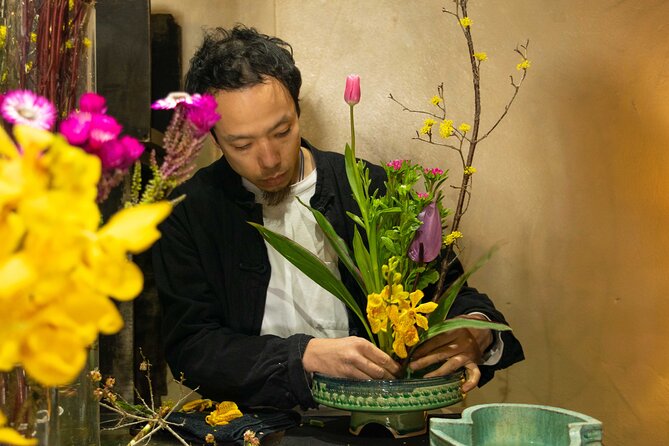
What I like most is how you’re guided without being bossed around. The class focuses on classical forms but keeps the point on the natural beauty of the stems and branches, with room for you to make choices instead of copying one perfect model. Beginners are welcome, and that matters in Kyoto where many activities assume you already know the rules.
One thing to consider: this is short. You’re looking at about 40 minutes, so if you want lots of time to experiment, ask questions, and redo your arrangement until you feel 100% confident, you may wish you had a longer session.
In This Review
- Key Points to Know Before You Go
- Inside SEKKA FLOWERS: A Traditional Room, Not a Demo
- The 40-Minute Flow: What You Actually Do
- 1) Welcome, context, and a short history of ikebana
- 2) Choose and handle seasonal flowers and branches
- 3) A wabi-sabi guided session with your instructor
- 4) Build your arrangement with a mix of guidance and freedom
- 5) Show your work in a tokonoma alcove
- 6) Leave with your arrangement
- Why the Location Near Kinkaku-ji and Daitoku-ji Matters
- Your Instructors: Warm Help, Real Guidance
- Who This Workshop Is Best For (and Who Should Skip)
- Great for:
- Maybe not for you if:
- Price and Value: $65.15 for 40 Minutes
- Practical Tips for a Smooth Visit
- Should You Book This Ikebana Class?
- FAQ
- FAQ
- Where is the ikebana workshop meeting point?
- How long does the experience take?
- How much does it cost?
- Is the class beginner-friendly?
- How many people are in a group?
- Do I get a ticket on my phone?
- Will the finished arrangement be displayed?
- Is the workshop near public transportation?
- Can I bring a service animal?
- Is there free cancellation?
Key Points to Know Before You Go
- Small group size (max 6 travelers) makes it easier to get hands-on help when you need it
- A renovated townhouse near Kinkaku-ji and Daitoku-ji adds atmosphere beyond a typical shop class
- Classical forms + wabi-sabi focus teaches the why, not just the how
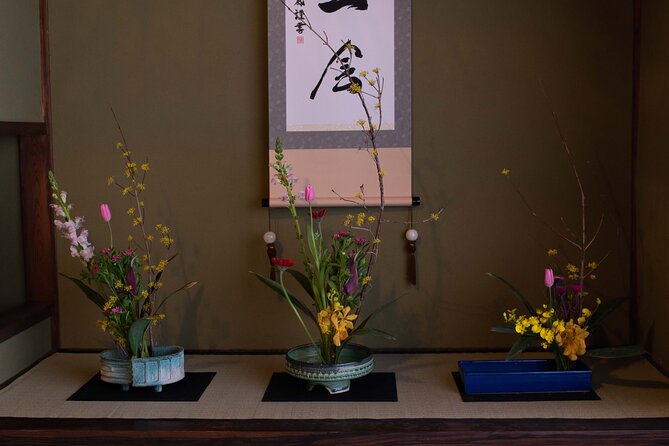
- Your arrangement is displayed in a tokonoma for a proper traditional touch
- Mobile ticket and short duration make this a low-stress fit into your day
Inside SEKKA FLOWERS: A Traditional Room, Not a Demo
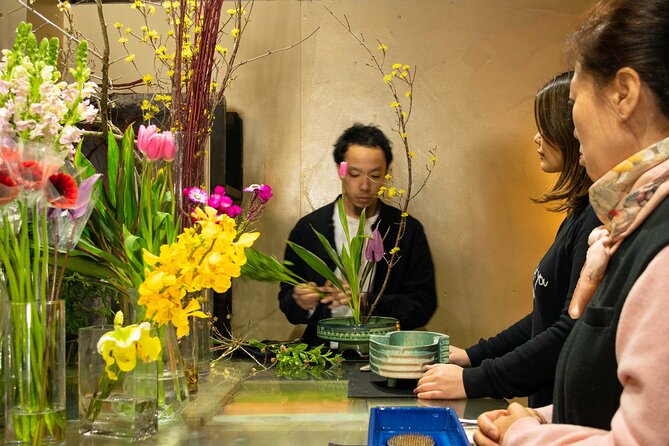
Kyoto can feel like two different cities at once. There’s the outside world—temples, traffic, groups, quick photos. Then there’s the calmer interior world of quiet rituals and slow looking. This ikebana experience sits firmly in that second world.
You’ll meet at 44-4 Murasakino Kamimonzenchō, Kita Ward, Kyoto. From there, you’ll step into a flower shop set in a renovated traditional townhouse said to be about 100 years old. That detail is not just decoration. It changes how the whole class feels. You’re not squeezed into a modern studio with fluorescent lighting and a hard chair.
I also like that the class is built around a clear philosophy. You’re guided through classical ikebana forms while paying attention to the natural state of flowers and branches. The goal isn’t to force plants into an idea you don’t understand. It’s to make a relationship between what you’ve been given and how you place it—then to let the arrangement look like it belongs there.
The “wabi-sabi” element is the other big reason this works. Wabi-sabi is basically the Japanese aesthetic of appreciating imperfection and transience. In a flower lesson, that translates into attention: how a stem bends, where a cut surface shows, and how asymmetry can look intentional instead of wrong. You’re not learning ikebana as a craft trick. You’re learning how to see.
You can also read our reviews of more tours and experiences in Kyoto.



The 40-Minute Flow: What You Actually Do
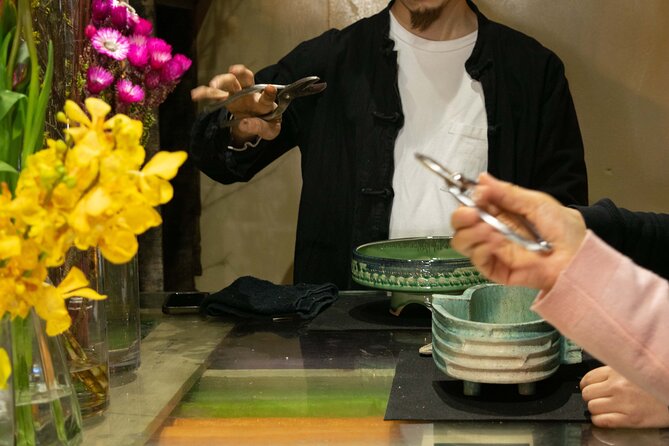
This is a 40-minute hands-on class. That time window shapes everything: you’ll get enough instruction to make something real, but you won’t be there long enough to lose focus.
Here’s the rhythm you should expect, in plain terms:
1) Welcome, context, and a short history of ikebana
You start by learning about the history and art of ikebana. Even if you’ve never arranged flowers before, this helps you understand why the rules exist. Ikebana isn’t just decoration. It’s a way of organizing nature into a composition that feels balanced, even when it’s not symmetrical.
2) Choose and handle seasonal flowers and branches
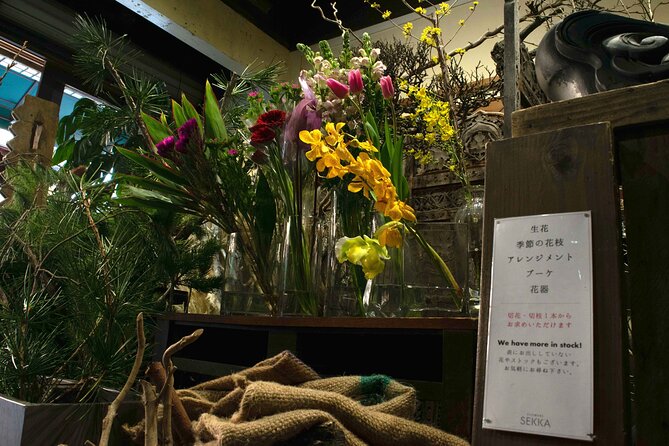
You’ll work with materials that reflect Japan’s seasons. That matters in ikebana because seasonal variation changes what feels natural in the arrangement. The stems you’re given will influence the form you choose.
This is also where the “natural state” idea becomes practical. Instead of treating stems as raw building blocks, you’re encouraged to respect their character—bend, length, thickness, and how they want to sit.
3) A wabi-sabi guided session with your instructor
The description specifically mentions a session that awakens primal senses and channels a wabi-sabi approach. In practice, that means you’ll be prompted to slow down and notice rather than rush. Think: feel the material, look closely, and place intentionally.
This part is where the class becomes relaxing, not just educational. People often come to Kyoto expecting constant motion. This gives you permission to work at a quieter pace.


4) Build your arrangement with a mix of guidance and freedom
Instructors guide you through classical structure, but the tone you’re aiming for is supportive, not rigid. One standout detail from the experience is that you don’t need to fear doing it wrong. In fact, a past participant highlighted that there’s no right or wrong answer—and the instructors encouraged creativity while still teaching principles.
If you’re the type who likes rules, classical form gives you structure. If you’re the type who likes self-expression, this experience leaves room for your personal choices within the framework.
5) Show your work in a tokonoma alcove
The payoff comes when your arrangement is displayed in a tokonoma, the traditional alcove used for art and seasonal display. This is more meaningful than a quick photo moment. A tokonoma frames your work in a way that makes it feel like part of a lived-in room, not a temporary craft project.
It’s also a gentle reminder that in Japanese culture, the presentation matters as much as the making.
6) Leave with your arrangement
The class ends back at the meeting point. Some participants also reported having the finished flowers delivered to their accommodation afterward. If that convenience matters to you, ask about it when you book so you can plan your day around the studio’s options.
Why the Location Near Kinkaku-ji and Daitoku-ji Matters
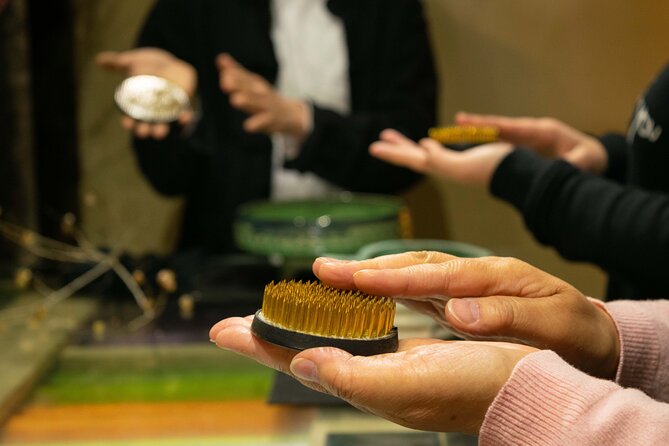
The workshop is near Kinkaku-ji Temple and Daitoku-ji Temple. That doesn’t just mean you can slot it between temple stops.
It means you’re surrounded by the kind of Kyoto atmosphere this craft depends on: seasonality, quiet aesthetics, and respect for tradition. Even if your time is tight, walking into a space near those landmarks helps your brain shift from sightseeing mode to cultural practice mode.
Also, being in a flower shop in a townhouse means you’re learning surrounded by real materials and real context. It’s not a staged museum classroom. You feel the everyday nature of the craft.
Your Instructors: Warm Help, Real Guidance
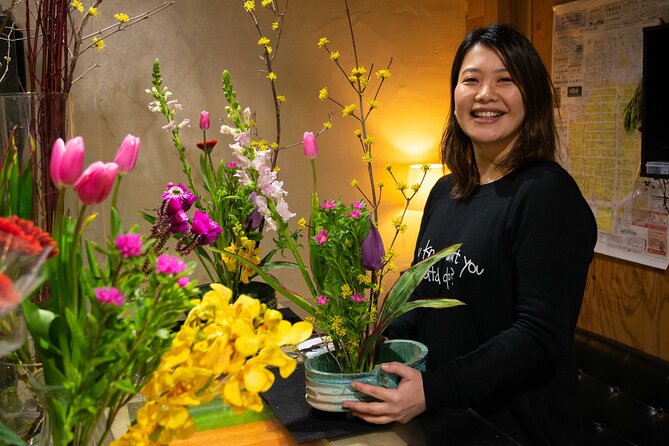
The experience is run with instructors, and the tone is repeatedly described as welcoming and encouraging. Names that came up include Taro-san and Chiaki-san, both noted for being friendly, knowledgeable, and supportive.
What that means for you: you’re less likely to freeze when you don’t understand a concept. The workshop sounds set up to explain principles, then let you work. You can expect the kind of help that answers your specific question instead of forcing you to follow a one-size-fits-all script.
Who This Workshop Is Best For (and Who Should Skip)
Great for:
- Beginners who want guidance but don’t want to feel tested
- Couples and small groups looking for a calmer Kyoto activity
- People who like hands-on cultural activities more than sitting through explanations
- Anyone who wants a meaningful souvenir that’s not just a photo
Maybe not for you if:
- You want a long class where you can redo multiple versions
- You dislike quiet, slow instruction and prefer high-energy tours
- You’re only looking for sightseeing value and don’t want to focus on making something
Price and Value: $65.15 for 40 Minutes
At $65.15 per person for about 40 minutes, the price isn’t about quantity. It’s about access: a small group, instructor-led teaching, and a traditional setting that includes a tokonoma display.
You’re paying for:
- direct coaching from instructors
- materials tied to seasonal flowers and branches
- a structured approach based on classical form
- the cultural setting of a renovated, traditional townhouse
If you’re comparing this to a typical “look, watch, leave” activity, ikebana is a better deal because you end up with something tangible. If you’re comparing it to a longer workshop where you learn more techniques, you’ll spend less time here—so treat it as a focused introduction or a first try.
Also, if the studio can deliver your arrangement to your accommodation, that’s extra practical value. It reduces the stress of carrying flowers through Kyoto.
Practical Tips for a Smooth Visit
You don’t need special skills to enjoy this. But you can make it easier on yourself.
- Wear comfortable clothes. You’ll be working close to stems and arranging.
- Bring a watch for pacing. Forty minutes goes fast once you start building.
- If you care about arranging style, tell the instructor early. The class is guided, so quick communication helps.
- If you want delivery to your hotel, ask about it before the workshop ends so you know what’s possible for your situation.
Should You Book This Ikebana Class?
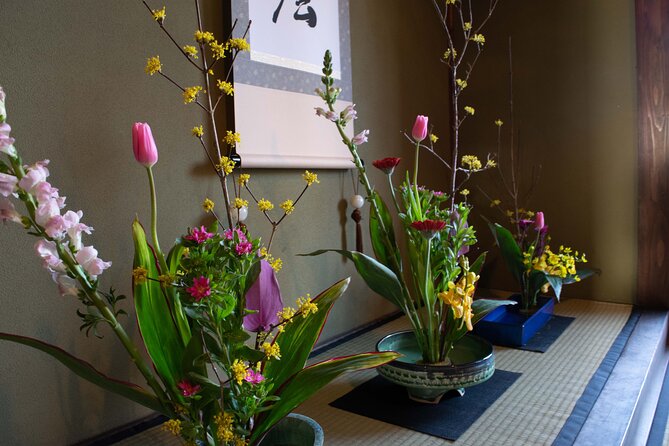
I think you should book this if you want a Kyoto experience that’s calm, hands-on, and genuinely different from another temple circuit. The small group size, the traditional townhouse setting, and the tokonoma presentation make it feel like a cultural moment rather than a quick activity.
Skip it only if you’re hoping for an all-day creative project or if you don’t like structured guidance. This is designed to be short and effective—an introduction that leaves you with a finished piece and a new way of looking at flowers.
FAQ
FAQ
Where is the ikebana workshop meeting point?
You’ll meet at 44-4 Murasakino Kamimonzenchō, Kita Ward, Kyoto, 603-8217, Japan.
How long does the experience take?
The session lasts about 40 minutes.
How much does it cost?
The price is $65.15 per person.
Is the class beginner-friendly?
Yes. Beginners are welcome.
How many people are in a group?
The workshop has a maximum of 6 travelers.
Do I get a ticket on my phone?
Yes. It’s a mobile ticket.
Will the finished arrangement be displayed?
Yes. Your artwork is displayed in a tokonoma in a traditional Japanese room.
Is the workshop near public transportation?
Yes. It’s near public transportation.
Can I bring a service animal?
Service animals are allowed.
Is there free cancellation?
Yes. You can cancel up to 24 hours in advance for a full refund.