REVIEW · KYOTO
Private car tour Let’s uncover secrets of majestic Kyoto history
Book on Viator →Operated by Amazing Kyoto Experience · Bookable on Viator
Kyoto works better in a private car. You get a more flexible route than the usual bus-rush, plus a day designed around less-crowded temples and small, meaningful stops like Kennin-ji and Ryoan-ji. One thing to plan for: the day can feel like it takes a little time to settle into rhythm at the start, so set expectations that the best flow comes after you’re moving and your guide gets a sense of what you want.
This is a private experience for your group (up to 10 people), with hassle-free hotel pickup and drop-off and an air-conditioned vehicle. The itinerary is built for “see Kyoto, but breathe while you do it,” with free admission listed for the scheduled highlights, plus guide-recommended lunch and dessert options along the way.
In This Review
- Key points that matter before you go
- Why a private Kyoto car day feels different than a bus loop
- Your 7-hour route: gates, gardens, and a koi pond finish
- Stop 1: Fushimi Inari-taisha’s gate maze and bamboo calm
- Stop 2 (with a surprise element): Kennin-ji’s moss garden stillness
- Stop 3: Ryoan-ji and the rock garden math
- Stop 4: Adashino Nembetsu-ji’s short stop with serious roots
- Stop 5: The Golden Pavilion top floors and the Ashikaga link
- Stop 6: Otagi Nenbutsu-ji’s artsy vibe (tea, calligraphy, and garden time)
- Stop 7: Monkey Park Iwatayama area plus Kyoto sweets
- Stop 8: Kibune Shrine and the koi pond pause
- Lunch and sweets: how the guide tips can actually save your day
- Price and value: what 108.58 per person really buys
- What could throw a wrench: timing, communication, and photo expectations
- Who should book this Kyoto private car tour
- Should you book? My take on the call
- FAQ
- FAQ
- What is the duration of this private Kyoto car tour?
- How big is the group for this private tour?
- Are hotel pickup and drop-off included?
- Is the vehicle air-conditioned?
- Is this tour truly private, or is it shared?
- Are admission tickets included?
- Is lunch included?
- What about dessert and food stops?
- Does the tour include a mobile ticket?
- Is alcohol allowed on the tour?
Key points that matter before you go
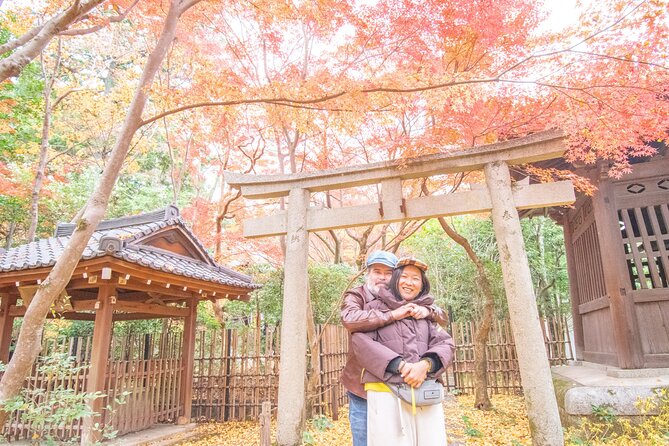
- Private group, up to 10 people: You control pace and small detours without squeezing onto a big bus.
- Hotel pickup and drop-off: You spend less time commuting and more time inside temples and gardens.
- A/C vehicle + parking/gas covered (up to 3000 yen/day): Fewer logistics headaches on a long day.
- A mix of famous and quieter sacred spaces: Fushimi Inari and Ryoan-ji, plus off-the-beaten-route temple stops.
- Dessert and local-food stops are part of the experience: Kyoto sweets show up near the Monkey Park area.
- One stop is kept as a surprise: The temple name for Stop 2 is disclosed only on the tour.
Why a private Kyoto car day feels different than a bus loop
Kyoto can be a time-management test. Even when you love the sights, big group tours often push you into the same schedule, the same photo angles, and the same crowds. This private car setup changes the feel fast: you ride together, you arrive with less stress, and you can shift timing when something is calm and you want to slow down.
The best part is how the route works as a story. You start with Fushimi Inari’s gate-and-path energy, then move through temple spaces where the atmosphere does the talking. Between stops, you’re not fighting transit or figuring out parking. You just go, sit back, and let your guide handle the day.
You can also read our reviews of more private tours in Kyoto
Your 7-hour route: gates, gardens, and a koi pond finish
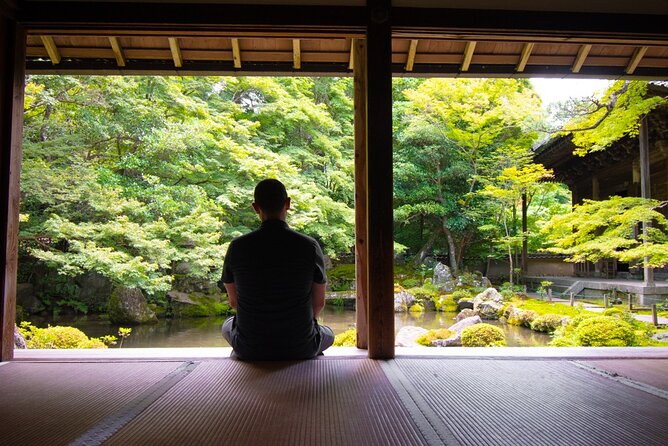
This tour runs about 7 hours, and it’s designed as a day circuit around classic Kyoto highlights plus smaller temple experiences. Expect a longish arrival-and-walk moment at Fushimi Inari-taisha, then a series of shorter temple stops where you can actually step inside and take your time.
The sequence below is the tour’s standard order, including free-admission temple stops listed in the itinerary. It also includes a dessert break near Monkey Park Iwatayama and a final shrine stop at Kibune.
- Stop 1: Fushimi Inari-taisha Shrine (about 2 hours, free)
- Stop 2: The surprise temple stop (about 1 hour, free; Kennin-ji on the schedule)
- Stop 3: Ryoan-ji Temple (about 1 hour, free)
- Stop 4: Adashino Nembetsu-ji Temple (about 30 minutes, free)
- Stop 5: The Golden Pavilion area (about 1 hour, free)
- Stop 6: Otagi Nenbutsu-ji Temple (about 30 minutes, free)
- Stop 7: Monkey Park Iwatayama area + dessert stop (about 30 minutes, free)
- Stop 8: Kibune Shrine (about 30 minutes, free)
Stop 1: Fushimi Inari-taisha’s gate maze and bamboo calm
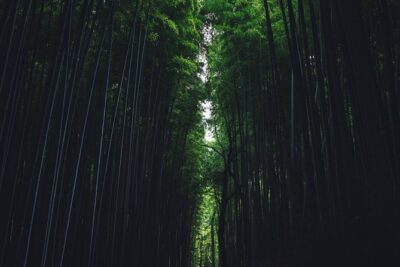
Fushimi Inari-taisha is one of those Kyoto places that looks like a movie set from the first second. The famous detail here is the long mountain stretch lined with thousands of torii gates—walking under them changes your rhythm instantly.
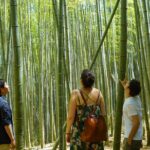
What I like about this stop in particular is the way the route includes more than just gate photos. The description points to the shrine grounds spanning a whole mountain area, with bamboo forest trails and calmer moments where birds chirp and the crowd energy drops. That matters because Fushimi Inari can be packed depending on the time of day, and you want a guide who keeps you moving toward the quieter pockets.
Practical tip: wear shoes you can walk in for a while. Two hours goes by fast once you start following side paths and pausing to look back along the gate lines.
Stop 2 (with a surprise element): Kennin-ji’s moss garden stillness
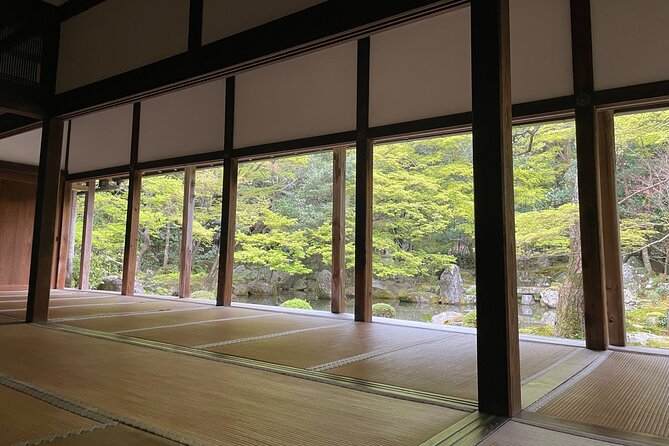
The tour keeps the temple name as a surprise until you’re actually there. On the standard route, that surprise stop is Kennin-ji Temple, a place famous for its moss garden atmosphere.
This is the kind of stop that works best when you don’t rush. You’re not meant to treat it like another checklist item. The point is the garden look and feel: the mossy texture, the quiet setting, and the slower temple pacing. The itinerary notes that this temple isn’t visited as often, partly because it can be a bit distant or inconvenient compared to the biggest “must-see” clusters—exactly the kind of trade-off that makes the day feel calmer.
If you’re the type who likes reading signs and letting the details sink in, this stop rewards you.
Stop 3: Ryoan-ji and the rock garden math
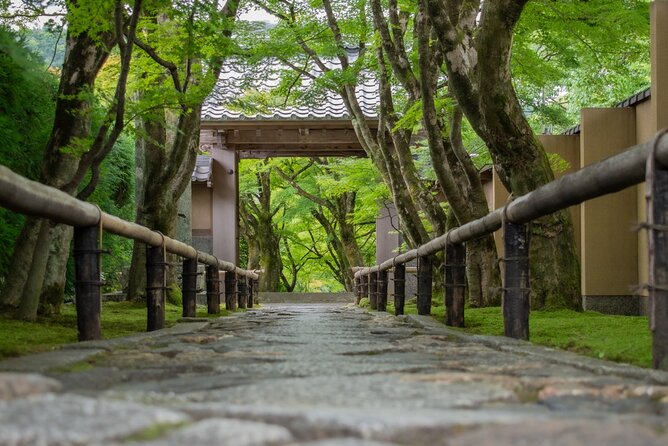
Ryoan-ji is known for an organized arrangement of tiny rocks in a large temple garden. The effect is simple and powerful: you’re staring at a design, but it feels like your eye is doing the work.
The itinerary also frames this stop as a window into the history of Japanese Buddhism and a major schism period. You’ll likely spend enough time here to notice how the garden isn’t just scenery—it’s part of the temple’s spiritual and historical identity.
What to expect: a calmer pace than the early gate crowds, with space to take in how the rocks sit and how the garden layout changes depending on where you stand.
You can also read our reviews of more historical tours in Kyoto
Stop 4: Adashino Nembetsu-ji’s short stop with serious roots
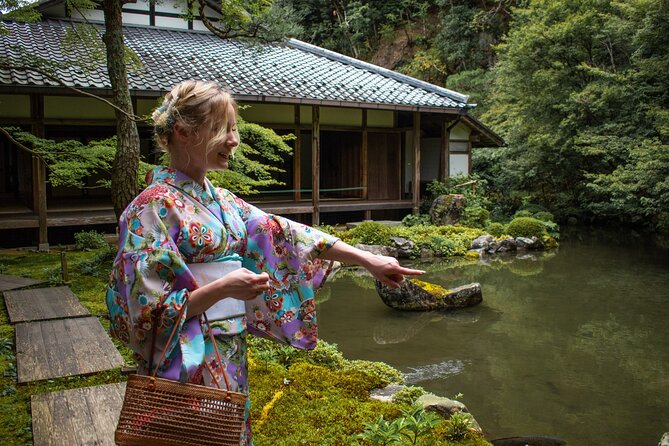
Adashino Nembetsu-ji is a compact stop that carries extra weight because of the story attached to it. The itinerary notes it was originally erected by a group called Hatashi, described as a Korean-rooted ethnic tribe in the 5th–6th centuries. It also notes that it was burned down in the 8th century but never vanished.
Even if you don’t go deep into the historical background, the point is that this isn’t just pretty landscaping. It’s a site with memory. The “short visit” format can be perfect here: you get the meaning without turning your day into a history lecture marathon.
Stop 5: The Golden Pavilion top floors and the Ashikaga link
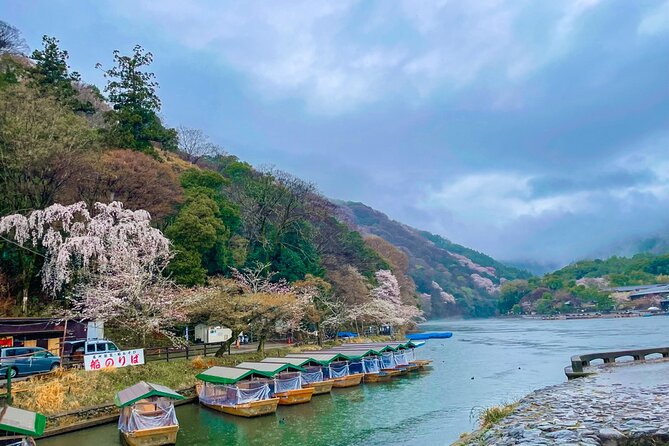
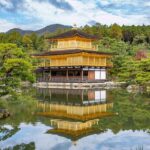
This stop is listed as Yasakanoto on the itinerary, but the description clearly matches Kinkaku-ji, the Golden Pavilion. You’ll hear the key story: it was once a villa of Shogun Yoshimitsu Ashikaga (1358–1408), and after his death it became a temple.
The standout visual detail is the building’s two top floors covered with gold leaf. That’s the moment people wait for. Even if you’ve seen photos, seeing the gold leaf in person changes the feel because of how the light hits the surfaces and how the pavilion sits within its surrounding space.
The practical win in a private car day: you can spend your time on the part of this stop that matters most to you, whether that’s exterior views, inside viewing areas, or taking a slower walk around the grounds.
Stop 6: Otagi Nenbutsu-ji’s artsy vibe (tea, calligraphy, and garden time)
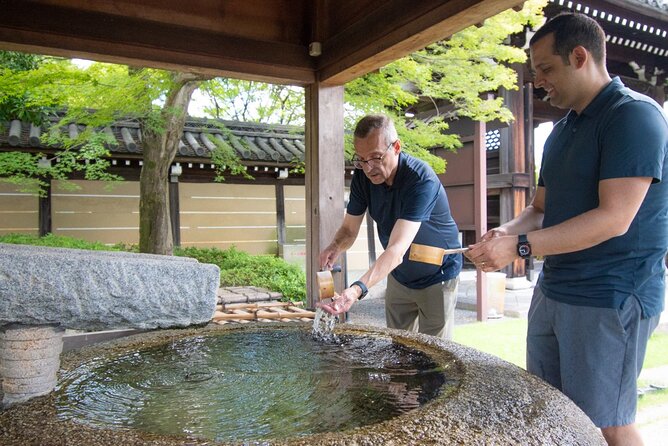
Otagi Nenbutsu-ji is described as an art master’s property tied to multiple arts, including tea ceremony and calligraphy. That theme shows up in how the place is framed: an “awesome garden” with various planted trees and tea ceremony-related items.
A 30-minute visit can feel short if you’re eager for details, but it’s also a good length for this kind of stop. You get the atmosphere—garden feel plus art/culture context—without draining the rest of your day.
If you like Japanese craft culture and small curated-feeling spaces, this is one of the more interesting stops on the list.
Stop 7: Monkey Park Iwatayama area plus Kyoto sweets
Monkey Park Iwatayama is the name you’ll recognize, but the scheduled experience here includes a dessert stop at a local shop. The itinerary calls out Kyoto-styled sweets like mochi with different textures, plus shaved ice flavored with yuzu (Japanese citrus) or matcha.
This is a smart break. You’re not eating a random snack in transit. You’re pausing in a Kyoto way, trying sweets tied to local tastes and seasonal flavors.
If you’re deciding what to order, look for a flavor that sounds familiar enough to enjoy right away (matcha and yuzu are safe bets). Then take one step more adventurous only if you’re in a mood for experimentation.
Stop 8: Kibune Shrine and the koi pond pause
The last stop is Kibune Shrine, described as the biggest shrine erected by the powerful Hatashi-tribe and beloved by neighborhood households. The key practical detail is the large koi fish pond, where you can feed the koi fish.
This is a perfect “finish the day without rushing” moment. You’re not sprinting for another major landmark. You’re stepping into a calmer, interactive shrine scene—more relaxed than the gate crowds earlier in the day.
Wear sleeves you’re comfortable with if it’s warm, because feeding the koi means you’ll be standing around a bit while people toss food and watch the fish gather.
Lunch and sweets: how the guide tips can actually save your day
Lunch is not included, but the tour notes that a stop for lunch may be possible based on request and situation, with guide-recommended local restaurants. The itinerary also includes “tips of local good restaurants for lunch and dessert shops,” so you’re not stuck guessing from a map app.
This is one of the hidden values of private tours: someone else makes the food decision you don’t want to make while you’re tired and navigating. If you’re picky, tell your guide your constraints early—spice level, dietary needs, or just what you don’t want (like raw seafood).
Price and value: what 108.58 per person really buys
The price is $108.58 per person for about 7 hours. On paper that might look steep if you’re only thinking about temple entry. But private car tours in Kyoto are priced for the logistics you normally pay in stress and time.
What you’re getting for that per-person cost:
- Private transportation in an air-conditioned vehicle
- Hotel pickup and drop-off
- Parking and gas fees covered up to 3000 yen/day
- A route that targets the less crowded side of Kyoto, not just the big, famous bottlenecks
- Free-admission-listed stops across the day (many scheduled highlights show “free” admissions)
One important cost line item: admission fees are listed as not included, with a separate note of ¥3,000 per person. The itinerary also labels several stops as free, so it’s possible some sites are treated differently or additional costs come up. Either way, check what the ¥3,000 covers at confirmation so there are no surprises.
If you’re traveling as a small family or a group of friends, this can become excellent value because you’re spreading the comfort and car time across your actual group size. Group discounts are noted too, so the math can improve when more people join.
What could throw a wrench: timing, communication, and photo expectations
A private tour is usually smooth, but it’s still a human system. One drawback that shows up in the experience feedback is that the day can start a little slowly while people connect and expectations sync up. You should treat the first stretch as an adjustment phase, not as a verdict on the whole tour.
Another consideration: if you care a lot about photos, ask clearly about photo handling expectations before you start. There’s at least one mention of not getting as many photos as expected from a DSLR-oriented promise, so it’s worth confirming how the guide plans to support picture-taking at each stop.
Also, remember how the schedule is structured. The best day will happen when you keep your pace realistic and let the guide handle the flow between locations.
Who should book this Kyoto private car tour
This tour fits especially well if:
- You want Fushimi Inari and Ryoan-ji without spending the whole day trapped in crowd surges
- You’re traveling with family members who benefit from a car between stops
- You want flexibility and a less rigid feeling than big-group day trips
- You prefer a guide who adds context as you go, not just a drive-by checklist
It also works for couples on a tight itinerary because hotel pickup removes one major headache. And if your group includes someone who can’t do long transit walks, the car routing is a big practical advantage.
Should you book? My take on the call
I think you should book this private Kyoto car tour if you want a calmer way to see famous temple names plus quieter sacred stops, and you’re willing to pay for time saved and crowd avoidance. The schedule is built around a mix of major and lesser-visited sites, and the car makes the difference between a stressful day and a day where you can actually enjoy what you’re looking at.
Book it especially if your priorities are:
- comfort (A/C, hotel pickup/drop-off)
- meaningful stops (temple interiors and garden atmosphere)
- food breaks handled by a guide who can steer you to solid local options
Skip it if you want a super fast, minimalist hit list where every minute is purely sightseeing with zero downtime. This is a “slow enough to notice” kind of tour, not a sprint.
FAQ
FAQ
What is the duration of this private Kyoto car tour?
It runs for about 7 hours.
How big is the group for this private tour?
It’s private for your group, with a maximum of 10 people.
Are hotel pickup and drop-off included?
Yes, hotel pickup and drop-off are included.
Is the vehicle air-conditioned?
Yes. The tour includes an air-conditioned vehicle.
Is this tour truly private, or is it shared?
It’s a private experience. Only your group participates.
Are admission tickets included?
No. Admission fees are not included, with a listed amount of ¥3,000 per person. (Some scheduled stops are labeled free on the itinerary.)
Is lunch included?
Lunch is not included. A lunch stop may be possible depending on your request and the situation.
What about dessert and food stops?
The tour includes guide tips for local lunch and dessert shops, and there is a dessert shop stop scheduled near the Monkey Park Iwatayama area.
Does the tour include a mobile ticket?
Yes, a mobile ticket is listed as part of the experience.
Is alcohol allowed on the tour?
If alcohol is involved, the minimum age for alcohol consumption is 18.