REVIEW · KYOTO
Arashiyama from Kyoto: Private & Personalized with a Local Guide
Book on Viator →Operated by City Unscripted · Bookable on Viator
Arashiyama feels magical when you slow down. This private, personalized walking tour helps you see the bamboo grove, temple gardens, and monkey park with a local guide who adjusts the day to your pace. You also get admission to 4 temples plus Okochi Sanso Villa, so you spend less time figuring out tickets and routes.
Two things I really like: first, the tour structure lets you choose a departure time and build a day around what you care about, whether that’s Zen temples or viewpoints. Second, the included stops hit a great mix of famous and slightly off-the-beaten-track spots, from Tenryu-ji’s UNESCO grounds to Otagi Nenbutsu-ji’s famous 1,200 rakan statues. It also helps that the guide quality seems consistently strong; guides named Alex, Ada, Vanessa, Hide, Jose, and Fatima all show up in the experience stories with clear praise for flexibility and tailoring.
One possible consideration: this is still a walking tour in a crowded area, and the monkey park climb can be steep. If your legs tire fast, plan to take it slow and bring comfortable shoes.
In This Review
- Key things to know before you go
- Where this Arashiyama day fits (and why it works)
- Your start point: meeting at Kyoto Station’s Mister Donut
- A bamboo grove morning—without treating it like a cattle line
- Jojakko-ji on Ogura Mountain: moss, a tall pagoda, and real views
- Monkey Park Iwatayama: the climb, the macaques, and the etiquette
- Tenryu-ji: UNESCO Zen temple time you can actually enjoy
- The quirky stop: Otagi Nenbutsu-ji’s 1,200 rakan statues
- Daikaku-ji: the former imperial villa turned temple
- How the guide personalization shows up in real life
- Price and value: is $288.17 actually a good deal?
- Logistics reality: walking, crowds, and transport between sites
- Who should book this (and who might not)
- Should you book Arashiyama: Private & Personalized with a Local Guide?
- FAQ
- How long is the Arashiyama private walking tour?
- Is this tour private?
- What’s included in the ticket price?
- Can I choose the departure time?
- Does the tour include food and drinks?
- Is transportation included?
- Where do we meet the guide?
- Is it suitable for most people?
Key things to know before you go
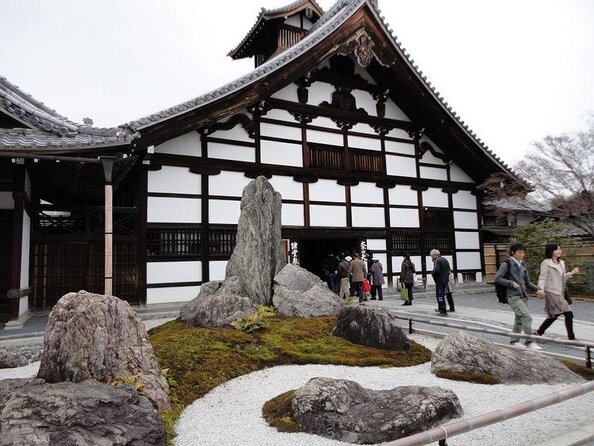
- Private and personalized: a pre-tour questionnaire helps your guide shape the day to your interests and energy level.
- Temple tickets are included: you’ll visit 4 of the listed 5 major temples, plus Okochi Sanso Villa.
- Monkey Park Iwatayama is part of it: expect a hilly walk and time near the Japanese macaques for a very Kyoto moment.
- You can choose your departure time: earlier timing can help you avoid some of the worst bamboo grove crowds.
- Your route can bend with weather: guides have adapted plans when rain hit, swapping in calmer nearby stops.
- Pickup may be possible, but it’s mainly on foot: you’ll likely use public transport or taxis only between sites, if needed.
Where this Arashiyama day fits (and why it works)
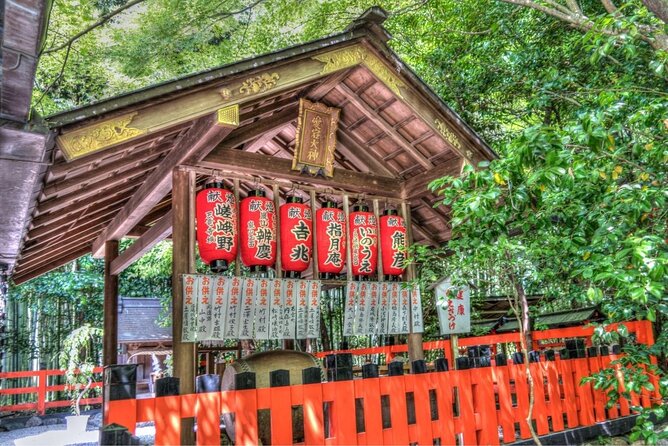
Arashiyama is the kind of Kyoto spot that looks great in photos and can feel like a theme park in real life. This tour tries to solve that problem by keeping you moving with a guide who knows how to pace the day, what to skip if conditions are rough, and where the quiet moments are.
The big value is that you’re not just buying access to famous sights. You’re buying a guided walk that strings together nature, religion, and views in a way that makes sense—without you needing to coordinate tickets for each stop. The tour runs about 6 hours, and you’ll return to the meeting point afterward, which makes it easier to plan the rest of your Kyoto day.
Also, the experience is private. That sounds like a marketing line, but in practice it matters: guides can slow down for families, adjust for sprained ankles (yes, that happens), or spend extra time at Monkey Park Iwatayama when kids want more of the macaque action.
You can also read our reviews of more guided tours in Kyoto
Your start point: meeting at Kyoto Station’s Mister Donut
Most walking tours begin with a vague corner in a neighborhood. This one starts with a clear place: Mister Donut at JR Kyoto Station (shop 901). The end is back at the same meeting point, so you don’t have to worry about getting yourself across town at the end.
Pickup is offered, and at least some guides have coordinated meeting directly at a hotel. Still, don’t assume every pickup point is guaranteed—message your guide after booking to confirm exactly what you’ll do and where you’ll begin.
If you’re coming from elsewhere in Kyoto, this start location is handy because it’s a major transit hub. You’ll also get to the Arashiyama area faster than if you were trying to navigate timing from an outer neighborhood.
A bamboo grove morning—without treating it like a cattle line
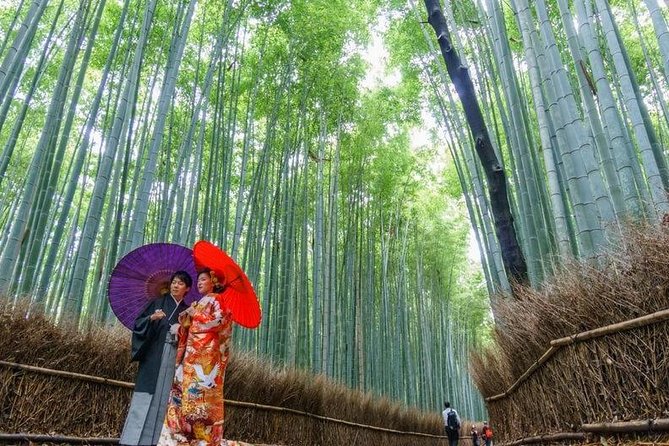
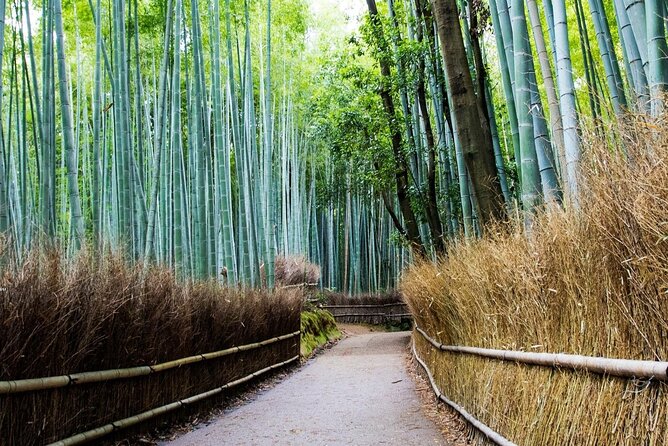
The day typically begins with Arashiyama’s signature scene: the bamboo grove. Even if you’ve seen it before, it lands differently in person—tall poles, shifting light, and that quiet, almost temple-like mood.
Here’s the practical part: the grove can be crowded. One solid tip is to aim for earlier in the day if your schedule allows. If you’re going later, your guide can often shift the plan to help you get at least some peaceful time before crowds thicken.
Another thing to know: the bamboo grove isn’t a sit-and-rest experience. A guide may point you to viewpoints and side lanes, but don’t expect benches or long breaks right there. Wear shoes you’re happy to walk in, because the tour is built around movement.
Jojakko-ji on Ogura Mountain: moss, a tall pagoda, and real views
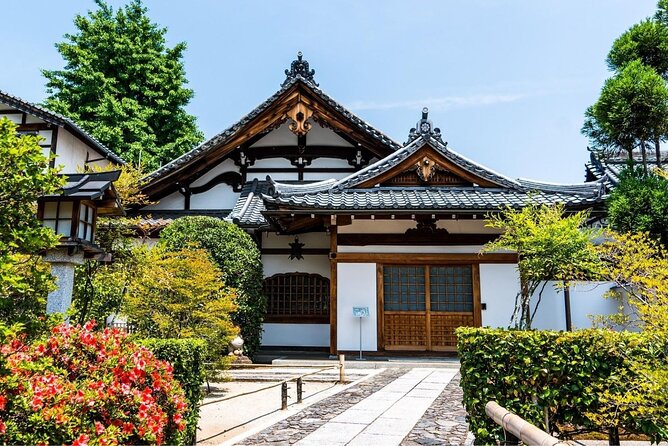
Next comes a quieter, slope-side temple stop: Jojakko-ji on the slopes of Ogura Mountain. This is one of the temples in the included set, and it’s known for lush moss gardens and a 12-meter pagoda.
What makes this stop valuable is the combination of textures and perspective. You’re not just ticking off a temple name—you’re getting a change of pace from bamboo to mossy stillness, and then you climb or walk enough to feel the Arashiyama terrain under your feet. From there, you get panoramic views over the area, which is one of those Kyoto moments that makes the walking feel worth it.
If you’re the kind of traveler who likes small details—stonework, garden edges, how buildings sit against the hills—this is the stop where you’ll slow down without trying.
Monkey Park Iwatayama: the climb, the macaques, and the etiquette
Then it’s on to Monkey Park Iwatayama, one of the day’s biggest attractions. Yes, you’ll see Japanese macaques roaming freely, and yes, you’ll get those famous viewpoint photos—but the experience is more than the selfie factor.
Two practical considerations matter here:
1) The walk to the park can be steep. One firsthand note described it like a long climb—around the effort of walking up a very tall building. If your knees protest, take breaks and let your guide set the pace.
2) It’s wildlife interaction, not a zoo show. Your guide will share tips for respectful behavior, which is exactly what you want. That means keeping distance and not encouraging risky interactions.
This stop is also where the tour’s personalization shines. One guide (Alex) made it a highlight for teens, while another guide helped plan extra time at Monkey Park Iwatayama for a family traveling with young kids. If you have a mixed-age group, this is the kind of stop that keeps everyone engaged without needing to force interest.
You can also read our reviews of more private tours in Kyoto
Tenryu-ji: UNESCO Zen temple time you can actually enjoy
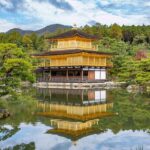
A UNESCO World Heritage site makes the list: Tenryu-ji, one of Kyoto’s five great Zen temples. This is also where the tour balances out the more playful monkey moment with a quieter, reflective temple experience.
What you should expect: time to stroll the garden grounds and learn what makes the place significant in Japanese Buddhism. The guide’s job here is to translate the temple’s atmosphere into something you can follow without getting lost in jargon.
A nice bonus is the contrast. After climbing hills at Monkey Park, Tenryu-ji gives you structured calm—space to breathe, look slowly, and notice how the garden design frames the surrounding mountains.
The quirky stop: Otagi Nenbutsu-ji’s 1,200 rakan statues
Next is one of Arashiyama’s most unusual temple experiences: Otagi Nenbutsu-ji, where you’ll see over 1,200 rakan statues, each with its own expression.
This is the kind of stop that surprises people. It’s not just a single photogenic object; it’s a whole field of small faces and interpretations. Your guide can point out what to look for so you don’t just snap a few pictures and move on.
If you like odd-but-meaningful places (and most of us do, once we’re in Kyoto), this is a highlight. It also helps balance the day: you’ve had bamboo, moss gardens, monkeys, and Zen temple grounds. Now you get something strange in a very Kyoto way—offbeat, creative, and memorable.
Daikaku-ji: the former imperial villa turned temple
The day continues to Daikaku-ji, described as a former imperial villa turned temple with a key role in Japan’s cultural history. This is where the tour gets historical without turning into a lecture.
A standout detail here is the connection to The Tale of Genji, Japan’s first novel, with scenes set here. You’ll also be able to enjoy the serene pond and garden setting, which makes this a good late-day stop when you want your senses to slow down again.
If your travel style includes culture plus scenery—walking plus meaning—Daikaku-ji is a strong finish. It’s also a nice contrast to the more crowded bamboo areas. You’ll likely feel a calmer atmosphere here.
How the guide personalization shows up in real life
One reason this tour scores so well is that the guides don’t treat it like a fixed checklist. They tailor the flow.
You can see that in how guides adapted for different needs and conditions:
- Ada adjusted when it was pouring rain, skipping the bamboo forest and shifting to lesser-known shrines and historic spots.
- Hide helped someone with a sprained ankle, which tells you the guide’s planning is practical, not just enthusiastic.
- Mia worked with a family that included a child with autism, keeping the pace and attention aligned with needs.
- Jose catered to preferences and handled the fact that it’s a walking day (which matters when you want a smooth experience).
- Fatima added off-the-beaten-track elements after learning what the traveler wanted most.
That last part is important: you answer a pre-tour questionnaire, and then your guide reaches out directly to craft your itinerary around you. So when you say you’re more into temples than shopping, or you want viewpoints, or you’re traveling with kids, the day should shift accordingly.
For me, that’s the difference between seeing Arashiyama and understanding Arashiyama.
Price and value: is $288.17 actually a good deal?
At $288.17 per person for about six hours, this isn’t a budget tour. But it can be good value if you compare it to what’s included.
You get:
- Private, personalized guiding
- Admission to Okochi Sanso Villa
- Admission to Monkey Park Iwatayama
- Tickets for 4 of 5 temples (Tenryu-ji, Jojakko-ji, Gio-ji, Otagi Nenbutsu-ji, Daikaku-ji)
That inclusion matters. In Kyoto, it’s easy for costs to creep up if you self-plan each site and add ticket fees, plus the time cost of figuring out the right order. Here, the route is built around those admissions, and your guide handles the timing and pacing.
Is it worth it? If you’re the kind of traveler who hates wasting time, wants someone to translate what you see, and appreciates a structured route—yes. If you’re very comfortable self-guiding and you only care about one or two major sights, you might do fine on your own for less.
Logistics reality: walking, crowds, and transport between sites
This is mainly a walking experience. A private vehicle is not included. Public transport or local taxis may be used between sites if needed, and the exact cost can be discussed with your host after booking.
Plan for a day that is active:
- Bamboo grove area can mean crowds and shoulder-to-shoulder time.
- The monkey park climb is real. Build in pauses.
- There may be hills, because Arashiyama sits at the foothills of the mountains.
Also, the tour ends back at the meeting point near Kyoto Station. That makes it easier to get back to your hotel or keep exploring without a complicated end-of-day transit scramble.
One more note: food and drinks aren’t included. If you need lunch, you’ll likely stop on the way, but you’ll cover those costs yourself.
Who should book this (and who might not)
This tour is a great match for:
- First-time visitors who want Arashiyama’s main sights plus the temple/garden context
- Travelers who want a guide to handle ticket logic and route pacing
- Families, including kids who enjoy monkeys and animals
- Travelers with mobility considerations who benefit from having a guide to adjust the pace (tell your guide your needs up front)
It may be less ideal if:
- You want a low-walking day with lots of sitting time
- You’re sensitive to steep hills
- You only want one attraction and don’t care about temples or garden visits
Should you book Arashiyama: Private & Personalized with a Local Guide?
I’d book it if you want Arashiyama to feel personal, not crowded and rushed. The mix of included temple admissions, Okochi Sanso Villa, and Monkey Park Iwatayama makes it a strong value for a guided day. And the guide adaptability—whether it’s rain changes, kid-focused timing, or slower pacing—shows up in how people describe their day.
I’d hold off if you’re looking for a relaxed stroll with minimal hills. This is a walking plan, and the monkey park climb is the part that can catch you off guard.
One final practical pointer: choose your departure time with the bamboo grove in mind. Going earlier is usually the easiest way to keep the day calmer, and it gives you more room to enjoy the quieter temple moments later.
FAQ
How long is the Arashiyama private walking tour?
It’s about 6 hours.
Is this tour private?
Yes. It’s private, and only your group participates.
What’s included in the ticket price?
You get private guiding, tickets to 4 of these 5 temples (Tenryu-ji, Jojakko-ji, Gio-ji, Otagi Nenbutsu-ji, Daikaku-ji), admission to Okochi Sanso Villa, and admission to Monkey Park Iwatayama.
Can I choose the departure time?
Yes. You can select a departure time that works with your schedule.
Does the tour include food and drinks?
No. Food and drinks are not included.
Is transportation included?
Transportation is not included. This is primarily a walking experience, and public transport or local taxis may be used between sites at additional cost.
Where do we meet the guide?
You meet at Mister Donut in the JR Kyoto Station Building (Shop 901).
Is it suitable for most people?
Most travelers can participate, but it is a walking tour with hills, including a steep climb to Monkey Park Iwatayama. Comfortable shoes help a lot.