REVIEW · KYOTO
Kyoto Nighttime All-Inclusive Eats and Streets, Gion and Beyond
Book on Viator →Operated by Pinpoint Traveler, Inc · Bookable on Viator
Kyoto at night is when the city softens and starts telling secrets. This tour turns a simple evening stroll into an easy-to-follow mix of Gion storytelling and real local bar-and-restaurant food. You’ll get guided context for how Kyoto’s famous night entertainments evolved, then you’ll eat your way through Kyoto’s night economy with included drinks.
I especially like that the pacing leaves room to actually enjoy what you’re seeing, not just rush from one photo spot to the next. I also like the value of the food stops: dinner is included, and you get two beverages (alcoholic or non-alcoholic), so you’re not doing constant add-ons while you’re trying to enjoy the night.
The main thing to consider is that this is a walking-focused evening, and most of the dining happens in standing-bar / small-restaurant settings. That’s great for atmosphere, but if you want lots of wide, quiet seating for conversation or you’re sensitive to smoky spots in older venues, plan accordingly.
In This Review
- Key things to know before you go
- Entering Gion at night: what you’re really seeing
- Meeting point at Minamiza Theater and the first hour’s focus
- Geiko and hostess culture: why Kyoto says different things
- Dinner starts at 7:30: standing bars, regional plates, and smart choices
- Dietary needs and how to use this to your advantage
- The west-side night walk: Pontocho, Kiyamachi, and Kawaramachi at 8:15
- Restaurant number two near 9:00: more food, another drink, and a calmer end
- Price and what you’re actually paying for at $119
- Logistics that matter: walking load, group size, and meeting nerves
- Who should book this Kyoto nighttime eats tour (and who should skip it)
- My call: should you book this tour?
- FAQ
- What time does the tour start and how long is it?
- Where do we meet, and where does the tour end?
- What meals and drinks are included?
- Are vegetarian options available?
- Is this tour suitable for teenagers?
- What is the minimum drinking age in Japan?
- How big is the group?
Key things to know before you go
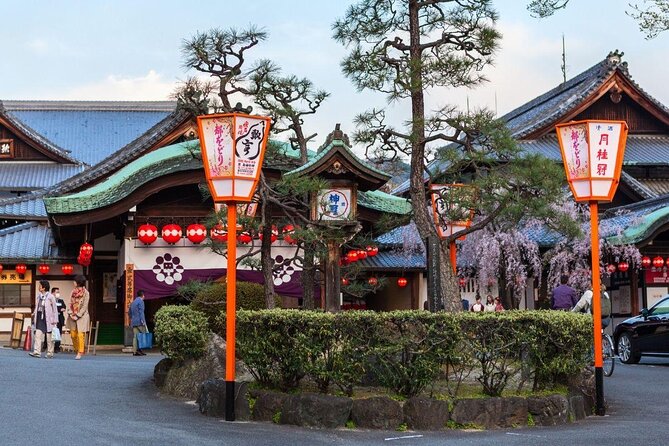
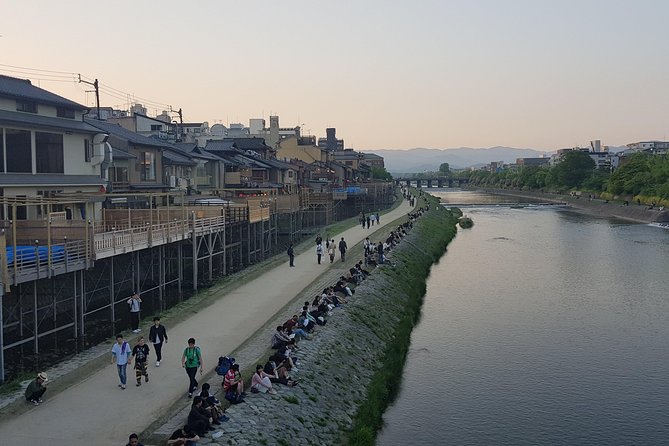
- Gion to the west-side night districts: you’ll cross the Kamogawa River vibe from historic lanes to busier entertainment streets.
- Two included drinks, one at each restaurant: you’ll choose alcoholic or non-alcoholic for both.
- Small group size (max 6): easier questions, faster navigation, less time lost hunting the meeting point.
- Food you’d skip without a guide: the stops are local and often the kind you’d never find on your own.
- Dietary needs can be handled: vegetarians are welcomed, and several departures have managed other restrictions smoothly.
- You’re learning social context, not just trivia: you’ll get explanations of geiko culture and how the entertainment world changed over time.
Entering Gion at night: what you’re really seeing
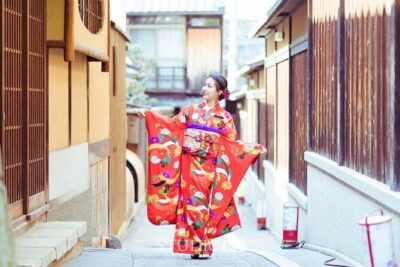
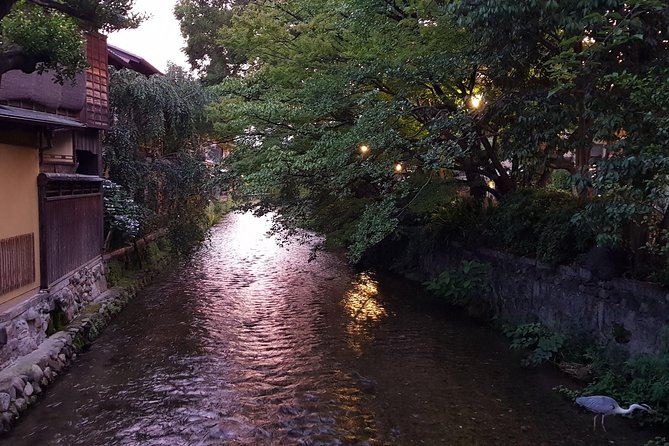
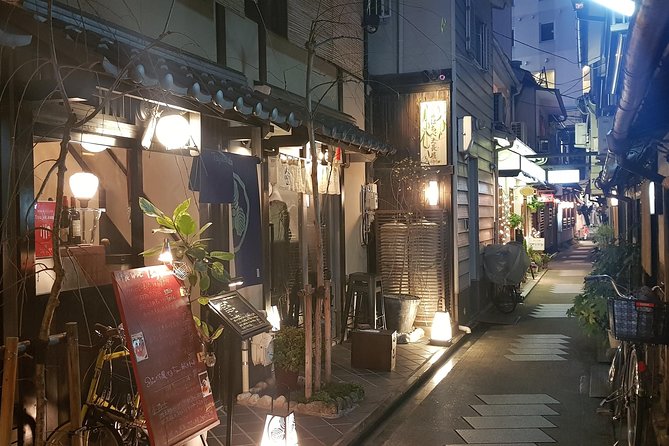
Gion is famous in daylight, but at night it’s quieter and more layered. The streets feel like they were designed for slow movement: narrow lanes, lantern-like lighting, and that odd mix of tourists and locals that Kyoto does better than almost anywhere.
This tour is built around that shift. You start in the Gion area and focus on the nighttime economy—how people actually spend evenings, where they eat, and why certain entertainment traditions are tied to specific neighborhoods. It’s not just a “look here, take a picture” route. You’re learning how the city’s social scene works, and why Kyoto is careful about using the right terms.
One early payoff is the geiko conversation. In Kyoto, you’ll hear the difference between geiko and geisha, and you’ll learn why Kyoto uses geiko for women in that traditional performance world. You’ll also get context for maiko (apprentices) when your guide explains how the system works.
You can also read our reviews of more tours and experiences in Kyoto.
Meeting point at Minamiza Theater and the first hour’s focus
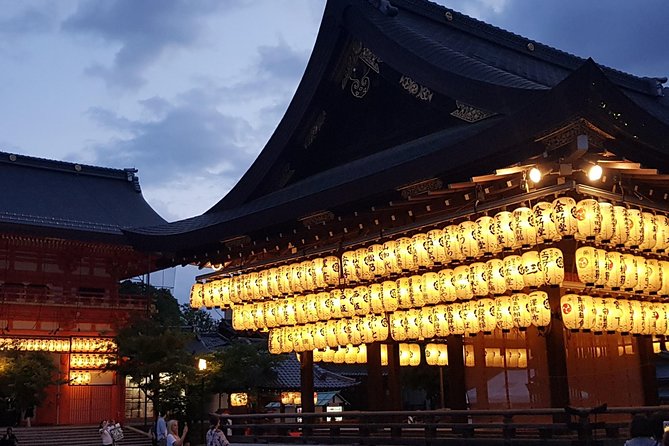
You meet at Minamiza Theater, on the second floor west lobby, at the Gion Shijo Station area. It’s a convenient starting point because it’s tied to public transport, and you’re not stuck far from the action before you even begin.
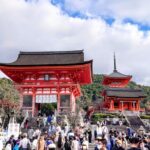
The first major block of time is a guided walk through the Gion district on the east side of the Kamogawa River. This is where the tour earns its name: you’re not waiting until dinner to start learning. You’ll get a guided explanation of what makes Gion special, plus how Kyoto’s evening entertainment evolved—from traditional performers to modern hostess clubs.
I like this structure for two reasons. First, it helps your brain connect what you’re seeing with a real social story. Second, it makes the walk feel purposeful, even if you’re not sure what you’re looking at yet.
And yes, this part is suitable for teens and up. One review even notes the guide explained shrine vs temple differences as part of the cultural stops, which is exactly the kind of practical background that makes Kyoto feel less mysterious and more understandable.
Geiko and hostess culture: why Kyoto says different things
Kyoto has a way of being precise. Even when the entertainment world looks similar on the surface, the labels and traditions matter.
On this tour, your guide explains:
- why Kyoto avoids the broad label geisha for the Kyoto performance context
- what geiko and maiko mean in day-to-day cultural terms
- how the modern hostess club era fits into the larger story of nightlife and service culture
This isn’t moralizing. It’s just context—how a city shaped by tradition and tourism still changes its social roles. That’s one of the most interesting parts of Kyoto at night: you can feel tradition in the streets, and you can feel modern nightlife in the people moving through it.
Dinner starts at 7:30: standing bars, regional plates, and smart choices
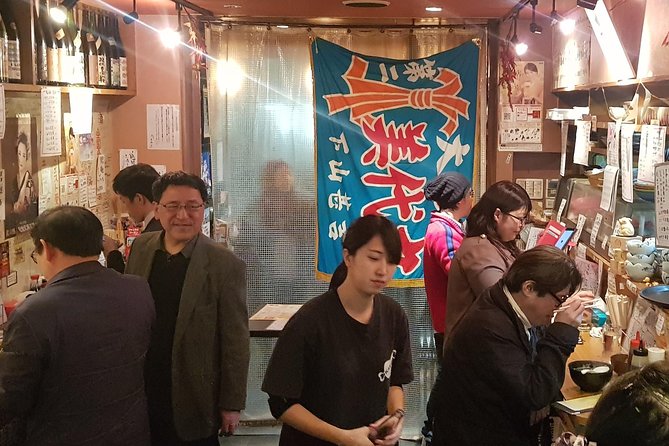
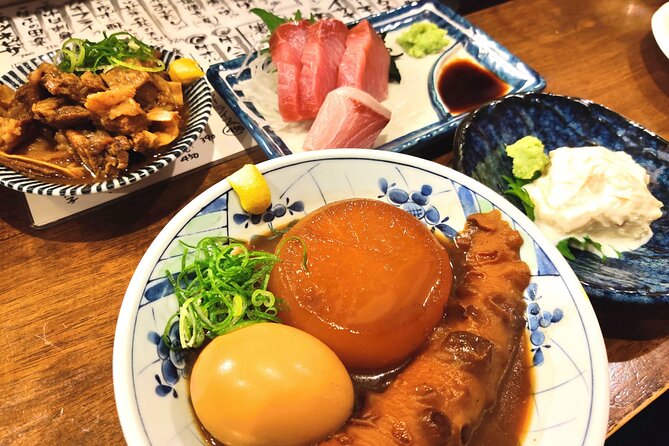
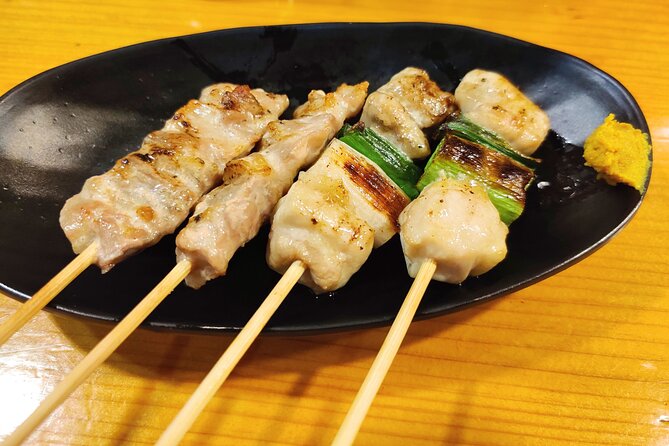
After the Gion walk, you move into the food portion around 7:30 pm. Expect a real local setup: small standing bars and compact restaurants, where the focus is on quick service, shared energy, and lots of small dishes.
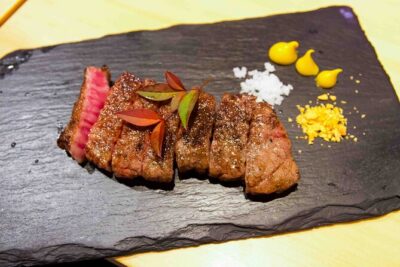
You’ll try a few regionally representative dishes, plus you’ll get a beer—or you can swap to shochu or sake if that’s your thing. The included drink isn’t just a checkbox; it’s part of the pacing. You taste something local while your guide continues tying the meal to the neighborhood culture.
Portions tend to be satisfying without turning the night into a food coma. That’s consistent with what many people appreciated: enough food to feel like dinner, but not so much you can’t enjoy the next walk.
Dietary needs and how to use this to your advantage
The tour notes that vegetarians are happily accommodated, and the overall setup is flexible enough to handle different restrictions when you communicate them. I’d still recommend you do two practical things before you arrive:
- clearly flag your needs at booking
- be ready with simple wording for what you avoid (for example, eggs or fish, if relevant)
Several guides have worked with gluten-free needs as well, so there’s a decent chance your meal will be handled without drama if you’re upfront.
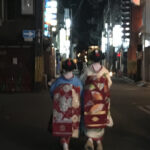
The west-side night walk: Pontocho, Kiyamachi, and Kawaramachi at 8:15
Around 8:15 pm, the tour shifts to the west side of the Kamogawa River and expands the atmosphere beyond Gion. This is where you get to feel two kinds of Kyoto nightlife side-by-side: classic lanes that protect tradition, and nearby areas that feel more current.
You’ll pass through or near:
- Pontocho: old, narrow lanes where Kyoto tradition still feels physically close
- Kiyamachi: lively streets that show how the city keeps the culture while changing the crowd
- Kawaramachi St. area: a more modern entertainment zone that keeps things moving
This is also the part where you’ll feel how compact Kyoto is. You can walk a short distance and go from quiet charm to active energy.
Photo tip, practical and honest: it can be hard to get clean night photos in narrow lanes without steady hands or good light. If that matters for you, embrace fewer, better shots rather than expecting a perfect slideshow. The streets are gorgeous, but they’re built for people, not cameras.
Restaurant number two near 9:00: more food, another drink, and a calmer end
No night tour is complete with just one restaurant stop, so you’ll visit another thoroughly vetted spot after your west-side wandering, around 9:00 pm.
This second stop is where the evening finishes strong. You’ll get more tasty food choices, plus the second included drink—again, either alcoholic or non-alcoholic, depending on what you prefer.
A detail worth planning for: small restaurants sometimes mean tight spacing. One review notes that seating at a bar can make group conversation harder. That’s not a dealbreaker—it’s more of a style mismatch. If you’re traveling with friends who want lots of back-and-forth talk, you might need to lean in and accept a more communal setup than you’d get at a larger table restaurant.
Also, one caution: some older Kyoto venues may allow smoking. The tour notes that this is uncommon, but it can happen occasionally. If you’re sensitive to smoke, it’s smart to mention it to your guide early in the evening so they can steer you to the most comfortable spot available.
Price and what you’re actually paying for at $119
At $119 per person, this tour isn’t a cheap snack. But it also isn’t overpriced when you look at what’s included.
You get:
- a 3-hour guided evening walk across two sides of the river
- dinner included (multiple dishes across stops)
- two included beverages (one at each restaurant)
- help navigating nightlife culture with an English-speaking guide
Where the value really shows is in the combination. Kyoto’s nightlife is not just “food.” It’s small venues, local etiquette, and a social map that you’d struggle to decode alone—especially if you don’t read Japanese. Paying for a guide here buys you time and confidence, not just meals.
The only ongoing budget item to expect is drinks beyond what’s included. Additional drinks can be purchased at the restaurants if you want more sake, shochu, or beer.
If you want to keep costs simple, plan to stick with the two included beverages and treat any extra ordering as a bonus, not a baseline.
Logistics that matter: walking load, group size, and meeting nerves
This tour runs about 3 hours and starts at 6:30 pm. You’ll finish at Kyoto-Kawaramachi Station. That end point is convenient because it drops you back into a major transit zone for the rest of your night.
Group size is small—maximum 6 travelers, with up to 8 only if the whole group is on the same reservation. Small groups are a big deal on a night walk, because:
- you move faster without splitting constantly
- you can ask questions without shouting
- the guide can adjust pacing and help with the flow through narrow streets
Meeting points can be a tiny headache anywhere in Kyoto, especially near popular attractions. One review specifically flagged that the meeting spot can look similar to other tours at the same location. My practical advice: arrive a few minutes early and look for your guide or the group’s identifying marker. If you’re unsure, ask staff at the theater area for help connecting with the correct tour group.
Who should book this Kyoto nighttime eats tour (and who should skip it)
This is a great match if you:
- want a first-night Kyoto experience that’s easy and organized
- like izakaya-style meals and the energy of local bars
- enjoy cultural stories with real-world context, not just dates and names
- want help finding places you wouldn’t pick on your own
It’s less perfect if you:
- hate walking on uneven, crowded city streets for a full evening block
- need large, quiet seating at every stop
- have strong sensitivity to smoke and expect modern restaurant ventilation everywhere
The minimum age is 13+. Alcohol is only relevant if you’re 20+, since Japan’s minimum drinking age applies. The tour includes both alcoholic and non-alcoholic drink options, so you can still have the full experience without drinking.
My call: should you book this tour?
I’d book this if you want your Kyoto night to feel guided, local, and efficient. The combo of Gion context plus two restaurant stops with included drinks hits a sweet spot: you get culture, you get food, and you don’t spend your evening hunting menus or figuring out where to go next.
If you’re on the fence, use this checklist before you decide:
- Do you want a planned food-and-walk evening instead of free-form wandering?
- Are you okay with standing-bar style spaces and tight restaurant seating?
- Will you enjoy learning the social side of Kyoto’s nightlife, including the geiko and hostess-club evolution?
If you said yes to those, you’ll likely have a smooth, memorable first night in Kyoto.
FAQ
What time does the tour start and how long is it?
The tour starts at 6:30 pm and runs for about 3 hours.
Where do we meet, and where does the tour end?
You meet at Minamiza Theater (2F west lobby) near Gion Shijo Station, and the tour ends at Kyoto-Kawaramachi Station.
What meals and drinks are included?
Dinner is included, along with two beverages. Each restaurant includes one included drink, and it can be alcoholic or non-alcoholic.
Are vegetarian options available?
Yes. Vegetarians are happily accommodated.
Is this tour suitable for teenagers?
Yes. All participants must be 13+ to participate.
What is the minimum drinking age in Japan?
The minimum drinking age in Japan is 20 years old.
How big is the group?
The tour has a maximum of 6 travelers. Groups up to 8 are welcome only if the entire group is the same reservation.