REVIEW · UJI
Uji Tea Ceremony and UNESCO Heritage Walking Tour
Book on Viator →Operated by TripGuru · Bookable on Viator
Uji has the calm you didn’t plan for. This small-group walking tour strings together Byodoin Temple (UNESCO) and a tea ceremony at Taihoan, plus bridges and shrines that help you see how Uji earned its reputation. I like that it’s timed well for a 3-hour visit, not a half-day you regret. I also love the focus on tea culture, not just taking photos.
One thing to consider: the schedule is compact, so if you want long stretches at every stop, you may feel the tea ceremony time is a bit short.
In This Review
- What makes this tour feel worth $70
- Key things I’d circle on your map
- Why Uji is the perfect target for a tea-and-temples tour
- Meeting at Uji Station: how the 9:45 start shapes your day
- Byodoin Temple: the UNESCO anchor and what to focus on
- Taihoan tea ceremony at the birthplace of green tea
- Suspension bridges and short scenic breaks you’ll actually enjoy
- Uji Shrine and Ujigami Shrine: quiet stops with meaning
- Uji Bridge finale: matcha, local treats, and a good place to continue
- Price and value: why $70 works when you compare the pieces
- Weather and pacing: the two things that can change your experience
- Who should book this Uji tour—and who might skip it
- Quick planning tips so your morning runs smoothly
- Should you book this Uji Tea Ceremony and UNESCO Heritage Walking Tour?
- FAQ
- How long is the Uji Tea Ceremony and UNESCO Heritage Walking Tour?
- Where do I meet, and where does the tour end?
- What is included in the ticket price?
- What group size should I expect?
- Does the tour run in bad weather?
- Can I cancel for a full refund?
What makes this tour feel worth $70
You get a real story, not just directions. The guide is English-speaking and keeps the group moving at a pace that works even when you’re walking with kids. Guides in past groups include Naoki, Katsuhiko, Maru, and Nobumasa Myake, and the common thread is clear, friendly explanations—especially around what you’re seeing at Byodoin and why tea matters here.
For the money, the value is strongest because Byodoin entrance fees and the tea ceremony time are built into the price. Still, you’ll likely spend extra on personal items and any snacks/drinks you choose to buy at the end.
Key things I’d circle on your map
- UNESCO Byodoin Temple and Phoenix Hall: plan for a full hour at the main highlight
- Taihoan tea ceremony: learn tea preparation in the birthplace of Japan’s green tea
- Small group (max 9): easier questions, less waiting, and calmer walking
- Scenic suspension bridges: short photo stops that break up the temple time
- Shrines with quiet atmosphere: Uji Shrine and Ujigami Shrine help the day feel grounded
- Uji Bridge finish: time to taste green tea and local treats after you’ve learned the story
You can also read our reviews of more walking tours in Uji
Why Uji is the perfect target for a tea-and-temples tour
Uji is one of those places where your day changes pace. You start with a UNESCO temple that takes itself seriously, then you shift to tea—something that’s equal parts ritual and everyday culture. The walking route matters here. Instead of doing one big landmark and leaving, you get multiple “proof points” for why Uji is tied to green tea, starting with Taihoan and continuing through the shrines and the bridge area.
Also, Uji is easy to fit into a trip because the meeting point is at Uji Station and the tour ends near Uji Bridge. That means you’re not stuck retracing steps or adding a bunch of extra transportation just to get back to where you want to be next.
Meeting at Uji Station: how the 9:45 start shapes your day
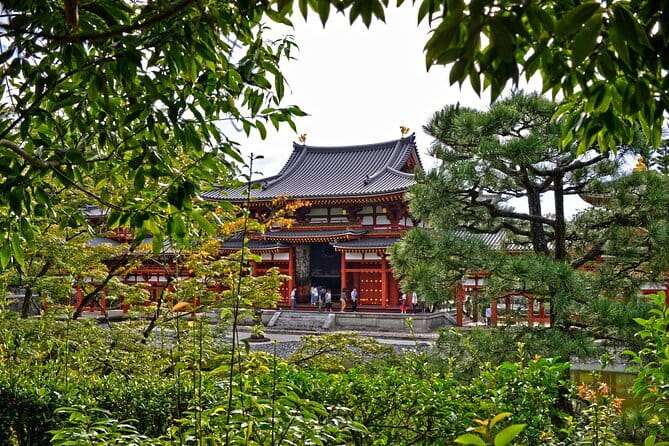
The tour begins at 9:45 am at Uji Station (宇治市宇治宇文字1716). Starting in the morning helps because you’re walking through temple and shrine areas when they’re calmer, and you’ll have daylight for bridge views.
The end point is Uji Bridge (Otsukata Uji, Kyoto 611-0021). This is a practical detail I really appreciate: you finish where the local food and tea atmosphere is, instead of ending far away from the action.
You’ll also appreciate the group size. With a maximum of 9 travelers, it’s not one of those tours where you lose the guide in the crowd. It also makes it easier to ask simple questions like where to look, what matters most, and how to read what you’re seeing.
Byodoin Temple: the UNESCO anchor and what to focus on
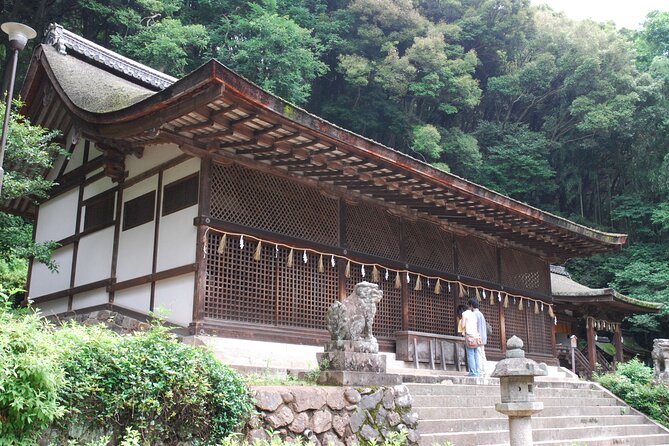
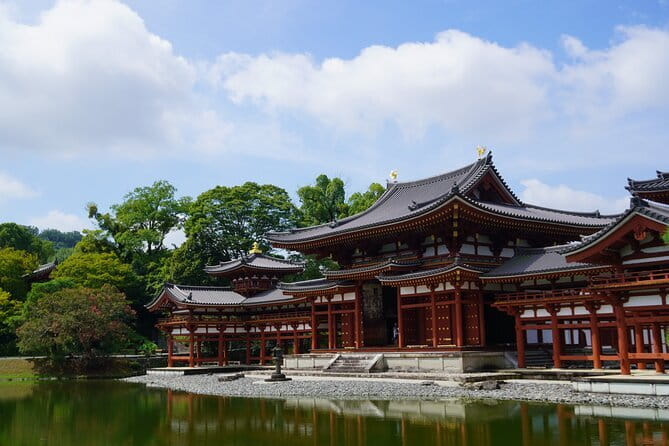
Your first major stop is Byodoin Temple, a UNESCO World Heritage Site. Plan on about one hour here, with the admission ticket included. The centerpiece you’ll want to keep your eyes on is the Phoenix Hall, and you’ll hear its story tied to centuries of Japanese temple culture.
Here’s the practical way to enjoy it: don’t treat it like a “quick temple photo” stop. Let the guide set context first—what the hall represents, why it’s architecturally important, and what visitors historically came to understand from it. Then you can look with intention. Once you know what you’re seeing, the details start making sense instead of feeling random.
There’s also something emotionally satisfying about starting the tour with a place like this. It gives your tea experience a larger frame. Tea in Uji isn’t just a product; it’s part of a landscape of religious practice and heritage, and Byodoin is the strongest early example.
Taihoan tea ceremony at the birthplace of green tea
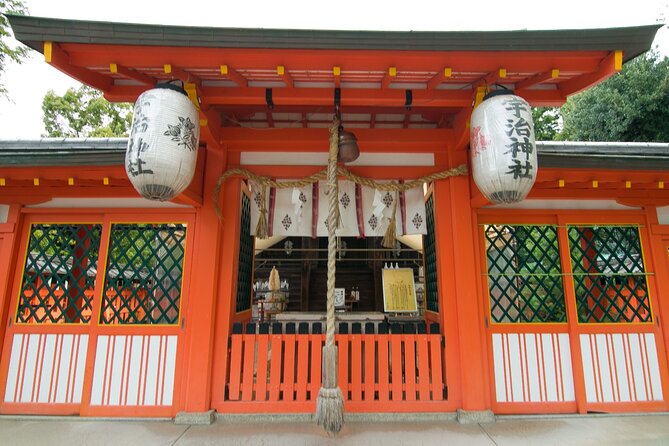
Next is Taihoan, where the tour includes a traditional tea ceremony. You’ll spend about 30 minutes for the ceremony itself, and the overall time slot for this stop is listed as up to 40 minutes—so expect around that range. Admission is included.
What I like about this part is that it’s not just sitting and watching. You learn the basics of tea preparation in the place tied to the origin story of Japan’s green tea. The guide’s explanations are where the ceremony turns into something you can remember, not just something you pass through.
If you’re the type who likes hands-on learning, this is one of the best uses of your time on the whole tour. Even if you’re new to tea rituals, you’ll come away with a clearer sense of what matters—how the steps connect to attention, and how the tea itself fits into Uji’s identity.
Possible drawback: if you’re hoping for a long, slow ceremony with tons of time to ask questions, the ceremony portion can feel brief. But for most people, it hits the sweet spot: enough structure to learn something real, without dragging your whole morning into late lunch.
You can also read our reviews of more historical tours in Uji
Suspension bridges and short scenic breaks you’ll actually enjoy
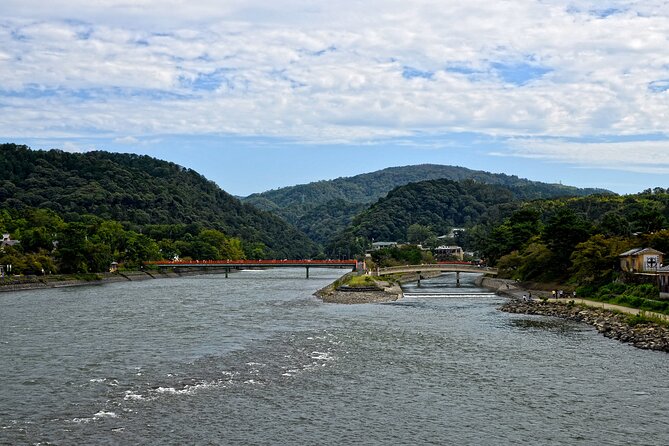
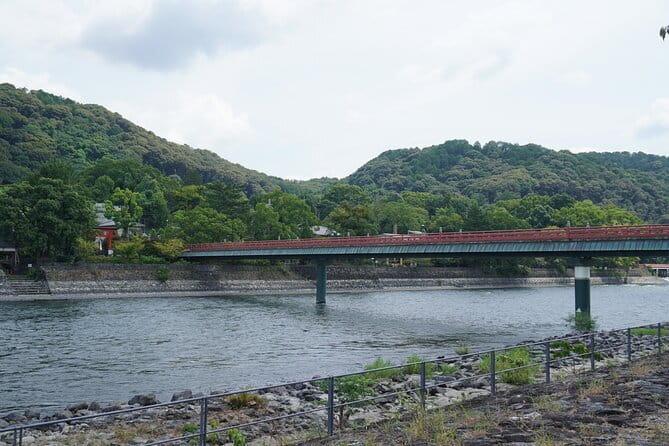
Between temples and shrines, you get a couple of short outdoor breaks, and that’s a smart design. Stop #3 is the Asagiri Bridge area, including the Tachibara and Asagiri Suspension Bridges. Expect about 15 minutes, and admission is free.
This is the “reset your brain” moment. You’ll get views, take photos, and stretch your legs without losing too much time. If you’ve ever been on a tour that only does heavy indoor sightseeing, you’ll appreciate that this one gives you a breather.
Pro tip: wear shoes you’re comfortable walking on for a few hours. The route is short compared to a full city hike, but you still want traction on paths around temples and along river-adjacent areas.
Uji Shrine and Ujigami Shrine: quiet stops with meaning
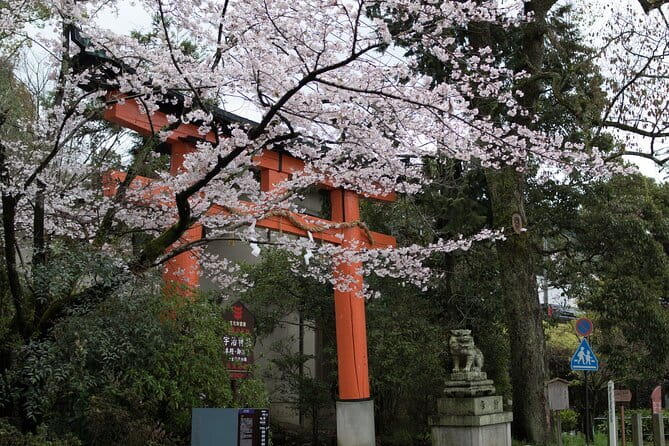
Then you head to the shrine area: Uji Shrine and Ujigami Shrine. This stop is about 20 minutes, also with admission listed as free.
Shrines can feel repetitive if you don’t know what you’re looking at, but this is where the guide helps. You’re not just walking through. You’re learning enough cultural context to make the atmosphere click—why these places matter and what the symbolism signals in everyday Japanese life.
These shrine stops are also a nice contrast after the ceremony. Tea is calm and inward; shrines are calm too, but in a different way. The day stops feeling like a checklist and starts feeling like a connected story.
Uji Bridge finale: matcha, local treats, and a good place to continue
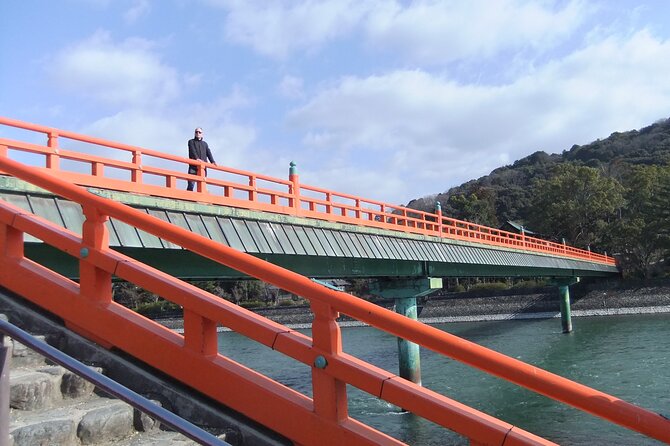
The tour ends at Uji Bridge after about 45 minutes in the area. Admission is listed as free for this part, and it’s your time to experience local culture and taste Uji’s green tea and local delicacies.
One practical note: the tasting component is described as part of the experience, but the exact food pricing isn’t spelled out. So bring a little cash/card buffer just in case you want to buy matcha sweets or a snack you can’t pass up.
This ending works well because you’re finishing in a place that naturally supports lingering. If you want to keep exploring after the tour, you’ll be in the right neighborhood to do it without a detour.
Price and value: why $70 works when you compare the pieces
At $70 per person, this is priced like a thoughtful half-day experience rather than a basic walking tour. Here’s what’s doing the heavy lifting for value:
- English-speaking guide: time with someone who can connect the dots matters on a temple-and-tea route
- Byodoin entrance included: you’re not paying separate site fees for the biggest stop
- Tea ceremony included: the ritual component isn’t an optional add-on
- Small group size (max 9): you’re paying for a calmer, more interactive pace
- Mobile ticket and a smooth start from a transit-friendly meeting point
Also, the tour is listed with group discounts. If you’re traveling with friends or family, that can lower the effective cost per person.
Where you should adjust expectations: food isn’t explicitly listed as included. So think of the tour as paying for guided access and cultural instruction, then let your personal taste decide what you eat at the finish.
Weather and pacing: the two things that can change your experience
This experience needs good weather. Since you’ll walk bridges and go outdoors between stops, rain or heavy wind can affect comfort. The good news: if it’s canceled for poor weather, you’re offered a different date or a full refund.
Pacing is the other factor. The total tour time is listed at about 3 hours, with multiple stops that together cover a lot of ground. That’s a win if you like structure. It can feel a little fast if you prefer to linger long at every site.
Who should book this Uji tour—and who might skip it
This is a great fit if you:
- want a tea-focused day with real context, not only sightseeing
- like small groups and clear explanations
- can handle a morning walk with several cultural stops
- want the UNESCO anchor (Byodoin) plus a calmer set of shrines and bridges
You might want a different option if you:
- dislike time-limited experiences and want a long, slow ceremony
- need long sit-down rest periods throughout the tour
- prefer a tour that ends with a single big attraction rather than multiple short ones
Quick planning tips so your morning runs smoothly
- Start time is 9:45 am. Build in a few minutes buffer at Uji Station.
- Wear comfortable walking shoes. You’ll move between temple, shrine, and bridge areas.
- Bring a small budget for snacks or matcha treats after the tour ends at Uji Bridge.
- If you’re sensitive to weather, check conditions the morning of. The tour is weather-dependent.
- Take advantage of the small group size: ask questions while you’re at Byodoin and Taihoan, where explanations matter most.
Should you book this Uji Tea Ceremony and UNESCO Heritage Walking Tour?
Yes—if you want a high-value morning that connects UNESCO heritage with tea culture in the same walkable story. The price makes sense because you’re paying for entrance to the main temple plus the tea ceremony, and the small group size makes the guide time feel useful rather than rushed.
If you’re the type who wants to spend an entire afternoon at a single site, you may find the schedule tight. But for most people, the mix of Byodoin Temple, Taihoan, scenic bridges, and shrine atmosphere is exactly the kind of day that gives you both photos and understanding.
FAQ
How long is the Uji Tea Ceremony and UNESCO Heritage Walking Tour?
It’s about 3 hours.
Where do I meet, and where does the tour end?
You meet at Uji Station (宇治市宇治宇文字1716) and the tour ends at Uji Bridge, Otsukata Uji (Kyoto 611-0021).
What is included in the ticket price?
The tour includes an English-speaking guide, the tea ceremony (listed as 30 minutes in the inclusions), and entrance fees to Byodoin Temple.
What group size should I expect?
The tour has a maximum of 9 travelers.
Does the tour run in bad weather?
This experience requires good weather. If it’s canceled due to poor weather, you’ll be offered a different date or a full refund.
Can I cancel for a full refund?
Yes. You can cancel up to 24 hours in advance of the experience for a full refund.