REVIEW · KYOTO
Invitation to Japanese Whisky: Exclusive TastingTime/Private
Book on GetYourGuide →Operated by Japan Exploration Tours JIN · Bookable on GetYourGuide
Japanese whisky tastes better with a teacher. This private 90-minute session pairs an English-speaking guide (Kenji on my visit) with tastings at a proper J-whiskey bar in Sanjo, plus a quick orientation to Kyoto and the area’s nightlife.
What I like most: you start with Suntory Kakū the way people actually drink it in Japan, making a highball with soda before moving into more “serious” pours. I also love the tasting method: you try whisky straight, then add two drops of water to open up sweeter, mellower flavors you might miss otherwise. One drawback to consider: at $245 per person, this is a tasting-first experience, and food beyond snacks plus transportation aren’t included.
In This Review
- Key Points Worth Booking
- Finding the Kneeling Man and Getting Oriented in Sanjo
- Your Welcome Highball: Starting with Suntory Kakū
- Inside the Bar: Why This Private Format Feels Luxurious
- The 12-Year Lineup: Yamazaki, Taketsuru, and Hibiki Notes
- The Two-Drop Water Trick (and Why It Works)
- Snacks and Pairing: Chocolate and Smoke with Your Glass
- Talking with Local Whiskey Fans and Getting Restaurant Help
- Price and Value: Is $245 Worth It?
- Quick Practicalities Before You Go
- Should You Book This Private Whisky Session?
- FAQ
- Where is the meeting point?
- How long is the experience?
- Is this a private tour?
- What’s included in the price?
- What whisky bottles are typically tasted?
- Is transportation or meals included?
- Are there age restrictions?
Key Points Worth Booking
- Start with the real Japan habit: a Suntory Kakū highball before you get technical.
- A step-by-step tasting technique: straight pours, then two drops of water to change aroma and palate.
- Straight, mellow, and sweeter in one session: you learn how flavor evolves as your glass changes.
- A lineup of famous bottles like Yamazaki 12-year and Taketsuru 12-year, plus other premium options.
- Local talk time: you may be able to chat with whiskey people in the bar.
- End with practical help: the guide can suggest restaurants that fit your tastes.
Finding the Kneeling Man and Getting Oriented in Sanjo
Your experience begins at street level, at the kneeling man statue at the southeast corner of Sanjo Ohashi intersection. From the east end of Sanjo Ohashi Bridge, cross and look for the statue. If you’re using the subway, it’s often quicker to come up to street level first and then navigate to the spot.
This is one of those small choices that matters. When a tour starts with a clear meeting landmark, you lose less time asking strangers for directions, and you arrive more relaxed—especially important when the session is only 90 minutes total. You’ll also want comfortable shoes, because you’re meeting in an active neighborhood where you’ll likely walk a bit.
Before you head to the bar, your guide typically explains general context about Kyoto and what Sanjo is known for—an area packed with evening energy and plenty of places to eat and drink. It’s not a lecture. Think of it as getting your bearings so you can enjoy the tasting without feeling lost in the setting.
You can also read our reviews of more private tours in Kyoto

Your Welcome Highball: Starting with Suntory Kakū
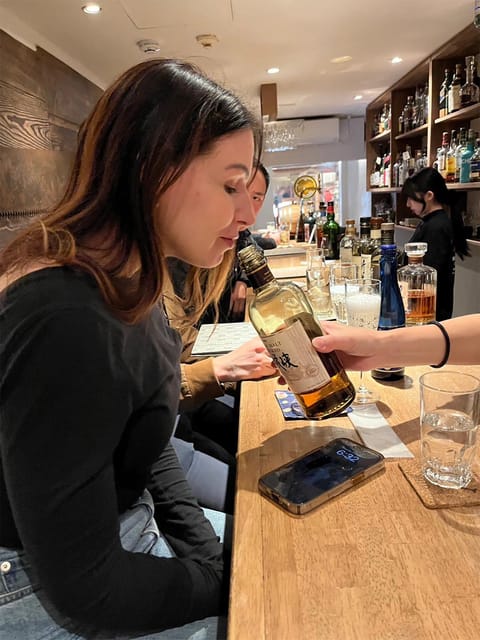
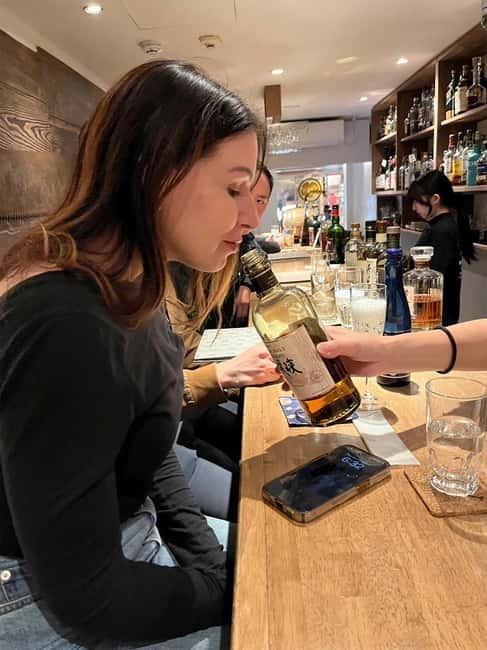
Most Japanese whisky tastings start with the fancy stuff. This one starts with the daily reality: Suntory Kakū—Japan’s go-to, representative bottle for what many people pour at home and at bars.
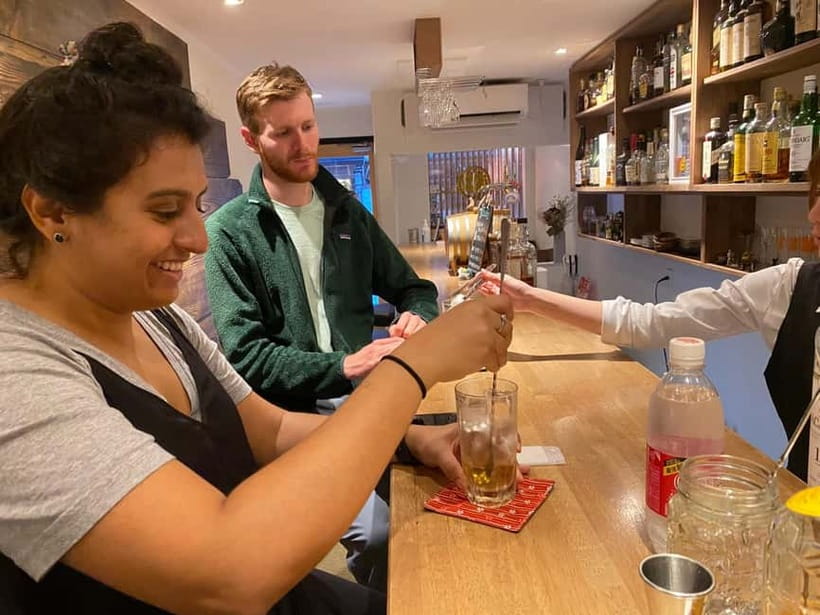
You’ll begin by trying it, then you’ll have a chance to make a highball by mixing whiskey with soda. If you’ve only ever tasted whisky neat, this part often changes your perspective fast. Highballs are not a “lighter” version of whisky. They’re a different flavor experience—soda lifts aroma, cools the spirit, and turns the sip into something crisp and easy to repeat.
You also get to watch how the guide frames the tasting. They’ll set you up to notice things in three phases: first impressions in the glass, what hits on the palate, and how the drink feels as it goes down. That last part matters more than people think—Japanese whisky culture often talks about the finish and throat feel as part of the enjoyment, not just the sweetness.
Inside the Bar: Why This Private Format Feels Luxurious
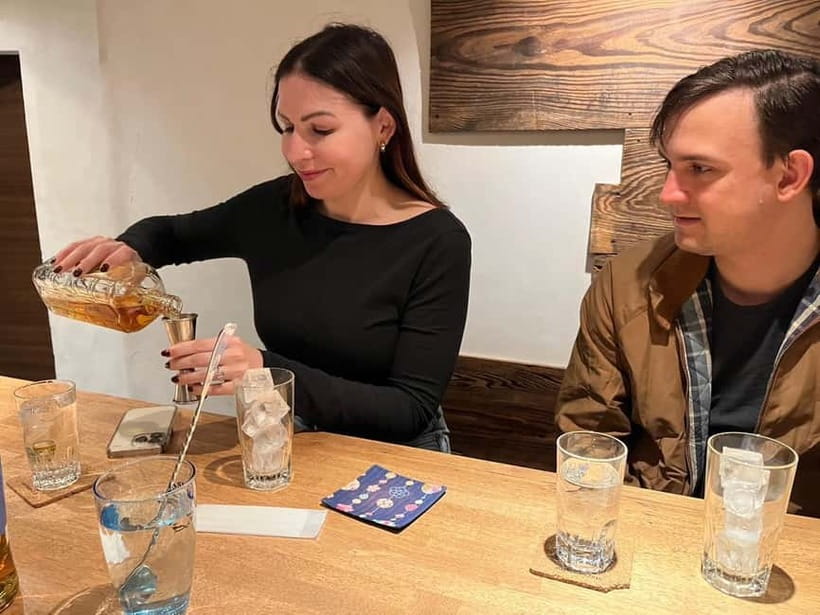
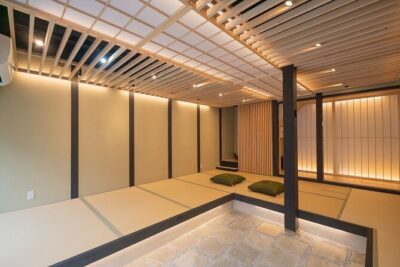
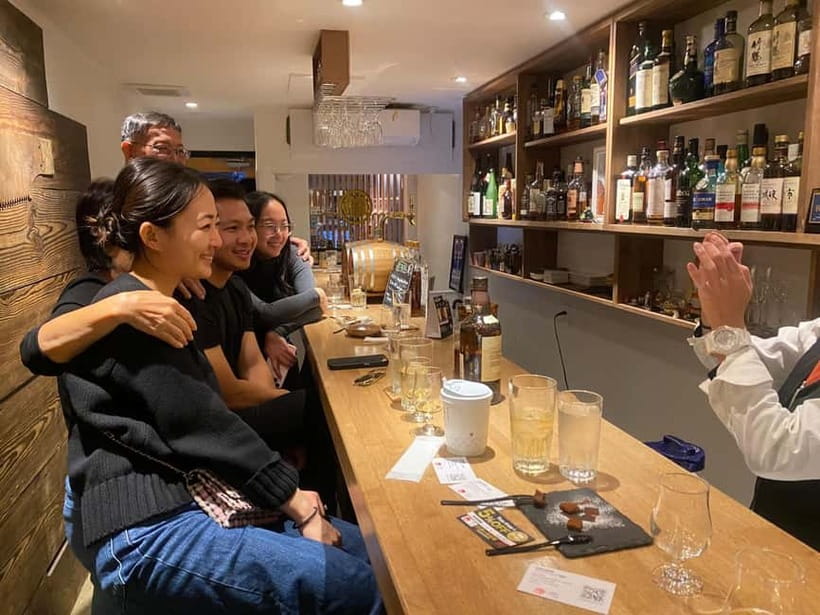
You’re taken to a dedicated whisky bar that offers a range of Japanese whisky, including bottles like vintage options. Even if you don’t buy anything, seeing that variety matters because it teaches you what’s possible beyond the “standard” names you’ve seen abroad.
The tour runs as a private group. In practical terms, that means you’re not waiting for everyone to catch up while the guide repeats instructions. You can ask the stuff you actually want to know: how to taste by aroma, what to pay attention to in the sip, and how to compare bottles without turning it into a chemistry exam.
There’s also a social angle. The guide may help open the door to conversation with local whiskey fans inside the bar. That’s where you learn small, real-world details you won’t get from a brochure—how people decide what to drink, how they order, and what they think is worth revisiting later.
The 12-Year Lineup: Yamazaki, Taketsuru, and Hibiki Notes
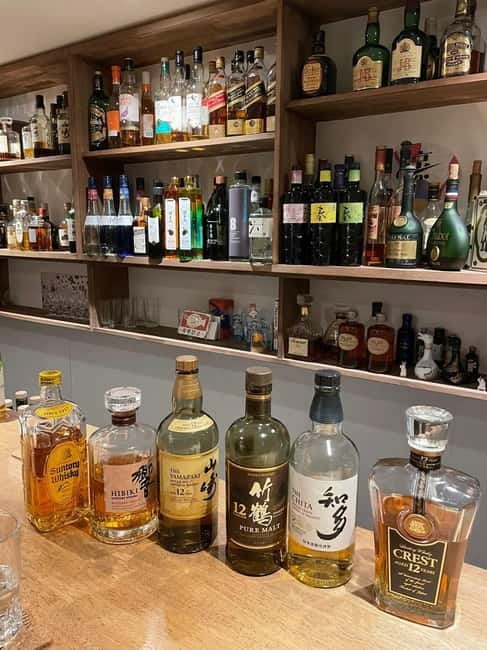
After the welcome pour, the session moves into Japanese premiere whisky tastings. The usual lineup includes famous bottles such as:
- Yamazaki 12-year
- Taketsuru 12-year
- Hibiki Blender’s Choice
- Suntory Royal 12-year
- plus other premium selections your guide presents during the tasting
The big value here isn’t just the brand names. It’s the order and the guidance. Famous bottles can still taste “similar” if you’re tasting randomly. With a guided approach, you learn how to distinguish categories: malt-forward character, blended complexity, the way sweetness shows up, and how the finish differs bottle to bottle.
Also, the bar’s service includes bottles that are often rare and expensive. You might not see these on a typical list overseas, and that changes the whole point of the tasting. You’re not only sampling what’s famous—you’re learning what people chase when they’re serious.
If you’re a whisky lover, this is a chance to stretch your palate. If you’re a beginner, it’s a chance to understand what people mean when they talk about notes, balance, and smoothness. Either way, you’re tasting with context instead of guessing.
The Two-Drop Water Trick (and Why It Works)
Here’s the method that turns the session from “drinking” into real learning. You’ll taste whisky straight first, then you’ll add two drops of water to the same whisky.
That tiny change can do a lot. Water can shift the alcohol intensity, soften sharp edges, and help aroma compounds show themselves more clearly. On the palate, the guide explains that the flavor can become sweeter and more mellow, which means you effectively get two tastings from one pour—without needing a dozen different glasses.
This is one of those tips that you’ll carry home. Next time you buy a bottle, you’ll know how to do a simple experiment:
- Try it straight once for strength and initial character
- Add a small amount of water and watch how the glass changes
And no, you don’t need to overthink it. The tour is built around small, repeatable steps that make your senses do the work.




Snacks and Pairing: Chocolate and Smoke with Your Glass
The included snacks aren’t an afterthought. They’re designed to pair with Japanese whisky flavors, so you can connect taste with the drink’s mood.
You might see pairings such as:
- Fresh chocolate served with Yamazaki whisky
- a smoked snack designed to match whisky character
Pairing is where many tastings fall short—people get hungry and forget the point. Here, snacks help you stay present without turning the session into a meal. You’ll get to compare how a sweet bite interacts with the whisky’s sweetness and how smoke can echo or sharpen certain notes.
Also, this is helpful if you don’t usually snack when you drink. The guide’s food pairing cues can teach you what kind of flavors work with different whisky styles, which makes ordering in a Japanese bar feel less random.
Talking with Local Whiskey Fans and Getting Restaurant Help
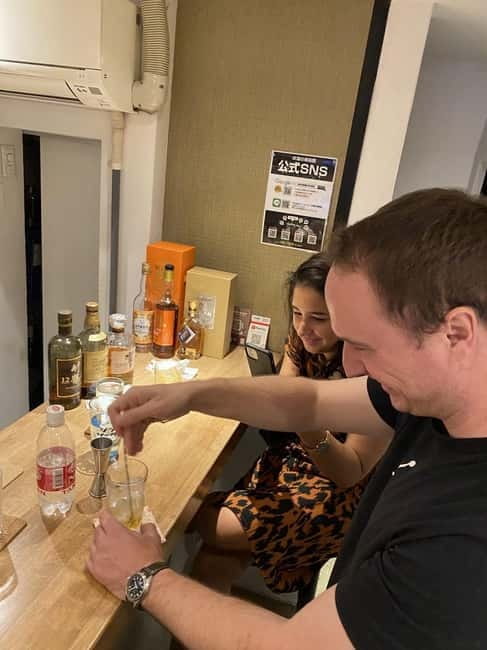
One of the underrated benefits of this format is the human part. If the bar has local whiskey fans around, you may get the chance to communicate with them. That’s where you’ll hear practical opinions—what people actually order, what they recommend to friends, and what bottles they consider worth the money.
Then, at the end, your guide shifts from tasting mode to “what’s next?” mode. They’ll introduce good restaurants based on your preference. That’s a nice close, because it turns a tasting into a full-night plan: drink well, then eat well nearby without wasting time searching.
If you’re traveling solo or you just don’t know where to start for dinner, that ending guidance can be worth a lot. Good restaurants in Kyoto can be amazing, but you often need the right neighborhood, the right vibe, and the right timing.
Price and Value: Is $245 Worth It?
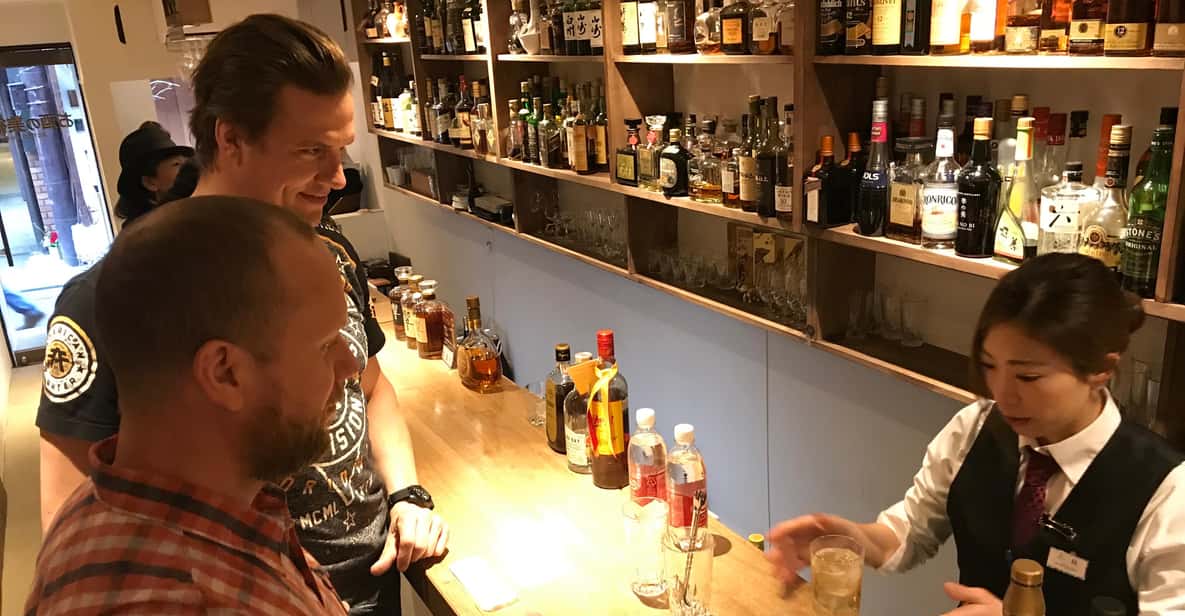
At $245 per person for 90 minutes, this isn’t a cheap “one drink and leave” stop. It’s more like a guided course in how Japanese whisky is understood and served.
So what are you paying for?
- A private, English-speaking guide who walks you through tasting steps
- A welcome drink (Suntory Kakū highball)
- Whisky tastings using a lineup that includes Yamazaki 12-year, Taketsuru 12-year, Hibiki Blender’s Choice, and Suntory Royal 12-year, plus additional premium selections
- Snacks paired for whisky
- the chance to taste rare, expensive bottles that aren’t always easy to access
The value angle is simple: if you care about whisky, you’re paying for focused guidance and bottle variety in a setting built for tasting. If you’re not a whisky person yet, you might find this pricier than you expect. But even then, the highball start and the two-drop water lesson can convert curiosity into understanding fast.
One more point: food and meals aren’t included, and transportation to and from the meeting point is on you. That doesn’t make it bad value, but it affects planning. If you want this to be your whole evening, you’ll need to budget for dinner after the tasting.
Quick Practicalities Before You Go
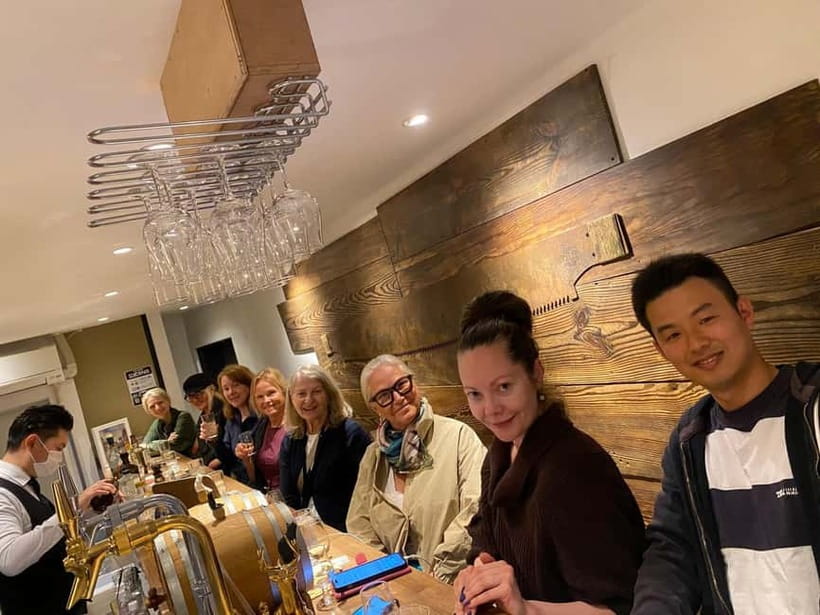
A few practical notes will help you enjoy the session without friction.
Bring a valid ID card. A copy is accepted. Wear comfortable shoes, since you’re meeting at a street landmark and likely walking within the area.
Smoking is not allowed. And while the details of the ride aren’t spelled out, there’s a clear rule: no alcoholic drinks in the vehicle.
Age rules are important in Japan. People under 20 can’t drink alcohol, but anyone can enter bars when accompanied by an adult. If you’re booking for someone aged 4 to 19, the information provided says it includes 3,000 JPY with one soft drink and snack.
Also, this experience isn’t suitable for pregnant women or people with mobility impairments.
Should You Book This Private Whisky Session?
Book it if you want more than a casual drink. This is ideal if you:
- want to learn how to taste whisky step by step, not just sample bottles
- care about Japanese whisky specifically and like famous names like Yamazaki 12-year and Taketsuru 12-year
- prefer a private feel with an English guide and time to ask questions
- want a guided evening that ends with real restaurant suggestions
Skip it (or think hard) if you want a full meal included or you’re traveling on a tight budget. Since dinner and transport aren’t included, you’ll need to plan the rest of your evening.
If you do book, get there a little early, arrive curious, and lean into the two-drop water lesson. That’s the kind of takeaway that keeps paying off long after the glass is empty.
FAQ
Where is the meeting point?
You meet at the kneeling man statue at the southeast corner of Sanjo Ohashi intersection. From the east end of Sanjo Ohashi Bridge, cross the street and find the statue.
How long is the experience?
The tour lasts 90 minutes.
Is this a private tour?
Yes. It’s listed as a private group with a live English-speaking guide.
What’s included in the price?
It includes whisky tasting, a welcome drink (Suntory Kakū highball), and snacks that pair well with Japanese whisky.
What whisky bottles are typically tasted?
The normal lineup includes Yamazaki 12-year, Taketsuru 12-year, Hibiki Blender’s Choice, and Suntory Royal 12-year, with other premium pours possible as presented by the bar.
Is transportation or meals included?
No. Food and meals aren’t included, and transportation to and from the meeting point is not included.
Are there age restrictions?
People under 20 years old are not allowed to drink alcohol in Japan, but anyone can enter bars when accompanied by an adult. For ages 4 to 19, the information provided says 3,000 JPY includes one soft drink and snack.