REVIEW · KYOTO
Discover Kyoto at Night by Bike
Book on Viator →Operated by Jaime · Bookable on Viator
Lanterns make Kyoto rideable. This evening bike tour threads you through some of the city’s best-known night sights, with small group size and entrance fees included so you’re focused on seeing, not paperwork. It runs about 3 hours 45 minutes and ends back where you start, which makes the whole plan feel easy.
I also like that the route is built around Kyoto after sunset, when temples, shrines, and historic streets look softer and more intimate. One consideration: you’ll likely spend a meaningful chunk of time stopped and listening, so it’s not a pedal-every-minute kind of ride.
In This Review
- Key takeaways before you ride
- Why Kyoto at night works so well on a bike
- Price and what you actually get for $80
- Group size, guide style, and how to get the best experience
- Stop 1: Fushimi Inari-taisha Shrine and its torii tunnel at night
- Stop 2: Miyakawa-cho dori for lantern glow along the river
- Stop 3: Gion at night and Hanamikoji Street’s old-town feel
- Stop 4: Yasui-Konpiragu and shrine vibes that feel unusual
- Stop 5: Hōkan-ji Temple (Yasaka Pagoda) and the photo-friendly streets
- Stop 6: Ninenzaka for night scenery and classic slope photos
- Finishing in Higashiyama’s famous park with cherry trees, ponds, and bridges
- Bike comfort and the skill level reality check
- Where to meet and how the tour ends
- Should you book Kyoto at Night by Bike?
- FAQ
- How long is the Kyoto at Night by Bike tour?
- What time does the tour start, and where do I meet?
- How much does it cost, and what’s included?
- Do I need to buy tickets at the stops?
- Is this tour suitable for beginners?
- How many people are in the group?
- What if the weather is bad or I need to cancel?
Key takeaways before you ride
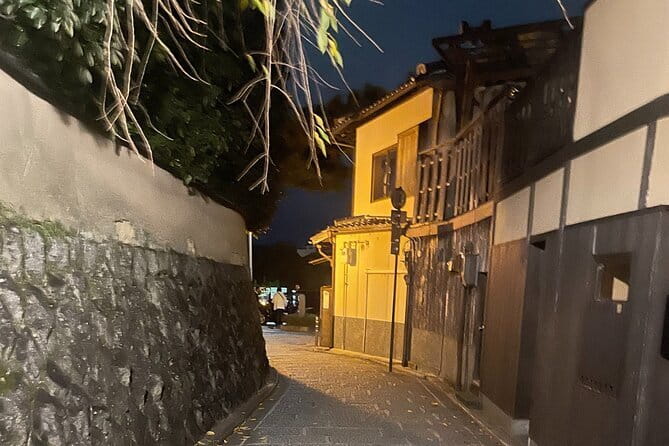
- Night-first route: Fushimi Inari, Gion lantern lanes, Yasaka Pagoda, and Higashiyama streets in one stretch
- Bike and water included: You don’t have to worry about rental logistics during the tour
- Up-front sights, mostly free: Several key stops are free, and the tour covers the entrances that do cost
- Max 9 riders: Easier to stay together and actually hear the guide
- Guide pacing matters: Some guests want more riding time than talking time
Why Kyoto at night works so well on a bike
Kyoto at night has a different rhythm. Daytime crowds can flatten the city into a checklist. After sunset, you get cleaner lines of sight, quieter alleys, and lantern glow that makes stone steps and wooden façades feel lived-in rather than staged.
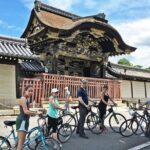
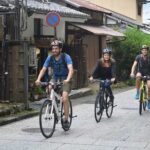
A bike makes a big difference because you can cover ground without losing the mood. You’re not rushing from one bus stop to another. Instead, you glide through areas like Gion and the route near Yasaka Pagoda, where the atmosphere is the point. This also helps you see the connections: how shrines, river views, and old-town lanes sit close enough to feel like one flowing neighborhood.
The small-group format also helps. With up to 9 people, the tour usually stays manageable when roads narrow or you pause for photos.
You can also read our reviews of more cycling tours in Kyoto
Price and what you actually get for $80
At $80 per person, this tour looks simple on paper, but the details matter. Your money covers the big ticket items you’d otherwise pay for separately: entrance fees plus the bicycle and bottled water.
That’s part of the value. If you were building this day on your own, you’d still spend time buying or scanning tickets and trying to coordinate bike rental and safe meeting points. Here, the tour handles the basics so your attention stays on the route and the pacing.
What’s not included is also clear: hotel transportation and guide gratuities. So you’ll want to plan how you’ll reach the start point on your own.
Group size, guide style, and how to get the best experience
This is a small tour (maximum 9 riders) with bilingual guides. That’s a great setup for Kyoto, where details can easily get lost if your guide only gives a rushed outline.
That said, one pattern shows up in feedback: some guests love the stories and context, while others felt there was more talking than riding. The route is full of short stops, so even when you’re on the move, you’ll be regrouping often. If you’re the type who wants constant motion, you may feel the pauses more strongly.
A positive note from reviews: at least one guide named Juan is described as safety-focused, especially for riders who might be less confident. If that’s you, take that as a sign this tour is at its best when you’re ready to listen, follow instructions, and ride with care.
Stop 1: Fushimi Inari-taisha Shrine and its torii tunnel at night
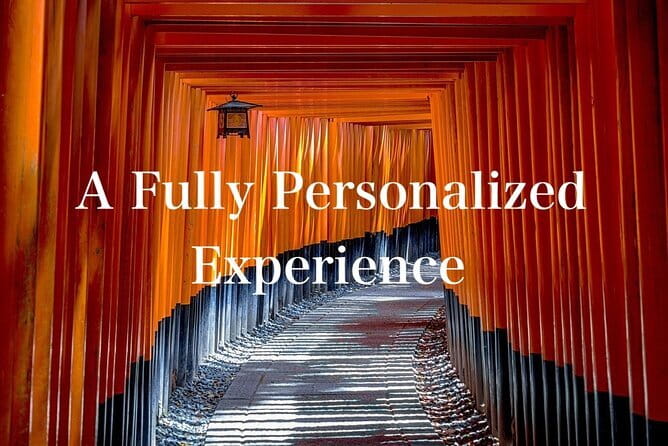
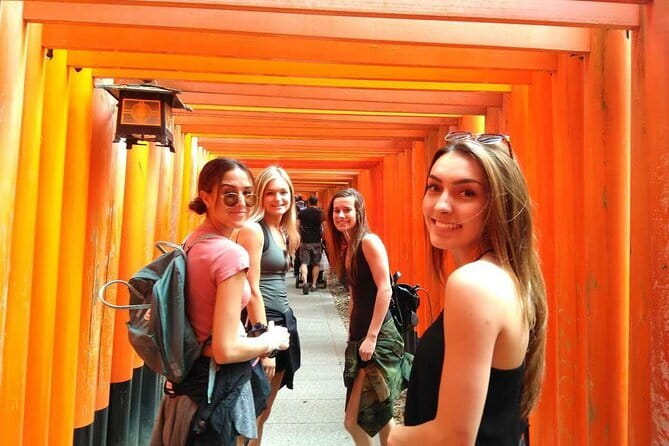
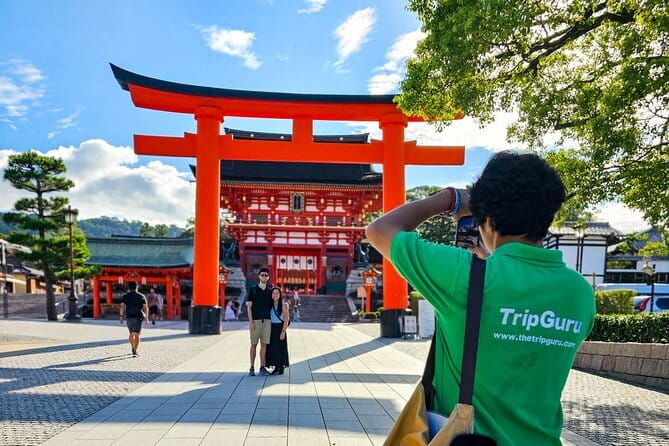
Fushimi Inari-taisha is Kyoto’s most famous shrine for a reason: it’s built around thousands of torii gates. Even when you’re not climbing a lot, the effect is immediate. The gates create a sense of depth and motion, like you’re walking through a corridor of orange shadows.
On this tour, you get about 40 minutes at the shrine area, and the entrance is free. That timing is useful for two reasons:
- you can take photos without feeling like you’re fighting a wall of people forever
- you have enough time to notice details beyond the obvious gate lines
Night adds another layer. Lantern light and darker sky tones make the torii feel less like a daytime postcard and more like a moving ritual space. Also, because this is a major landmark, expect plenty of foot traffic near the entrances—your guide’s job is partly to keep the bike flow safe around pedestrians.
Stop 2: Miyakawa-cho dori for lantern glow along the river
Just south of Gion, Miyakawa-cho dori is a short stop that can still feel memorable. The area is known for its lantern-lit look at night, with a street vibe that feels calmer than the most famous main thoroughfares.
The tour gives you about 15 minutes here, and admission is free. That makes it a good breathing point after Fushimi Inari. Instead of another big-ticket cultural stop, this is more of a mood stop—watch for the way lighting changes the street textures and the spacing between buildings.
If you like photo opportunities, this is one of the places where you’ll likely want to slow down for a few frames. The street’s location near the Kamogawa River (running parallel in this area) also gives the night a reflective feel.
You can also read our reviews of more evening experiences in Kyoto

Stop 3: Gion at night and Hanamikoji Street’s old-town feel
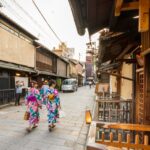
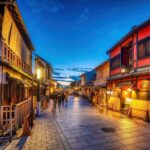
Gion at night is the reason many people come to Kyoto in the first place. The iconic Hanamikoji street is lined with historic ochaya (tea houses), and when the evening air cools down, the area feels more like a quiet stage set than a loud attraction.
You’ll have about 10 minutes for this stop, and the tour lists an admission ticket included for the Gion stop. Even if you’re mostly there for atmosphere, the timing works because you can catch the glow without burning half a day.
Two practical notes help here:
- Old streets can be uneven or narrow, so keep your bike handling smooth
- If you want photos, plan for standing space first, then take your shots
This is also a place where the “Kyoto after dark” experience can feel both traditional and cinematic. Just remember: it’s also a popular neighborhood, so follow the guide’s pacing and stay aware of pedestrians.
Stop 4: Yasui-Konpiragu and shrine vibes that feel unusual
Next up is Yasui-Konpiragu. This is one of those Kyoto stops that doesn’t rely only on scenery. It’s a shrine visit rooted in a specific kind of personal wish-making.
The tour description points out that people come seeking to cut ties with bad relationships or habits and form the resolve to move forward. That gives the stop a different flavor than a purely sightseeing temple. Even if you don’t speak Japanese, shrine practices often translate through the intention: visitors are there with something on their mind.
The stop is about 10 minutes and admission is free. Short shrine visits work well on a bike tour because you get the meaning without losing momentum.
Stop 5: Hōkan-ji Temple (Yasaka Pagoda) and the photo-friendly streets
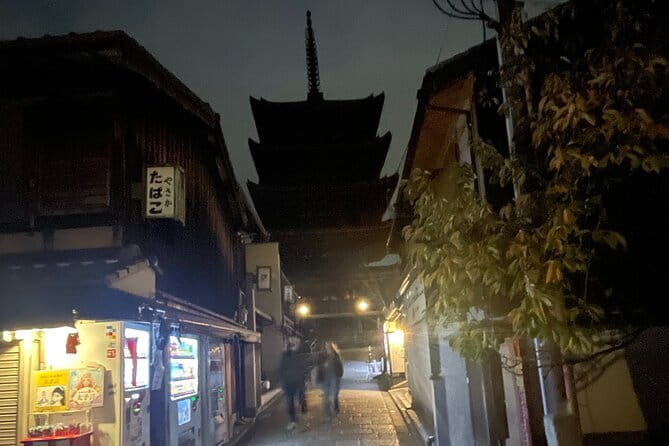
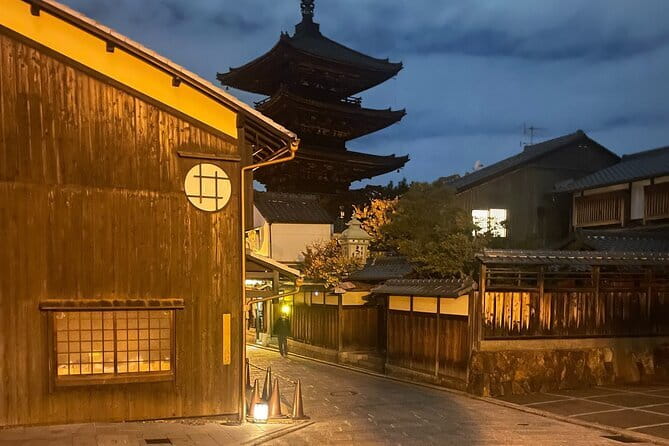
If you’ve seen the Yasaka Pagoda in Kyoto photos, you’ll recognize the setting fast. The pagoda sits around narrow cobblestoned streets, with traditional Machiya townhouses lining the area.
Here you get about 15 minutes, and admission is free. This is a classic “looks good from every angle” spot. Night helps because the streets feel less harsh than daytime, and the pagoda’s silhouette against the dark sky reads cleanly.
One drawback to watch for: photo spots can bottleneck. Plan to pause in ways that don’t block others, and keep your bike positioned so you’re not stepping into traffic while you’re aiming a camera.
The pagoda area is also a reminder why bikes are a good fit for this specific tour. You can reach the temple area without making it a full walking-only detour.
Stop 6: Ninenzaka for night scenery and classic slope photos
Ninenzaka is known for traditional street character and great scenery, especially at night when the slope and building lines feel more dramatic. The tour allots about 15 minutes here and notes it’s one of the spots for the best night views.
This is the kind of stop where you’ll see why Kyoto’s old-town neighborhoods feel distinct from modern streets. Slopes like this are part of the city’s built identity, not just a backdrop.
A helpful strategy for this stop: decide quickly what you want most—wide street shots or tighter details. You’ll be moving with the group, so lingering without a plan can eat into your best angles.
Also, keep in mind this tour works best when your riding is steady. If your bike control is shaky, you’ll feel it more on sloped or curb-heavy areas.
Finishing in Higashiyama’s famous park with cherry trees, ponds, and bridges
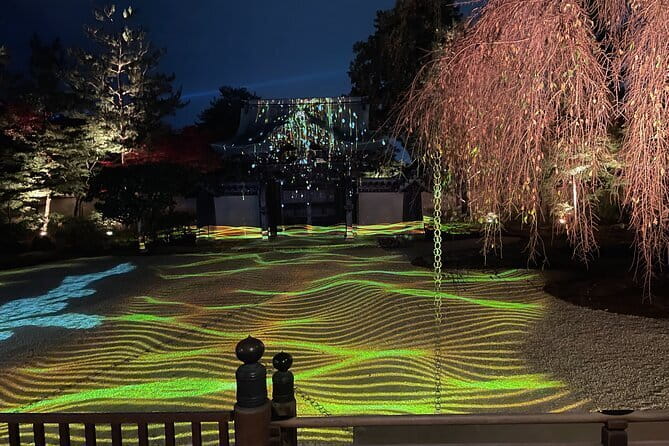
The final stop is a famous park in Higashiyama, described with cherry trees, ponds, and wooden bridges. That combination is very Kyoto: a small landscape of calm textures, water reflections, and gentle walking paths.
The tour time at this stop isn’t listed clearly in the material you provided, but it’s positioned as the grand calm finish. After shrine and lantern streets, a park ending can help the whole experience feel balanced—less “next stop, next stop,” more “slow down and breathe.”
Even if you’re not a cherry-season traveler, the pond-and-bridge vibe is worth paying attention to. In low light, those wooden bridge lines and water surfaces often look especially good.
Bike comfort and the skill level reality check
This tour lists a moderate physical fitness level, but riding skill matters. One review is very direct: make sure you’re a fairly proficient bike rider. It’s not for first-timers who want to learn balancing techniques mid-tour.
That’s good advice. Kyoto’s streets can be uneven, and you’re riding at dusk into darker conditions. Add tight lanes, pedestrians, and quick regrouping, and you want confidence before you arrive.
If you’re unsure, treat this as your gauge:
- Can you ride smoothly while stopping and starting without wobbling?
- Are you comfortable in crowded areas where you must move slowly?
- Do you follow instructions quickly and keep your attention on the guide?
If your answers are yes, you’ll likely enjoy the pace and flow. If not, you might feel stressed, and stress kills the fun.
Where to meet and how the tour ends
You start at 5:00 pm at a 7-Eleven at 44-1 Higashikujō Kamitonodachō, Minami Ward, Kyoto. The tour ends back at the meeting point, which is helpful for planning dinner nearby without guessing how you’ll get back.
It’s also described as near public transportation, which matters if you’re coming from Kyoto Station or want a simple last-mile plan.
The tour uses a mobile ticket. Bring your phone with the ticket ready at check-in time.
Should you book Kyoto at Night by Bike?
Book it if you want a night-focused Kyoto experience with a clear route and less logistics work. The price makes more sense because bikes, water, and entrance fees are included. And the combination of Fushimi Inari’s torii, Gion’s lantern lanes, and the Yasaka Pagoda area gives you big “Kyoto after dark” payoff.
Skip it or think twice if you’re looking for nonstop riding. The stop-and-listen format can feel heavy if you want maximum pedal time, and the bike ride is best for someone who’s already comfortable riding with traffic and crowd conditions.
If you want stories plus scenery and you’re a confident rider, this one can be a standout evening in Kyoto.
FAQ
How long is the Kyoto at Night by Bike tour?
The tour runs for about 3 hours 45 minutes.
What time does the tour start, and where do I meet?
It starts at 5:00 pm. The meeting point is 7-Eleven, 44-1 Higashikujō Kamitonodachō, Minami Ward, Kyoto, 601-8002, Japan. The tour ends back at the meeting point.
How much does it cost, and what’s included?
It costs $80. Included are all entrance fees, use of the bicycle, and bottled water. Guide gratuities are not included.
Do I need to buy tickets at the stops?
No. Entrance fees are included in the tour price.
Is this tour suitable for beginners?
The tour lists a moderate physical fitness level, and you should be a fairly proficient bike rider. It’s not recommended for first-time bike riders based on participant feedback.
How many people are in the group?
The maximum group size is 9 travelers.
What if the weather is bad or I need to cancel?
This experience requires good weather. If it’s canceled due to poor weather, you’ll be offered a different date or a full refund. Cancellation is free up to 24 hours in advance for a full refund.