REVIEW · KYOTO
Dance and Game with Maiko
Book on GetYourGuide →Operated by B.B.Advisors Inc. AN KYOTO · Bookable on GetYourGuide
Kyoto can feel packed and slow at the same time. This short show-and-interaction format gives you an up-close maiko encounter without eating half your day.
I especially like the chance to watch two elegant dance performances in a small setting, then switch gears into a playful traditional game with the Maiko right there. And yes, you’ll get a photo up close plus a Senjafuda lucky charm to take home.
One thing to plan around: this isn’t a classic ochaya-style tea-house experience. It’s in a building, there are stairs (no elevator), and the timing can be tighter than advertised.
In This Review
- Key things to know before you go
- A 45-minute maiko moment near Gojo Station
- What you’ll see: two close-up dances and the mood shifts
- The game with Maiko: simple rules, real energy
- Photo time and the Senjafuda lucky charm
- The flow of the program: what happens in order
- Price and value: is $28 a fair deal in Kyoto?
- Logistics you can’t ignore: stairs, timing, and language
- Who this is best for (and who should skip)
- Should you book Dance and Game with Maiko?
- FAQ
- Where is the meeting point?
- How long is Dance and Game with Maiko?
- How much does it cost?
- What’s included in the price?
- Is there an extra option, like tea ceremony?
- Do I need to speak Japanese?
- What if I arrive late?
- Is the venue an ochaya or traditional Japanese house?
- Are there stairs?
- Are children allowed?
Key things to know before you go
- Two dances, not one: you get a double performance in a short window.
- Photo time is real and close: you’re not stuck across the room.
- Game with the Maiko: simple rules, lots of cheering, and audience participation if you want it.
- Senjafuda lucky charm included: a small keepsake tied to the experience.
- Stairs, not an elevator: the venue is practical, not polished luxury.
- Maiko may turn into Geiko: depending on the situation, the performer could be Geiko instead.
A 45-minute maiko moment near Gojo Station
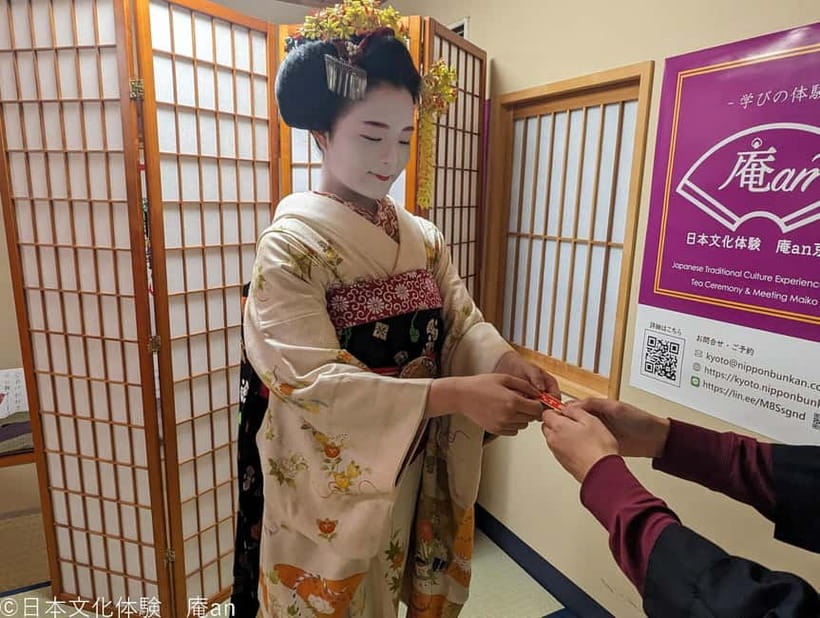
If your Kyoto schedule is tight, this is one of those experiences that fits like a good refill: quick, satisfying, and surprisingly memorable. You’ll be starting near Subway Karasuma Line Gojo Station—just a 1-minute walk from Exit 1—in an area that’s easy to reach from many central neighborhoods.
The program runs roughly 45 minutes, and it follows a simple flow: dance, game, then photo and charm. That structure matters because it keeps the experience focused. You’re not signing up for a long cultural lecture, and you’re not waiting around for an hour before anything happens.
The location is also convenient for logistics. Your starting point faces Gojo-dori, so you’re not hunting for a hidden doorway. Still, do note the venue setup: it’s not an ochaya (traditional tea-house) setting. It’s in a building, and the atmosphere is relaxed, with friendly staff.
You can also read our reviews of more tours and experiences in Kyoto.



What you’ll see: two close-up dances and the mood shifts
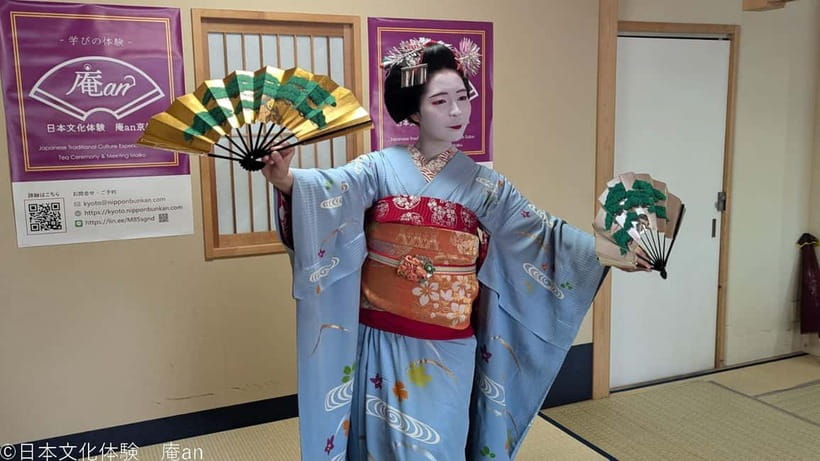
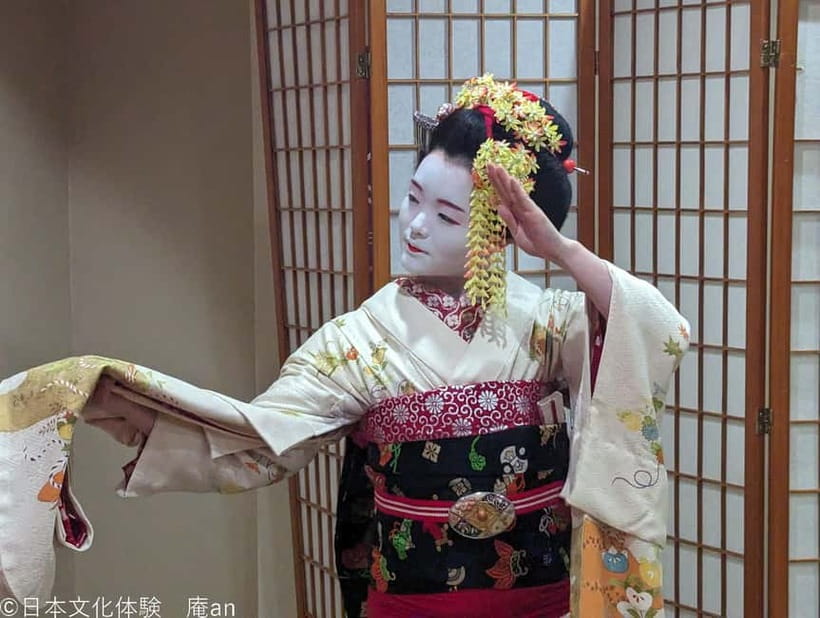
The heart of the experience is watching two Maiko dance performances. Maiko dance isn’t just movement—it’s storytelling. The dances are expressive and connected to themes like Japan’s seasons, love stories, and everyday life, all communicated through music, gestures, and timing.
Because it’s short, you get a neat contrast. One dance leans into a particular mood, then the second changes the rhythm and character. Even if you’re not fluent in Japanese, the body language does most of the work. You’ll likely feel the shift right away.
What I like for first-time visitors is that the dances are presented as an experience you can see clearly. You’re not dealing with a huge stage-distance situation. The point is to let you appreciate details: the controlled pacing, the graceful arm work, and the way the performance stays elegant even when the room is informal.
A practical consideration: this program may take place while other people are having lunch or dinner. That doesn’t automatically ruin the moment, but it can affect the overall quiet level and how much the room feels like a “show” versus a “gathering.” If you’re the type who needs total silence for watching, mentally plan for some background life.
The game with Maiko: simple rules, real energy
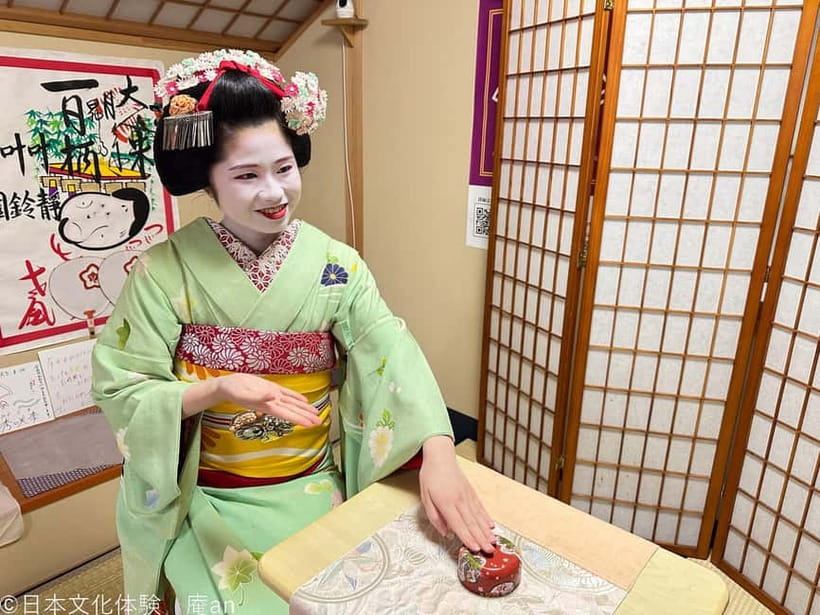
After the dances, the evening changes pace with a traditional game between the Maiko and the audience. The structure is intentionally easy to follow. The idea isn’t to test you—it’s to bring you into the moment.
Here’s what makes it fun: audience participation is invited. You’ll see volunteers play with the Maiko if you want to jump in. If you prefer to watch, you can still clap and cheer along, which turns the room into a shared little celebration rather than a passive spectator situation.
This is also where the experience can feel extra personal. When the Maiko is interacting with people at close range, it stops being “Kyoto culture as performance” and becomes “Kyoto culture as lived interaction.” You’ll feel that switch as soon as the game begins.
One note I’d keep in mind for families: a kid might be interested but shy about participating in a small room full of adults. If that’s your child, plan for a compromise—cheering from your seat can still make the game part feel like it counts. The adults laughing is usually contagious.
Photo time and the Senjafuda lucky charm
The best part for souvenir lovers and camera users comes right after the game. You’ll get the chance to take a commemorative photo with the Maiko up close. This is the payoff for booking a short program instead of just wandering Kyoto hoping to see one.
Up close means you can actually capture the details in your photos—costume textures, makeup styling, and the overall presence that makes Maiko so visually striking. If you’re used to quick pass-by sightings, this is a different category.
Then you get a gift: the Senjafuda lucky charm. The name can appear as Senjyafuda in some descriptions, but the idea is the same. It’s a small keepsake connected to the ceremony-like flow of the program, and it gives you a tangible reason to remember the night besides photos alone.
This is also one of the most practical value elements of the experience. Many short cultural events give you either a show or a photo. Here, you get both plus a physical charm, all without needing extra add-ons.
The flow of the program: what happens in order
The schedule is straightforward, and knowing the rhythm helps you decide what to wear and how to manage your energy.
Here’s the typical timing:
- Program start (around 0:00)
- Maiko dance performance
- Game with the Maiko with audience participation if you choose
- End of the dance/game segment (around 30:00)
- Photo with the Maiko
- Presentation of the Senjafuda charm
- The Maiko leaves the room
- Chatting time
- Room departure (around 45:00)
A detail worth flagging: the experience is described as 45 minutes, but it can come in shorter depending on how the session runs. That means you should treat it like a compact program rather than a long one. If you’re trying to fit it between major Kyoto stops, build in a small buffer so you don’t feel rushed.
Also, participation rules are part of the reality here: people who don’t participate are not allowed to enter. That doesn’t mean you’ll be forced into doing the game, but it does mean you shouldn’t show up casually hoping to just watch from the doorway.

Price and value: is $28 a fair deal in Kyoto?
At about $28 per person, this is priced like a focused interaction experience. In Kyoto terms, that’s fairly reasonable for three things you don’t always get together in a single short slot: a close viewing of Maiko dances, a chance at an up-close photo, and a lucky charm.
What makes it good value is that you’re paying for “access,” not just performance time. Watching dances in a public space is one option. Getting the game interaction and photo moment is another. Getting both plus a charm is where the value adds up quickly.
There’s also a hidden value for practical travelers: the program is short, and the meeting point is easy to reach. When you’re paying extra for time-saving convenience, $28 starts to make more sense. You’re buying a concentrated dose of Maiko culture without committing to a half-day or a longer tour.
The main value downside is that this isn’t an ochaya setting or a tea ceremony format. If you’re specifically hunting for a full traditional hosting experience—tea, longer conversation, and deeper etiquette focus—this won’t replace that. It’s more like a neat sampler with a photo finish.
Logistics you can’t ignore: stairs, timing, and language
Let’s keep it simple: this venue has no elevator, so you’ll take stairs to reach the rooms. If mobility is an issue for you or anyone in your group, plan accordingly before you book.
Language is also part of the setup. The instruction is Japanese. English translation is provided as much as possible, and if you want to add requests, you can contact them. In practice, that means you won’t be completely lost, but don’t expect everything to be perfectly explained in English.
Timing is another reason to stay organized. Operation hours run from 10:00 to 17:00, and reservations after 17:00 are processed the next day. The organizers also won’t hold the event for delays, so plan to arrive a few minutes early. In a short 45-minute experience, punctuality matters more than you might expect.
One more surprise possibility: depending on the situation, they may invite Geiko instead of Maiko. You’ll still get the same style of experience structure, but the performer identity could change. If your heart is set on seeing a Maiko specifically, treat this as a small wildcard.
Who this is best for (and who should skip)
This experience is a strong fit if you:
- Want a short, high-impact Kyoto moment
- Like watching traditional performance up close
- Want a photo and a keepsake without extra add-ons
- Prefer interactive fun over long formal sessions
It may be less ideal if you:
- Want an ochaya-style atmosphere or a tea ceremony experience
- Need a fully quiet, theatre-like setting
- Have mobility constraints that make stairs difficult
- Are the type who dislikes audience participation energy, even as a spectator
Families can still have a good time, especially if the kids are comfortable in a small group setting. But if your child is shy about joining in, focus on cheering and watching. The room can still feel lively even without someone stepping forward.
Should you book Dance and Game with Maiko?
Book it if you want a practical shortcut to an up-close Maiko encounter—one that bundles two dances, a game, a photo, and a Senjafuda into a compact schedule near Gojo Station. For many people, it’s one of the most cost-effective ways to make Maiko part of a Kyoto plan without sacrificing the rest of your day.
Skip it if you’re chasing a longer, deeper tea-house experience or if stairs and possible timing variations would stress you out. And if your schedule is extremely tight, remember the program runs in a short window and may be tighter than 45 minutes.
If you’re deciding between this and a longer Maiko-focused tea program, choose based on your goal: quick access and photo keepsake here, versus tea ceremony depth in the other option.
FAQ
Where is the meeting point?
The meeting point is a 1-minute walk from Exit 1 of the Subway Karasuma Line Gojo Station. The store entrance faces Gojo-dori.
How long is Dance and Game with Maiko?
The program lasts about 45 minutes, and starting times vary based on availability.
How much does it cost?
It costs $28 per person.
What’s included in the price?
You get the Maiko dance performances, the game with Maiko, a photo with Maiko, and a Senjafuda lucky charm.
Is there an extra option, like tea ceremony?
A tea ceremony with Maiko is offered as separate programs (Tea ceremony with Maiko and Tea ceremony with Maiko premium), but it isn’t included in this price.
Do I need to speak Japanese?
English translation is provided as much as possible. The instructor is Japanese, and you can contact the organizers if you’d like to request extra language help.
What if I arrive late?
They will not be able to hold the event to accommodate delays.
Is the venue an ochaya or traditional Japanese house?
No. It’s located in a building, not an ochaya or traditional Japanese house, but the atmosphere is relaxed.
Are there stairs?
Yes. There is no elevator in the building, so you’ll need to use the stairs.
Are children allowed?
Children under 2 years old are free of charge if they sit on a parent’s lap. If a child needs a seat or meal, they’re charged the same fee as one person.