REVIEW · KYOTO
Kyoto: Beginner Knife Sharpening & Handle Fitting Workshop
Book on GetYourGuide →Operated by Japanese knife shop HIRAI · Bookable on GetYourGuide
Kyoto can feel like a museum—until you pick up a whetstone. This beginner knife workshop lets you sharpen a real Japanese blade, fit a handle (with fire involved), and leave with your own knife packaged to take home. I love how hands-on it is, and I also love that the instruction stays practical for what you’ll actually do at home, not just what looks good in photos.
The class is small—limited to 3 participants—so you get real corrections and feedback as you learn the technique. One consideration: the handle-fitting uses heat, so there can be smoke and your clothes might pick up that smell if you’re wearing your best outfit.
In This Review
- 5 Key Things I’d Plan Around
- Kyoto Knife Skills, Without the Pressure to Shop
- Your Knife Choice: Santoku, Deba, or Yanagi
- Sharpening on a Whetstone: How Beginners Get Unstuck Fast
- Handle Fitting in Kyoto: Magnolia, Heat, and Real Craft
- What You Leave With: Your Knife, Packaged and Engraved
- The $161 Question: Is It Worth It?
- Small-Group Size and English Support That Actually Helps
- During the Workshop: Rules, Noise Levels, and What to Bring
- Who Should Book This Knife Workshop in Kyoto (and Who Should Skip)
- Should You Book This Workshop?
- FAQ
- How long is the workshop?
- What knives can I choose for the workshop?
- Can I take my knife home afterward?
- Is engraving included?
- What’s included in the workshop besides the knife?
- Do I have to bring my own whetstone?
- Will I need to pay extra for a handle upgrade?
- Will there be smoke during the workshop?
- What languages are offered?
- Is it suitable for everyone?
5 Key Things I’d Plan Around
- Small-group coaching with hands-on checks so you don’t guess.
- Pick your blade type up front: Santoku, Deba, or Yanagi.
- Sharpen and then fit the handle, so you learn the full “care + construction” loop.
- Fire during handle fitting means wear clothes you don’t mind getting smoky.
- You take the knife home, and engraving is set up in advance if you request it.
Kyoto Knife Skills, Without the Pressure to Shop
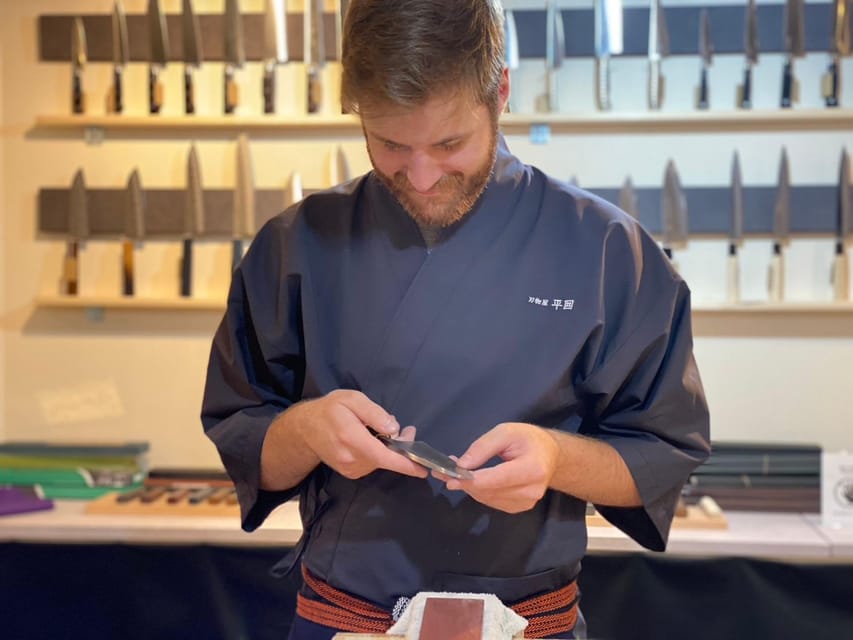
If you like the idea of learning craft in Kyoto, this workshop hits a sweet spot: you’re not just watching. You’re doing the work—sharpening on a whetstone, then fitting a handle to a blade you’ll own afterward.
What makes it especially appealing is that it’s not only about the final knife. You get the why behind the technique: how the stone contact should feel, how to keep your angle consistent, and how to recognize when you’ve actually progressed instead of hoping. Several classes are led by instructors such as Julio, Tim, and Tatsu, and the teaching style is consistently built around calm, step-by-step guidance in English (with Japanese support as needed).
The vibe also stays focused. Multiple past participants specifically call out that there’s no hard sell—so you can enjoy the experience even if you don’t plan to buy extra knives.
You can also read our reviews of more tours and experiences in Kyoto

Your Knife Choice: Santoku, Deba, or Yanagi
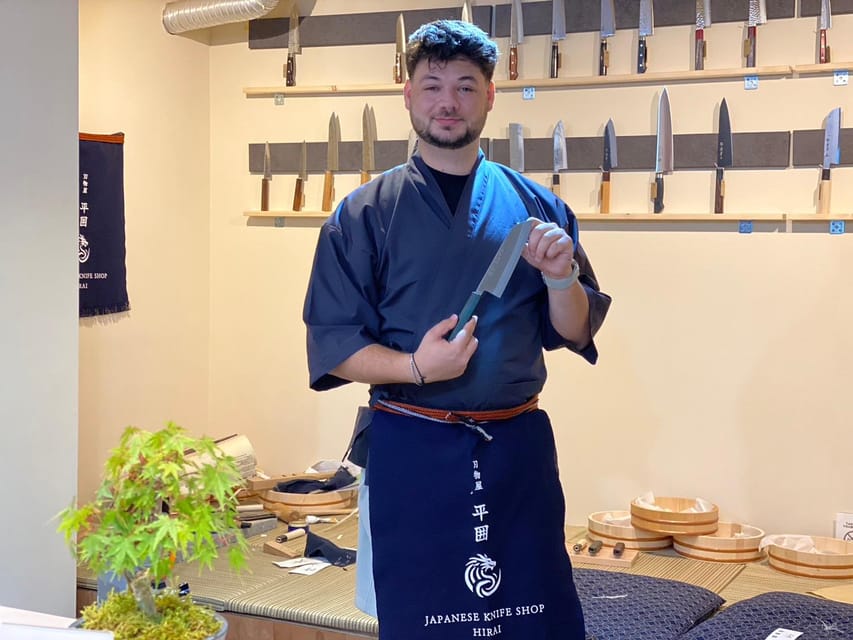
Before you start, you choose one knife from three options: Santoku, Deba, or Yanagi. That matters, because each blade type changes the feel of the sharpening session and the kind of cutting it’s meant for.
Here’s the practical mindset I recommend: don’t pick based only on looks. Pick based on what you cook. A Santoku is typically the most familiar “daily driver” shape for home kitchens. A Deba and Yanagi are more specialized profiles, and if you choose one of those, you’re basically voting for a more traditional, purpose-focused knife.
You’ll also have the chance to add engraving. If you want it, you should request it in advance with the characters you want (up to 4 letters). Engraving is handled as part of the workshop setup, not as an afterthought.
Sharpening on a Whetstone: How Beginners Get Unstuck Fast
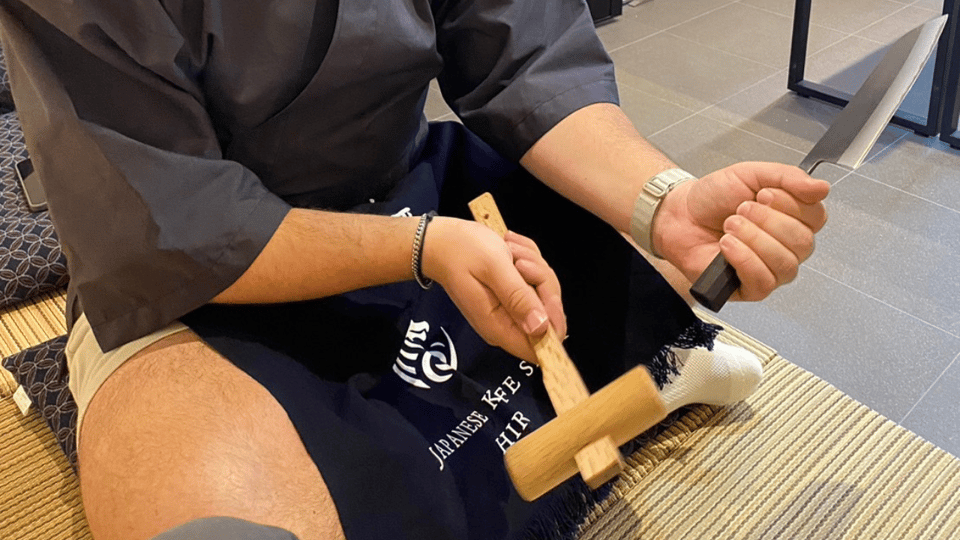
This is where the workshop earns its high rating. Beginners often get stuck because sharpening on their own feels like guesswork. The great news is that here, the process is broken down into simple steps and then corrected as you practice.
You’ll sharpen the knife you select for the class. The shop provides the whetstones, so you’re not stuck buying tools you’re not sure you’ll use. And because the group is limited to 3 participants, instruction doesn’t vanish into a crowd. You get guidance while your edge is still in progress, which is exactly when beginners need it most.
A helpful way to think about this segment: you’re building muscle memory around control. Sharpening becomes easier when you stop trying to “make it sharp” and instead focus on repeatable technique—consistent angle, steady pressure, and attention to what the blade feels like during the stroke. The instructors are patient about that. People learning in English frequently note that corrections are clear and that the instructor checks progress directly, which removes a lot of uncertainty.
Handle Fitting in Kyoto: Magnolia, Heat, and Real Craft
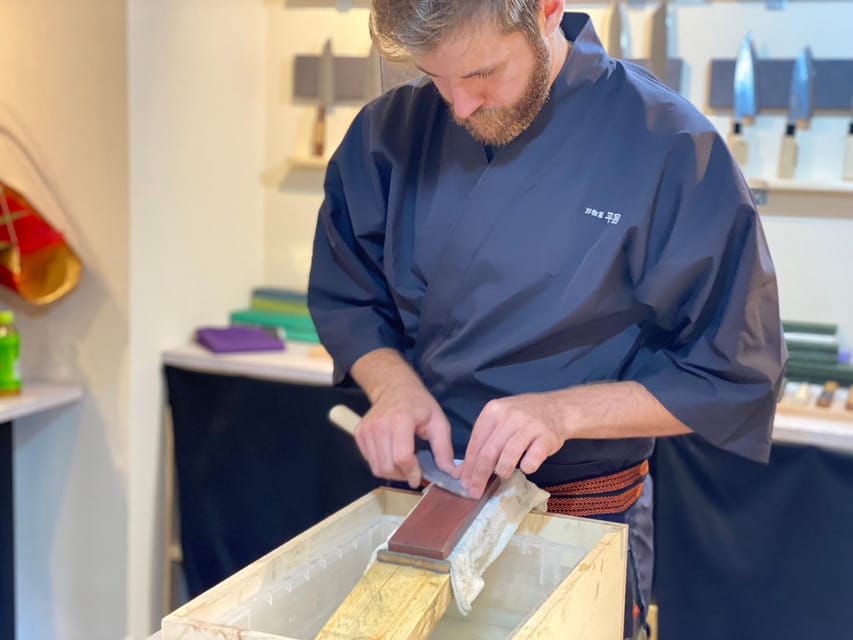
Sharpening is only half the story. The second major section is fitting the handle to your blade. In this workshop, the included handle is made from magnolia tree. You’ll attach it during the class with expert help, and you’ll wear the proper uniform and apron for the work.
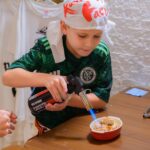
This part is also where the experience becomes noticeably more “hands-on” than typical classes. The handle-fitting uses fire, so you may see smoke and you may notice the smell afterward. Plan for that reality. Wear clothes you don’t mind getting smoky, and treat the apron and uniform as practical protection, not a fashion accessory.
There’s a nice added layer here: you’re learning how Japanese knife construction works at a basic level. That’s what makes this more than a souvenir purchase. You’ll understand that a great knife isn’t only about the edge—it’s also about how the handle is fitted and how the blade feels in your hand over time.
If you want a different kind of handle than the included magnolia, you can choose another type by paying an additional fee. The amount varies depending on the handle you pick.
What You Leave With: Your Knife, Packaged and Engraved
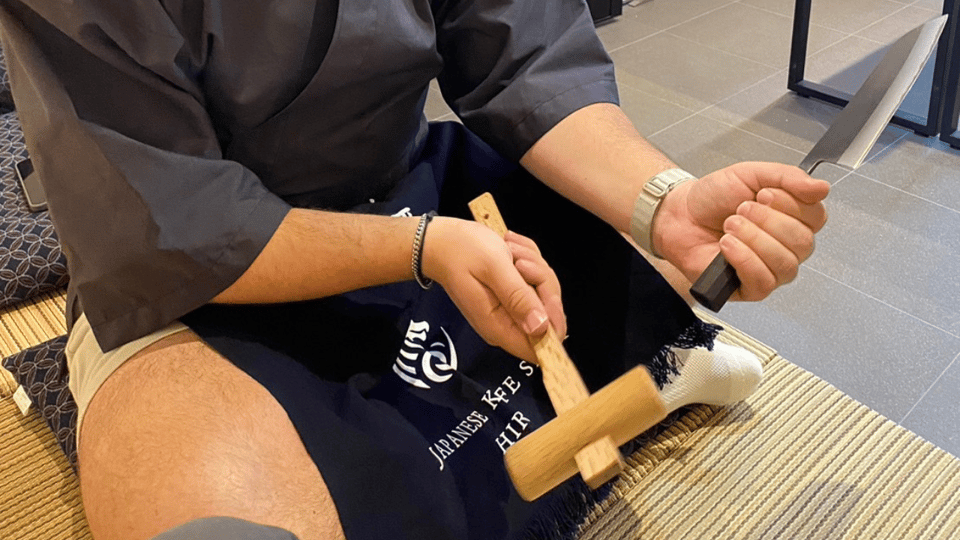
After both parts—sharpening and handle fitting—the workshop packages your knife so you can take it home. That means you’re not rushing around at the end trying to figure out how to transport a blade safely.
This is also why the class feels like value instead of just entertainment. Your workshop includes:
- The knife you sharpen
- The included magnolia handle you attach
- A Japanese working uniform and apron
- The experience fee
- The engraving fee (if you requested it in advance)
One more practical detail: if you plan to gift this, engraving plus a personal blade choice makes the final knife feel like an actual Kyoto-made object, not a generic store purchase.





The $161 Question: Is It Worth It?
For $161 per person, you’re not only paying for instruction. You’re paying to walk out with a completed Japanese knife plus the skill to maintain it.
A big reason this tends to feel fair is what’s included. You get the blade you sharpen, the handle you fit, and the engraving fee. You also get the uniform/apron, and you don’t have to buy whetstones for the class because the shop provides them. In other words, you’re getting both a learning session and a take-home result.
Could the cost still be a lot if you’re not interested in owning a knife? Sure. If your goal is just a quick Kyoto activity, there are cheaper options. But if you want a tool you’ll use—and a skill you’ll keep using—this is one of those workshops where the price starts to make sense fast.
Small-Group Size and English Support That Actually Helps
This workshop is designed for beginners. That shows in how it’s structured: small group (max 3 participants), clear guidance, and direct correction while you practice.
English is available through an English guide/instructor support. Reviews also highlight that the teaching feels inclusive and supportive in the moment, not just a lecture with a translator. People repeatedly mention that instructors are patient and give feedback, which is a big deal when you’re learning something physical where you can’t fake it.
If you want a calmer class experience without feeling lost, small group matters. It means you can ask the question you’re afraid to ask. You also get time to reach a solid result rather than finishing “someday” in your head.
During the Workshop: Rules, Noise Levels, and What to Bring
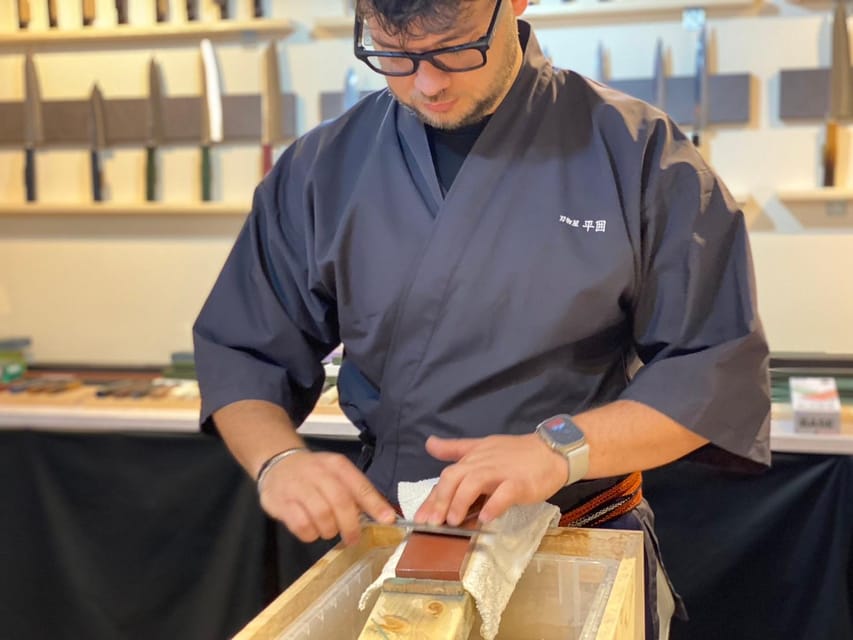
This isn’t an anything-goes demo. The shop doesn’t allow pets, baby strollers, smoking, alcohol or drugs, and making noise. Think of it like a small workspace where respect for the craft matters.
You should also arrive ready to start smoothly. The instructions ask you to be at the shop about 5 minutes early, so you don’t feel rushed when the workshop begins.
If you’re worried about the logistics of finding the place, the meeting note helps: come directly to the shop, and look for the white storefront curtain at the building.
Who Should Book This Knife Workshop in Kyoto (and Who Should Skip)
I’d book this if you:
- Want beginner-friendly sharpening instruction that sticks
- Like hands-on crafts more than watching from the sidelines
- Cook at home and want a knife you’ll actually use
- Want a Kyoto souvenir with meaning that goes beyond a keychain
You might skip it if:
- You’re not comfortable with smoke from the fire-based handle fitting
- You prefer activities that are purely low-focus or purely sightseeing
- You’re traveling with anyone who can’t participate based on the workshop’s limits
It’s not suitable for children under 15, wheelchair users, or people over 80 years old. Also, pets and strollers aren’t allowed.
Should You Book This Workshop?
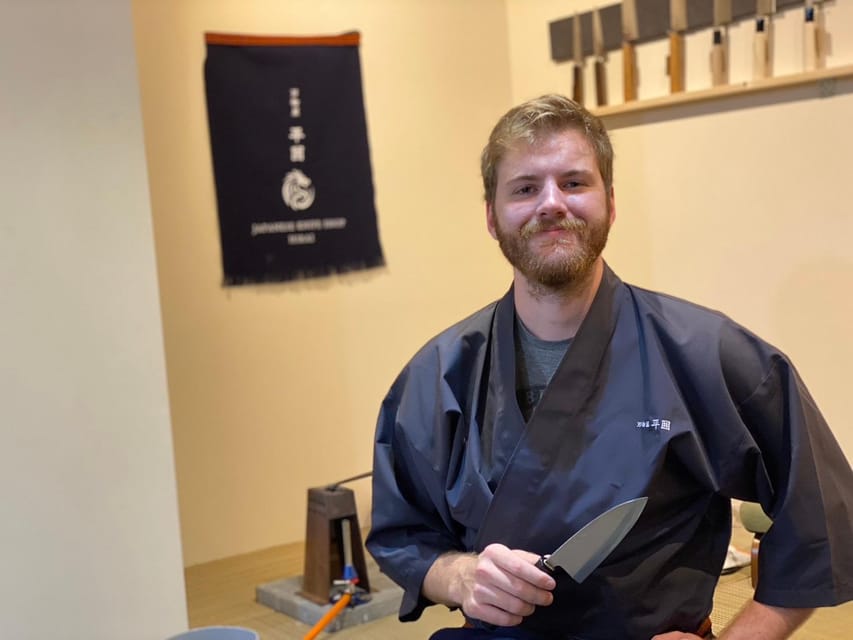
If you’re the type who hates buying something you don’t know how to use, this is a smart buy. You’ll leave with a completed Japanese knife (chosen and sharpened by you), plus the technique to maintain it. The small group and real corrections make it especially beginner-friendly.
If you’re worried about price, compare what’s included. The $161 covers the knife, the included magnolia handle, your class materials (uniform/apron), and engraving if you plan ahead. And unlike many souvenir stops, this one teaches you an ongoing skill.
If you’re okay wearing clothes you don’t mind getting smoky and you arrive ready to learn, I’d call this one of the best “do something real” Kyoto experiences—short, practical, and genuinely memorable.
FAQ
How long is the workshop?
The workshop lasts 2 hours.
What knives can I choose for the workshop?
You can choose one knife from Santoku, Deba, or Yanagi.
Can I take my knife home afterward?
Yes. After the workshop, your knife is packaged and you can take it home.
Is engraving included?
Engraving is included in the workshop price. If you want engraving, you need to request it in advance and provide the characters (up to 4 letters).
What’s included in the workshop besides the knife?
You get the knife you sharpen, the magnolia handle you attach, a Japanese working uniform and apron, and the experience fee. Whetstones are provided by the shop.
Do I have to bring my own whetstone?
No. Customers use whetstones provided by the shop.
Will I need to pay extra for a handle upgrade?
The included handle is magnolia. If you want a different handle type, you can choose it for an additional fee, which changes depending on the handle.
Will there be smoke during the workshop?
During the handle fitting, fire is used and some smoke can come out. If you don’t want your clothes to smell smoky, wear clothes you don’t mind getting smoky.
What languages are offered?
The workshop provides English and Japanese instruction.
Is it suitable for everyone?
It is not suitable for children under 15, wheelchair users, or people over 80 years old. Pets and baby strollers are also not allowed.