REVIEW · KYOTO
Kyoto: Calligraphy class at Buddhist temple in city center
Book on GetYourGuide →Operated by LAMBDA CUBE LLC · Bookable on GetYourGuide
Ink, paper, and Kyoto quiet. This calligraphy class at a Buddhist temple in the center of town turns basic brushwork into a real keepsake, with tatami room time and a master-guided lesson. I really like that you practice step by step, not just watch a demo, and you end with a finished piece you can actually hang at home.
The second thing I like is the hands-on souvenir angle: you create your own OMIYAGE on shikishi paperboard and also get a character-made key-chain. One catch to plan for: most of the seating is on the floor, so tatami + zabuton may be hard if your legs get stiff.
In This Review
- Key Points That Make This Kyoto Class Worth Your Time
- Finding Seigan-ji Temple Without Stress
- The 70 Minutes: What the Lesson Actually Does
- Tatami Room Reality Check: Sitting on the Floor
- Choosing Your Kanji (and How to Get a Better Result)
- Tools, Ink, and the Step-by-Step Technique
- Getting Your Take-Home OMIYAGE: Shikishi Artwork + Key-Chain
- Language Support: How Jose and Other Translators Help
- Price and Value: Is $55 Fair for Kyoto?
- Who Should Book This, and Who Might Skip It
- Final Verdict: Should You Book This Kyoto Calligraphy Class?
- FAQ
- Where is the meeting point for the Kyoto calligraphy class?
- What is the duration of the workshop?
- What do I take home?
- What’s included in the class materials?
- Do they serve food or drinks?
- Is this suitable for children or people with limited mobility?
Key Points That Make This Kyoto Class Worth Your Time
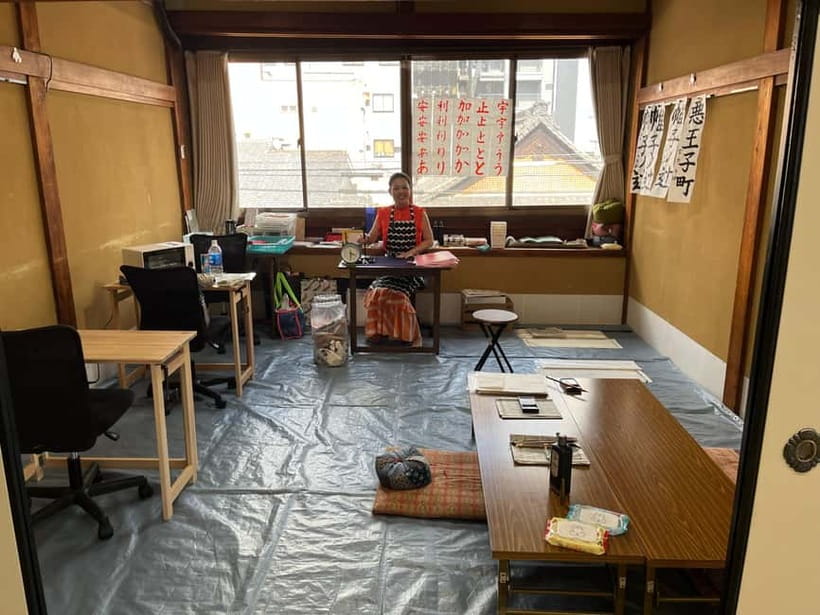
- Temple setting with real atmosphere: you’re in a Buddhist temple space in the middle of Kyoto, not a community hall.
- Small group, real coaching: limited to 6 participants, so your strokes get corrected instead of rushed.
- Clear 70-minute flow: tool tips, basic lines, then your chosen kanji, finished into a take-home artwork.
- You choose the character: pick a word or kanji you care about, and you’ll shape it into your final piece.
- Take-home extras: shikishi artwork plus a key-chain with your character.
Finding Seigan-ji Temple Without Stress
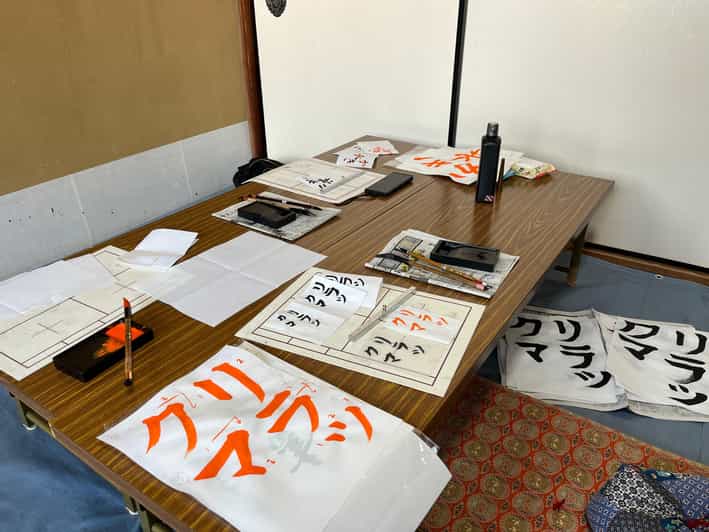
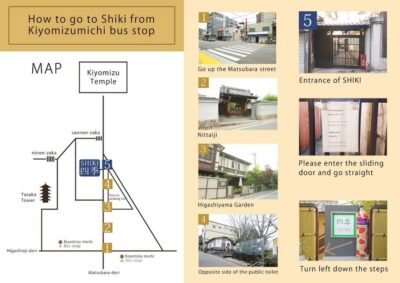
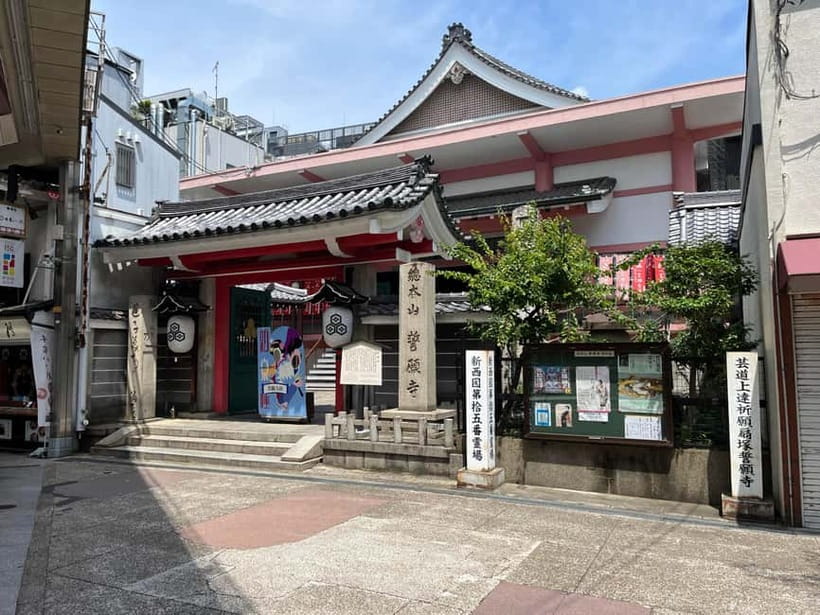
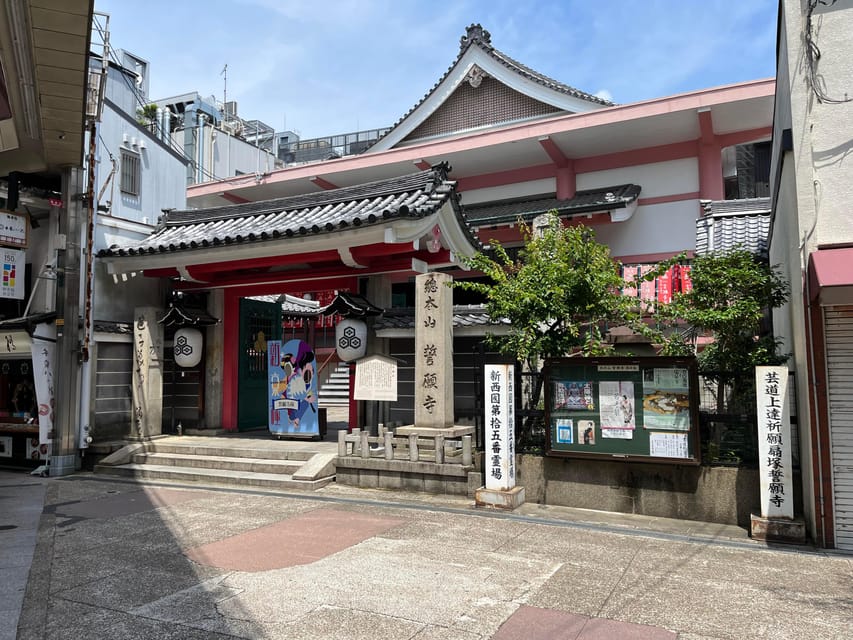
This workshop meets at Seigan-ji Temple, in the SHINKYOGOKU shopping street area. Go to the front of the temple and look for the person holding a red lantern on a stick under the roofed street.
Important: don’t go up the stairs to enter the main temple area on your own, and don’t ask monks or other staff to confirm you’re in the right place. Just wait in front for the lantern holder. It’s a small detail, but it keeps the experience respectful and smooth.
If you’re pairing this with temple hopping nearby, build in a little buffer. Kyoto streets can be simple but slow—storefronts, crowds, and detours can add time faster than you’d think.
You can also read our reviews of more city tours in Kyoto


The 70 Minutes: What the Lesson Actually Does
The class is designed to feel manageable even if you start from zero. It’s paced so you can learn strokes, apply them to your chosen character, and still finish with something you’ll be proud to take home.
Here’s the structure you’ll follow:
First, you get an introduction to the teacher and the translator(s). Then you select your word or kanji, usually from examples provided, and you decide what you want on your final shikishi piece.
Next comes tools and technique. You’ll learn how to handle brush and ink, plus the writing setup that makes the calligraphy look crisp instead of blotchy. After that, you practice basic lines and components—small training strokes that matter more than you’d expect.
Only then do you write your chosen kanji for real. You’ll build it through practice, not by guessing. Finally, you complete your artwork on shikishi (the special square board), and you take it home.
Your schedule is tight enough to keep the focus, but it isn’t a race. It’s also not a total silent experience. The room tends to be quiet because everyone is concentrating, but you’ll still hear instruction and translator support.
Tatami Room Reality Check: Sitting on the Floor
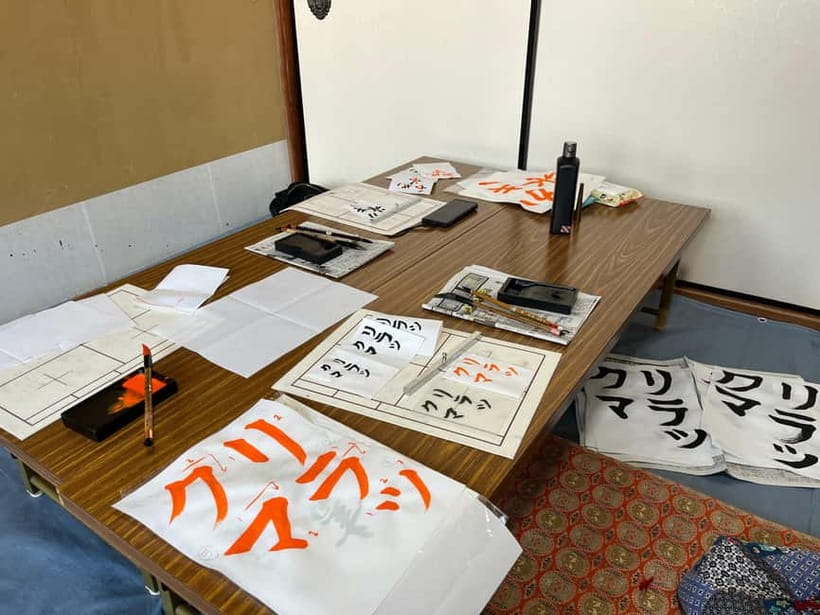
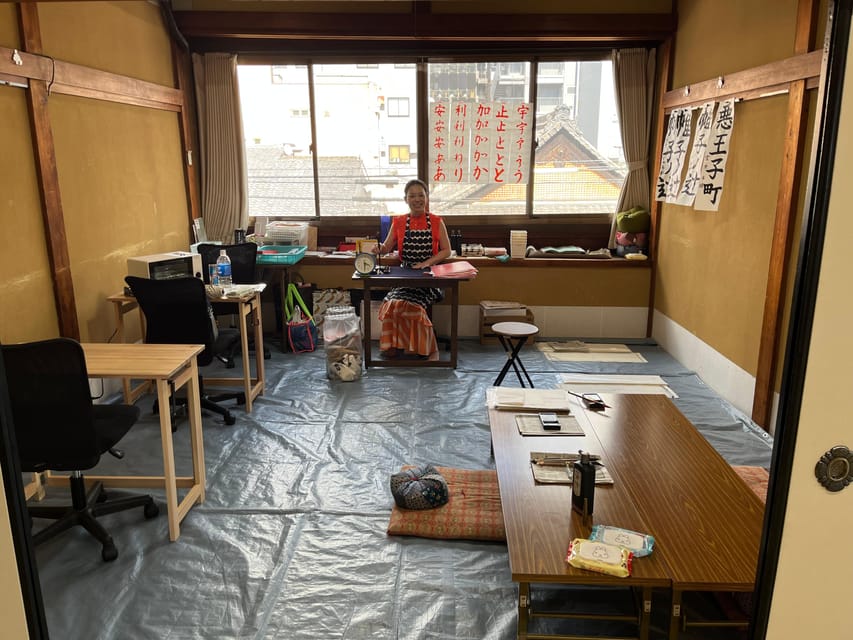
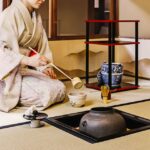
The workshop takes place in a washitsu, with tatami flooring. Most people sit on the floor with a zabuton, and there are only a limited number of desks.
This is one of the few parts that can make or break comfort. If you know floor sitting makes your knees unhappy, plan accordingly. Bring your best patience, and consider how long you can comfortably kneel or sit before you commit.
On the positive side, the tatami setting is part of why this class feels authentic. It matches the traditional tone of shodo—hands moving carefully, attention settling, and the whole space helping you slow down.
Choosing Your Kanji (and How to Get a Better Result)
You’ll be asked to think about a word or kanji you want before you start, and there are examples available on-site. I strongly suggest coming with a couple options, even if you don’t decide until you see the template.
Why? Because the final piece is built from your choice. If you pick something too complex for your first attempt, the teacher will still guide you—but you’ll spend more time fighting the shape than enjoying the art.
A practical tip: choose a character that you can imagine meaningfully on a sign. People often pick personal words like names, hopes, or values. The workshop flow includes practice, but your arm and focus still have limits. Too much writing can make your strokes wobble just when you want them most steady.
Also, you’ll practice the character and its components first. That’s how you end up with a cleaner final result without needing to be artistic to begin with.
Tools, Ink, and the Step-by-Step Technique
The included materials are part of the experience: you get washi and the calligraphy tools such as brush and ink, plus items like bunchi and shitakami, along with explanation and practice. You’re not expected to bring anything.
What matters most is how the teacher breaks the process down. In the sessions I’ve read about, the Japanese instructor is patient and structured, building skill gradually. Translators help connect the technique to what you actually need to do in your hands.
If you’re worried about doing it wrong, this is one of those activities where mistakes are part of the learning. You practice lines and components, then refine the character you selected. Your final piece comes from that cycle of trial, correction, and completion.
And yes, writing with ink is messy in the way you want. The tactile feel of brush and ink is one reason this class sticks in memory more than a souvenir you just bought.
You can also read our reviews of more tours and experiences in Kyoto


Getting Your Take-Home OMIYAGE: Shikishi Artwork + Key-Chain
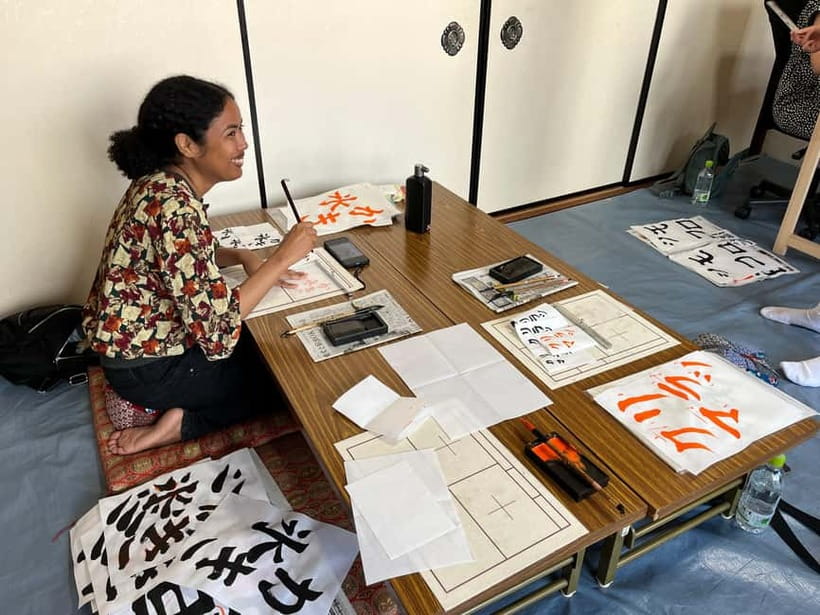
You end with a finished artwork you can take home. Your writing goes onto shikishi, the square board you’ll work from and complete during the class.
This is not just a craft token. You’ll get something that looks like what you’ve seen in Japanese calligraphy displays, the kind of work you can frame, hang, or keep on a shelf without feeling like it’s flimsy.
On top of that, you receive a key-chain made with your chosen character. It’s a small thing, but it’s personal. For many people, it becomes a quick reminder of the temple moment and the particular character they chose.
If you want your souvenir to feel extra meaningful, pick a kanji you’ll enjoy seeing on a wall. The class doesn’t try to push a generic design. Your piece is the point.
Language Support: How Jose and Other Translators Help
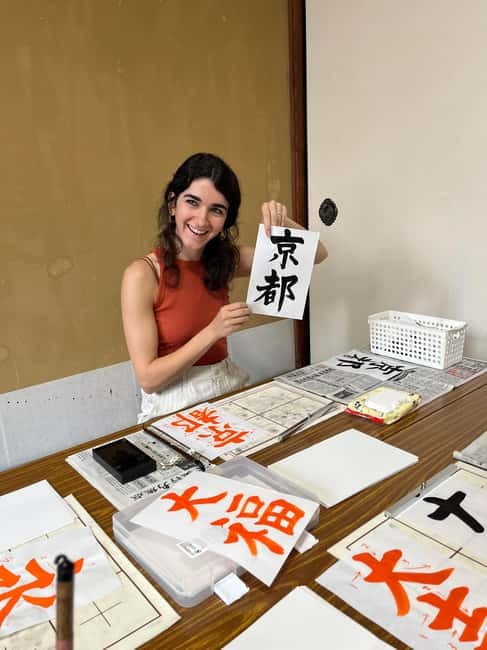
The class is taught with instructor support and translator help. Languages listed include English, Spanish, Japanese, and Dutch.
Several reviews mention a guide named Jose who helped run the workshop in practical ways, including translating and keeping things comfortable. Another name you might see connected with translation support is Saskia. The important part for you is that there is a translator working alongside the Japanese calligraphy teacher, so you won’t be left guessing.
One big value here is that technique instruction becomes understandable. Calligraphy has a few concepts that are hard to figure out from visual-only watching. With translation, you learn what the stroke is supposed to do and how to adjust your brush for the right look.
Price and Value: Is $55 Fair for Kyoto?
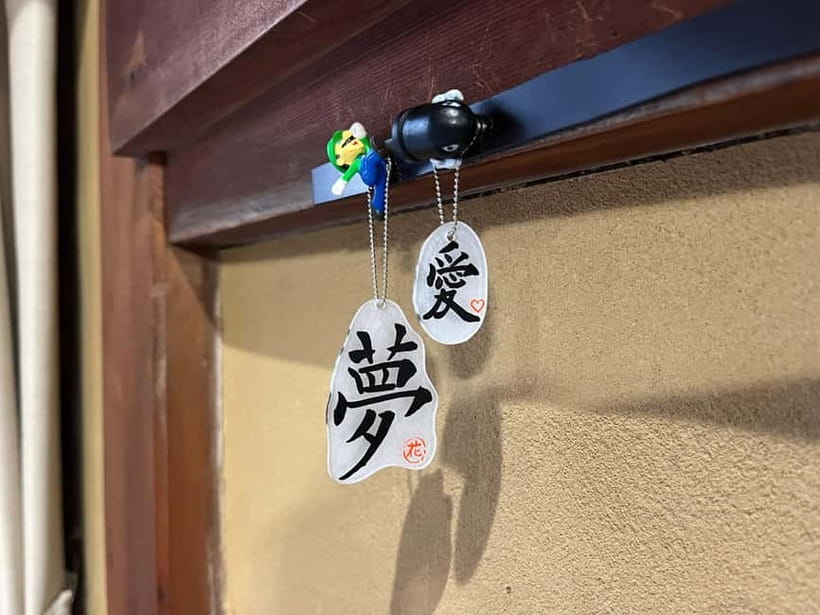
At $55 per person for about 70 minutes, this is positioned as a focused, hands-on workshop. You’re paying for more than a piece of cardboard and ink.
You’re also paying for:
- a dedicated teacher with more than a decade of calligraphy experience
- step-by-step practice time inside a Kyoto Buddhist temple setting
- materials included (tools, paper/boards, ink, and writing supplies)
- translation support (because the teacher may not speak your language)
- a small group format limited to 6 participants
So the value is really in the coaching and the setting. A similar craft class outside a temple might be cheaper, but you wouldn’t get the same atmosphere, structure, and “finished artwork” payoff.
If you only have room for one cultural activity beyond temple browsing, this one can be a strong choice because you leave with something you made, not just something you saw.
Who Should Book This, and Who Might Skip It
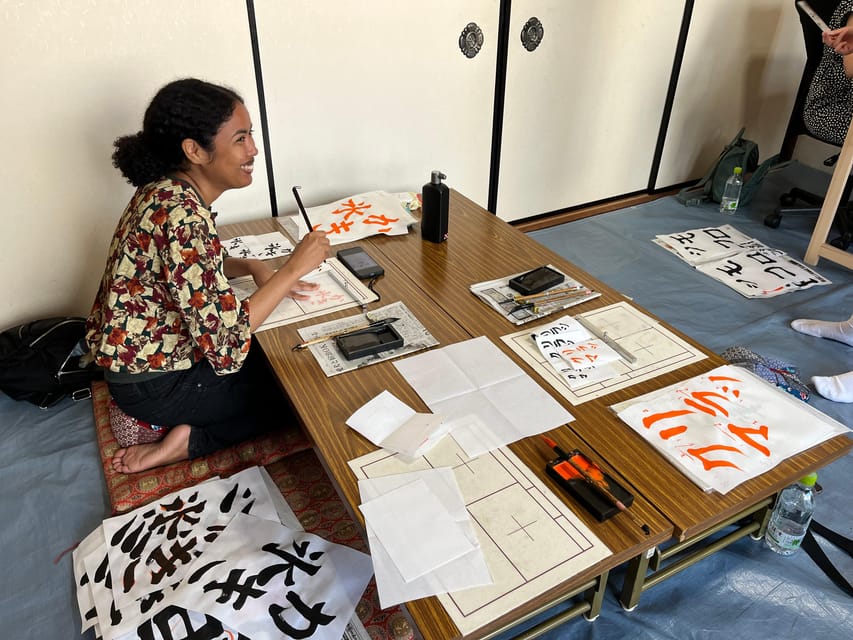
This workshop is a great fit if you:
- want a traditional Kyoto activity with a calm tone
- like learning a skill you can take home
- enjoy small groups and personal feedback
- are okay sitting on the floor in a washitsu
It’s also family-friendly in a specific way: the listing notes it isn’t suitable for children under 5, and it excludes babies under 1. If you’re traveling with younger kids, you’ll need to look elsewhere.
It also isn’t listed as suitable for visually impaired people, so plan around that.
Wheelchair access is listed as available. Still, because the standard setup includes tatami-floor seating, it’s smart to consider your comfort needs and how the space is arranged for your chair.
Final Verdict: Should You Book This Kyoto Calligraphy Class?
I’d book this if you want an experience that feels both traditional and personal. The temple setting helps, but what really makes it worth it is the way the class teaches: practice first, then completion, then take-home proof of your work.
Go in with a couple kanji ideas if you can. Expect to concentrate and write slowly enough to get the strokes right. If floor seating is a problem for you, plan for that too.
If you’re the type of traveler who likes souvenirs you can display with pride, this fits your style. Your shikishi artwork and character key-chain aren’t random. They’re the result of a real lesson inside Kyoto’s religious heart.
FAQ
Where is the meeting point for the Kyoto calligraphy class?
Meet in front of Seigan-ji Temple in the SHINKYOGOKU shopping street. Look for the person holding a red lantern on a stick under the roofed street. Do not go up the stairs to enter the temple yourself, and wait for the lantern holder.
What is the duration of the workshop?
The workshop lasts about 70 minutes.
What do I take home?
You take home your completed calligraphy artwork made on shikishi, and you also receive a character key-chain as a souvenir.
What’s included in the class materials?
The class includes use of washi, brush, ink, bunchi, shitakami, plus explanations, practice, kanji examples to pick from, and the self-made souvenir items.
Do they serve food or drinks?
No food or drinks are served. You can buy drinks in vending machines outside the temple.
Is this suitable for children or people with limited mobility?
The workshop is not suitable for children under 5, and it is not listed as suitable for visually impaired people. Wheelchair accessibility is listed as available, but most seating is on the tatami floor.