REVIEW · KYOTO
Kyoto Gion Historical Walking Tour
Book on Viator →Operated by Localized Walking & Food Tours · Bookable on Viator
Gion and Higashiyama walk together in one great afternoon. You’ll stitch together shrines, temples, and classic old streets with a guide who connects what you see to Kyoto’s big historical shifts. One catch: you’re on your feet for about half a day, with plenty of walking (and some stairs).
My favorite part is the way this route mixes famous names with quieter, story-rich stretches you’d probably miss on your own. The second big win: most stops are free to enter, so your money goes to the guide and the experience instead of ticket math.
In This Review
- Key highlights to look forward to
- Why this Gion-to-Higashiyama walk is a smart use of $40
- Meeting point and how the 3-hour flow feels on the ground
- Tatsumi Bridge and the Gion shibashi start
- Chion-in: Sanmon gate to temple grounds
- Maruyama Park: a green reset between temple stops
- Nene-no-Michi: a stone path with a specific human story
- Hōkan-ji Temple (Yasaka Pagoda): the five-story skyline moment
- Ninen-zaka and Sannen-zaka slopes: where Kyoto feels like a postcard
- Kiyomizu-dera finish: the UNESCO moment, and the admission choice
- The Meiji Restoration context that changes how you see Kyoto
- What to wear and bring for this half-day walk
- Is the small group size (max 12) worth it?
- Should you book this Kyoto Gion Historical Walking Tour?
- FAQ
- How long is the Kyoto Gion Historical Walking Tour?
- How much does it cost?
- How many people are in the group?
- What type of ticket do I get?
- Where does the tour start and end?
- Is lunch included?
- Are admission fees included?
- What should I wear?
- Is this tour suitable for people with limited mobility?
- Are service animals allowed?
Key highlights to look forward to
- Small group pace (max 12): easier questions, more room to pause for photos
- Free entry at most major stops: you’ll spend less on admissions and more on wandering
- Old-meets-new Kyoto: you’ll connect Gion-era atmosphere with the Meiji Restoration story
- Iconic Higashiyama viewpoints: Yasaka Pagoda and the Kiyomizu-dera finish give you the classic skyline angle
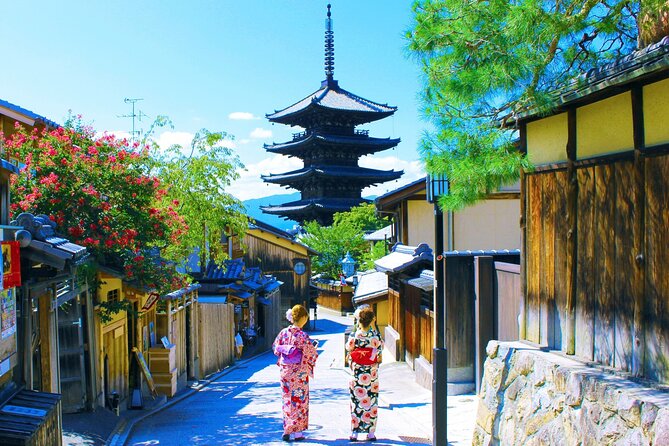
- Cobblestone slopes and stone paths: Ninen-zaka, Sannen-zaka, and Nene-no-Michi bring Kyoto texture up close
Why this Gion-to-Higashiyama walk is a smart use of $40
If you’re trying to understand Kyoto fast without running from place to place, this tour fits. It’s priced at $40 per person for an English-speaking guide plus a tight, well-chosen set of stops. You’re not paying for a single attraction—you’re buying context, route guidance, and the kind of route that links neighborhoods together.
Most of the key sights on the route are admission free, which makes the price feel lighter. The only notable exception is the Kiyomizu-dera admission, which isn’t included. Translation: you still get a guided finish at one of Kyoto’s top spots, and you decide how long you want to stay inside once you’re there.
You’ll also get a route that’s heavy on the “walkable Kyoto” vibe: river bridges, temple gates, shaded park paths, and those famous preserved streets that make you slow down. For first-timers, that’s the fastest path to seeing the city’s personality.
You can also read our reviews of more walking tours in Kyoto

Meeting point and how the 3-hour flow feels on the ground
You start near public transportation at Ben’s Cookies Kyoto Shijo (89 Shinchō, Shimogyo Ward). The tour ends at Kiyomizu-dera, in front of the entrance (1-chōme-294 Kiyomizu, Higashiyama Ward). That end point matters. Once you reach Kiyomizu-dera, you’re set up to keep exploring Higashiyama on your own without retracing steps.
The tour runs about 3 hours, so it’s a half-day commitment. With up to 12 people, the group size tends to stay manageable on narrow streets. You’ll get short, focused stops—long enough to learn and take photos, not so long that you feel trapped.
You’ll need moderate physical fitness and solid walking shoes. Expect a real stroll across multiple kinds of terrain: temple approaches, park paths, and cobblestone slopes. If you’re also dealing with limited time elsewhere, it helps to know you may have options to adjust on the fly if you need to break away.
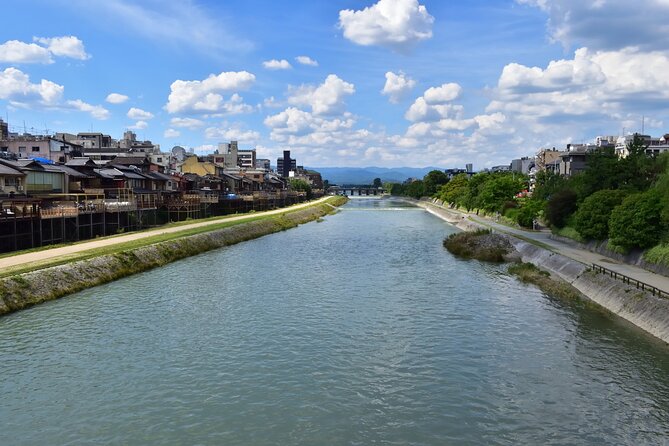
Tatsumi Bridge and the Gion shibashi start
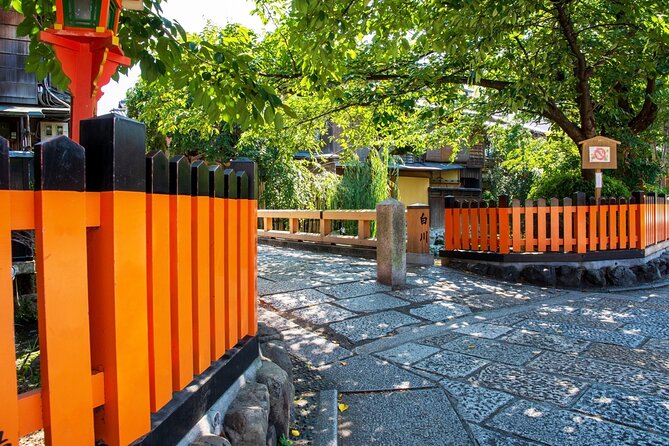
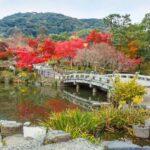
The tour kicks off at Tatsumi Bridge, walking through the Gion shibashi area. This is a classic “first look” moment because bridges and rivers instantly tell you how Kyoto landscapes are arranged—water, pathways, and neighborhoods all in the same frame.
You’ll have about 15 minutes here, which is a good amount for orienting yourself. I like this kind of start because it sets the tone: it’s not just museum Kyoto. It’s lived-in Kyoto, with streets that feel both historic and very current.
Also, this is where you’ll start seeing why Gion works visually. The spacing, the approach angles, and the way old buildings sit along the walk make photos easy if you pay attention to where the path leads you next.
Chion-in: Sanmon gate to temple grounds
Next up is Chion-in Temple’s Sammon (Sanmon) Gate. The gate is described as one of the largest wooden gates in Japan, and approaching it is a moment of scale. It’s one of those stops where your brain recalibrates—suddenly Kyoto isn’t only about small courtyards and lantern streets. It’s also about big, temple-level grandeur.
You’ll spend roughly 10 minutes at the gate and 20 minutes at the main temple area. That time lets you do more than “arrive, take a shot, leave.” You’ll learn what this temple means in Buddhist history and why its layout and presence matter in Kyoto’s religious landscape.
One practical note: this part of the walk is a natural place to pause and reset your pace. If you’ve been rushing around Kyoto’s busier streets, the Chion-in area can feel like a breather—still busy, but calmer than the immediate Gion lanes.
Maruyama Park: a green reset between temple stops
From Chion-in, the route heads to Maruyama Park. You’ll have about 10 minutes here. This stop is valuable because it breaks up the “temples back-to-back” rhythm and gives your eyes a different kind of texture: trees, shaded paths, and open space.
Maruyama Park is described as one of Kyoto’s oldest parks, and that age shows in how it sits inside the city. It’s not a separate world; it’s a city oasis. If you tend to burn out in dense historic areas, this park stop helps you keep your energy for what comes next—especially the Higashiyama streets and the Kiyomizu-dera finish.
You can also read our reviews of more historical tours in Kyoto


Nene-no-Michi: a stone path with a specific human story

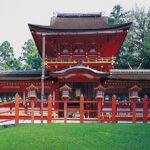
Then you’ll walk Nene-no-Michi, also called the Path of Nene. This is a historic stone-paved path named for Nene, the wife of Toyotomi Hideyoshi. The path winds through the area, and that winding matters. It’s not only scenic—it guides you through a quieter section where you can feel history as something physical, not just something you read on a sign.
This stop is a great payoff if you like stories that connect names to places. Kyoto is packed with labels, and this one gives you a “why this path exists” kind of detail. It also helps you slow down before the route leans back into the most photo-famous slopes and temple skyline.
Hōkan-ji Temple (Yasaka Pagoda): the five-story skyline moment
The tour heads to Hōkan-ji Temple, also known as Yasaka Pagoda. Expect about 10 minutes here. The big draw is the iconic five-story pagoda, and it’s the kind of landmark that makes you feel like you’ve arrived in the classic Higashiyama frame.
This stop works on two levels. First, it’s a visual anchor for the district. Second, it’s a reminder that Kyoto’s religious culture isn’t only “inside buildings.” It’s also about what towers over the street and shapes the skyline.
If you’re planning photos, treat this as your warm-up for Kiyomizu-dera later. You’ll learn how to look upward without ignoring where you’re standing, and that makes your next viewpoint more satisfying.
Ninen-zaka and Sannen-zaka slopes: where Kyoto feels like a postcard
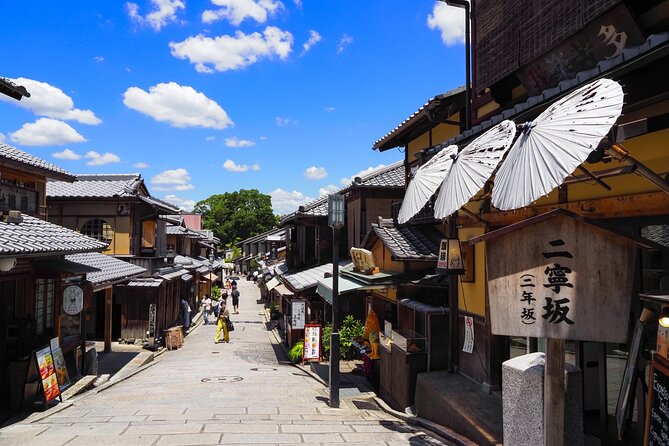
After the pagoda, you’ll walk the slopes: Ninen-zaka (Two-Year Slope) and Sannen-zaka (Three-Year Slope). Ninen-zaka is described as a historic cobblestone pedestrian path with preserved traditional architecture and tea houses lined along the way. Sannen-zaka follows in the same spirit, with additional time on the route (about 10 minutes here).
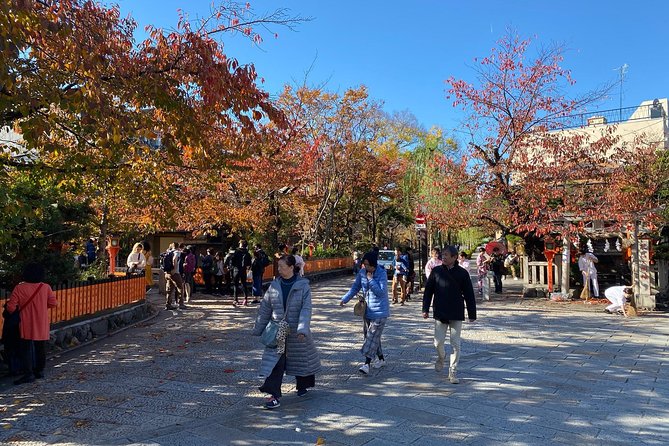
These stops are short—think 5 to 10 minutes each—but they’re worth it. This is where Kyoto’s atmosphere becomes obvious in your body. The cobblestones slow your pace, the architecture funnels your view, and the street layout nudges you toward the best angles.
You’ll likely run into souvenir shops and snack spots here. That’s fine. Just keep your expectations realistic: this is one of Kyoto’s busiest “experience streets,” so your best strategy is to move calmly, not sprint for photos.
Kiyomizu-dera finish: the UNESCO moment, and the admission choice
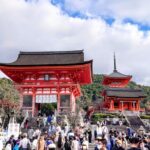
The tour ends at Kiyomizu-dera, which is a UNESCO World Heritage Site. The temple dates back to the 8th century and sits on a hillside, giving views over Kyoto’s skyline. You’ll spend about 10 minutes on the grounds as part of the walk, and admission is not included.
What you should know: this is a finish, not a full temple circuit. Ten minutes with a guide can help you orient, understand the site’s importance, and spot where to look for the big views. Then you decide whether to pay admission and keep exploring deeper.
If you want the full Kiyomizu-dera experience—especially the most famous viewpoints—plan extra time after the tour. If you only want the feel and context, you can stay with what the guide covers and leave refreshed instead of exhausted.
The Meiji Restoration context that changes how you see Kyoto
One of the most practical reasons to book a guided walk here is the Meiji Restoration talk. Your guide connects that period’s changes to what you see around you—especially how religious life and public space shifted over time.
Even if you don’t memorize dates, the payoff is in your perception. You start seeing Kyoto as a city that layers centuries of belief, politics, and daily life. The temples and lanes aren’t just pretty backdrops. They’re pieces of a system that evolved.
This kind of framing also helps when you’re later reading about Kyoto’s history on your own. It gives you a mental map: what changed, what stayed, and why the city looks the way it does today.
What to wear and bring for this half-day walk
This is a walking-first experience. Start with shoes you trust. Cobblestones and sloped streets can get slippery if you’re in the wrong footwear, and Kyoto’s terrain doesn’t forgive bad socks.
Also, bring water. There aren’t long meal stops included, and the pace is structured around short sightseeing segments. If you’re sensitive to hunger or fatigue, handle it before you get deep into the route. A simple snack plan goes a long way.
If you’re traveling with kids, keep expectations realistic. The tour is about history, religion, and city context, and it’s 3 hours long. That can work for older kids with stamina, but if you’re hoping for a mostly play-based outing, this might feel info-heavy.
Finally, remember this is a popular area. You’ll share space with other pedestrians. Your best move is to let your guide lead and focus on your own pace, not the crowd’s speed.
Is the small group size (max 12) worth it?
For Kyoto, yes. Narrow lanes, temple approaches, and slopes can be slow even on a “simple” walking tour. A group of up to 12 keeps the experience from turning into a moving bottleneck.
It also helps with questions. When you hear a story about something you’re standing in front of—like why Nene-no-Michi matters or what makes a pagoda iconic—you can ask follow-ups and get clarity right then, not later over dinner.
And with English-speaking guides, you shouldn’t have to work to understand the key points. Guides like Jay, Ben, Tommy, Michel, and Aiyumi have been highlighted for strong communication and an engaging style, so you can expect more than names and dates.
Should you book this Kyoto Gion Historical Walking Tour?
Book it if you want a guided way to understand Gion + Higashiyama without spending your whole day hopping between distant stops. The route makes smart use of time: a bridge start, temple anchors, a park reset, and then the cobblestone slopes culminating in Kiyomizu-dera.
Skip it (or at least adjust expectations) if you hate walking, dislike stairs, or only want a short list of must-see sites with minimal context. This is for people who want the “why” behind the “wow.”
One more deciding factor: you get strong value for the price because so many stops are free to enter, and you’re paying mainly for guide storytelling and route flow. If you like history with a human tone, this tour is an efficient way to get your bearings fast—and still leave time to explore on your own.
If you want flexibility, know you can cancel for a full refund up to 24 hours before start time (and it can be shifted or refunded if weather forces a change). That gives you a low-stress way to plan around Kyoto’s unpredictable days.
FAQ
How long is the Kyoto Gion Historical Walking Tour?
It’s about 3 hours.
How much does it cost?
The price is $40.00 per person.
How many people are in the group?
The tour has a maximum of 12 travelers.
What type of ticket do I get?
You receive a mobile ticket.
Where does the tour start and end?
It starts in front of Ben’s Cookies Kyoto Shijo and ends at Kiyomizu-dera, in front of the entrance.
Is lunch included?
No, lunch is not included.
Are admission fees included?
Admission fees are not included. The tour includes several stops where admission is listed as free, but Kiyomizu-dera admission is not included.
What should I wear?
Wear walking shoes, since you’ll be walking for a half day and the route includes slopes and temple areas.
Is this tour suitable for people with limited mobility?
It says you should have a moderate physical fitness level.
Are service animals allowed?
Yes, service animals are allowed.