REVIEW · KYOTO
Historical Kyoto E-Bike Tour
Book on Viator →Operated by Memory Kyoto Bike Tour · Bookable on Viator
Pedal past Kyoto’s big sights, fast. This Historical Kyoto E-Bike Tour turns the city into a rideable museum, with e-bikes that make the day feel less punishing and more about enjoying the streets. I like that the group stays small (max 8), so you’re not stuck behind a crowd while you learn. You’ll hit major stops like Kitano Tenmangu Shrine and Kinkakuji, then head west for Arashiyama’s bamboo trail and the UNESCO Tenryu-ji garden.
One thing to watch: the meeting point can be a little tricky to find if you’re expecting big signs right on the street, and parts of the day include some walking. Also, Kyoto traffic is real, and you’ll be sharing paths with pedestrians and vehicles, so you’ll want basic comfort riding on city streets.
In This Review
- Key points to know before you book
- Why this Historical Kyoto e-bike route works better than walking
- Getting rolling at Memory Kyoto bike tour (and what to do if you struggle)
- Stop 1: Kitano Tenmangu Shrine and the learning-story behind the plums
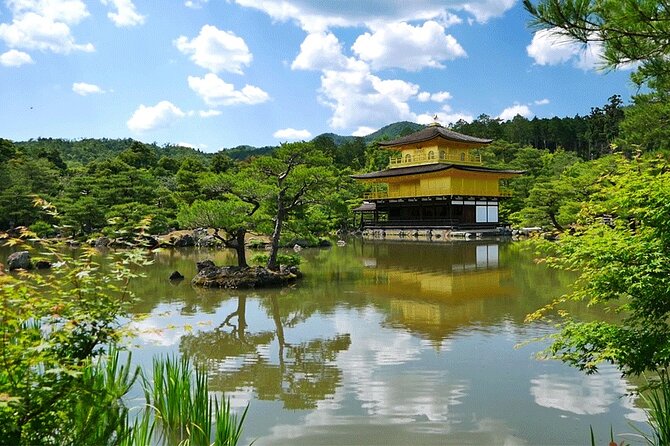
- Stop 2: Kinkakuji Temple, gold leaf, and the pond reflection moment
- Stop 3: Arashiyama Bamboo Forest Trail and why you’ll likely slow down
- Stop 4: Tenryu-ji Temple gardens and UNESCO since 1994
- Lunch time: how the meal fits the route (and why cash matters)
- Safety on Kyoto streets: why the guide’s job is more than facts
- Two morning options: what that flexibility buys you
- Price and value: is $99.49 actually fair for this much Kyoto?
- Who should book this e-bike tour (and who might want a different style)
- Should you book the Historical Kyoto e-bike tour?
- FAQ
- What’s the price of the Historical Kyoto E-Bike Tour?
- How long is the tour?
- How big is each group?
- What’s included in the tour?
- Are there different start times?
- Where does the tour start?
- Is lunch included?
- Can most people participate?
- Is the tour mostly biking or walking?
- What’s the cancellation policy?
Key points to know before you book
- Small group size (up to 8) keeps the pace human and makes it easier for your guide to help with questions.
- E-bikes reduce effort so you can cover more ground than you would on foot.
- You’re set up for major sights and calmer back streets, not just a checklist of photos.
- Guides like George, Pohan, Diego, and Jody are repeatedly praised for clear explanations and group safety.
- Lunch is part of the flow, not a separate trip, and it can involve cash-only options.
- Admission tickets are included for the key temple/shrine stops listed on the route.
Why this Historical Kyoto e-bike route works better than walking
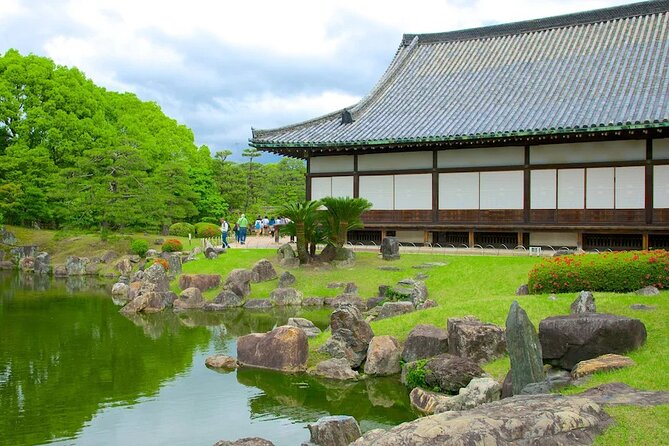
Kyoto has a way of making you choose between “see a lot” and “enjoy it.” This tour is designed for the first option without turning the day into a sprint. The e-bike helps you move between neighborhoods smoothly, so your energy stays for the sights that actually require your attention.
The route is built around a smart mix: a big-name shrine to start (Kitano Tenmangu), a world-famous gold-leaf temple (Kinkakuji), and then the iconic Arashiyama bamboo area paired with Tenryu-ji’s gardens. That combination matters because you get both spectacle and context—shrines, temple architecture, garden design, and everyday Kyoto street life.
I also appreciate the practical touch that shows up in the tour description: a bottle of water is included. In Kyoto heat or humidity, that’s not a luxury. It’s sanity.
You can also read our reviews of more cycling tours in Kyoto
Getting rolling at Memory Kyoto bike tour (and what to do if you struggle)
The tour starts and ends back at the Memory Kyoto bike tour meeting point in Nakagyo Ward (8-6 Umaryo-cho, Nishinokyo, Nakagyo-ku). It’s near public transportation, which helps if you’re taking buses or trains to get there.
That said, one recurring theme from real feedback is that the meeting location can feel a bit hidden—no giant sign screaming bike tour—so give yourself a few extra minutes. If you’re the type who hates being rushed, arrive early, then take a moment to re-check the exact spot on your mobile ticket instructions.
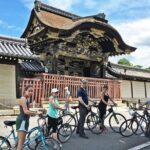
Once you’re in the group, you’ll get the gear you need: a bike and a helmet. That matters because you’re not negotiating bike rental logistics while everyone else is already rolling.
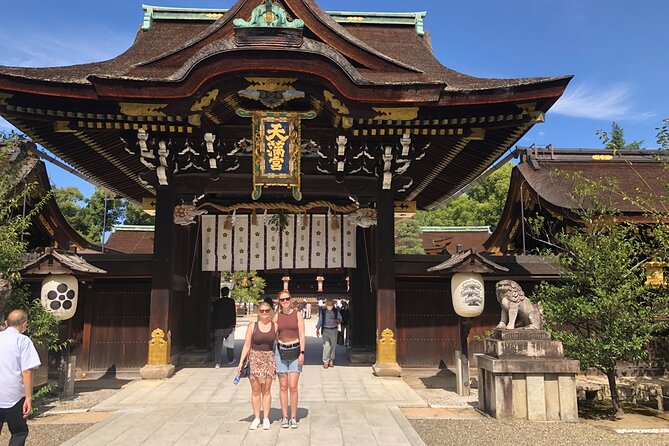
Stop 1: Kitano Tenmangu Shrine and the learning-story behind the plums
You begin at Kitano Tenmangu Shrine, with about 30 minutes on-site and admission included. This shrine is closely tied to Sugawara no Michizane, a deity of learning. Even if you don’t memorize every name, the guide’s job is to connect the symbolism to what you’re actually seeing—so the shrine doesn’t feel like random decor.
If you’re visiting early spring, there’s a big seasonal selling point: the shrine’s 1000 plum trees can be in bloom. That changes the vibe. Instead of just walking through temple grounds, you’re moving through a softened, flower-framed landscape.
A subtle benefit of starting here on a bike tour: you arrive before you’ve burned your legs. Kyoto shrines often involve standing in lines or slow browsing through crowded areas. Starting the day with riding energy makes it easier to slow down once you’re inside.
Stop 2: Kinkakuji Temple, gold leaf, and the pond reflection moment
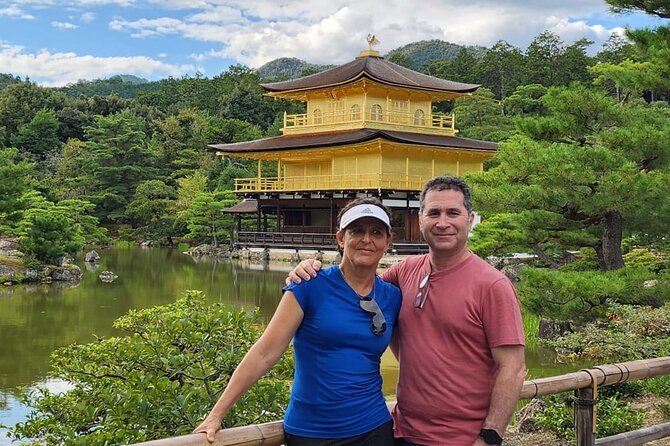
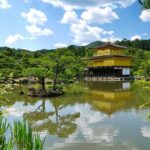
Next is Kinkaku-ji (Kinkakuji Temple), where you’ll spend about 45 minutes and have admission included. Kinkakuji’s signature is the gold leaf covering the buildings, with reflections on the surrounding pond. It’s one of those places where people say the words gold leaf and then forget to mention the real wow factor: the symmetry and the waterline views.
Plan for photos, yes—but also plan for time to walk around so you catch the temple from different angles. This tour gives you that time without forcing you to spend the whole day in one queue.
One more practical note: because you’re on an e-bike tour, your arrival is part of the pacing. You’re not starting from the far end of Kyoto and crossing the city in one long grind. That can make a noticeable difference between a good day and an exhausting one.
Stop 3: Arashiyama Bamboo Forest Trail and why you’ll likely slow down
Then comes the Bamboo Forest Trail in Arashiyama. Expect about 45 minutes here, with admission included. The Arashiyama Bamboo Grove is iconic for a reason: the height and density of the stalks change how the air feels. Even when it’s crowded, the visuals can still land hard.
This is also a stop where the day shifts from mostly riding to mostly being present. Bamboo areas tend to be narrow and slow-moving. You’ll get the best experience if you’re ready to walk and take your time instead of trying to zip through.
One good reason to schedule this with a guided e-bike route: you’re not stuck doing the entire “get there” part on foot. You’ll still have to slow down for the grove itself, but you’re more likely to enjoy the moment instead of rushing it.
You can also read our reviews of more historical tours in Kyoto

Stop 4: Tenryu-ji Temple gardens and UNESCO since 1994
Your final temple stop is Tenryu-ji, again with about 45 minutes and admission included. Tenryu-ji is a UNESCO World Heritage Site (listed since 1994), and the tour description focuses on its garden—described as one of the finest.
This is where the tour can feel especially worthwhile if you like design. Japanese temple gardens aren’t just pretty. They’re laid out to guide movement and sight lines. A good guide helps you notice what you’d otherwise miss: how paths and viewpoints are used, and why certain features matter.
Tenryu-ji can also be a weather-dependent experience. In one group story, heavy snow turned the day into a totally different scene, and the guide adjusted the plan to keep everyone comfortable. That’s a reminder: you’re not only buying access to sites—you’re buying someone’s ability to manage a real day out.
Lunch time: how the meal fits the route (and why cash matters)
Lunch happens during the remaining time of the tour, alongside the biking between stops. That means you’re not hunting for a meal on your own while everyone else is juggling schedules.
What you should know: lunch options can vary, and at least one cited lunch experience involved a ramen place that was cash-only. You’ll also want to be ready for the kind of casual fast-order setup where different payment habits might surprise you.
If you want an easy strategy, bring some yen in small amounts. It removes decision stress when your group is hungry and you’re trying to keep the tour pace.
Safety on Kyoto streets: why the guide’s job is more than facts
E-bike tours live or die on safety and confidence. The strongest praise in the feedback isn’t only about what the guides say—it’s about how they keep things controlled on roads shared with pedestrians and vehicles.
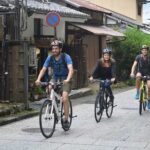
You’ll be riding in a city where bike infrastructure can be limited and where you share space with cars, buses, mopeds, and other cyclists. One review specifically advised this tour is best for teens and above, especially if you’re comfortable riding in street conditions rather than just smooth trails.
On the best days, that doesn’t feel scary—it feels guided. Names that popped up in safety-focused praise include George, Pohan, and Diego, with comments about guides explaining crossing points and bike rules in Kyoto. Another recurring detail: guides often position themselves to keep the group together, including riding at the front and back so nobody gets separated.
Bring a calm mindset. Ride predictably. And if you’re nervous, say something early. A good guide would rather adjust at the start than react later.
Two morning options: what that flexibility buys you
The tour offers two morning tour options, which is a real benefit in Kyoto. That flexibility helps if you want to match your day with other plans, or if you’re trying to avoid the worst of crowds at certain times.
It also matters because the itinerary is focused on specific places that can be popular at certain hours. If you can choose your start time, you can often improve how the day feels—less rushing, more breathing room.
If your Kyoto schedule is tight, this kind of planning flexibility is worth more than it sounds on paper.
Price and value: is $99.49 actually fair for this much Kyoto?
At $99.49 per person for roughly 5 to 6 hours, this tour prices itself as a shortcut to time. And it’s not just sightseeing convenience. You’re getting e-bike and helmet included, admission tickets for the main listed stops included, and a guide to connect the sites so you’re not just moving from landmark to landmark.
The real value comes from the combo:
- Transportation solved (you’re not walking long distances between far-apart areas)
- Time saved (more stops in one day)
- Structure added (stops have set time blocks, so your day doesn’t sprawl)
- Small group pacing (max 8 keeps it from turning into a cattle drive)
Could you DIY this route cheaper? Sure, if you rent bikes and figure out admissions, timing, and navigation on your own. But in Kyoto, “cheap” can quickly turn into “why am I standing in line twice” or “why am I lost right when I’m supposed to meet the group?” This tour is built to prevent that.
Who should book this e-bike tour (and who might want a different style)
This tour is a great fit if you want to see major Kyoto highlights while still getting a taste of local streets—especially if you’d rather ride than do steep walks all day. The e-bike makes it realistic for people who want culture without paying for it with sore legs.
It also fits well for families and mixed groups, because the small size helps the guide adapt. You’ll see that in the praise for guides who handled requests and even group comfort changes when weather got rough.
If you’re a confident cyclist used to city streets, you’ll probably feel more relaxed throughout. If you’re not, consider your comfort level honestly. Kyoto traffic is not a closed park, and this is still a street-based cycling experience with shared space.
Should you book the Historical Kyoto e-bike tour?
Yes—if your goal is a single-day hit of Kyoto’s biggest sights plus a calmer-feeling ride between them. For $99.49, you’re paying for time saved, admissions handled, and a guide who helps you make sense of the sites while keeping the group safe.
I’d skip or rethink it only if you strongly prefer very structured, low-traffic pedestrian sightseeing, or if riding city streets makes you tense. In that case, a walking tour plan might match your comfort better.
If you do book, come early, bring some cash for lunch just in case, and ride like you want to get where you’re going comfortably—because this tour is at its best when you can enjoy the stops, not just survive the transit.
FAQ
What’s the price of the Historical Kyoto E-Bike Tour?
It’s listed at $99.49 per person.
How long is the tour?
The duration is about 5 to 6 hours.
How big is each group?
The tour has a maximum group size of 8 travelers.
What’s included in the tour?
You get an e-bike and a helmet, plus a bottle of water. Admission tickets are included for the temple and shrine stops listed on the route.
Are there different start times?
Yes. You can choose between two morning tour options for flexibility.
Where does the tour start?
The meeting point is Memory Kyoto bike tour in Kyoto (Nakagyo Ward), and the tour ends back at the same meeting point.
Is lunch included?
The remaining time on the tour includes lunch, but the details and options can vary by the lunch stop used that day.
Can most people participate?
The listing says most travelers can participate.
Is the tour mostly biking or walking?
It’s a mix. You’ll do biking between locations, and you should expect some walking during shrine and temple time.
What’s the cancellation policy?
You can cancel for free up to 24 hours in advance for a full refund. Changes made less than 24 hours before the start time aren’t accepted, and refunds won’t be issued if you cancel within 24 hours.