REVIEW · KYOTO
Kyoto: Traditional Mini Umbrella Making Workshop
Book on GetYourGuide →Operated by 京都和傘屋辻倉 · Bookable on GetYourGuide
A tiny umbrella can hold a surprising amount of meaning. In this Kyoto umbrella making workshop, you learn wagasa craft techniques and create your own mini piece using genuine Japanese materials.
I especially love how hands-on it feels, and how the shop setting makes the process calm instead of rushed, even when the details get fiddly.
You’ll start near Shijo Kawaramachi—handy for pairing this class with a day of shopping and temple visits—then work on a traditional mini Hime Wagasa design. I also like that the class includes what you need to finish and display your umbrella, not just the lesson.
One heads-up: it’s not suitable for children under 6, so plan around that if you’re traveling with very young kids.
In This Review
- Key things that make this workshop worth your time
- Kyoto Umbrella Making: Your Mini Wagasa, Made With Care
- Finding the Workshop Near Shijo Kawaramachi (Central Kyoto Convenience)
- A Relaxed Workshop Atmosphere That Helps You Focus
- What You’ll Make: Your Mini Hime Wagasa
- The Hands-On Steps: Shaping, Assembling, and Paying Attention
- Instructor Experience: Patient Coaching From Ai Takenaka
- Personal Design and the Wagasa Meaning: A Gift of Happiness
- Take-Home Details: Bamboo Stand, Box, and Carry Bag
- Wheelchair Accessible, but Check Age Fit
- Price and Time: Is $70 Worth 90 Minutes?
- Before You Go: Etiquette and a Optional Finishing Touch
- Should You Book This Kyoto Umbrella Workshop?
- FAQ
- Where is the workshop located in Kyoto?
- How much does the Kyoto mini umbrella making workshop cost?
- How long is the workshop?
- What will I make during the class?
- What is included with the workshop?
- What languages are the instructors available in?
- Is the workshop wheelchair accessible?
- Is this workshop suitable for children?
- Are there any items that aren’t allowed in the workshop?
- Can I pay extra for finishing touches?
Key things that make this workshop worth your time
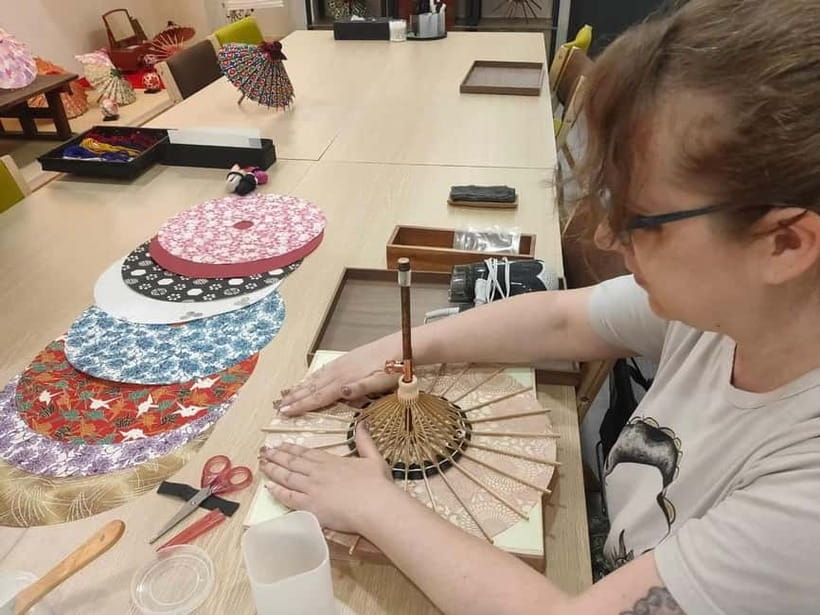
- Oldest umbrella shop setting: You’re learning in the atmosphere of a long-running wagasa tradition.
- You actually make the umbrella: The class is built around shaping and assembling your own mini wagasa.
- Genuine Japanese materials: The workshop emphasizes real materials, not a simplified craft kit.
- Design your own Hime Wagasa: Your mini umbrella ends up looking like your taste, not a generic souvenir.
- Take-home display included: You get a bamboo umbrella stand plus a box and carry bag.
Kyoto Umbrella Making: Your Mini Wagasa, Made With Care
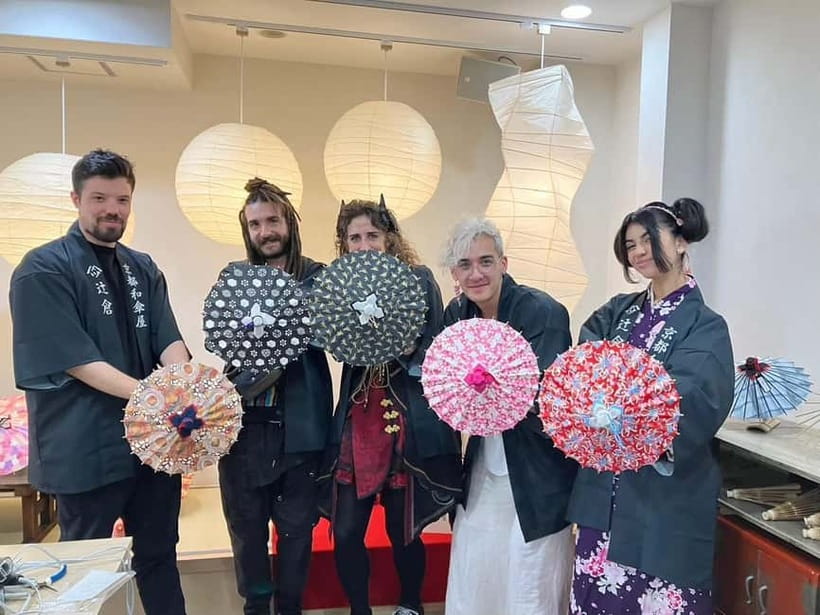
This workshop is a simple idea done the right way: you sit down with an artisan, follow a sequence of careful steps, and leave with a finished mini wagasa (specifically a Hime Wagasa-style umbrella). It’s the kind of activity that feels like stress relief. Your hands stay busy, your attention narrows, and somehow the time passes quickly.
The best part for me is the end result. You’re not just learning history—you’re making a small object that represents Japanese craft pride and the idea of happiness. The class also frames your finished umbrella as something you can gift, which makes the whole thing feel more personal than a typical grab-and-go souvenir.
At $70 per person for 90 minutes, the value comes from what’s included: materials for crafting your umbrella, plus the presentation pieces (bamboo stand, decorative box, and carry bag). In other words, you’re paying for an actual workshop outcome, not just a demonstration.
You can also read our reviews of more tours and experiences in Kyoto



Finding the Workshop Near Shijo Kawaramachi (Central Kyoto Convenience)
The meeting point is central Kyoto and easy to locate. It’s about a 2-minute walk north of the Shijo Kawaramachi intersection, right in the area that already anchors many shopping and sightseeing plans.
That location matters. You don’t need a half-day logistics puzzle to fit this in. If you’re already walking around Gion/Higashiyama-adjacent neighborhoods or doing a Shijo/Kawaramachi afternoon, this class slots in without turning into a separate mission.
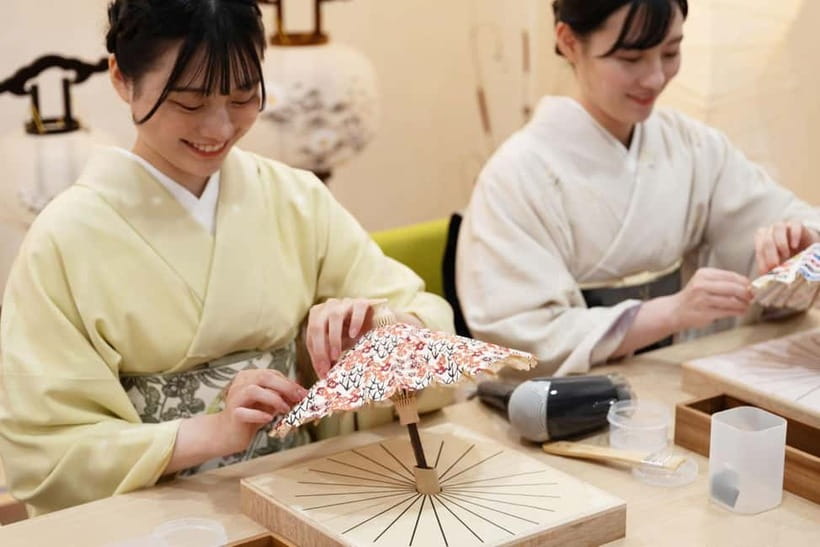
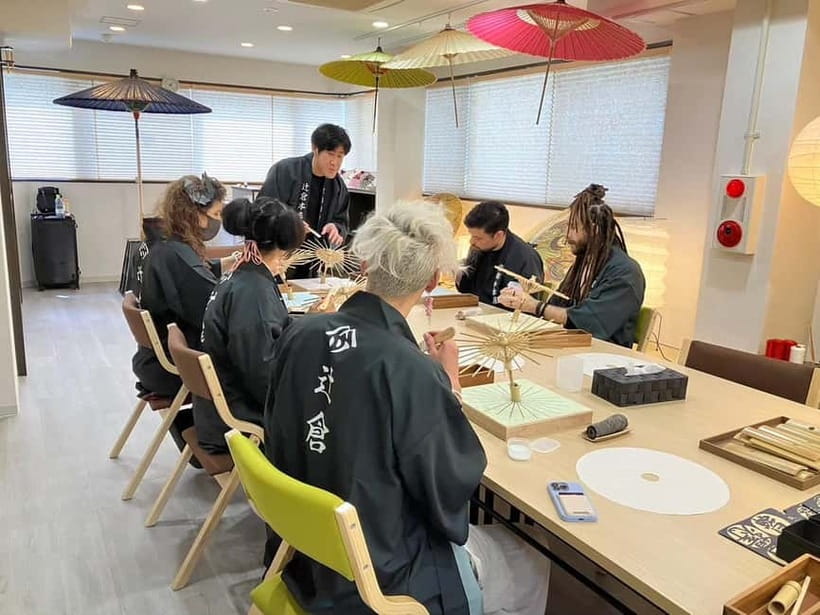
Also, the workshop is described as a serene space decorated with traditional umbrellas and lighting. That means you’re not just doing a craft at a table in the corner of a busy store. The environment is part of the experience.
A Relaxed Workshop Atmosphere That Helps You Focus
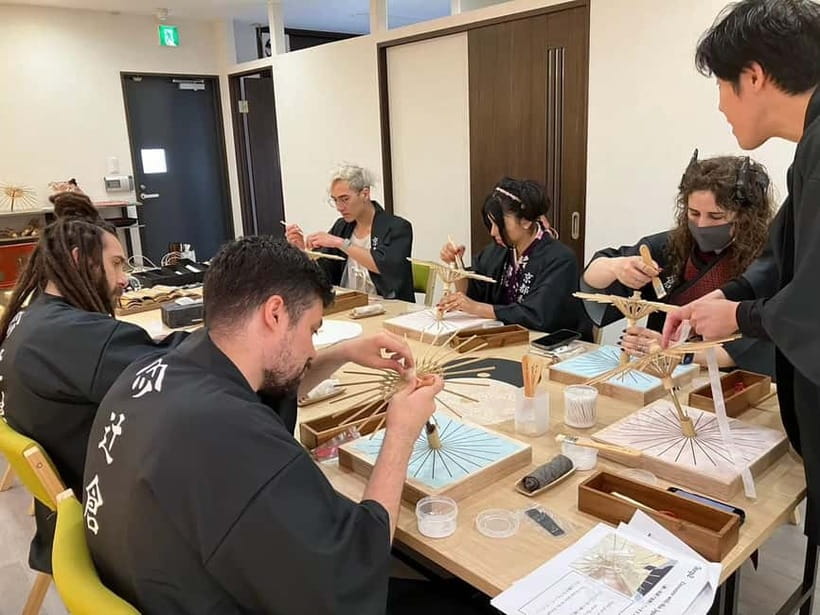
The class begins the way good craft instruction should: with a calm setup. You’re welcomed into a room with authentic Japanese umbrellas around you, plus traditional lighting that makes the space feel quiet and creative.
This is where the experience earns its popularity. Several people noted the instructors are patient and helpful, and that the process takes attention to detail. That doesn’t sound relaxing on paper—until you experience the fact that slow, careful steps tend to shut down the mental noise. One review even described how the work keeps your mind focused, which is exactly what you want during a busy Kyoto trip.
There’s also something charming about learning traditional craft in a place that looks like it belongs to the tradition, not to a modern craft mall. You’ll feel like you’re stepping into a working culture, not posing in front of artifacts.
What You’ll Make: Your Mini Hime Wagasa
You’ll craft a mini Japanese umbrella called a Hime Wagasa. The workshop emphasizes two things: using genuine Japanese materials and building a personalized design that reflects elegance and tradition.
During the class, you’ll be guided through shaping and assembling the umbrella components. You start with raw materials, then work through the careful steps that turn them into a finished umbrella. That hands-on building is key. You’re not just decorating a pre-made frame.
The “mini” part is practical too. It makes the project achievable in 90 minutes without turning it into a marathon craft session. You’ll leave with something you can actually display and pack, rather than a fragile artwork you’re afraid to breathe on.
The Hands-On Steps: Shaping, Assembling, and Paying Attention
The workshop is built around a sequence of detailed work. Your job is to shape and assemble each component properly, following the instructor’s guidance.
This is the part where patience pays off—both yours and the instructor’s. Reviews repeatedly mention the teachers being patient, helpful, and skilled with these materials. In plain terms: they know how to slow you down without making you feel slow.
You’ll likely spend time getting comfortable with fine movements and careful alignment. That sounds technical, but the real takeaway is emotional: you get the satisfaction of seeing your progress as the umbrella comes together, not in vague “maybe it’ll be done later” terms. One review described the class as a true highlight of the trip for that exact reason—an earned, visible accomplishment.





Instructor Experience: Patient Coaching From Ai Takenaka

The instructors are a big reason the experience rates so highly. One standout name that comes up is Ai Takenaka, described as friendly and helpful.
What you’re looking for in a workshop isn’t just someone who can make umbrellas. You want someone who can explain the steps clearly and keep you moving when something doesn’t line up on the first try. The reviews reflect that style—patient guidance, clear instruction, and a friendly vibe that makes the work feel approachable even if you’ve never held these tools before.
If you’re worried you might be slow at crafts, this is still a good bet. People mention the guidance is supportive, and the class encourages you to complete your piece with care. You’ll leave knowing you did the work, not just watched it happen.
Personal Design and the Wagasa Meaning: A Gift of Happiness
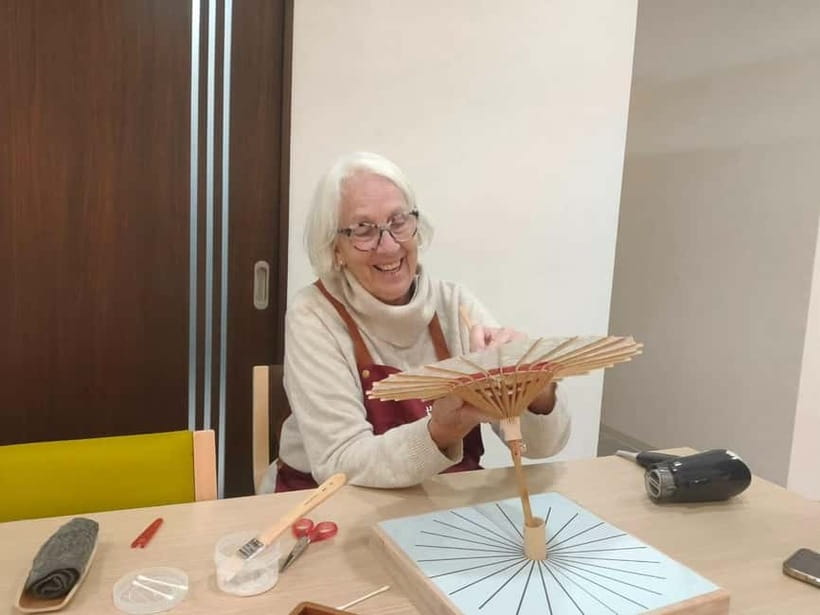
A huge part of the class is personalization. You’re not making a generic umbrella. You design your own mini wagasa so the final piece reflects your style and appreciation for the tradition.
The workshop also frames the umbrella as a symbol of happiness, something you can gift. That matters because it changes the emotional tone of the souvenir. You’re not leaving with clutter. You’re leaving with an object that feels like it came from a meaningful moment.
Some umbrellas in Kyoto can look pretty but feel a little empty—just decorative. This class is different because the umbrella is tied to time, effort, and guidance. When you open the box at home, it’s not just a souvenir. It’s proof you learned a real craft step-by-step.
Take-Home Details: Bamboo Stand, Box, and Carry Bag
This is one of the best “value for money” parts of the workshop. Your mini umbrella isn’t just handed to you. You get the display and packing essentials:
- Bamboo umbrella stand to take home
- Decorative box
- Carry bag
That means your umbrella has a home right away. It also helps a lot with the practical side of travel. You’re less likely to worry about how to pack something delicate, and you don’t end up needing extra supplies on the spot.
In reviews, people specifically mention the bamboo stand as part of what made the workshop feel complete. That’s not a throwaway detail. A display stand turns your finished mini umbrella into something you’ll actually use to decorate your space.
Wheelchair Accessible, but Check Age Fit
The workshop is listed as wheelchair accessible, and the instructor team offers Japanese and English. That’s a helpful combination for travelers who want real instruction with clear language support.
The age note is more specific: children under 6 years aren’t suitable. One review mentioned a group with kids as young as 3, but the published rule is still the rule. If you’re traveling with younger children, I’d treat the class as something to confirm with the provider first, so you don’t show up expecting it to work for a specific age group.
If you’re bringing a child around the minimum age or older, the workshop’s hands-on nature can still be a great fit. Just keep expectations realistic about attention to detail.
Price and Time: Is $70 Worth 90 Minutes?
For $70 per person and 90 minutes, the question isn’t just the lesson—it’s the output. You’re paying for:
1) instruction from a working craft team,
2) materials to build a real mini umbrella, and
3) take-home presentation items (bamboo stand, box, carry bag).
If you compare this to many “make something” classes that end with a smaller token and no proper display, the included items make a difference. You’re leaving with a functional-looking craft object, not only a short activity memory.
Ninety minutes is also a smart length. It’s long enough for real assembly work, short enough that you can still enjoy the rest of Kyoto the same day. That flexibility is practical, especially if you’re hopping between neighborhoods.
Before You Go: Etiquette and a Optional Finishing Touch
This workshop has clear behavior rules. Smoking, alcohol and drugs, and explosive substances are not allowed. It’s a calm craft room, so those restrictions make sense.
There’s also a useful option: you can request a craftsman to add finishing touches to your mini umbrella for an additional fee. If you want your final piece to look extra polished, this is worth considering—just plan for the extra cost.
One more practical note: the workshop runs with an instructor who speaks Japanese and English. If you prefer instruction in English, confirm the session language when you book.
Should You Book This Kyoto Umbrella Workshop?
Book it if you want a Kyoto experience that’s hands-on, culturally grounded, and satisfying at the finish line. This is ideal if you like crafts, you enjoy slow attention to detail, or you want a meaningful take-home item that isn’t just mass-made.
Skip it or think twice if you’re traveling with children under 6, or if you’re looking for a quick photo stop rather than a guided build. This class rewards patience and a steady pace, not speed.
If you’re on the fence, consider this: for $70, you don’t just learn about wagasa. You create a mini umbrella you can display at home, complete with a stand and a box that makes it gift-ready.
FAQ
Where is the workshop located in Kyoto?
The workshop is in central Kyoto, about 2 minutes’ walk north from the Shijo Kawaramachi intersection.
How much does the Kyoto mini umbrella making workshop cost?
The price is $70 per person.
How long is the workshop?
The workshop duration is 90 minutes.
What will I make during the class?
You’ll craft your own mini Japanese umbrella, a Hime Wagasa.
What is included with the workshop?
All materials for crafting your mini Hime Wagasa are included, along with a bamboo umbrella stand to take home, plus a decorative box and carry bag.
What languages are the instructors available in?
The instructor speaks Japanese and English.
Is the workshop wheelchair accessible?
Yes, it’s listed as wheelchair accessible.
Is this workshop suitable for children?
It’s not suitable for children under 6 years.
Are there any items that aren’t allowed in the workshop?
Smoking, alcohol and drugs, and explosive substances aren’t allowed.
Can I pay extra for finishing touches?
Yes. You can opt to have a craftsman add finishing touches for an additional fee.