REVIEW · KYOTO
Show Tickets at Non-Verbal Theatre GEAR
Book on Viator →Operated by ART COMPLEX · Bookable on Viator
Kyoto after dark is usually quiet. This is the kind of show that turns the evening loud and fun, with no language barrier and plenty to watch. I love how non-verbal storytelling keeps everyone on the same page, and I also like the way the stage mixes breakdance, mime, juggling, and magic into one fast-moving plot.
The one drawback to plan for: the show uses strong light, big sound, and some fully dark moments, so it may be rough if you get overwhelmed easily.
If you’re counting on Japanese to make sense of the night, you can relax. This performance is built to communicate through movement, timing, and modern effects, so you’re following the story with your eyes and ears instead of your vocabulary. Still, there’s also a practical reality: it’s in a small space up a few flights of stairs, so bring the right expectations for stairs if you need help getting around.
In This Review
- Key Things I’d Be Sure To Know First
- Kyoto After Temples: Why This Show Works So Well at Night
- GEAR Theatre and the Non-Verbal Storytelling You Actually Feel
- The Performer Lineup: Break Dance, Mime, Juggling, and Magic
- Projection Mapping and LED Costume Effects: Where the Tech Becomes Character
- The 90-Minute Flow and What a Small Black-Box Theatre Does to You
- Sensory Notes: Bright Lights, Loud Sound, and Brief Full-Dark Scenes
- Who Should Book GEAR in Kyoto (and Who Might Want Another Plan)
- Price and Value: Is $47.57 Worth It?
- How to Plan Your Evening Around the Show
- Should You Book GEAR Non-Verbal Theatre in Kyoto?
- FAQ
- FAQ
- How long is the GEAR non-verbal theatre performance?
- Is the show language-free or does it rely on Japanese?
- What are the age rules for the theatre?
- Where do I redeem my ticket?
- Is the venue easy to access if there is limited mobility?
- What sensory effects should I expect during the show?
- How many people are in the experience group?
- Will I get confirmation after booking?
Key Things I’d Be Sure To Know First
- Non-verbal performance: You won’t need Japanese to follow the story.
- A tiny theatre with close viewing: The action feels near because the space is small.
- Projection mapping + LED costume effects: Tech is part of the storytelling, not just background.
- A real mix of specialist performers: Break dancing, mime, juggling, and magic are all in the show.
- Sensory staging is real: Bright lights, loud sound effects, and brief full-dark scenes are part of the design.
- Family-friendly timing options: Kids under 4 aren’t allowed, but there’s a matinee policy on 1st and 3rd Saturdays.
Kyoto After Temples: Why This Show Works So Well at Night
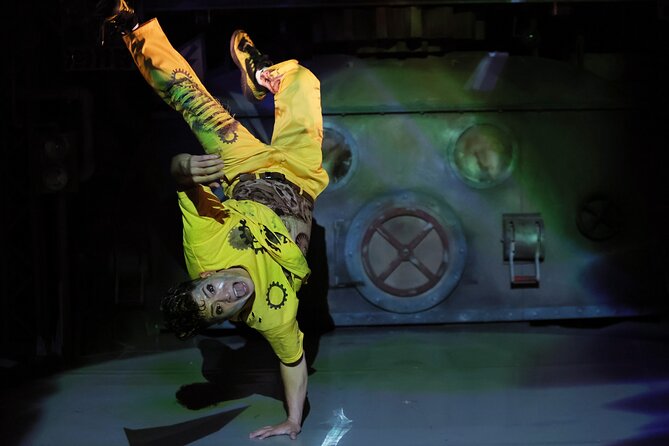
Kyoto is magical in the morning, but by evening many of the classic temple and shrine sights are winding down. This is a smart way to spend time after dark without needing a reservation at a specific restaurant or a long late-night commute. It’s also built for groups that include different ages, which matters when your day already includes walking, crowds, and schedules.
I like that it’s positioned as confidence-friendly family entertainment once the evenings get serious. The show’s theme leans into the idea of different parts working together, like gears meshing. You feel that message in the staging and the way the performers trade focus without words.
At about 90 minutes, it also fits cleanly into a Kyoto itinerary. You get a complete performance arc without committing to an all-night plan, which is a big deal when you’re trying to balance rest with sightseeing.
You can also read our reviews of more tours and experiences in Kyoto

GEAR Theatre and the Non-Verbal Storytelling You Actually Feel
GEAR takes place in the GEAR Theatre, Kyoto’s first-of-its-kind non-verbal performance space. The show uses a moving storyline set in the future, and it’s designed to stimulate your five senses instead of relying on spoken dialogue. In plain terms: you watch bodies, timing, sound cues, lighting cues, and effects do the storytelling work.
The biggest advantage for your trip is how language-proof it is. Even if you’ve just arrived in Japan and you’re still learning basics, you don’t lose anything when the performance doesn’t speak. You can focus on the physical craft and stage pictures, which also makes it easier to enjoy even if your day already had a lot of culture.
There’s also a strong sense of pace. The production keeps moving, and because it’s non-verbal you’re always reading what’s happening in front of you. If you like theatre that feels like choreography, it’s a great match.
The Performer Lineup: Break Dance, Mime, Juggling, and Magic
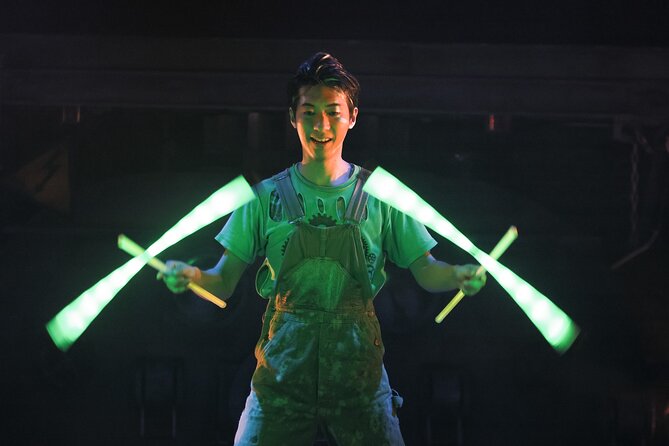
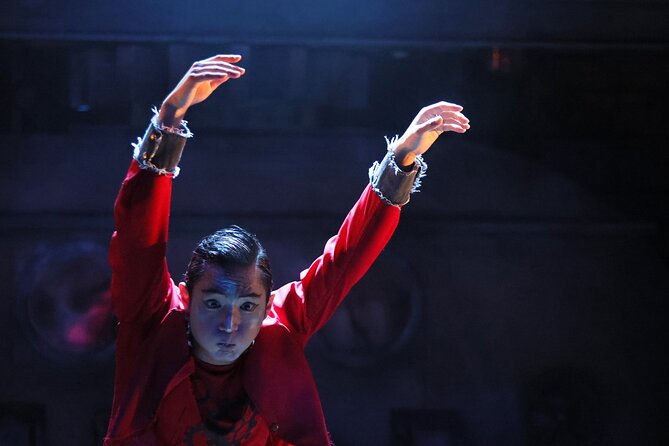
The show is built around skilled specialists, not general variety acts. You’ll see a championship-level break dancer, a mime actor who’s credited as a world tournament gold medalist, and a Japanese record-holder juggler. There’s also a magician who brings in talk about media, which helps keep the show feeling modern and playful.
Even without named characters, the performers tell a clear story through their disciplines. Break dance brings energy and rhythm. Mime adds clarity and emotional expression without needing words. Juggling creates visual precision and suspense, and magic brings that moment where you lean forward because you expect something surprising.
And yes, the reviews point out the show has a cast of five very talented actors, which fits the way the stage keeps shifting focus. That matters because with five people you get more variety in the action, not just the same performer repeating a style.
Projection Mapping and LED Costume Effects: Where the Tech Becomes Character
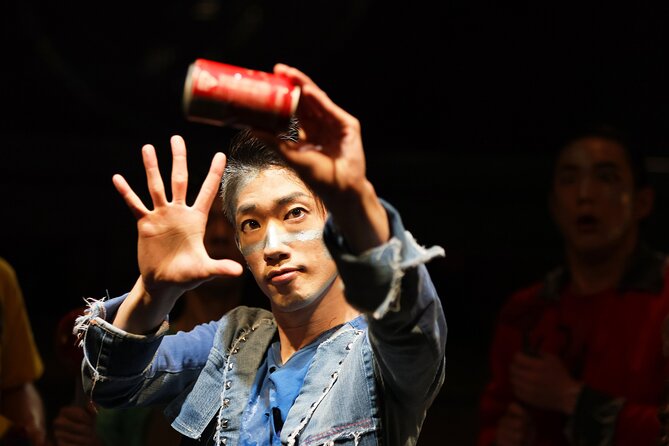
GEAR uses stage technology you don’t usually get in traditional temple-adjacent sightseeing. The production includes projection mapping, and it also features an LED dress that changes color with remote control. In other words, the costume isn’t just decoration. It behaves like part of the performance language.
This is the kind of tech that makes the show feel future-facing while still staying understandable. Projections can show motion, environment, and mood without a narrator explaining it. Lighting that changes quickly also helps you follow what the performers are doing, even during fast transitions.
There’s also a broader creative idea at work: the show connects different “gears,” different skills, different energies, and different colors into one balanced whole. It’s not just a tech demo. It’s a story structure.
If you’re the type who likes modern art and design, this is where it clicks. The show looks designed, not improvised.
The 90-Minute Flow and What a Small Black-Box Theatre Does to You
The show runs about 1 hour 30 minutes. Reviews describe it as fast and packed, and the staging is clearly made for a small room. This is one of those rare situations where the theatre size becomes part of the experience instead of a limitation.
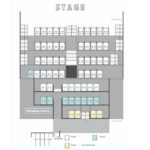
Because it’s a tiny space, you get a close feel for the performers’ movement and facial expressions. That closeness helps a non-verbal show land. If you’re sitting nearer, you’re seeing small gestures and timing details that you might miss in a bigger venue.
One practical note: you’ll want to arrive with some patience for the building layout. The redemption point is on the 3rd floor (in the building listed for GEAR Theatre), and there’s no elevator. You may need to climb stairs to reach the correct level.
If you’re using a cane or you have mobility limits, the information specifically says to contact the Gear ticket office before booking so they can help with seat arrangements. Don’t assume it’s step-free.
You can also read our reviews of more tours and experiences in Kyoto


Sensory Notes: Bright Lights, Loud Sound, and Brief Full-Dark Scenes
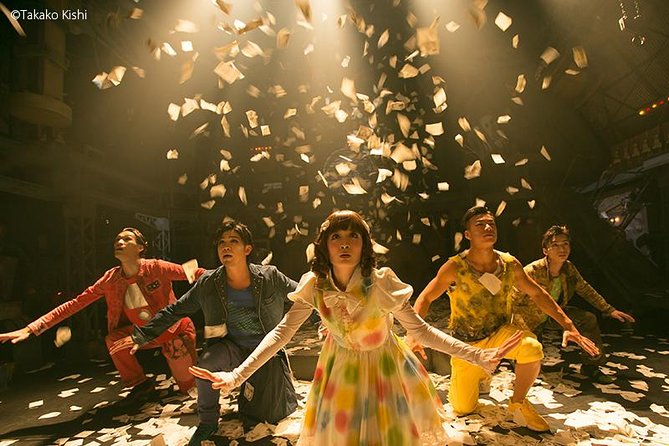
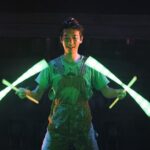
This show is designed to hit the senses hard. The staging includes strong lights and large sound effects as part of the performance. If you have sensory sensitivity, plan accordingly and consider where your comfort line is.
There’s also mention of fully dark scenes. Not every moment goes dark, but some parts do, and that can be a problem if you feel anxiety in low-light or fully black conditions. If that’s you, it’s worth thinking through before you buy a ticket.
A helpful mindset: this isn’t background music theatre. It’s a planned production with theatrical sound and lighting cues, like a concert meets stage magic. You’ll likely love it if you enjoy that kind of energy, but you’ll want to be honest with yourself about triggers.
Who Should Book GEAR in Kyoto (and Who Might Want Another Plan)
GEAR is made for people who want a break from an all-temple day. If you’re tired of walking, admiring gates, and reading signage, this is a change of pace that still feels connected to Japanese creativity—just in a modern stage format.
It also suits families, with clear age rules. Kids under 4 can’t enter for security reasons. But there’s a flexible option: on the 1st and 3rd Saturday of the month, the matinee welcomes children of any age. If you’re bringing preschool-age kids, it’s also specifically recommended you contact the ticket office in advance so they can make proper seat arrangements.
For younger primary school age children, there’s a supervision rule: they must be accompanied by an adult, and up to two children per one adult are allowed.
If you’re travelling with multiple generations, the non-verbal format is a big equalizer. Everyone can enjoy the physical storytelling without translating. And because it’s a compact 90 minutes, it’s easier for kids to handle than late-night shows.
Price and Value: Is $47.57 Worth It?
At $47.57 per person, it’s not a bargain ticket, but it also isn’t priced like a luxury dinner experience. You’re paying for a concentrated, high-skill production: multiple specialist performers, plus modern visuals like projection mapping and reactive lighting through an LED costume.
The value gets stronger if you compare it to the cost of a single high-end activity on an evening in Kyoto. This ticket includes admission, and the show length is long enough to feel like a complete experience rather than a short filler stop. The theatre is also capped at a maximum of 10 in the experience group, which often translates into better sightlines and a more personal feel.
So I’d frame the choice like this: if you want something different from temples—something modern, physical, and easy to follow—this price is reasonable for the production quality. If you need a quiet, low-stimulation night, you might prefer something calmer.
How to Plan Your Evening Around the Show
This experience is near public transportation, which matters because Kyoto evenings can make taxis expensive and walking long distances tiring. You’ll want to build in time to reach the exact meeting and redemption point.
For ticket redemption, the meeting location is:
GEAR / Non-Verbal theatre, Japan, 604-8082 Kyoto, Nakagyo Ward, Benkeiishichō, 56 1928ビル 3階
Because it’s on the 3rd floor with no elevator, plan for a little extra buffer if you’re carrying a bag or have limited mobility. And if you’re going with anyone who walks slowly, arriving early is your friend.
Also, the booking confirmation comes through within 48 hours if space is available. That’s useful if you’re organizing a day-by-day itinerary and don’t want to wait too long to lock your evening.
Should You Book GEAR Non-Verbal Theatre in Kyoto?
Yes—if you want a high-energy, language-free show that feels modern and skillful. I’d book it when you’re looking for an evening plan that’s easy for mixed ages, and when you like theatre that communicates through movement and technology.
I’d think twice before booking only if you know you’re sensitive to bright lights, loud sounds, or fully dark scenes. If that’s your situation, you can still enjoy Kyoto, but this might not be the right match.
If you’re undecided between another night of sightseeing and something indoor, consider this: a 1 hour 30 minute non-verbal performance can reset your whole trip day. It’s one of those nights where the city stops being just about sights and becomes about experience.
FAQ
FAQ
How long is the GEAR non-verbal theatre performance?
It runs about 1 hour 30 minutes.
Is the show language-free or does it rely on Japanese?
The show is non-verbal, so you can enjoy it without needing Japanese.
What are the age rules for the theatre?
Kids under 4 can’t enter the theatre. On the 1st and 3rd Saturday of each month, a matinee welcomes any aged children.
Where do I redeem my ticket?
You redeem at GEAR /Non-Verbal theatre, Japan, 604-8082 Kyoto, Nakagyo Ward, Benkeiishichō, 56 1928ビル 3階.
Is the venue easy to access if there is limited mobility?
There is no elevator, and you may need to climb stairs to reach the 3rd or 4th floor. If you use a cane or need assistance, you should contact the Gear ticket office before booking.
What sensory effects should I expect during the show?
Strong lights and big sound effects are part of the production. There are also fully dark scenes at some points.
How many people are in the experience group?
The experience has a maximum of 10 travelers.
Will I get confirmation after booking?
Confirmation is received within 48 hours of booking, subject to availability.