REVIEW · KYOTO
1 Hour Geisha Show in Kyoto
Book on Viator →Operated by GuideMe Japan · Bookable on Viator
A real Maiko up close changes your view of Kyoto. This 1-hour geisha experience is built around short, high-impact dances followed by conversation time, photo moments, and a traditional game. You’re also choosing between two atmospheres: a classic tea house setting or a dedicated showhouse in Gion.
What I love is the face-to-face interaction. You’re not stuck watching from far away; you get a Q&A and a photo session with an active Maiko, plus structured context from a professional guide/translator. Second: the show actually teaches as it entertains—two short dances (about 10 minutes total) plus the cultural backstory and green tea help you understand what you’re seeing.
The main thing to consider is that this is not a full hour of dancing. The performance is intentionally short to preserve the art, so expect the schedule to be shared between dancing, questions, photos, and the game.
In This Review
- Key Highlights You’ll Notice Fast
- What You’re Really Booking: A Short Maiko Moment, Not a Full Hour of Dancing
- Tea House vs Gion Theater: Pick the Atmosphere That Fits Your Trip
- Kamishichiken Street: How the Hour Unfolds
- The Guide Factor: Translation That Makes the Art Click
- The Photo Session: Plan for Intimacy, Not Stadium Views
- Price and Value: Why $79.59 Can Be a Great Deal (or Feel High)
- Timing and Punctuality: Build in Extra Flex Time
- If You Add Kimono Rental and Hair: Where to Go First
- Who This Show Fits Best (and Who Might Skip It)
- Should You Book This 1-Hour Geisha Show in Kyoto?
- FAQ
- How long is the geisha show?
- Is it a full hour of dancing?
- What’s included in the tour?
- What happens during the show?
- What are the two venue options?
- What’s the group size limit?
- Is there a kimono rental option, and what should I do?
Key Highlights You’ll Notice Fast
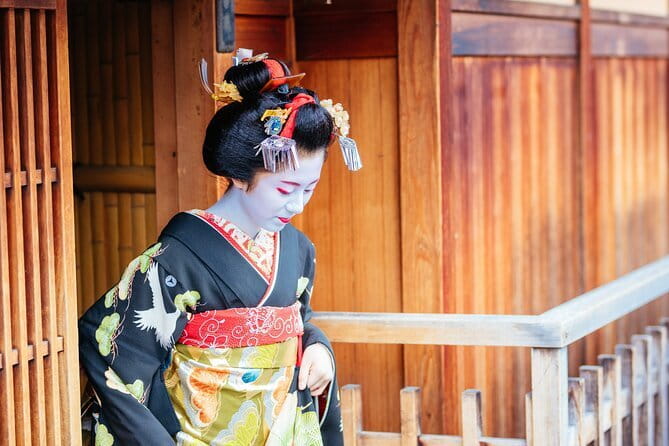
- A rare Maiko moment in Kyoto: only about 40 remain in Kyoto today, so this feels special for a reason
- Two dances, then Q&A: the dancing is intentionally brief (about 10 minutes total)
- Photo time with the Maiko: planned into the flow, not left to chance
- Tea house vs showhouse: choose between an authentic Kyo-machiya venue or Gion Theater
- Small-group experience: maximum of 25 travelers keeps it more personal
- A traditional Japanese game: it’s fun, but it also keeps the tone respectful and cultural
What You’re Really Booking: A Short Maiko Moment, Not a Full Hour of Dancing
The title sounds like a long performance, but the rhythm is different. The Maiko’s dancing portion is intentionally short—around two short dances totaling about 10 minutes—because the art form is preserved through careful limits. The rest of the time is where the value lands: Q&A, photos, and a traditional Japanese game.
That matters for your expectations. If you want 60 uninterrupted minutes of choreography, this may feel like less than you hoped. If you want a rare, up-close cultural experience with time to actually ask questions and interact, this format makes sense. I like that it’s respectful of the craft and doesn’t turn the performance into a marathon.
Also, because it’s a real, active Maiko, the experience is meant to feel controlled and intimate. This is not a big theater spectacle, and that’s part of the point.
You can also read our reviews of more tours and experiences in Kyoto


Tea House vs Gion Theater: Pick the Atmosphere That Fits Your Trip
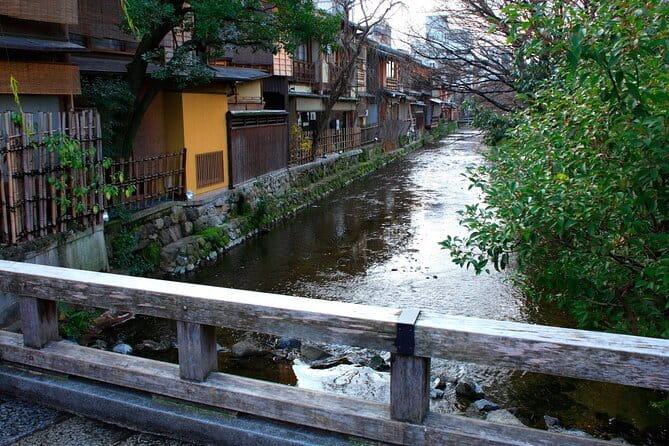
You get two venue options, and they change the feel of the whole experience:
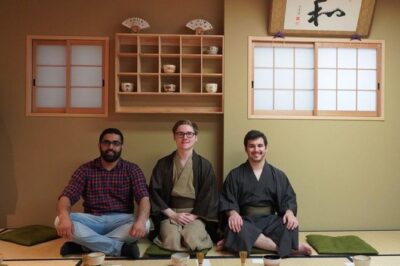
- Tea House option: held inside an authentic Kyo-machiya, Kyoto’s traditional wooden townhouses
- Gion Theater option: held in a dedicated showhouse designed for this kind of performance
I’d recommend you choose based on what you want to photograph and how you want the mood to feel. The tea house option usually appeals if you want old-school Kyoto textures—wood, calm, and that lived-in neighborhood atmosphere. The showhouse option can feel more purpose-built and straightforward, especially if you’re worried about sight lines or crowding in a smaller traditional space.
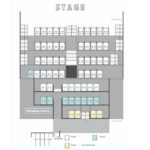
One practical tip: check the photos before booking. Seating and sight lines can vary by room layout, and a “better seat” here isn’t about VIP perks—it’s about where you end up relative to the table setup and stage area. If you’re booking with someone who cares a lot about views, the photos matter.
Kamishichiken Street: How the Hour Unfolds
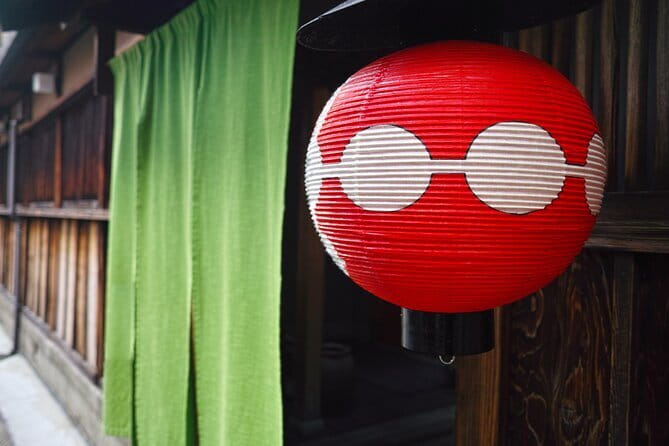
The experience is centered around the Gion-area streets, specifically Kamishichiken Street. That’s a meaningful choice because this is the kind of area where geiko and maiko culture is historically concentrated, so you’re not just traveling to a show—you’re stepping into the neighborhood context.
Here’s what to expect in the flow:
- You watch a professional performance by the Maiko (with dancing that totals about 10 minutes)
- You get a Q&A portion so you can ask questions directly
- There’s a photo session planned with the Maiko
- You also play a traditional Japanese game together afterward
- You’ll have traditional green tea included as part of the experience
Depending on the day, some elements of the interaction can vary. That’s normal for live cultural events. The reliable part is the overall structure: short dance, interaction, and then a group activity that keeps things light while still staying respectful.
The Guide Factor: Translation That Makes the Art Click
This experience includes a professional guide/translator, and the reviews strongly suggest that the best sessions depend on this. You’ll hear explanations in a way that doesn’t require you to already know Kyoto’s geisha culture to follow along.
What I like about the way this is designed is that it turns the show into something you can process. Instead of only admiring motions, you get context for what you’re seeing—how training and tradition show up in the dances, how the role works, and what’s behind the style.
The guide also helps keep the group organized during the Q&A and photo moments. In a setting where you’re trying to be polite in a small space, a good host saves you from awkward guesswork. Some guides are specifically referenced by name in past visits (like Soichiro, Chihiro, Genki, Ai, and Yuko), and the consistent theme is friendly, clear communication with solid translation.
The Photo Session: Plan for Intimacy, Not Stadium Views
This show is built around being up close and personal, so photos are a major part of why people book. But because it’s a smaller room setup (especially in a tea house), your camera angle matters more than you’d think.
One real consideration: if you end up seated in the less optimal spot, your view of the dance can be blocked by the table layout in the tea setting. That’s not a dealbreaker—this isn’t a bad experience if your photos aren’t perfect—but it is something I’d think about ahead of time.
My advice:
- If photos matter a lot, pick the venue whose layout best matches the images from the listing photos you review before booking.
- Bring patience. You’re photographing an intimate moment, not a performance staged for photographers from one fixed angle.
- Keep it respectful. The show is short, and the interaction time is part of the ceremony.
You can also read our reviews of more tours and experiences in Kyoto



Price and Value: Why $79.59 Can Be a Great Deal (or Feel High)
At $79.59 per person, you’re paying for access and time with an active Maiko in Kyoto. That’s where the value argument starts.
Here’s the balanced view:
- Why it’s worth it for many people: this is rare access. The Maiko limit in Kyoto (about 40 remaining) is a big clue that this kind of close interaction isn’t something you can casually “do on your own.”
- Why it can feel expensive to some: the actual dancing is brief—two short dances totaling around 10 minutes—and the rest of the hour is interaction and cultural programming.
That means you should ask yourself a simple question before you book: Do I mainly want a beautiful dance performance, or do I want a rare chance to talk, ask questions, and learn in person?
If you’re the first type (dance-only), the price might sting. If you’re the second type (meaning + interaction), the format can feel very fair, especially with small group size (up to 25) and included green tea plus guide/translator support.
Also note: group discounts are available, and that can help if you’re traveling with friends or family.
Timing and Punctuality: Build in Extra Flex Time
This kind of cultural experience runs on a tight schedule because there’s limited performance time and a set flow (dance → Q&A → photos → game). One past issue raised was that show times can change, and late arrivals can become a problem once the session begins.
You don’t need to panic, but you should plan smart:
- Arrive early enough to absorb any time changes or wayfinding stress.
- Don’t treat the start time like a suggestion.
- If you’re doing kimono rental the same day, plan your buffer carefully.
In practical travel terms: Kyoto neighborhoods can be slower than you expect when streets, crowds, and walking pace all add up.
If You Add Kimono Rental and Hair: Where to Go First
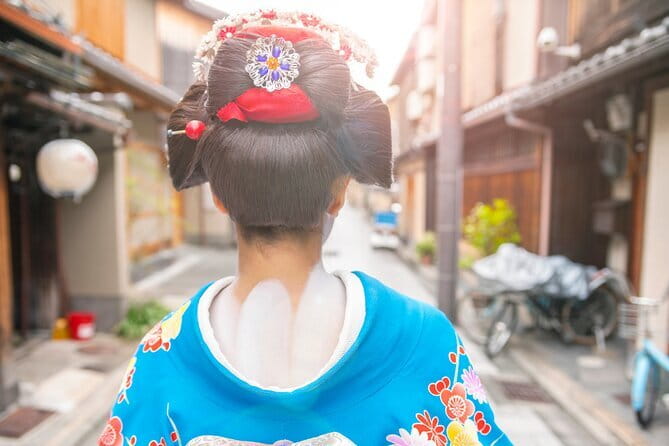
If you selected the kimono rental & hair set option, you’ll need to go to the rental shop before the show. The shop listed is:
Kyoto Kimono Rental Mimosa
362-2 Masuyacho, Higashiyama Ward, Kyoto 605-0826
Open daily: 8:00–18:00
What matters most for you:
- Go to the shop on your tour day, before the performance
- Tell the staff you’re from GuideMe Japan and give your name
- No payment is required at the shop because the rental and hair set are already included
This is the key logistical piece. If you’re prone to tight schedules, set aside enough time so you’re calm when you arrive.
Who This Show Fits Best (and Who Might Skip It)
This experience is best for you if:
- You want up-close interaction with a Maiko, not just a distant performance
- You enjoy learning through Q&A and cultural context
- You like small-group cultural moments more than big-auditorium events
- You want a Kyoto activity that feels authentic and deliberately paced
You might reconsider if:
- You only care about long dance performances (this is not a full hour of dancing)
- You’re extremely sensitive to seating/view variations, especially in tea house layouts
- You get stressed by schedule changes and tight timing (because punctuality matters)
For families, this also has a built-in group-friendly feel because it includes a traditional game and the tone tends to be welcoming. Some experiences reported that children enjoy the end portion too, but the core structure is the same: dance, Q&A, photos, and game.
Should You Book This 1-Hour Geisha Show in Kyoto?
I’d book it if your goal is a rare Kyoto experience where you can meet a Maiko, ask questions, and watch short dances in an intimate setting. The small-group size, included guide/translator, and included green tea help make the hour feel purposeful, not just paid admission.
I’d think twice if you’re expecting nonstop dancing for the whole hour or if you’re counting on a guaranteed perfect view. In both venue styles, your best outcome depends on how you’re seated and how early you arrive.
If you’re booking, do two things that make the biggest difference:
1) Choose tea house vs Gion Theater based on the photos you see before you confirm.
2) Give yourself extra time to arrive so you don’t risk missing part of the session.
If that sounds like your style, this is a strong, memorable Kyoto stop.
FAQ
How long is the geisha show?
It runs about 1 hour to 1 hour 30 minutes.
Is it a full hour of dancing?
No. The Maiko performances are intentionally short to preserve the art, and she will not perform for the full hour.
What’s included in the tour?
You get geisha meeting and experience time, traditional Japanese green tea, and a professional tour guide/translator.
What happens during the show?
You can expect two short dances (about 10 minutes total), then Q&A, a photo session, and a traditional Japanese game.
What are the two venue options?
You can choose between a Tea House option held inside an authentic Kyo-machiya, or a Gion Theater option held in a dedicated showhouse.
What’s the group size limit?
The tour has a maximum of 25 travelers.
Is there a kimono rental option, and what should I do?
If you selected kimono rental and hair set, you need to visit Kyoto Kimono Rental Mimosa before the show (no payment is required at the shop since it’s included).