REVIEW · KYOTO
Kyoto Sword Experience – includes Museum Ticket/Ninja Experience
Book on Viator →Operated by Maikoya · Bookable on Viator
A Samurai sword session in Kyoto can feel like cosplay. This one is also structured training time in a traditional dojo, plus a free museum visit at the Samurai Ninja Museum. You dress as a samurai, learn basic Iaido moves with a blunt replica, and get a chance to throw a ninja star.
I especially like that it follows Japanese safety rules (no sharp blades), so you get the fun without the stress. I also like the included museum ticket and history-style walkthrough, which helps the sword class feel less random. One thing to consider: the dojo portion can feel time-bound in busy periods, so build in patience if you want a slower pace.
In This Review
- Key highlights at a glance
- A Samurai Sword Session in Kyoto: what you actually do
- Meeting at Samurai Ninja Museum Kyoto and getting oriented fast
- Dressing in samurai hakama: the photo moment with real payoff
- Iaido basics with a blunt replica sword: what you learn and why it matters
- A smart expectation to set
- The safe sword-fight segment: thrill without the risk
- Ninja star throwing and armor photos: the fun finale
- The free museum tour: what makes it worth more than the class
- Price and value in Kyoto: is $83.91 a good deal?
- Group size realities: when your class feels calm vs rushed
- Who this is best for (and who should skip it)
- Should you book Kyoto Sword Experience with Museum Ticket and Ninja Experience?
- Quick tips before you go
- FAQ
- What is included in the Kyoto Sword Experience?
- Are real swords used?
- How long is the experience?
- Is the museum ticket included?
- Can children under 7 enter the dojo?
- What is the group size limit?
- Where do I meet, and where does it end?
- Is transportation included?
- What’s the main accessibility issue to know?
- What is the cancellation policy?
Key highlights at a glance
- Safe replica sword training that stays within Japanese legal limits
- Dress in samurai hakama for the full look and the full experience
- Iaido basics taught by an instructor in a traditional dojo setting
- Ninja star throwing plus photo moments in samurai gear
- Museum ticket included, with a guided history tour inside
- Multiple daily start times so you can fit it into your Kyoto plan
A Samurai Sword Session in Kyoto: what you actually do
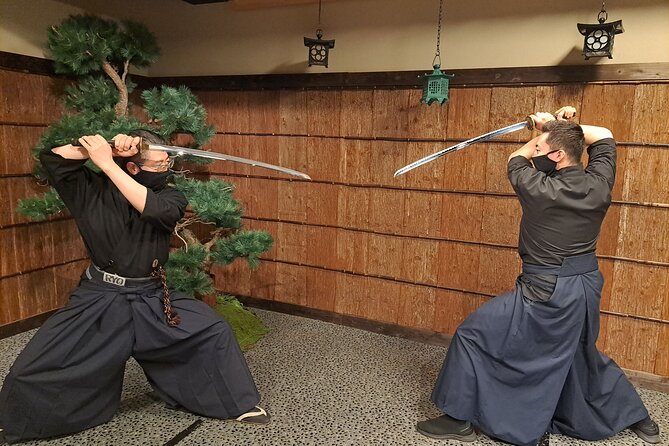
This experience is built around one simple idea: give you the look, the discipline, and the hands-on practice of samurai training, without turning it into a risky stunt. You’ll use a blunt, safe replica sword and follow the instructor’s guidance in a controlled way, in compliance with Japanese law.
So what makes it more than a theme-park photo shoot? The class is designed as training. You start by dressing in traditional samurai style, then you learn basic iaido-style movements—slow, precise, and very deliberate. You’re also guided through a simple sword-fight format using the replica, which adds energy while still keeping things safe and orderly.
You can also read our reviews of more tours and experiences in Kyoto

Meeting at Samurai Ninja Museum Kyoto and getting oriented fast
You meet at SAMURAI NINJA MUSEUM Kyoto109 Horinouechō, Nakagyo Ward, Kyoto, 604-8117, Japan. The tour ends back at the meeting point, so you’re not hopping around Kyoto all day.
The good news: it’s described as near public transportation, and the ticket is a mobile ticket, so you can keep things simple on your phone. The session is about 2 hours (approx.), and the start times are flexible (multiple daily options), which matters in Kyoto where your best day depends on weather and crowd patterns.
One practical note: the venue lists an elevator out-of-service period from January 24, 2026 to February 19, 2026. If you’re someone who hates stairs, plan around that date range or expect to use stairs.
Dressing in samurai hakama: the photo moment with real payoff
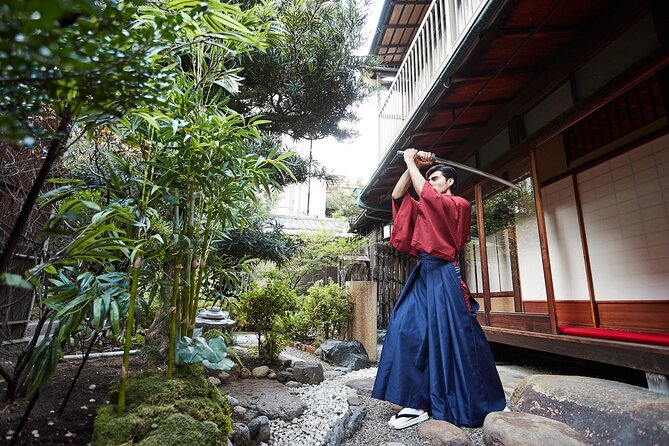
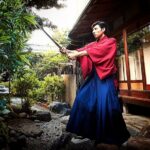
The first real “wow” step is the outfit. You begin by dressing in a traditional samurai hakama. It’s not just for pictures. The clothing changes your posture and movement, and that’s exactly what these training sessions tend to rely on: grounded stance, controlled body alignment, and clear discipline.
The experience description also frames it as an atmosphere thing—taking place in a traditional dojo. Even if you’re there mainly for the sword lesson, this part sets the tone. You’re not wandering into a museum shop. You’re getting ready to train.
If you’re traveling with kids, pay attention to the age rule: children under 7 are not allowed in the samurai dojo venue. If your group includes younger kids, they can still enjoy the museum side, but they won’t be able to enter the dojo portion.
Iaido basics with a blunt replica sword: what you learn and why it matters
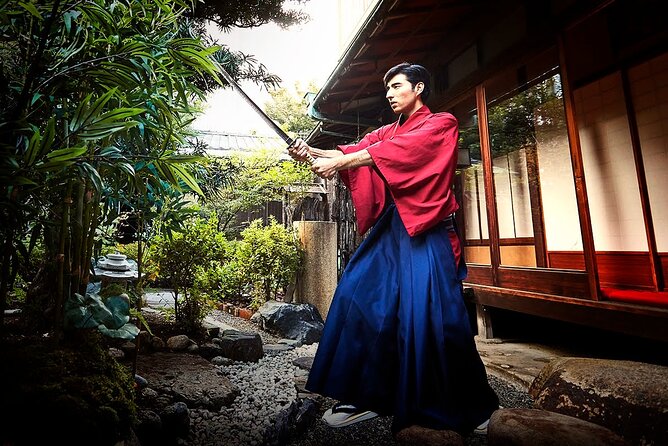
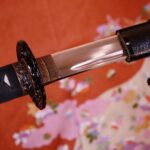
Once suited up, you move into the core of the class: Iaido techniques with a replica sword. Iaido is about controlled draw, posture, and clean technique more than big flashy moves. That fits perfectly here because the goal is safe practice with coaching.
Expect instruction on how to hold the sword correctly and how to perform the basic movements. You’re not aiming for performance-level mastery. You’re building the foundation that makes the later sword-fight segment feel understandable instead of random.
One of the most praised parts of this experience is the sense of real instruction. Reviews mention specific instructors like Riku, Ken, and Nobu, with people appreciating how the guidance kept the class engaging. You’ll also see the difference between a session that’s just “put on the gear” and one that actually teaches. This one leans toward the second option.
A smart expectation to set
Your session is designed to comply with Japanese law and avoid using sharp blades. So if you’ve seen old promotional photos featuring cutting scenes, don’t assume your exact training setup will match those older visuals. The current framing is clear: you’ll be working with safe replica equipment, not a sharpened sword.
You can also read our reviews of more museum experiences in Kyoto



The safe sword-fight segment: thrill without the risk
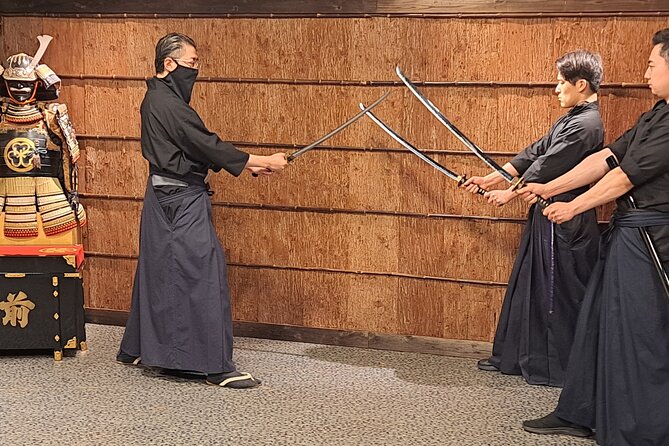
After the basic iaido moves, you do a simple sword-fight segment using the safe replica. This is where you’ll feel the training click into something more exciting: spacing, timing, and reaction—still guided, still controlled, and still far away from anything dangerous.
This part is also where some people feel the biggest difference between doing “a little holding a sword” and actually doing a mini training session. If you want to feel like you’re participating—not just watching—this is the segment that tends to deliver.
Keep in mind one real-world factor: the tour description notes a maximum group size of 22 travelers, and the experience runs about 2 hours total. In practice, that means there may be some waiting at turns, especially in busier hours. If you hate waiting, pick an earlier time slot when you can and arrive a bit ahead so you’re not rushed into your gear.
Ninja star throwing and armor photos: the fun finale
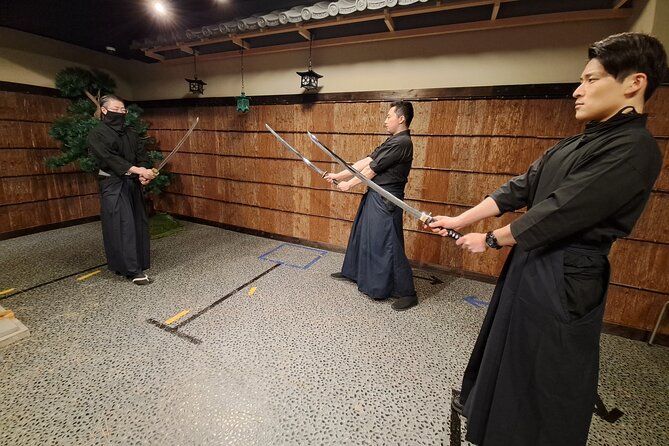
Ninja star throwing is part of the package, and it’s one of those activities that’s easy to get excited about because it feels playful and instantly visual. You’ll get a chance to participate, not just watch someone else do it.
Then comes the photo side of the experience: wearing samurai gear and getting picture moments. Reviews often call out the photo opportunities, including armor and helmet looks. Even if you’re not a serious photographer, it’s one of the easiest ways to make the day feel memorable.
There’s also a practical timing reason to appreciate this segment: after training, throwing and photos help break the “class” rhythm. You get a finish that feels like an experience, not only a lesson.
The free museum tour: what makes it worth more than the class
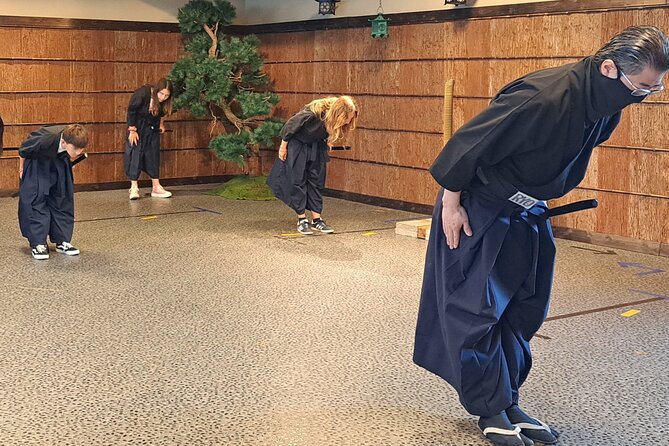
A big value point here is that your museum ticket is included. You don’t just learn in the dojo and then vanish. You also get a free museum visit and a guided history-style walkthrough as part of the session.
For many people, this is what turns a sword class into a Kyoto cultural stop. The museum portion connects what you did—stances, discipline, samurai culture, ninja influence—to context you can carry with you later in the city. Instead of only learning sword technique, you’re also learning why these traditions mattered.
The most positive feedback you’ll see around this kind of combo experience is about the mix: training plus history plus hands-on fun. Instructors and guides are frequently mentioned as part of why the museum time feels engaging rather than like a quick walk-through.
Price and value in Kyoto: is $83.91 a good deal?
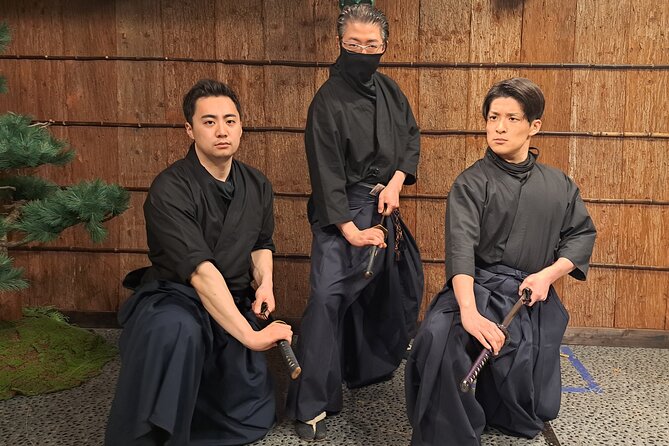
At $83.91 per person, this isn’t the cheapest “quick activity” in Kyoto. The value case comes from what’s included: samurai dojo training with a safe replica, a museum ticket with a guided history tour, ninja star throwing, and photo opportunities.
Here’s how I’d judge it for your trip:
- If you want hands-on training (even basic technique), not just a “hold-a-sword” moment, the package is easier to justify.
- If you also want the museum context, you’re paying for more than entertainment.
- If you’re mainly chasing the lowest price possible, there are cheaper Kyoto activities, and this one may feel steep.
The most common complaint pattern in negative feedback is pacing and waiting—especially in crowded periods. The tour tries to keep things tight at about two hours, but crowded timing can make the experience feel more rushed. If you’re budget-checking and sensitive to queues, pick a time slot when Kyoto is less crowded for you.
Group size realities: when your class feels calm vs rushed
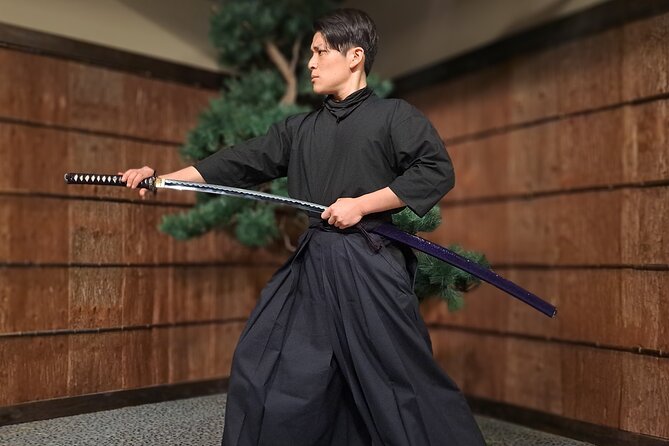
The stated maximum is 22 travelers, but what matters day-to-day is how many people are in your time slot and how smooth the flow is at check-in, dressing, and turns at the training station.
Some people report a very engaging, well-paced experience with instruction and attention. Others have reported disorganization during peak periods—like sakura season—and mentioned extra waiting or fewer planned segments than expected.
My practical advice: if this is a “must-do” for you, don’t book it as the final item in a tight schedule. Give yourself buffer time, and choose an earlier start if you can. You’ll spend less energy worrying about timing and more energy enjoying the actual training.
Who this is best for (and who should skip it)
This is a great fit if you want a memorable, structured, safe samurai experience in Kyoto with real technique practice. It’s also a good choice if you like hands-on learning more than passive sightseeing—dressing up, practicing stance, then finishing with ninja star throwing and photos.
It’s less ideal if:
- You dislike waiting for turns and want everything nonstop.
- You’re traveling with someone who expects a quiet, museum-only pace.
- You’re bringing children under 7 to the dojo venue (they won’t be allowed inside that space).
If you’re an older teen or adult who enjoys culture plus action, this has a strong “day trip worth it” feel. If your travel style is slow and laid-back, consider pairing it with a calmer neighborhood walk afterward rather than stacking another major timed activity immediately.
Should you book Kyoto Sword Experience with Museum Ticket and Ninja Experience?
Book it if you want a safe, legal, hands-on samurai class that includes the museum context and ends with fun ninja star throwing and photo moments. At 4.6/5 with strong positive recommendations, it clearly lands well for many people, especially those who want to do more than take photos.
Skip or think twice if you’re extremely price-sensitive or you know you’ll get frustrated by crowd flow. In those cases, try to go during a quieter time, aim for a morning/earlier slot when possible, and keep your expectations realistic: it’s a short session, so you’ll get guided basics, not years of training.
Quick tips before you go
- Bring a little patience. Turn-based activities always involve waiting.
- Wear easy-to-manage clothes. You’re suiting up into traditional garments.
- If you’re sensitive to stairs, plan for the elevator out-of-service window if your travel dates fall between Jan 24 and Feb 19, 2026.
FAQ
What is included in the Kyoto Sword Experience?
It includes a samurai dojo experience with dressing in samurai hakama, learning basic Iaido techniques with a blunt replica sword, a simple sword-fight segment, ninja star throwing, and a free guided tour of the Samurai and Ninja Museum with admission tickets included.
Are real swords used?
No. The experience uses a blunt, safe replica sword in compliance with Japanese law, and it states there is no sharp blade involved.
How long is the experience?
The duration is listed as about 2 hours.
Is the museum ticket included?
Yes. The museum ticket and the museum history tour are included.
Can children under 7 enter the dojo?
No. Children under 7 are not allowed to enter the samurai dojo venue.
What is the group size limit?
The activity states a maximum of 22 travelers.
Where do I meet, and where does it end?
You meet at SAMURAI NINJA MUSEUM Kyoto109 Horinouechō, Nakagyo Ward and the activity ends back at the meeting point.
Is transportation included?
No. Transportation to and from attractions is not included.
What’s the main accessibility issue to know?
The listing notes an elevator out-of-service period from January 24, 2026 – February 19, 2026.
What is the cancellation policy?
Free cancellation is available. You can cancel up to 24 hours in advance for a full refund. If you cancel less than 24 hours before the start time, the amount paid is not refunded.
If you tell me your travel month and what time of day you prefer, I can suggest the best way to place this in your Kyoto schedule to avoid the busiest flow.