REVIEW · KYOTO
Samurai School in Kyoto: Samurai for a Day
Book on Viator →Operated by Ginbu Co., LTD. (former name: Samurai Kenbu Co., LTD.) · Bookable on Viator
Kyoto has a way of making history hands-on, fast. This Samurai School in Kyoto: Samurai for a Day style lesson teaches katana basics with bowing, draw/scabbard technique, and a short photo session, all led in English. I especially like that it includes the dressing-up part and the practical, move-by-move instruction you can actually feel in your arms. I also like the added option to go beyond basics into kenbu choreography with extra skills. One drawback to plan for: the presentation at the start can take longer than you expect, so build in a bit of buffer time.
This is also a good use of a rainy afternoon or a schedule gap, since the class is indoors and runs about 1 hour 30 minutes for the standard option. The group stays small (up to 10), which helps you get real instruction instead of just watching. If you want the best experience, come in ready to move, follow safety directions, and dress in something that can work for costume changes.
In This Review
- Key things to know before you go
- Kembu Kyoto Dojo: finding the spot and what kicks things off
- Suiting up: bowing etiquette and your samurai uniform basics
- The sword draw lesson: katana technique in plain steps
- Sword work plus costume photos: what you actually take home
- Short session vs longer upgrade: where kenbu really kicks in
- What the group size means for your experience
- Price and value: is $66.32 worth 90 minutes?
- What to wear and how to plan your timing in Kyoto
- Who should book Samurai for a Day?
- Should you book it?
- FAQ
- How long is Samurai for a Day?
- Do I get to upgrade for a longer training session?
- Is the class taught in English?
- What sword skills do I learn?
- Does the experience include costume photos and souvenirs?
- Where do I meet for the tour?
- Is hotel pickup included?
- Can I cancel for a full refund?
Key things to know before you go
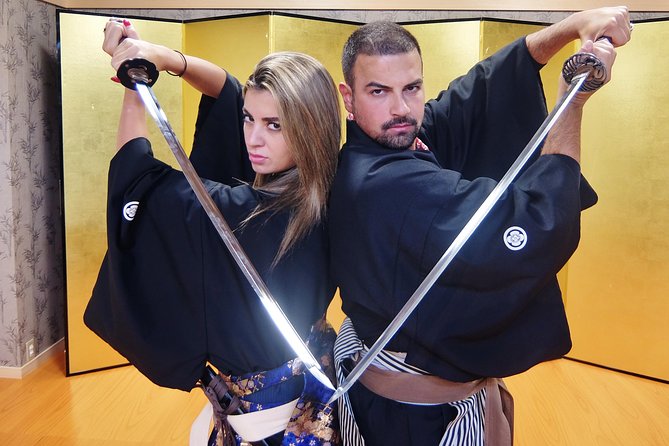
- Kembu Kyoto Dojo setup: you start with a short film, then you suit up for the sword lesson.
- Real instruction, not just photos: you practice bowing, drawing from the scabbard, and controlled striking.
- Costume + photo shoot included: you get a brief costume session and souvenir photos.
- Short vs longer upgrade: the longer option adds walking, folding fan skills, and stage kenbu choreography with poem and music.
- Small group size: limited to a maximum of 10 participants for a more hands-on feel.
Kembu Kyoto Dojo: finding the spot and what kicks things off
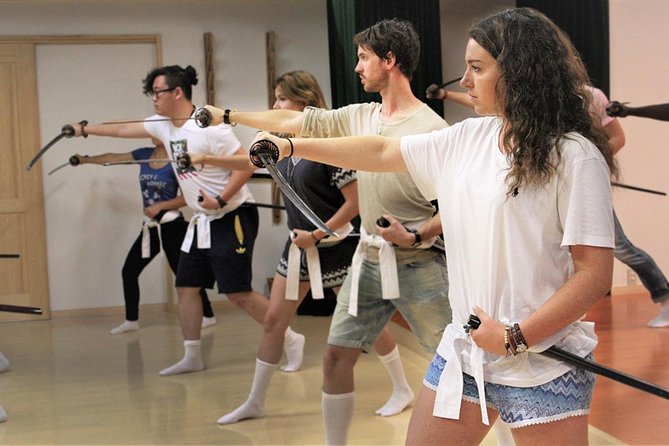
The experience is based out of the Kembu Kyoto Dojo in Higashiyama Ward. The meeting point is in the GOZAN building, and you’ll head to the first basement floor from the stairs on the right side. It’s near public transportation, which matters in Kyoto where walking times can sneak up on you.
Timing is part of the deal. You’re asked to arrive 10 to 3 minutes before your start time. When you’re there, the flow is straightforward: you meet the instructor, then you watch a short 3-minute film that covers the basic practices. Even if you know nothing about samurai culture, that quick starter helps you understand what you’re about to do—bowing etiquette, sword handling, and the idea of disciplined, stylized movement.
One practical tip: this is not a sit-and-watch museum stop. You’ll be changing into a uniform and using a sword safely, so be ready to pay attention and move when it’s your turn.
You can also read our reviews of more tours and experiences in Kyoto.



Suiting up: bowing etiquette and your samurai uniform basics
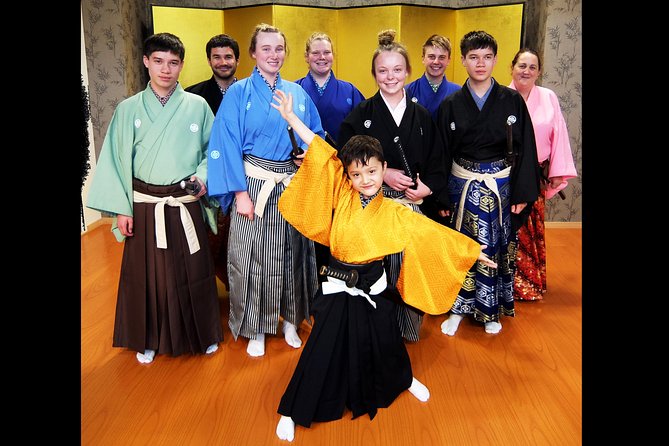
After the film, you suit up in a traditional samurai uniform, including a white belt, Japanese-style socks, and a sword setup. The costume experience is a big part of why this works as a tourist activity: you’re not just learning about the past, you’re performing the posture and steps that go with it.
The first skill you practice is how to bow properly. That sounds simple, but it sets the tone. The bow isn’t just formality—it’s how you show respect before you handle weapons and begin choreography. It also helps you settle your body so the next task feels less chaotic.
Then comes the part most people come for: the first round of sword work.
The sword draw lesson: katana technique in plain steps
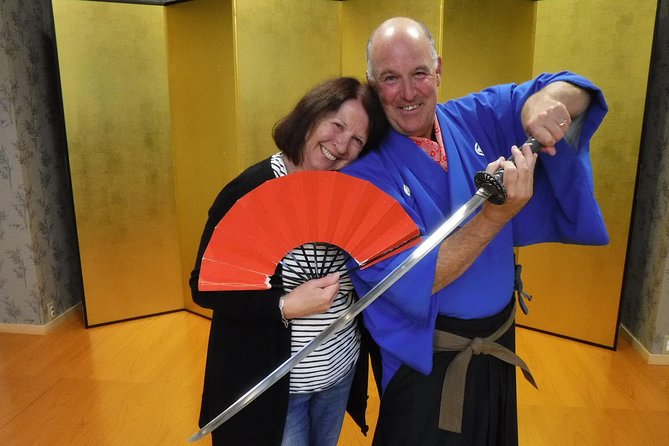
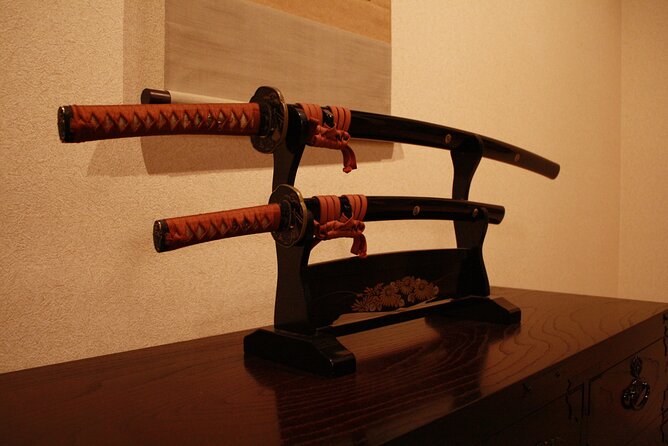
The core training starts with drawing the sword and then returning it to its protective scabbard. This is trickier than it looks, especially at first because you’re managing timing, wrist position, and controlled movement—without rushing. You’ll also learn how to replace the blade back safely.
From there, you practice striking methods you can do within the lesson structure. The goal is not to spar or go full-contact. It’s closer to learning controlled technique within a set of choreographed basics, like a martial arts lesson that focuses on form.
Because this involves a weapon, safety is real here. The experience explicitly asks you to follow the instructor’s instructions for safety reasons. If you’re the type who hates being told what to do, this might feel less flexible than you’d like—but for most people, strict guidance is exactly what makes it feel legitimate and safe.
Also, your physical fitness level should be moderate. This is not extreme athletic training, but you do need to stand, move, and repeat the same steps until the mechanics click.
Sword work plus costume photos: what you actually take home
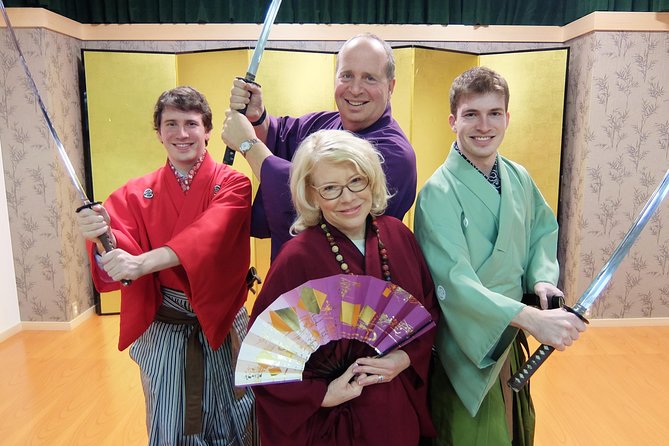
One reason this class feels like more than a gimmick is that it combines instruction and performance. Midway through (or right after core basics, depending on the session length), you’ll get a photo shoot in costume. You’ll dress in a samurai outfit for a short session, then you’ll return to training.
Included with the experience are:
- a photo shoot
- a tenugui towel (traditional Japanese towel)
- a lesson completion certificate
You also get souvenir photos as part of the package, which many people love because you end up with images that match what you learned. Instead of one quick snapshot, you get a brief, structured costume moment tied to the training.
A useful detail from real-world experience: some photo sessions can feel rushed if multiple groups are finishing around the same time. If you care about posed, high-quality shots, show up early (and be ready quickly when your group gets called).
Short session vs longer upgrade: where kenbu really kicks in
There’s a shorter version and an optional longer practice session. In the shorter session, your experience ends after the training basics with a respectful bow to your instructor, and you’ll then grab your photos, certificate, and the small souvenir towel before leaving.
If you upgrade, the class continues with more stylized technique. You learn additional elements like:
- how to walk in a samurai style
- how to use a folding fan
- more challenging kenbu choreography
The longer session ends with kenbu performed on stage, accompanied by a poem and music. That stage moment is the difference between learning a few moves and seeing the whole art form as a performance, not just a technique drill.
If you’re a martial arts enthusiast or a history buff, that upgrade can be the better value because it expands the lesson beyond sword-draw basics into a more complete presentation of kenbu, the samurai performing art.

What the group size means for your experience
The maximum group size is 10 travelers. That number matters. With small groups, your instructor can correct posture and timing. You also spend less time waiting for your turn.
One review pattern that’s worth taking seriously: when the class is small, some participants got extra individual attention and coaching. Even if you’re not in a tiny group, expect an instructor who wants you to do things correctly. That’s a good thing when you’re learning weapon handling.
Also note: for children aged 5 to 11, the experience says it’s preferable they attend some kind of class or martial arts school. In practice, that recommendation usually means younger kids should be comfortable with instructions and discipline-style training.
Price and value: is $66.32 worth 90 minutes?
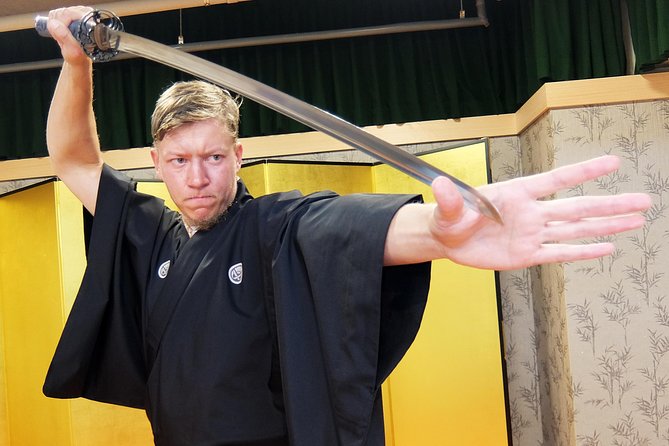
At $66.32 per person, you’re not just paying for a “try sword once” photo. You’re paying for:
- an English-speaking instructor
- structured training time (about 1 hour 30 minutes for the standard experience)
- costume dressing and a photo shoot
- a completion certificate
- a tenugui souvenir
- and (if you upgrade) additional skills plus stage kenbu elements with poem and music
For Kyoto, where many activities are either short shows or long museum walks, this is a compact, hands-on option. You’re getting active instruction plus a souvenir set, so you leave with photos and proof you finished something, not just memories.
Could it feel like a lot of money if you only want a quick photo? Yes. If that’s you, consider whether you want the full instruction portion. If you want to learn how to bow, draw, and handle the mechanics safely, the value lands better.
What to wear and how to plan your timing in Kyoto
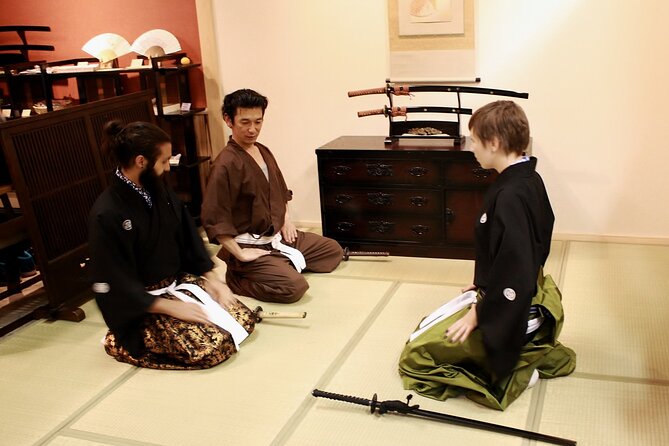
Wear clothes suited for exercise and movement. This is important because you’ll be transitioning into uniform and moving through repeated practice. The experience also specifically notes that a single hoodie or tights outfit is not suitable for costume changes.
Practical approach:
- Choose something you can move in comfortably.
- Think about layers you can remove or re-wear easily.
- Don’t plan to do this right after a formal dinner where you’ll be uncomfortable moving.
Also plan a little extra time in your day. The training includes a short 3-minute film, plus the class includes a show/performance component. Some people find the presentation timing at the start longer than expected before the swordwork feels like the focus. Even if that part varies by session flow, it’s smart to schedule this when you won’t be rushing to catch a reservation right after.
Who should book Samurai for a Day?
This experience fits best if you want hands-on Japanese culture without a steep learning curve.
You’ll likely enjoy it if you:
- like martial arts basics and controlled choreography
- want a fun, structured Kyoto activity that isn’t a long museum session
- enjoy costume photos tied to what you actually practiced
- want a small-group workshop (max 10)
It might be less ideal if you:
- hate following strict safety instructions
- only want a very short activity and hate any waiting around
- aren’t comfortable changing into a costume/uniform for the experience
If you’re traveling with family, it also seems popular for teens and adults who want something active. The one caution is that younger kids should be ready for instruction and discipline-style guidance.
Should you book it?
If you want one of the more memorable, hands-on samurai experiences in Kyoto, I think this one is a strong pick—especially if you’re open to learning real technique, not just snapping costume photos. The standard 90-minute option is already packed: bowing, sword draw mechanics, and a full costume/photo-and-certificate finish. If you’re truly into the craft, the longer upgrade is the way to go because it adds walking, folding fan skills, and stage kenbu choreography with poem and music.
My call: book this if you’ll treat it like a dojo class and show up ready to move. Skip or rethink it if you want a quick sightseeing stop with no instruction or no costume change.
FAQ
How long is Samurai for a Day?
The experience is about 1 hour 30 minutes for the standard option, but your exact class time can vary depending on the length and option you selected.
Do I get to upgrade for a longer training session?
Yes. There’s an optional longer practice session that adds more skills in depth, including walking and folding fan techniques, and it finishes with kenbu choreography on stage with poem and music.
Is the class taught in English?
Yes. The experience includes an English-speaking local instructor/guide.
What sword skills do I learn?
You learn basic samurai techniques including bowing, drawing the sword, replacing it in the scabbard, and practicing striking methods. If you choose the longer upgrade, you also learn additional choreographed skills for kenbu.
Does the experience include costume photos and souvenirs?
Yes. A photo shoot is included, along with a lesson completion certificate and a tenugui towel (traditional Japanese towel).
Where do I meet for the tour?
Meet at Japan, 605-0005 Kyoto, Higashiyama Ward, Sanchōme, 35 at the GOZAN building. On the day of the event, go to the first basement floor from the stairs on the right side.
Is hotel pickup included?
No. Hotel pickup and drop-off are not included.
Can I cancel for a full refund?
Yes, with free cancellation. You can cancel up to 24 hours in advance for a full refund via Viator. If you cancel less than 24 hours before the start time, you won’t receive a refund.