REVIEW · KYOTO
Kyoto: Imperial Palace & Nijo Castle Guided Walking Tour
Book on GetYourGuide →Operated by TripGuru Japan · Bookable on GetYourGuide
Two palaces, one afternoon, lots of clues. This 3-hour guided walking tour connects Kyoto Imperial Palace and Nijo Castle so you can see how Japan’s emperor and shogun-shaped power played out in real buildings and gardens. You’ll get guided time in each place, plus just enough walking to feel like you actually used your limited Kyoto hours well.
I love the practical setup: a small group (up to 9) and an English-speaking guide (also offered in French and Spanish) who helps you make sense of what you’re looking at instead of just reading signs. I also like that entrance costs are handled for Nijo Castle, including the Ninomaru-goten Palace and the Painting Gallery, so you’re not juggling ticket lines while you’re trying to see both stops.
One consideration: you’ll be walking, and the sites have rules. Plan for modest dress (no shorts or tank tops) and note the tour is not suitable for pregnant women, people with mobility impairments, heart problems, or respiratory issues.
In This Review
- Key highlights you’ll care about
- Emperor and shogun in one Kyoto walk
- Nijo Castle: Ninomaru-goten Palace and Garden, plus the Painting Gallery
- Kyoto Imperial Palace grounds: architecture and gardens with modest expectations
- The guided walking format: time-saving, question-friendly, and fast-paced by design
- Price and value: what $49 buys you in real terms
- Who should book this Kyoto combo tour
- Should you book this tour?
- FAQ
- How long is the Kyoto Imperial Palace and Nijo Castle guided walking tour?
- Where is the meeting point, and how early should I arrive?
- What’s included in the $49 price?
- What languages do the guides speak?
- What should I wear and bring?
- Is the Imperial Palace portion included too, or just Nijo Castle?
- Who is this tour not suitable for?
Key highlights you’ll care about
- A tight 3-hour loop that hits two major Kyoto power centers without eating your whole day
- Nijo Castle access focused on the Ninomaru-goten Palace and Garden, plus the Painting Gallery
- Imperial Palace grounds explained in clear terms, with time to enjoy the architecture and gardens
- Small-group pacing (limited to 9) so questions don’t get swallowed
- Guides who connect details to meaning, including explanations of how shogun and emperor eras differ
Emperor and shogun in one Kyoto walk
Kyoto can feel like a museum day. But this tour is designed to give you a “why” behind the buildings. You start at Nijojo-mae Station, then spend about an hour at Nijo Castle before moving to the Kyoto Imperial Palace for another focused hour. The goal is simple: help you see the same city through two different lenses of authority.
This works especially well if you’re doing Kyoto with limited time. You don’t need a whole afternoon to get the big picture. And because it’s a walking format, you’re building mental connections instead of hopping from place to place with no context.
A nice bonus is the guide style. Guides like Raphael Matsui and Jasmine Lau are known for giving an overview early, so you’re not staring at gates and wondering what matters. Other guides—Cecilia, Vincent, and Gus—are often praised for answering extra questions and pointing out details you’d likely miss on your own.
You can also read our reviews of more walking tours in Kyoto


Nijo Castle: Ninomaru-goten Palace and Garden, plus the Painting Gallery
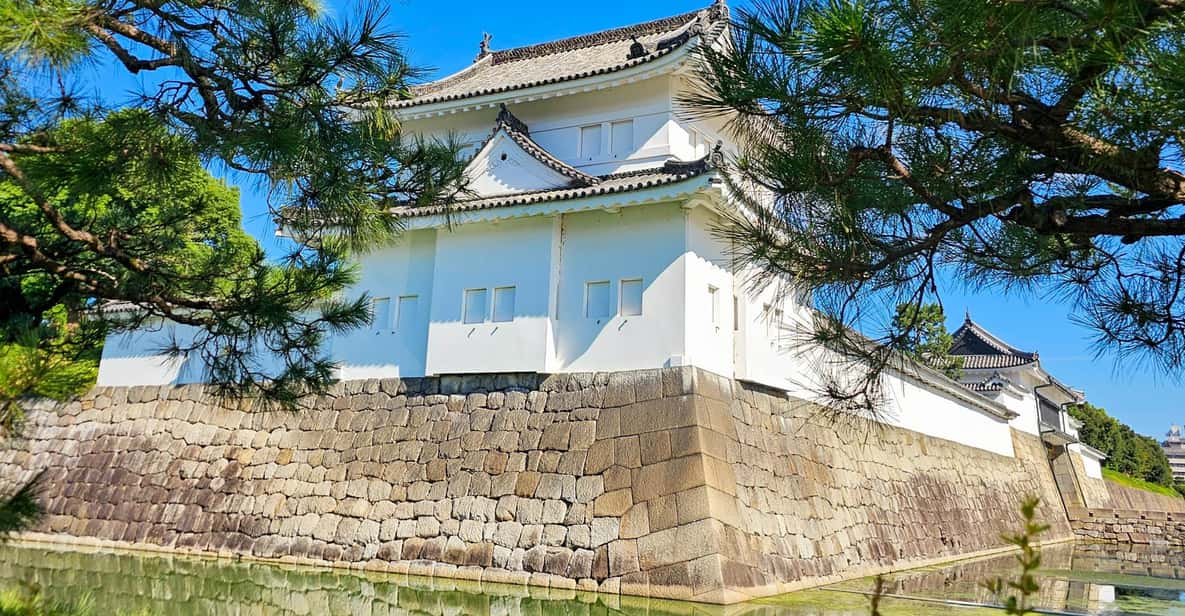
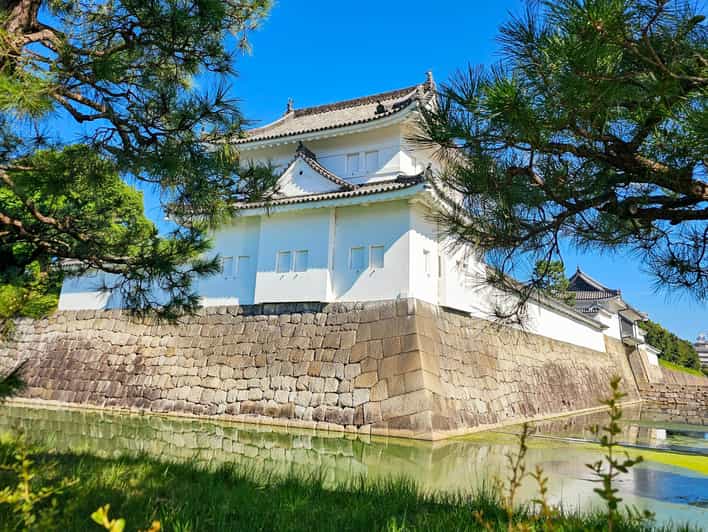
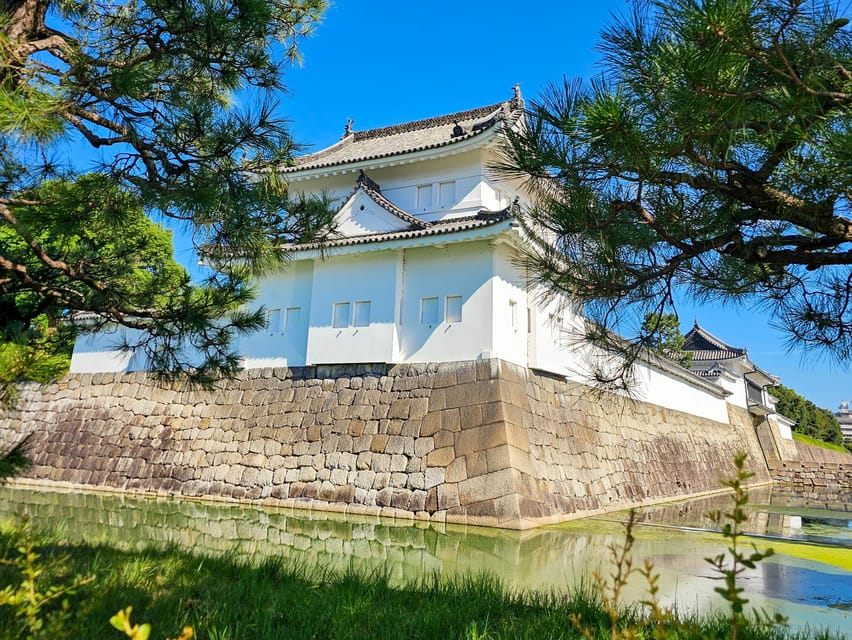
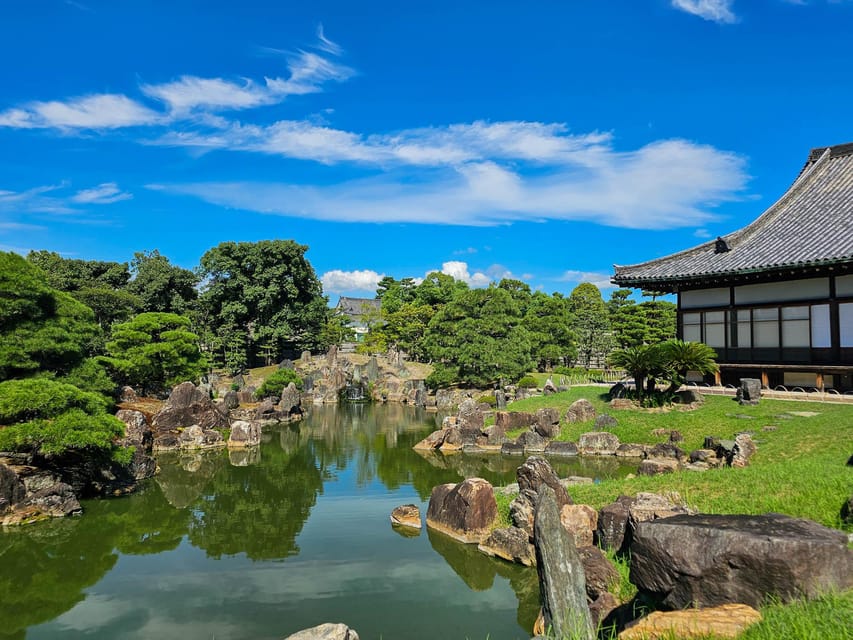
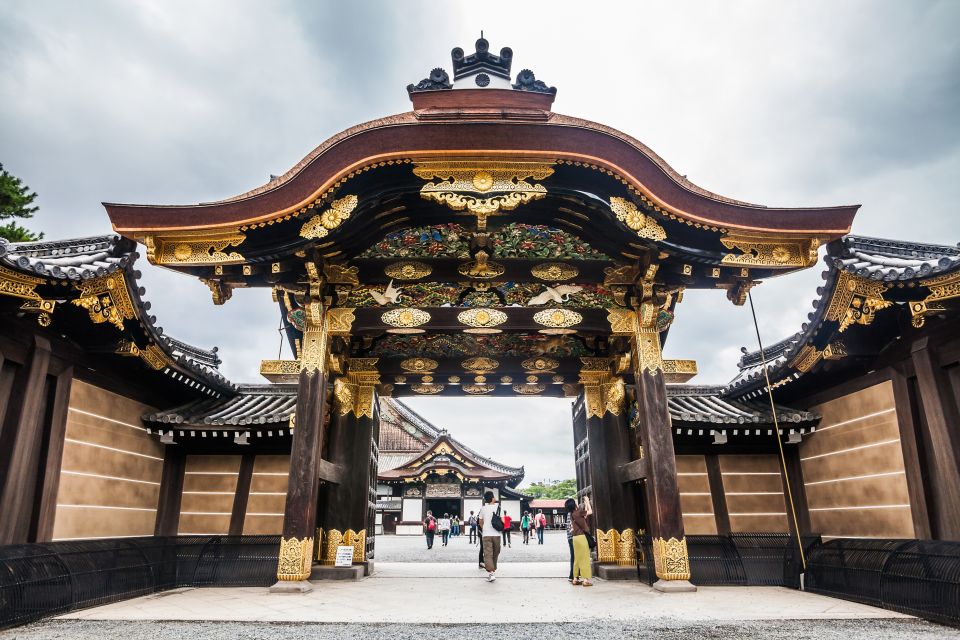
Nijo Castle is the feudal-era counterweight to the Imperial Palace. The tour’s Nijo portion is guided and focused. You’ll visit the Ninomaru-goten Palace and Garden, and you’ll also be able to see the Painting Gallery as part of your visit.
What makes this stop satisfying is that it’s not just a quick exterior pass. You’re getting a guided route through the areas the tour includes, and your guide explains what you’re seeing in the context of the shogun world. One reason people love this part is that guides often spell out the practical difference between shogun power and emperor residence—so you leave with a mental model, not just photos.
A couple of practical notes so you don’t get surprised:
- The tour’s Nijo Castle access is specific. You won’t be wandering freely through every possible corner of the complex; instead, your guide brings you to the Ninomaru-goten Palace and Garden.
- Your time at Nijo Castle is about an hour. That’s long enough to slow down for the important moments, but it’s not long enough to turn the site into a half-day research project.
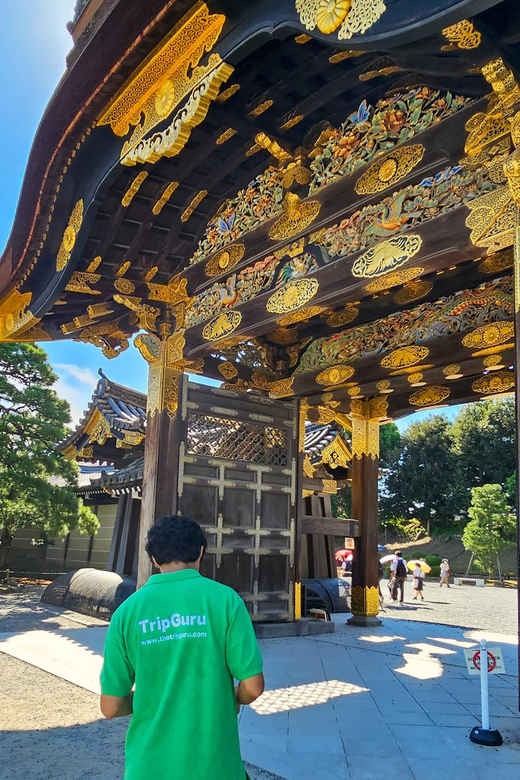
If you’re the kind of visitor who enjoys architecture-as-storytelling, this stop is a strong match. Many guides are praised for spotting the small signals in the design and translating them into plain language. For example, Vincent is described as able to connect details back to Japanese history and culture, while Jasmine Lau is credited with explaining the meaning behind symbols.
Kyoto Imperial Palace grounds: architecture and gardens with modest expectations
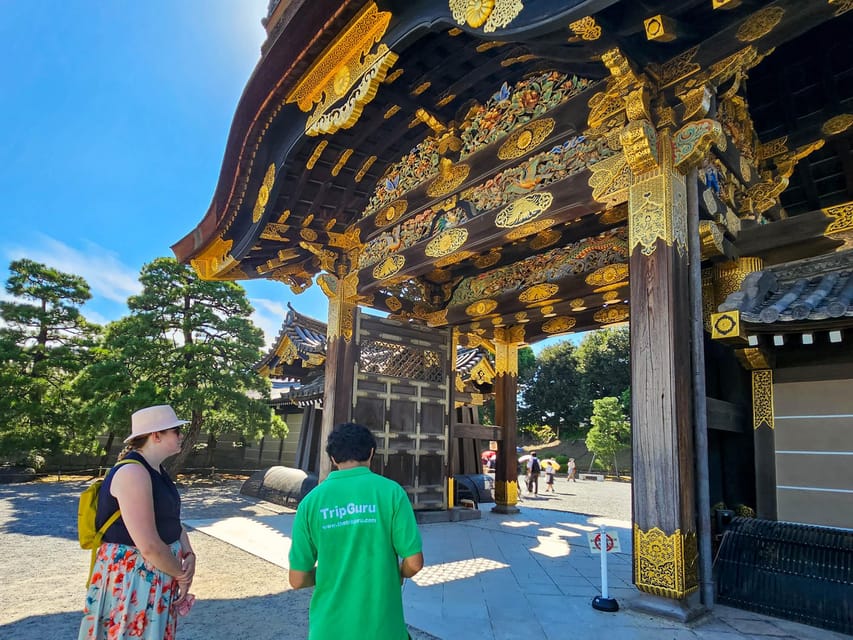
Then you head to the Kyoto Imperial Palace. This is where the narrative flips. You’re stepping into a space that once served as the residence of Japan’s imperial family, so the feel of the visit changes from shogun-era display to imperial residence and ceremonial life.
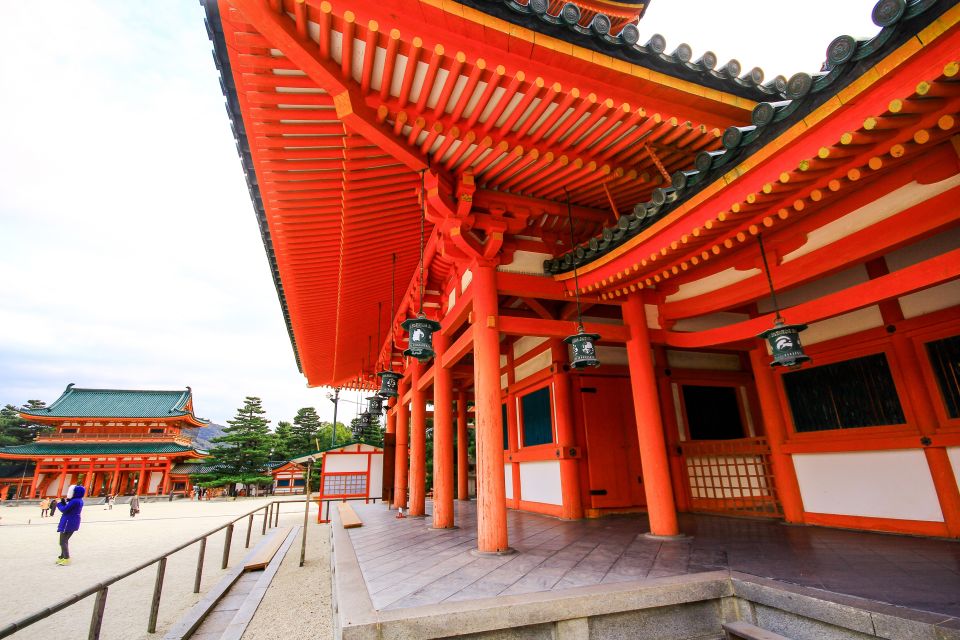
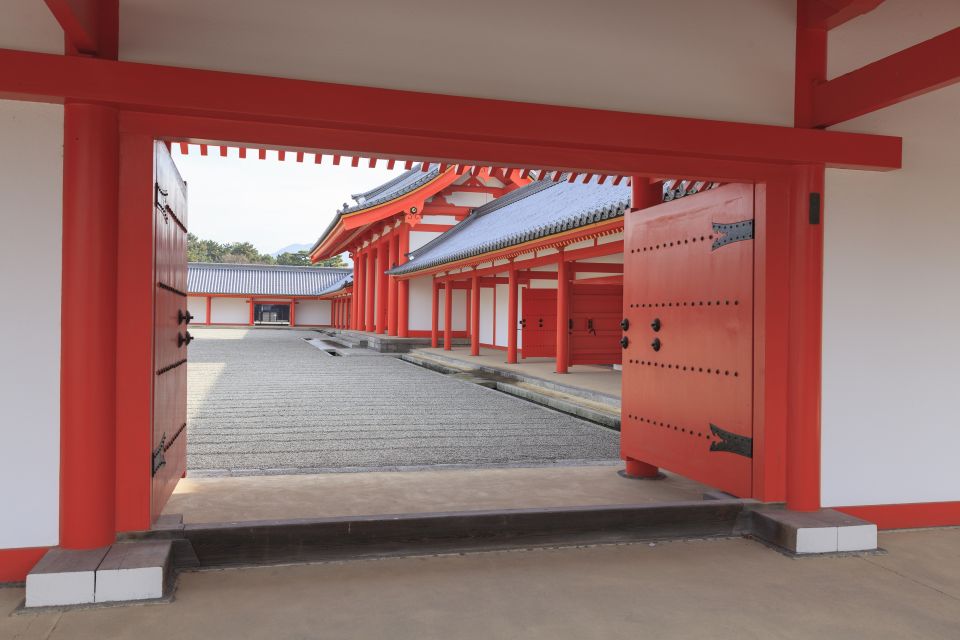
Your guide takes you around the impressive structure and gives you time to admire the architecture and gardens. In other words, it’s not a “grab-and-go.” You should come away with a better sense of why this place mattered and what the design was trying to communicate.
Now for the balanced reality check. The Imperial Palace portion is often less about room-by-room sightseeing and more about understanding the grounds, layout, and what’s visually significant. One visitor even wished they’d allocated different priorities, suggesting the Imperial Palace may not scratch the interior-exploration itch some people expect. So if you’re imagining a tour that feels like you’re inside every major hall, you might want to keep your expectations anchored to a guided walk through the areas your guide can show you.
The upshot: you’ll get a clearer storyline when you pair this with Nijo Castle. Seeing them back-to-back is the point. You’re watching two systems of power expressed through built space.
Also, dress matters here. The tour asks for modest, respectful clothing, which means avoiding shorts or tank tops. On a warm day, plan for breathable layers that still fit the rule.
The guided walking format: time-saving, question-friendly, and fast-paced by design
This is a 3-hour tour with a clear sequence and a guided pace. Small group size matters here. With a maximum of 9 participants, you’re more likely to get your questions answered rather than shouting them into the crowd.
Guides are also expected to brief you before you start moving. That matters because Kyoto’s signage and architecture can feel cryptic if you’re not sure what you’re looking for. People mention that the best guides explain differences between eras—so when you see something on the grounds, you know what it likely represents.
One logistical detail you’ll want to respect: your guide will only wait up to 10 minutes at the meeting point. The meeting point is Nijojo-mae Station outside Exit 1, and you’re asked to arrive at least 10 minutes early. If you’re coming in from another part of the city, factor in morning traffic, which can be very different from what maps apps estimate.
Heat and walking are real in Kyoto. The tour doesn’t mention this explicitly, but I’d treat it like a normal city walk: comfortable shoes are non-negotiable, and if you’re going in summer conditions, bring what helps you last (water and sun protection are smart).
And then you finish at Imadegawa Station. That’s handy if you’re planning dinner nearby or want to continue your day by train.
Price and value: what $49 buys you in real terms
At $49 per person for about 3 hours, the value comes from two big buckets: guided interpretation and included entry for at least the Nijo Castle portion. You get an English-speaking guide (plus French and Spanish options) and entrance fees are included, specifically noting Nijo Castle including the Ninomaru-goten Palace and Painting Gallery.
What you should treat as extra:
- Meals and other drinks are not included.
- Personal expenses are on you.
- Hotel pickup and drop-off aren’t included.
To judge value, ask yourself this: would you otherwise pay for a guide plus tickets, or would you prefer a self-paced visit where you read everything and hope it all clicks? If you’re the type who wants historical context and you’re short on time, this price is easier to justify. If you love wandering alone with zero structure, you might not feel the guide advantage as strongly.
This tour’s sweet spot is the “I want the highlights but I want meaning” traveler. It’s not trying to be the cheapest option. It’s trying to be the option that makes your Kyoto time feel organized and worth it.
You can also read our reviews of more guided tours in Kyoto




Who should book this Kyoto combo tour
You’ll likely love this if:
- you want to see both Nijo Castle and the Kyoto Imperial Palace in one go
- you enjoy learning how architecture and gardens connect to Japanese governance and culture
- you prefer a small-group pace that leaves room for questions
- you’re okay with modest dress rules and a solid amount of walking
You should skip it (or at least reconsider) if:
- you’re pregnant
- you have mobility impairments
- you have heart problems or respiratory issues
Language is another practical factor. If English isn’t your comfort zone, the tour offers French and Spanish as well, which can make a huge difference in how much you absorb.
One more “fit” point: the finish at Imadegawa Station makes it easier to keep moving. If you’re building an itinerary that doesn’t end with a long return trip, this layout helps.
Should you book this tour?
Book it if you want a structured Kyoto experience that connects emperor and shogun power through two top sites, with entrance handled for Nijo Castle areas included in the tour and an experienced guide who answers questions. I’d especially recommend it if you’re visiting for the first time and you don’t want to spend your energy decoding history from scratch.
Skip or think carefully if you need maximum interior access, have health or mobility constraints, or you’d rather spend more hours at a single site than split your time between two.
If your plan is “see the big Kyoto sights without wasting the day,” this one is a strong bet.
FAQ
How long is the Kyoto Imperial Palace and Nijo Castle guided walking tour?
The tour lasts 3 hours total, with guided time at Nijo Castle and guided time at the Kyoto Imperial Palace.
Where is the meeting point, and how early should I arrive?
Meet at Nijojo-mae Station outside Exit 1. Arrive at least 10 minutes before the stated meeting time, and the guide waits a maximum of 10 minutes.
What’s included in the $49 price?
The price includes an English-speaking tour guide, walking tour, and entrance fees. The entrance fee details specifically include Nijo Castle access, including the Ninomaru-goten Palace and the Painting Gallery.
What languages do the guides speak?
The live tour guide is available in English, French, and Spanish.
What should I wear and bring?
Wear comfortable shoes and dress modestly and respectfully (avoid shorts or tank tops). Bring a camera and cash.
Is the Imperial Palace portion included too, or just Nijo Castle?
The tour includes visits to both sites: Nijo Castle and the Kyoto Imperial Palace, with guided visits at each.
Who is this tour not suitable for?
It is not suitable for pregnant women, people with mobility impairments, people with heart problems, or people with respiratory issues.