REVIEW · KYOTO
Kyoto: Samurai Ninja Museum guided tour
Book on GetYourGuide →Operated by GLOBA Inc. · Bookable on GetYourGuide
Samurai fantasies become hands-on in Kyoto. This guided hour in the Kyoto Samurai Ninja Museum turns the samurai and ninja story into something you can try yourself, not just look at. You’ll connect the two worlds to Kyoto’s history, then get pulled into practical, hands-on activities.
What I like most is the interactive format: you dress up in samurai gear, put on a real helmet, and even hold a replica sword. Guides such as Mami and Miu are praised for clear, detailed explanations that link what you’re doing to real Japanese history.
One thing to consider: this is a fast, focused 1-hour experience. If you’re hoping for a long museum wander or deep martial-arts training, the hands-on hits may feel brief, and $28 works best when you want both the entry and the guided activities.
In This Review
- Quick hits
- Why Samurai and Ninja Belong in Kyoto
- The 1-Hour Flow: What Happens During Your Visit
- Dress-Up Samurai: Helmet, Armor Feeling, and a Replica Sword
- Shuriken Throwing: Fun That Actually Ends the Tour Strong
- Katana Lesson and Ninja Fukiya: The Training Stops
- Why the Guide Matters (Mami, Miu, Aya, Sayo, Akiko, and More)
- Pricing in Kyoto: Is $28 Good Value?
- Small Group Size: The Real Benefit You Feel
- Who Should Book This Tour in Kyoto
- Should You Book This Kyoto Samurai Ninja Museum Tour?
- FAQ
- How long is the Kyoto Samurai Ninja Museum guided tour?
- How much does the tour cost?
- What is included in the tour?
- Is the tour offered in English?
- Do I get skip-the-ticket-line entry?
- How big is the group?
- Is it wheelchair accessible?
- Can I reserve now and pay later?
- What is the cancellation policy?
- What should I plan for regarding transportation?
Quick hits
- Small group feel with limits that keep things personal
- Skip the ticket line and go straight into the experience
- Samurai dress-up with costume, a real helmet, and a replica sword
- Shuriken throwing as an actual activity, not a demo from far away
- Hands-on training stops like a katana lesson and ninja fukiya use
- English-speaking guides who actively explain and engage the group
Why Samurai and Ninja Belong in Kyoto
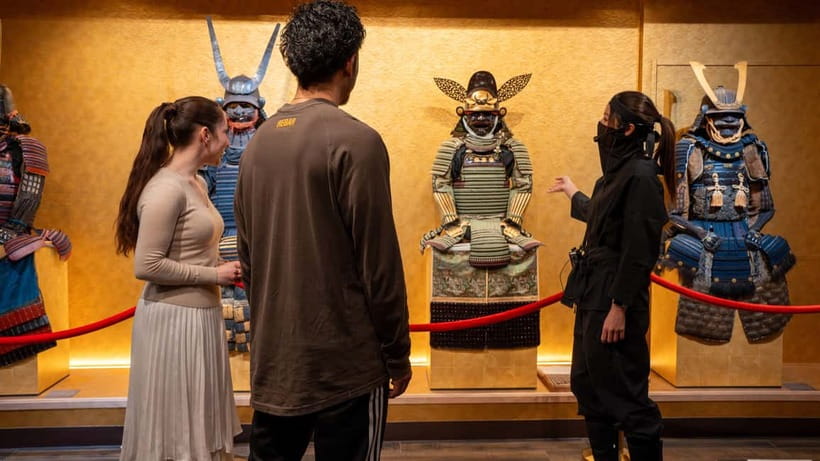
Kyoto is where Japan’s power, culture, and court life all mixed over centuries. That’s exactly why the samurai-and-ninja connection makes sense here. The tour frames it as part of Kyoto’s timeline, from the Heian period through the end of the Tokugawa shogunate—when samurai and ninja both moved through the city’s real social world.
I also like that this isn’t sold as fantasy only. The museum positions samurai and ninja as roles shaped by the times, not just movie stereotypes. That historical link matters because it makes the costume and weapon play feel less like a gimmick and more like story-based learning.
You can also read our reviews of more guided tours in Kyoto


The 1-Hour Flow: What Happens During Your Visit
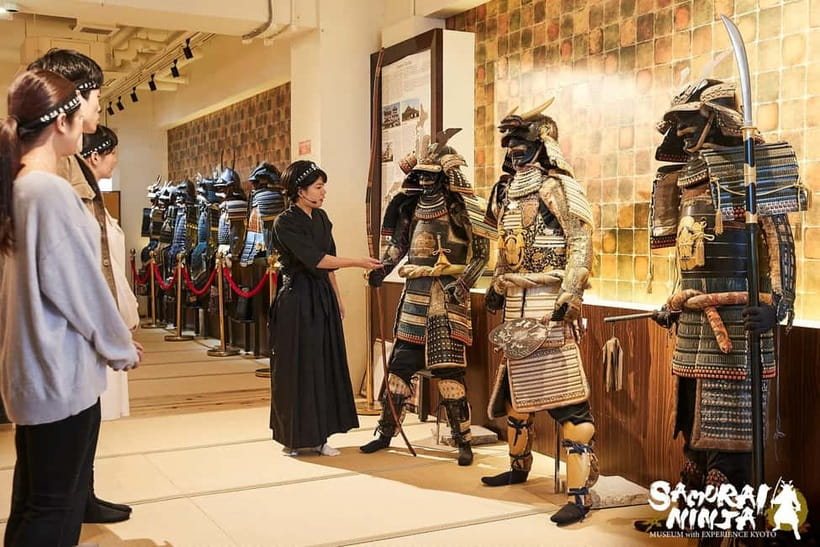
This experience runs about 1 hour, with starting times based on availability. The tour is designed to stay lively: you’ll move through the museum with an English-speaking guide rather than reading everything at your own pace.
A nice practical touch is the skip-the-ticket-line feature. It saves you time at the front door so you can focus on the guided part right away. With a small group (limited to 10 participants), you get more back-and-forth instead of being one voice in a crowd.
One quick reality check: it’s not a half-day adventure. So go in ready to participate. You’ll get the most out of it if you treat it like an active workshop inside a museum, not a quiet walk-through.
Dress-Up Samurai: Helmet, Armor Feeling, and a Replica Sword
If you like photos, you’ll probably smile here. The highlights are the samurai costume, putting on a real samurai helmet, and holding a replica sword. The tour doesn’t just hand you props. It uses the dress-up as a way to teach what those items were for and why they mattered.
The museum is built around hands-on interaction, which is why this stop lands. When you wear the helmet and handle a sword-shaped prop, you instantly understand why equipment design wasn’t random. Even basic physical interaction makes the historical roles feel more real.
Also, this is a moment families tend to love. Kids and teens usually jump in fast, and adults often enjoy it more than they expect. You’re not doing an awkward costume skit; you’re stepping into the visual language of samurai culture.
Shuriken Throwing: Fun That Actually Ends the Tour Strong
The shuriken activity is one of the big reasons people book this in the first place. You get a ninja star throwing experience, and the energy stays high because it’s a real skill practice, not a staged photo-only moment.
It’s also a smart way to connect “ninja” to something concrete. Instead of talking only about stealth as a vague idea, you handle a tool tied to that reputation. The throwing part gives you a simple, memorable takeaway you can remember later when you hear the word shuriken again.
From what I see in the way the tour is described, this is often treated like a highlight payoff. If you want one clearly active moment during your Kyoto day, this is the one.
Katana Lesson and Ninja Fukiya: The Training Stops
The museum’s pitch is hands-on across multiple weapon-related areas. In addition to dress-up and throwing, you can expect a katana lesson and a chance to use a ninja fukiya (a tool associated with ninja lore).
Now, a fair note: you’re visiting a museum with guided activities, not joining a dojo for months of training. So think of these as short demonstrations and guided practice, focused on understanding the basics and the purpose behind each item.
Still, this is valuable if you’re the type who learns best by doing. You’ll leave knowing what the objects look like, how they’re handled, and how the guide connects them back to historical context.
You can also read our reviews of more museum experiences in Kyoto




Why the Guide Matters (Mami, Miu, Aya, Sayo, Akiko, and More)
This tour lives or dies by the guide’s ability to make history feel human. And the English narration seems to be a recurring strength. Guides like Mami, Miu, Aya, Sayo, and Akiko are specifically mentioned for being engaging and for explaining details clearly.
What you want from a guide here is not just facts. You want someone who can link what you’re seeing to why it existed and why it mattered in Kyoto’s past. The best comments describe guides who answer questions, keep the group involved, and make sure people understand what’s happening during each hands-on segment.
If you’re visiting Kyoto for the first time, this style helps you get your bearings fast. The tour becomes a shortcut to understanding the samurai-and-ninja theme without doing hours of independent research first.
Pricing in Kyoto: Is $28 Good Value?
At $28 per person for about 1 hour, the value depends on what you want. On paper, you’re paying for more than museum entry. The tour includes the museum tour with a professional guide, samurai costume, and ninja star throwing—plus the hands-on components like the helmet, replica sword, and other training stops described in the experience overview.
So if you want:
- a guided visit,
- time-saving skip-the-line entry, and
- active experiences you can’t get from just buying a ticket,
then this price starts to make sense.
One caution: if you’re only interested in a general museum browse and don’t care about the hands-on activities, you may feel like you paid extra for structure. This isn’t a “wander at your own speed” ticket. It’s a guided workshop.
Also remember that transportation isn’t included, so you’ll want to factor in getting there from where you’re staying.
Small Group Size: The Real Benefit You Feel
The tour is positioned as small group, with limits such as 10 participants. There’s also a note that the overall activity can have a maximum of 30 travelers, so sessions may vary depending on the schedule.
Either way, the key point for you is the vibe. Smaller groups usually mean:
- the guide can check in with people,
- questions get answered faster,
- and the interactive parts feel less like a conveyor belt.
If you’re traveling with kids, this matters even more. The guide-style described in the experience tends to keep attention moving and gives everyone a chance to participate.
Who Should Book This Tour in Kyoto
This one fits well if you want something practical and fun inside a museum setting. I’d especially recommend it for:
- families with children who like hands-on activities,
- first-time visitors to Japan who want an easy entry into samurai and ninja themes,
- anyone who learns by doing, not by reading.
It may be less satisfying if you’re looking for a long, quiet museum experience or very technical martial-arts instruction. The point here is guided engagement in a short time window, not deep study.
If you want to get even more out of it, do a little prep on ninjas and samurai before you go. That makes the guide’s explanations click faster and helps you recognize what’s fact-based versus legend.
Should You Book This Kyoto Samurai Ninja Museum Tour?
I’d book it if your Kyoto day needs a high-energy, guided activity that mixes history context with real interaction. For $28, you get a guided museum visit plus hands-on moments like samurai dress-up, real helmet handling, and shuriken throwing. That combo is exactly what makes this type of tour worth your time.
You should skip it if you hate participating, dislike structured tours, or want a slow museum wander. This is a “try it, listen, try the next thing” format.
If you do book, wear comfortable clothes. You’ll be suiting up and handling props. Bring your camera for the costume moments, and come ready to ask questions—these guides seem built for interaction, not lectures.
FAQ
How long is the Kyoto Samurai Ninja Museum guided tour?
The tour duration is 1 hour.
How much does the tour cost?
The price is $28 per person.
What is included in the tour?
It includes a museum tour with a professional guide, a samurai costume, and a ninja star throwing experience. The experience description also mentions hands-on activities like a katana lesson and using a ninja fukiya.
Is the tour offered in English?
Yes, the live tour guide provides the experience in English.
Do I get skip-the-ticket-line entry?
Yes. The tour includes skip the ticket line.
How big is the group?
It’s described as a small group limited to 10 participants. There is also a note that the maximum number of travelers for the activity is 30.
Is it wheelchair accessible?
Yes, the tour/activity is listed as wheelchair accessible.
Can I reserve now and pay later?
Yes, the option is Reserve now & pay later.
What is the cancellation policy?
Free cancellation is available up to 24 hours in advance for a full refund.
What should I plan for regarding transportation?
Transportation to and from attractions is not included.