REVIEW · KYOTO
Samurai Sword Experience (Family Friendly)at SAMURAI MUSEUM KYOTO
Book on Viator →Operated by Maikoya · Bookable on Viator
A katana lesson that fits the whole family. At SAMURAI MUSEUM KYOTO, you’ll suit up in traditional samurai gear and step into a hands-on sword experience with clear guidance and a relaxed pace.
What I like most is the small-group setup, with caps listed as low enough that you don’t disappear in a crowd.
My second favorite part is that this isn’t costume-only. You’ll learn the story behind samurai, watch a proper sword-swing demonstration, then try it yourself before getting photo moments in themed backgrounds. The only real caution: the experience is geared toward families and intro-level practice, so adults wanting long, intense katana training may find the time window a bit short.
In This Review
- Key Things to Know Before You Go
- Samurai Museum Kyoto: where the costume turns into practice
- Meeting at the Kyoto Samurai Ninja Museum (and what “Experience Floor” means)
- Suiting up in samurai armor and posing in themed backgrounds
- The sword lesson flow: history, a swing demonstration, then your turn
- Family-friendly Kyoto fun: what kids love (and what adults won’t mind)
- Price and value: what $65.39 buys you in 2 hours
- Group size limits: why fewer people can make it better
- Timing in Kyoto: morning vs. afternoon slots and how to plan your day
- Who should book the Samurai Sword Experience?
- Should you book this Samurai Sword Experience at Samurai Museum Kyoto?
- FAQ
- How long is the Samurai Sword Experience?
- Where is the meeting point?
- What group size should I expect?
- Is there an age requirement for children?
- What’s included in the experience?
- Do I need a printed ticket?
- Can I cancel for a full refund?
Key Things to Know Before You Go
- Small groups: listings show limits ranging from about 10 to up to 17, with some sessions capped even lower
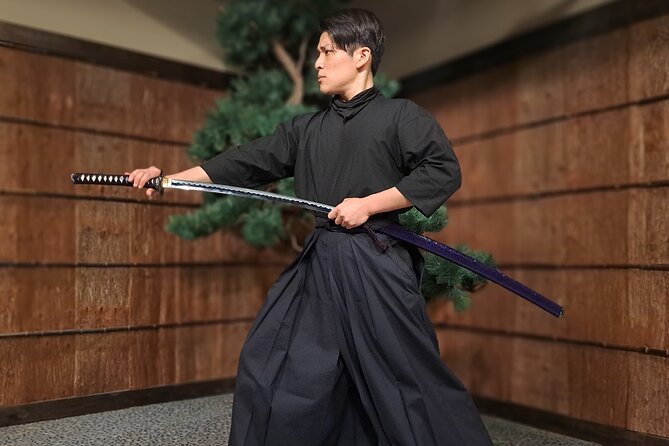
- Hands-on sword practice: you’ll watch how to swing properly, then try it yourself
- Family-friendly energy: designed to work for kids and adults in the same session
- Costume + photos: wear armor and pose in front of several samurai-themed backgrounds
- Built around history: you’ll learn context for what you’re doing, not just perform moves
Samurai Museum Kyoto: where the costume turns into practice
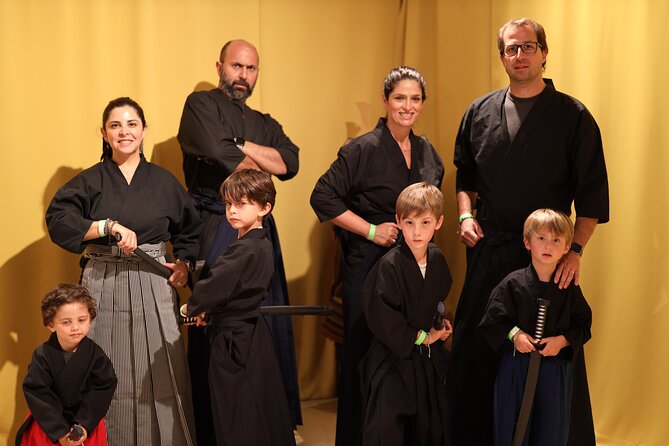
This is the kind of Kyoto activity that scratches two itches at once: it looks fun on day one, then actually teaches you something on day two. You’re at SAMURAI MUSEUM KYOTO on the “Experience Floor” inside the Kyoto Samurai Ninja Museum. The operator is listed as Maikoya.
You start by transforming from regular traveler into a modern-day samurai. That means clothing/armor, a short walkthrough, and a guided introduction to how the sword is handled in a controlled, classroom-style way. The key is that it’s positioned as a real practice experience, not just cosplay where you pose and leave.
There’s also a strong family focus. Kids and teens typically get the wow factor fast—armor, poses, sword try-outs—while adults get enough history to feel like they’re not wasting time.
One more plus: the ratings are strong. The experience sits at 4.7 out of 5 with 92% recommending, so most people are leaving happy with the balance of fun and instruction.
You can also read our reviews of more museum experiences in Kyoto

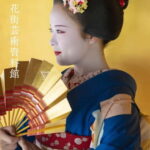
Meeting at the Kyoto Samurai Ninja Museum (and what “Experience Floor” means)
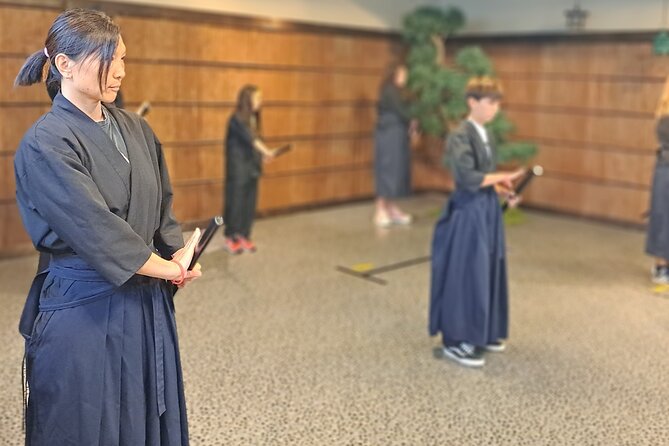
Your start point is very specific: KYOTO SAMURAI NINJA MUSEUM With Experience (Experience Floor of the Kyoto Samurai Ninja Museum) at 292 Higashidaimonjichō, Nakagyo Ward, Kyoto, 604-8073, Japan. The activity ends back at the same meeting point.
If you’re used to museum tours where everyone drifts in quietly, this one is a bit more like a workshop. Plan to arrive a few minutes early so the group can settle, get ready, and start on time.
Also, you’re given mobile ticket access. That’s handy in Japan when you don’t want to chase paper reservations.
One practical heads-up: the booking notes an elevator out-of-service period from January 24, 2026 to February 19, 2026. If you’re visiting during those dates, assume you’ll need stairs or other assistance. Since nothing else is stated, I’d plan for that possibility rather than banking on an elevator working.
Suiting up in samurai armor and posing in themed backgrounds
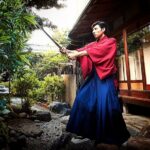
The costume part matters here because it’s not random. You wear a samurai outfit and then pose in front of several samurai-themed backgrounds. This is the visual payoff that turns the whole session from “lesson” into “memory.”
If you’re traveling with kids, this is usually what makes them buy in quickly. They get to look the part, stand in the right spots, and feel like part of the experience instead of sitting through a lecture.
For adults, I find it helps you engage too. It’s hard not to pay attention when you’re actively in character. Plus, it gives you a few minutes to slow down and get photos while the group is already set up in a safe, guided setting.
The downside to be aware of is timing. In a short, 2-hour format, getting dressed and photographed does take minutes. So if you want heavy training time, you’ll need to accept that this is a blend: costume, photos, history, and sword practice—not a full immersion program.
The sword lesson flow: history, a swing demonstration, then your turn
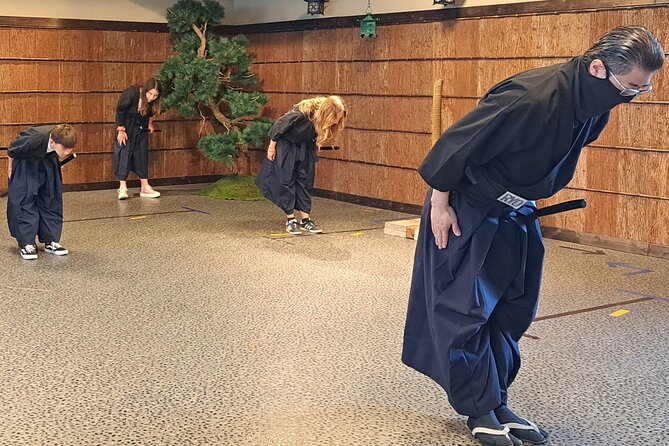
Here’s the arc you should expect for the katana component:
1) You’ll learn the context: the history of samurai comes into the session so you know what you’re looking at and why.
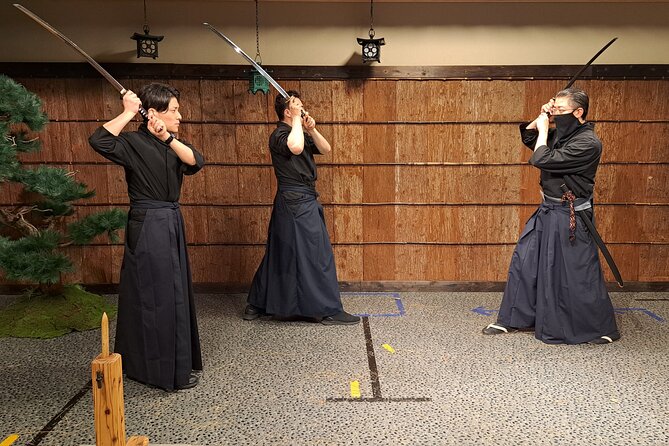
2) You’ll watch a demonstration of how to properly swing a sword.
3) Then you’ll try it yourself.
That “watch first, then do” structure is exactly what you want on a family-friendly activity. Kids can copy the motions in a controlled way, and adults get the basics without needing prior martial arts experience.
One more detail that’s important: you do get a hands-on experience rather than only being told about swords. The experience is marketed as different from simple costume play in Kyoto, with actual practice time included.
Safety and comfort are the quiet heroes here. A group cap helps the instructor keep eyes on everyone, and the short format keeps attention from drifting. If you’ve ever done an activity where the first 45 minutes are admin and then you barely practice, you’ll appreciate that this one is designed to actually get you trying.
Family-friendly Kyoto fun: what kids love (and what adults won’t mind)
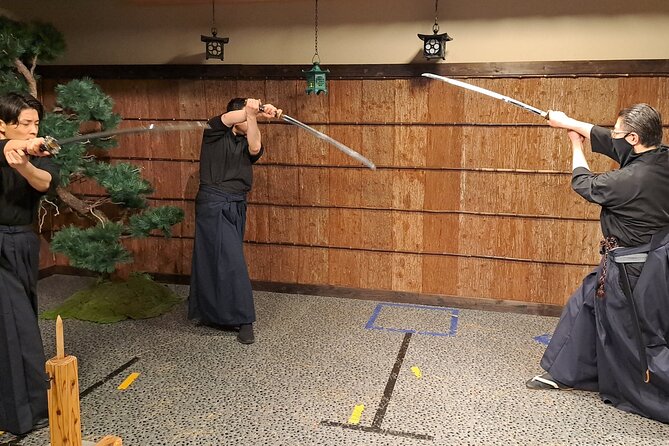
This is clearly built for families. The activity is offered in the morning and afternoon, so you can choose a time that fits naps, school schedules, or your own Kyoto sightseeing rhythm.
There’s an explicit age rule: children under 3 cannot enter the venue. If you’re traveling with toddlers, plan something else for that age group and still do this with the older kids.
The format is also described as suitable for both kids and adults. That matches the tone of the experience: it’s not only for kids who want action. It also includes explanation, so adults get something beyond the photos.
From the practical side, I also like that it’s a small group. With fewer people, you tend to get clearer instruction and less waiting around.
A note on what’s sometimes included beyond the basics: some people describe additional action elements like sword-fighting-style practice and even ninja-star throwing as part of the broader experience. The core is the sword lesson and history, but if your group does add-ons, it’s likely in the same family-friendly workshop spirit.




Price and value: what $65.39 buys you in 2 hours
The price is listed at $65.39 per person, with an approximate 2-hour duration.
Is it “cheap”? No. But value in Japan isn’t only about cost—it’s about getting your money’s worth in time, access, and experiences you can’t easily copy on your own. Here, you’re paying for:
- the guided sword swing demonstration and practice
- the samurai outfit transformation
- history context
- a structured photo setup with multiple themed backgrounds
- a small-group environment that makes instruction easier
If you tried to DIY this, you’d struggle with the hardest parts: finding safe practice instructions, arranging appropriate gear, and getting a guided, classroom-style flow that works for kids. Here, you get that in one block.
Where value can vary is your expectations. If you’re an adult martial-arts enthusiast expecting hours of technical katana training, this probably won’t satisfy that itch. If you want a fun, well-timed intro that teaches you how swords are handled and tells you why samurai mattered, it’s a solid deal for the time you spend.
Group size limits: why fewer people can make it better
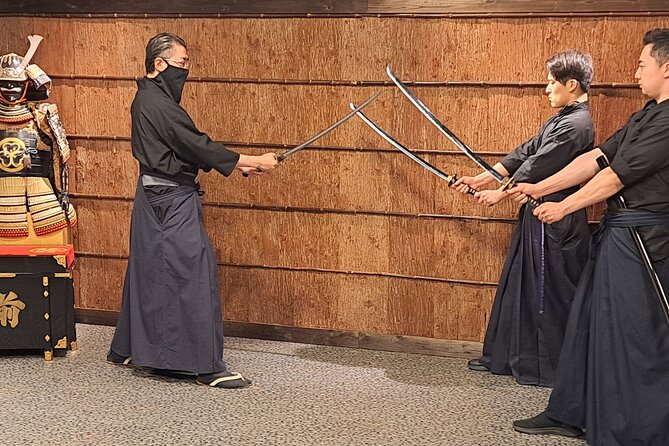
This is one of the big selling points, but the numbers vary depending on the booking details you see. The experience is described as:
- maximum 10 people for a more personalized feel
- also listed with a maximum of 17 travelers for the activity
- and one set of notes says a maximum of 4 travelers
Rather than treating this as a contradiction, I think of it as: it’s designed to stay small. No matter the exact cap for your time slot, you should expect an intimate workshop rather than a giant production line.
For you, the payoff is practical:
- less waiting around
- more chances to be corrected
- a smoother rhythm for kids who need breaks
- a better chance of getting clear instructions
Timing in Kyoto: morning vs. afternoon slots and how to plan your day
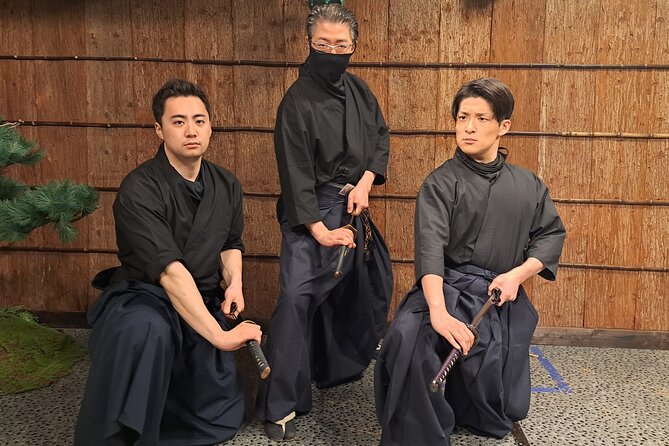
You can choose morning or afternoon sessions. That flexibility is useful in Kyoto, where you’re often juggling temple schedules, meals, and walking distances.
Since the experience is about 2 hours, I’d treat it like a mid-day or late-afternoon anchor. It’s active, so don’t load it right after a long walking day without water and snacks planned for the kids.
Also, arrive a little early. Costume handouts and getting everyone ready are part of the clock. If your day is packed tightly, you may feel the time crunch once you’re standing in armor.
If you have school-age kids, this can be a great way to break up a sightseeing loop with something interactive.
Who should book the Samurai Sword Experience?
Book it if you want:
- an active, family-friendly Kyoto activity
- a structured introduction to samurai and sword basics
- photo moments with a real “try it yourself” feel
- something that works for kids, teens, and adults together
Consider skipping or pairing differently if:
- you only want adult-level martial arts training
- your group is mostly adults uninterested in costumes and themed photo settings
- you’re traveling with children who are under 3 (they can’t enter)
This is also a good “teen activity” option. Some people specifically mention doing it with teenagers and having everyone enjoy the mix of fun and instruction. If your kids are old enough to follow directions and try moves safely, it usually clicks.
Should you book this Samurai Sword Experience at Samurai Museum Kyoto?
I’d recommend booking if you’re looking for a short, high-energy Kyoto activity where you actually participate. The blend of history + hands-on practice + samurai outfit + themed photo backdrops is exactly what makes this kind of workshop work for families.
If you’re an adult who wants hours of technical sword work, you might feel underwhelmed by the intro-level pacing. But if your goal is to learn the basics, get the photos, and enjoy a guided experience in a small group, this hits the mark.
Bottom line: for families and curious adults who want something practical and fun in Kyoto, it’s a very reasonable use of 2 hours.
FAQ
How long is the Samurai Sword Experience?
It lasts about 2 hours.
Where is the meeting point?
You meet at KYOTO SAMURAI NINJA MUSEUM With Experience (Experience Floor of the Kyoto Samurai Ninja Museum), 292 Higashidaimonjichō, Nakagyo Ward, Kyoto, 604-8073, Japan.
What group size should I expect?
The experience is described as small-scale, with limits noted as maximum 10 people, and also listed with a maximum of 17 travelers. Some information also lists a maximum of 4 travelers.
Is there an age requirement for children?
Yes. Children under 3 cannot enter the samurai venue.
What’s included in the experience?
You wear a samurai outfit and transform into a modern-day samurai, and you participate in the hands-on sword experience. The experience also includes a history introduction and a sword-swing demonstration before you try.
Do I need a printed ticket?
No. The booking mentions a mobile ticket.
Can I cancel for a full refund?
Yes. You can cancel up to 24 hours in advance for a full refund. If you cancel less than 24 hours before the start time, the amount paid is not refunded.