REVIEW · KYOTO
Nijo Castle and Imperial Palace Visit with Guide
Book on Viator →Operated by WaRaiDo Guide Networks · Bookable on Viator
Kyoto does not do half-measures. This 2.5-hour tour links Nijo Castle and the Kyoto Imperial Palace with an English-speaking guide who explains what you’re looking at. I especially like the focus on context for the Edo period and the way the guide keeps the story clear while you move through both sites. One thing to keep in mind: you’ll be on your feet for a fair chunk of time, so plan comfortable shoes.
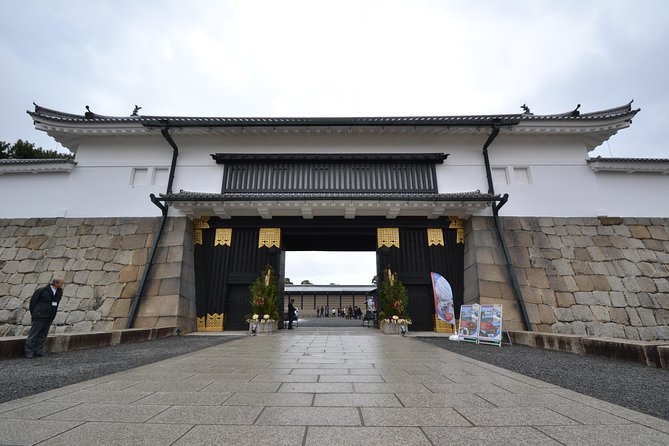
I also like how the tour is designed for efficiency without feeling rushed. You start at the big white main gate of Nijo Castle, get a guided hour inside, then take public transport together to the Imperial Palace for another guided hour. The best-case setup is often a very small group, with guides such as Mia/Mie or Choko showing up in the experience feedback as standout English communicators. The one potential drawback: you won’t have time to wander completely on your own, because the guide’s pacing shapes the visit.
In This Review
- Key things to know before you go
- Nijo Castle: the shogun era, explained right where you stand
- What to watch for (and why)
- Kyoto Imperial Palace: Meiji-era change in a tighter, guided hour
- The 2.5-hour structure: efficient, but still human
- Walking and timing reality check
- Price and value: what $79.18 covers (and why it can be worth it)
- Meeting point and finish: easy start, easy next steps
- Who this tour fits best (and who might want something else)
- Should you book Nijo Castle and Kyoto Imperial Palace with a guide?
- FAQ
- How long is the tour?
- What are the main stops?
- Is the tour in the morning or afternoon?
- What’s included in the price?
- What isn’t included?
- How many people are in the group?
- Is there free cancellation?
Key things to know before you go
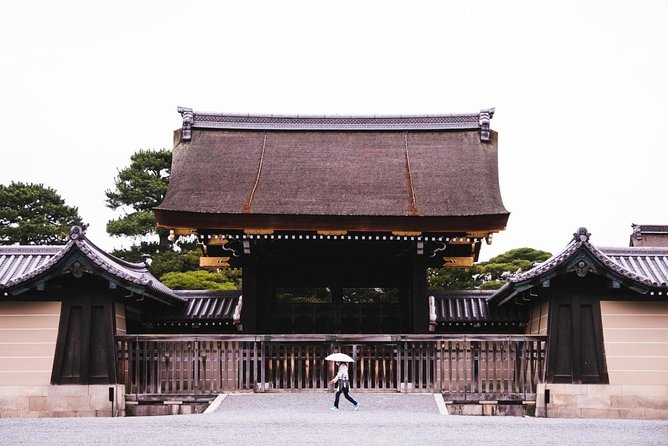
- Two one-hour guided blocks: Nijo Castle first, then Kyoto Imperial Palace, so you get explanations where they matter.
- Small group size: described as under 8 guests for the castle portion, with a maximum of 11 travelers overall.
- English-speaking guide with context: expect clear talk about Edo-era power and how it connects to Kyoto’s political shifts.
- All the big tickets included: entrance fees for both sites plus public transport during the tour.
- Simple meeting and pickup flow: start at the white main gate of Nijo Castle; finish at the Imperial Palace area (near Kyoto Gyoen National Garden).
Nijo Castle: the shogun era, explained right where you stand
Nijo Castle is one of Kyoto’s best “read it with your brain, not just your eyes” places. You’ll meet your guide in front of the huge white main gate and then spend about an hour touring with admission included. The value here is not that you’re simply walking through historic buildings. It’s that someone ties the architecture and the setting to how power worked in the Edo period.
In practice, you’ll get a guided route that helps you notice details you’d usually miss if you went alone. The experience feedback highlights how the guide points out symbolism and explains how spaces were used, not just what they look like. That turns the castle from a photo stop into a story you can actually follow.
You should also know what to expect from the visit style. You’ll be moving through areas that are meant to be observed carefully, so it helps to keep an eye on your guide’s cues rather than drifting. If you’re a fan of shoguns and political history, this is where the tour earns its keep, because the explanations are tied directly to what’s in front of you.
You can also read our reviews of more guided tours in Kyoto

What to watch for (and why)
- Understanding the Edo period through design: the guide’s emphasis on shogunate life makes the castle feel less like a museum and more like a working political stage.
- Learning the castle’s “why,” not only the “what”: explanations about meetings and how the system functioned come through during the guided hour.
- Taking breaks only when your guide pauses: there isn’t time for long detours; the schedule is built to cover two major sites.
Kyoto Imperial Palace: Meiji-era change in a tighter, guided hour
After Nijo Castle, you’ll transfer to the Imperial Palace by public transportation with your guide. Then you’ll have another one-hour guided tour with entry fees included. This second stop matters because it shifts the story from shogunate rule into the broader arc of Japan’s political transition, including the period associated with Emperor Meiji.
The best part of this stop is how a guide can help you connect the dots between the two worlds. Even if the palace grounds are stunning on their own, the tour value is in the interpretation—what the structures represent, how the imperial family fits into the narrative, and how the country’s power changed hands over time. The experience feedback also points out a strong balance: enough historical material to be meaningful, without turning the visit into a lecture you can’t enjoy.
One practical consideration: you’re on a guided timeline. That’s good for depth in a short window, but it means you won’t be the one deciding which areas get your longest stare. If you want to linger for personal photos, plan to do that mainly after the tour ends in the palace area.
The 2.5-hour structure: efficient, but still human
This is a compact tour at about 2 hours 30 minutes. It’s designed for first-time Kyoto visitors who want two major historical sites but don’t want the stress of planning transit, entry logistics, and a sensible walking route on their own.
Here’s the flow that helps it work:
- Stop 1: Nijo Castle (guided 1 hour, admission included)
- Transit to the palace by public transport with your guide
- Stop 2: Kyoto Imperial Palace (guided 1 hour, admission included)
Because the tour includes public transport during the experience, you don’t have to figure out how to get between sites while also reading signs in Japanese. That matters in Kyoto, where you can waste time just trying to match routes to your exact starting point.
Walking and timing reality check
The tour is short, so it moves at a steady pace. Comfortable shoes are not optional. Both sites are worth your time, but the schedule doesn’t allow a slow drift through every corridor. If you tend to get distracted by details and photos, you’ll still enjoy it—you’ll just need to accept that the guide’s route is part of the design.


Price and value: what $79.18 covers (and why it can be worth it)
At $79.18 per person, this tour is priced to include the stuff people normally end up paying for separately: entrance fees at both sites and public transportation between them. You’re also buying what’s hard to price—an English-speaking guide who can explain Edo politics in a way that makes the sites understandable fast.
If you’re traveling as a couple or small group, this kind of guided structure can be a strong value. Going solo means paying entry fees anyway, and then you’re responsible for building context from guidebooks or apps. Here, the guide is doing the translation work between “what you see” and “why it mattered.”
Is it pricey compared to buying tickets yourself? It can be, yes. But if you care about history beyond the obvious, the guide time is the product you’re actually paying for. Based on how the experience is described, the guide is a big part of why people call it one of the best tours they did in Kyoto.
Meeting point and finish: easy start, easy next steps
You’ll start at Nijō Castle at 541 Nijōjōchō, Nakagyo Ward, Kyoto. The meetup is specifically in front of the huge white main gate, which is helpful if you’re using Google Maps and want to avoid “nearby but not it” confusion.
The tour ends at the Kyoto Gyoen National Garden area, with the note that it finishes in front of Imperial Palace. That finish is convenient because you’re positioned to continue your day on foot through the Imperial Palace gardens area and nearby routes, instead of being dropped miles away.
One small tip: arrive a bit early. Even when meeting points are straightforward, you’ll enjoy the experience more if you’re not rushing to find the guide at the gate.
Who this tour fits best (and who might want something else)
This works best for:
- You if you like Edo-period stories, shogun-era power, and political symbolism tied to real buildings.
- You if you want a small-group format with real Q&A, not just a headset lecture.
- You if you’d rather spend time learning than spending time figuring out transit and entry flow.
It may not be ideal if:
- You want total freedom to roam slowly at each site.
- You plan to spend lots of time in cafés or doing long detours, because the schedule is built around two guided hours.
If you’re visiting Kyoto and want a high-impact history pairing in one outing, this is the kind of tour that saves you effort while still giving you real context.
Should you book Nijo Castle and Kyoto Imperial Palace with a guide?
I’d book it if your goal is to understand what these places meant, not just to check them off. The big strengths are the two guided hours, the included entrance fees and public transport, and the fact that the guide’s explanations reportedly make the shogun and imperial narratives feel accessible. It’s also a smart fit for short stays because it bundles two major sites in one efficient outing.
If you’re mainly interested in soaking up the gardens and taking photos at your own pace, you might prefer a self-guided day. But if you want history you can actually follow while you’re standing in the rooms and courtyards, this tour is built for exactly that.
FAQ
How long is the tour?
It runs about 2 hours 30 minutes.
What are the main stops?
You visit Nijo Castle first, then Kyoto Imperial Palace.
Is the tour in the morning or afternoon?
You can choose either a morning or afternoon time slot.
What’s included in the price?
The tour includes a professional English-speaking guide, entrance fees, and public transportation during the tour.
What isn’t included?
Food and drinks are not included, and there is no hotel pickup or drop-off.
How many people are in the group?
It’s described as a small group (less than 8 for the castle stop), with a maximum of 11 travelers.
Is there free cancellation?
Yes. You can cancel for a full refund up to 24 hours in advance of the start time.