REVIEW · KYOTO
Ninja Experience (Family Friendly) at Samurai Ninja Museum KYOTO
Book on Viator →Operated by Maikoya · Bookable on Viator
Throwing stars in Kyoto is surprisingly fun. This is a hands-on ninja training session where you practice shuriken and a blowgun style weapon, then you wrap it up with a Samurai and Ninja Museum look. I like how it includes costume so you can focus on the fun, and I like the museum add-on for context. One possible drawback: the whole experience runs on a tight schedule, so arrive early and keep an eye on where the museum stop takes place.
I also like that the ninja outfit rental takes the guesswork out of what to wear, and the group stays small (max 4), which helps the instructor keep things moving. Just note that the museum visit is included but may be at a different location than the training space, so plan for a quick change of pace. If you want extra hands-on time, show up on time and be ready to jump into the session.
Expect about 2 hours total (approx.) and a mobile ticket. With a score of 4.5 from 132 reviews, it’s clearly a popular pick for families who want an activity that feels like part role-play, part practical skills, part history.
In This Review
- Key highlights to watch for
- A Family-Friendly Ninja Training Stop in Kyoto
- Price and What $56.16 Gets You (Not Just a Ticket, a Time Block)
- Meeting at 292 Higashidaimonjichō: Plan Your Arrival Like a Ninja
- Ninja Outfit Rental and Samurai Dress-Up: Why the Costume Part Works
- The Training Session: Stealth Skills and Weapon Practice
- Shuriken and Blowgun Sessions: Fun, Measured, and Learnable
- Samurai and Ninja Museum Tour: The Part That Adds Meaning
- Group Size and Instructor Energy (Max 4 Travelers)
- What Could Feel Off: When Time Gets Tight
- Who Should Book This (And Who Might Not)
- Tips to Get the Most Out of the 2 Hours
- Should You Book Ninja Experience at Samurai Ninja Museum KYOTO?
- FAQ
- How long is the Ninja Experience in Kyoto?
- Where do we meet for the tour?
- Is a mobile ticket used?
- Does the ticket include ninja and samurai outfits?
- What activities are included in the training?
- Is the Samurai and Ninja Museum included?
- Are children under 3 allowed to join?
- Is transportation to and from the attraction included?
- Is the elevator available?
Key highlights to watch for
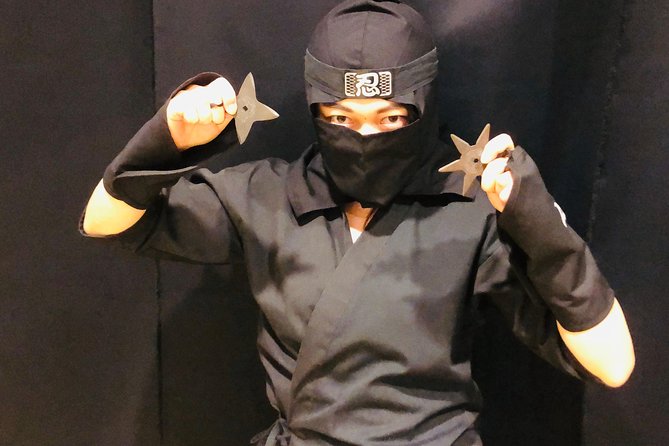
- Shuriken throwing practice led by an instructor, not just a photo op
- Ninja blowgun session as a core part of the training
- Samurai and Ninja Museum included after the workshop
- Ninja outfit + samurai outfit are both part of the ticket
- Small group format (maximum of 4 travelers) to keep attention on you
- Sword demonstration by a swords master is included
A Family-Friendly Ninja Training Stop in Kyoto
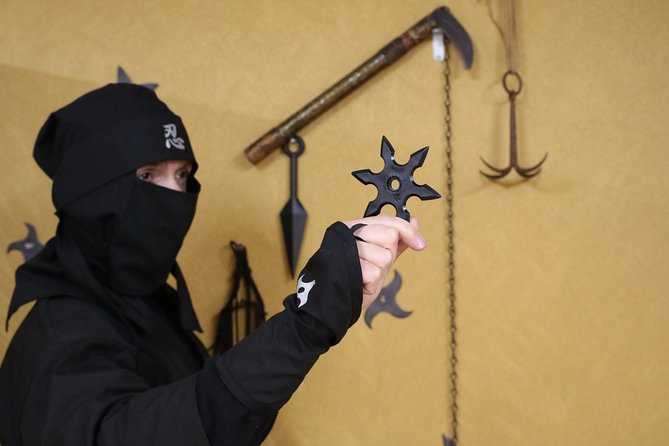
Kyoto is packed with temples, gardens, and calm walking streets. This experience gives you a different kind of Kyoto moment: hands-on, silly-cool, and structured enough that kids aren’t just waiting around.
You start by transforming into a modern ninja. That means costume on, then instruction on basic stealth-style ideas and how to handle a few iconic weapons. If your family likes acting-out eras from Japan’s past, this is a direct way to do it without needing any prep work.
What I like most is that it’s not only about dressing up. You also get time to practice throwing and aiming. And then you transition into the museum tour so your ninja play doesn’t float off into pure cosplay land.
You can also read our reviews of more museum experiences in Kyoto

Price and What $56.16 Gets You (Not Just a Ticket, a Time Block)
At $56.16 per person, this sits in the “worth considering” zone if you want a pre-planned activity with built-in fun and materials. You’re not paying for a walking tour where you mostly listen; you’re paying for an organized session with props, coaching, and costume.
Here’s the value angle that matters: the ticket includes both the ninja training and access to the Samurai and Ninja Museum. So you get two different experiences in one booking—action first, then explanation.
Still, you should go in with realistic expectations. The session is fast by design. If you expect a long, deep, combat-art lesson, you may feel the time is short. If you’re aiming for an entertaining, safe, kid-friendly skills demo plus a museum visit, it’s much easier to feel satisfied.
Meeting at 292 Higashidaimonjichō: Plan Your Arrival Like a Ninja
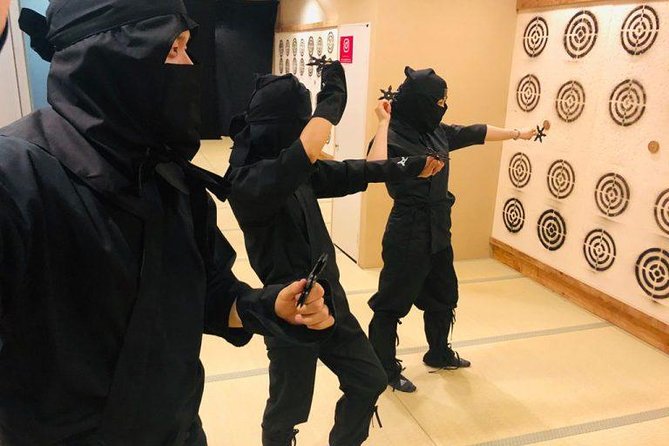
The meeting point is 292 Higashidaimonjichō, Nakagyo Ward, Kyoto, 604-8043, Japan. The good news: it’s near public transportation, and the experience ends back at the same meeting point.
Because timing matters here, I’d treat this like a class. If you arrive late, you risk missing part of the flow. The experience runs for about 2 hours (approx.), and the day can move quickly once everyone is in costume and ready.
Also, keep your schedule flexible after the workshop. The museum portion is included, but some people have been caught off guard by the fact that it may be in a different location from the training start. A quick check of where you’re headed next will save you stress.
Ninja Outfit Rental and Samurai Dress-Up: Why the Costume Part Works
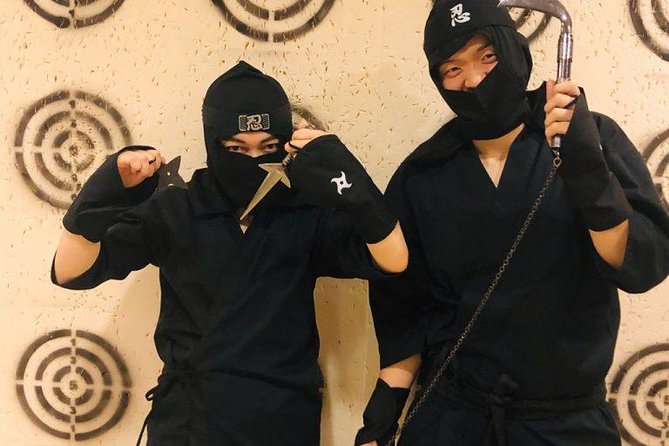
This ticket takes care of your wardrobe. You wear a ninja outfit to transform for the training, and there’s also samurai dress-up included in your ticket.
That does two things for you. First, it lowers friction—no need to hunt for costumes or figure out sizing. Second, it makes the experience feel like a real “role” rather than just a lesson. For kids, that matters. For adults, it’s a fun way to let your brain stop treating ninjas as a theme park and start treating it as a story you’re participating in.
The samurai portion also helps with balance. You’re not stuck only on ninja mythology. You get a bridge to the samurai side of feudal Japan, which makes the museum visit feel more connected rather than tacked on.
The Training Session: Stealth Skills and Weapon Practice
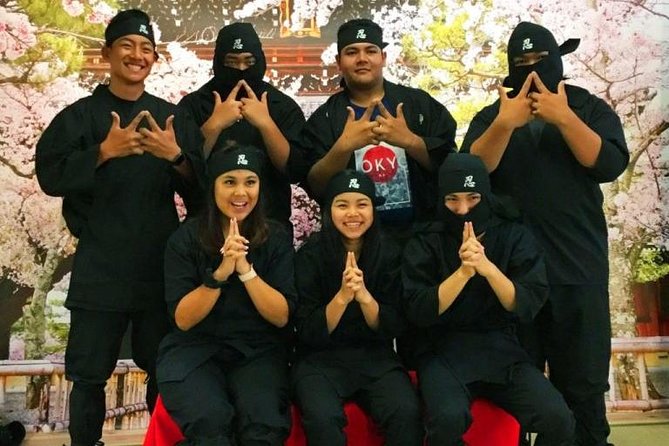
The core part is an authentic special ninja training session. You’ll get guidance on stealth-style techniques, plus practical weapon practice.
What your time usually looks like:
- You get dressed and briefed for the session.
- You learn the basics of stealth techniques.
- You practice throwing ninja stars (shuriken).
- You use a ninja blowgun (blow darts style).
- You learn simple sword techniques.
- You watch a sword demonstration by a swords master (included).
In plain terms: it’s part classroom, part mini training hall. You’re not expected to become a martial artist in two hours. But you are expected to try the key activities so your kids can say they actually did ninja skills—not just watched them.
If you love hands-on activities, this is the part you’ll remember. And if you’re traveling with mixed ages, it’s also easier because each activity has clear start/finish moments.

Shuriken and Blowgun Sessions: Fun, Measured, and Learnable
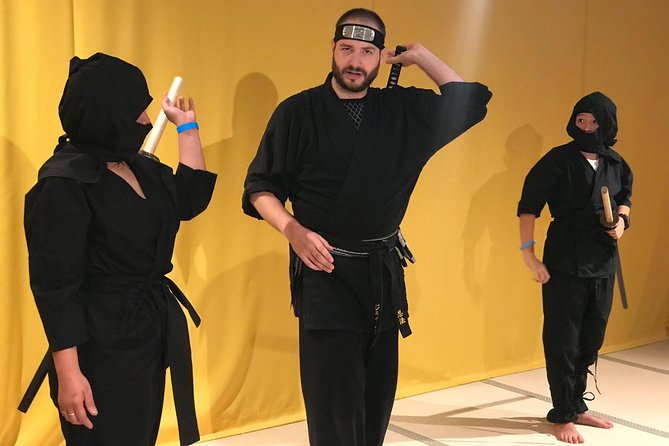
The two headline activities are throwing ninja stars (shuriken) and using a ninja blowgun.
These are great choices for a family setting because they’re easy to understand quickly. You get:
- Demonstration from the instructor
- Guided practice
- A controlled way to try aiming and throwing
One helpful way to approach it: treat it like a game with rules. That’s how you’ll avoid frustration, especially with kids who want instant results. You don’t need perfect accuracy to enjoy it—you just need to keep showing up and trying again.
You’ll also get simple sword techniques. The experience doesn’t claim to turn you into a swords master, but it adds a crucial layer: it shows how those weapon traditions weren’t only about “one cool move.” They were part of broader martial training.
Samurai and Ninja Museum Tour: The Part That Adds Meaning
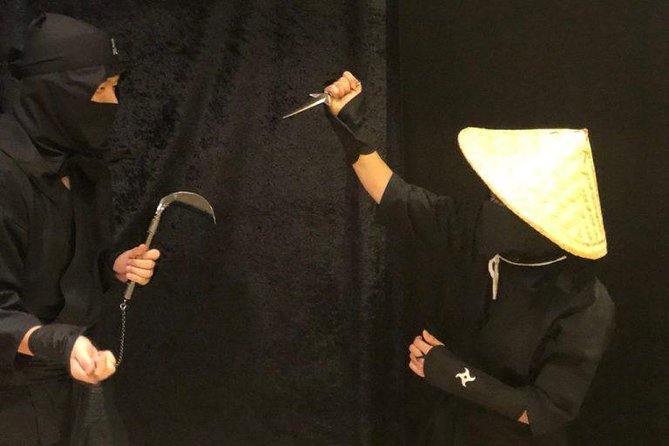
The Samurai and Ninja Museum visit is included, and it’s a smart way to add context to your training session.
Why it’s valuable: otherwise, shuriken throwing and blow darts can feel like pure “toy weapons.” The museum helps connect those items to how people studied, built, and used tools in feudal Japan settings.
Timing matters, though. Some people have had confusion because the museum visit can happen at a different location than the workshop. If you’re the type who hates surprises, I’d make it a priority to confirm the plan right after the training portion begins.
Also, remember that the total experience duration is about 2 hours (approx.). So the museum stop is included, but it’s still part of an action-filled schedule—not a long independent museum day.
Group Size and Instructor Energy (Max 4 Travelers)
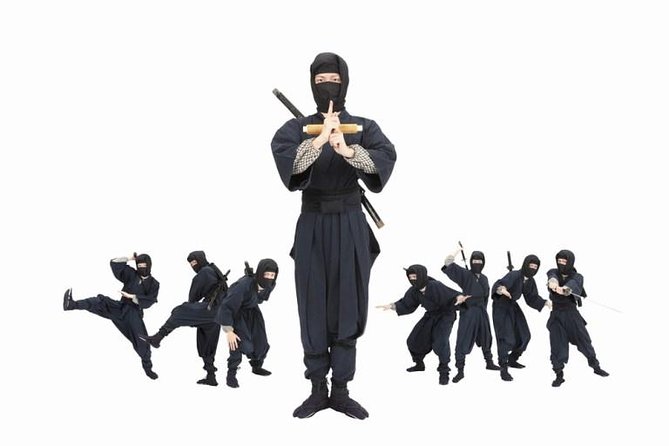
This experience has a maximum group size of 4 travelers. That’s a big deal for families.
Small groups usually mean:
- You get more attention during hands-on practice
- Less waiting while everyone takes turns
- A smoother pace for kids who don’t want to sit still
It also explains why the session can feel structured. When a group is small, the instructor can move you through each station without leaving too many people stuck in line.
In at least one case, the session’s vibe was led by an instructor named Kiryu, and the training was described as fun and accommodating. You may not know your instructor in advance, but the overall approach is clearly hands-on and kid-friendly.
What Could Feel Off: When Time Gets Tight
Most people who do well with this experience come in wanting action and a quick museum context. The people who struggle tend to expect more time at each station.
A few common “watch-outs” to plan for:
- The full session can feel short if you were expecting a longer lesson.
- The schedule moves quickly, especially if the venue is busy.
- The museum location detail can catch people off guard if you don’t confirm it.
On busier periods—like peak seasonal times—things can run tighter. That doesn’t mean the experience stops being fun; it just means your best strategy is to show up early, pay attention, and be flexible about timing.
Who Should Book This (And Who Might Not)
This is a strong fit if:
- You’re traveling with kids who want to do ninja and samurai activities
- Your family likes interactive, role-based experiences
- You want something structured rather than a pick-your-own-adventure afternoon
- You want a quick museum add-on without turning it into a half-day project
You might reconsider if:
- You want a deep martial-arts training experience with lots of instruction time
- Your group dislikes fast-moving schedules
- You need clearly labeled, same-location logistics end-to-end (because the museum can be separate)
One good sign you’ll enjoy it: it includes the outfits and the main weapon practice. That removes a lot of the uncertainty that can make “interactive” experiences frustrating.
Tips to Get the Most Out of the 2 Hours
Here are practical steps that pay off with this kind of activity:
- Arrive early at the meeting address so you don’t lose costume time.
- Be ready to move from one activity to the next without long breaks.
- If your family needs clear logistics, confirm where you’ll go for the museum portion as soon as you can.
- Bring your best “try again” attitude for shuriken and blowgun practice. Perfection isn’t the goal; participation is.
Also, this tour is listed as suitable for most travelers, but kids under 3 can’t join the ninja experience (they can enter the venue). If you’re traveling with younger kids, plan what you’ll do while the others train.
Should You Book Ninja Experience at Samurai Ninja Museum KYOTO?
Yes, if you want a kid-friendly, hands-on ninja and samurai activity that’s built for families and packaged with a museum visit. At $56.16 per person, you’re paying for a structured 2-hour experience with costumes, weapon practice, and a sword demonstration—not just a walk and a story.
Skip it (or adjust expectations) if your priority is a long, detailed training lesson. The experience is designed to keep things moving. And if you hate location surprises, take a moment to confirm the museum stop so you don’t end up trying to figure it out while everyone’s waiting.
If you line up your expectations—fun practice plus a museum context—it’s a memorable Kyoto detour.
FAQ
How long is the Ninja Experience in Kyoto?
It lasts about 2 hours (approx.).
Where do we meet for the tour?
The meeting point is 292 Higashidaimonjichō, Nakagyo Ward, Kyoto, 604-8043, Japan.
Is a mobile ticket used?
Yes, the experience includes a mobile ticket.
Does the ticket include ninja and samurai outfits?
Yes. Ninja outfit rental is included, and dress up like a samurai is also included.
What activities are included in the training?
You can expect ninja skills such as throwing ninja stars (shuriken), using a ninja blowgun, and simple sword techniques, plus a sword demonstration by a swords master.
Is the Samurai and Ninja Museum included?
Yes. A tour of the Samurai and Ninja Museum is included in your ticket.
Are children under 3 allowed to join?
Children under 3 cannot join the ninja experience, though they can enter the venue. Children also must be accompanied by an adult.
Is transportation to and from the attraction included?
No. Transportation to/from attractions is not included.
Is the elevator available?
The listing notes an elevator out-of-service period from January 24, 2026 – February 19, 2026.