REVIEW · KYOTO
The Art of Geisha: Exclusive Show & Gion Walking Tour
Book on Viator →Operated by GuideMe Japan · Bookable on Viator
Gion at 3:00 pm hits differently. This tour gives you a rare, up-close look at the geisha world through a maiko performance paired with conversation and a hands-on moment. I also like how the group stays tiny, so you’re not shouting over a crowd and you actually get time to connect, not just watch.
The other big plus for me is the chance to chat with the apprentice and ask questions while enjoying Japanese tea and snacks. One thing to keep in mind: the whole experience is about 1 hour, so it’s not a long, slow wander of Kyoto streets.
In This Review
- Key highlights you’ll care about
- Why a tiny Gion show feels worth it
- The 3:00 pm timing and meeting point that actually matter
- Stop in Gion: learning the neighborhood, not just the performance
- The maiko show: tea, snacks, and close-range artistry
- The conversation and the traditional game (why this beats a standard show)
- Price and value: what $124.21 buys you in Kyoto
- What to expect from the guide (and how to get the most)
- Who this tour is best for (and who might feel a mismatch)
- Quick practical notes before you go
- Should you book The Art of Geisha in Gion?
- FAQ
- How long is The Art of Geisha: Exclusive Show & Gion Walking Tour?
- Where do I meet for the tour?
- What time does the tour start?
- How big is the group?
- What’s included in the price?
- Can children join?
Key highlights you’ll care about
- Max six people means you’re close enough to notice details, not just see movement from far away
- Tea and snacks are built into the show time, so you’re not waiting around hungry
- Gion context first helps you understand what you’re seeing instead of treating it like a spectacle
- Q&A with the maiko turns the performance into a real learning moment
- A traditional game gives you a fun, interactive challenge, not just a sit-and-watch format
Why a tiny Gion show feels worth it
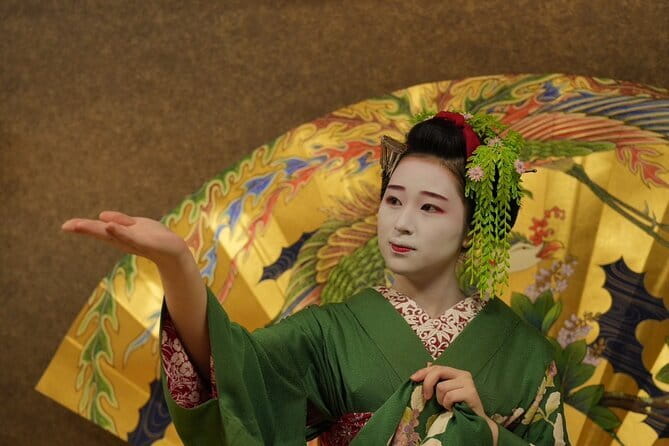
Kyoto’s Gion looks calm from the outside, but it’s full of rules, roles, and careful traditions. What makes this experience stand out is that it doesn’t ask you to merely look from the curb. You sit down and get pulled into the etiquette and artistry from the inside, with a small group (maximum six).
I like small-group tours because they respect your attention. You can actually track what’s happening and why, and you can hear the guide’s explanations without straining. You also get a more natural flow when the maiko performs—less background noise, fewer interruptions, and more “this is happening right now” energy.
The other part I value is the chance to talk. You’re not just watching choreography; you’re also learning how the maiko thinks about the work, the discipline, and the reason these arts matter. The guides you may meet (for example, Ai or Yoshino have been named in past experiences) tend to focus on practical context and how to ask better questions.
You can also read our reviews of more walking tours in Kyoto


The 3:00 pm timing and meeting point that actually matter
This runs at 3:00 pm and lasts about 1 hour (listed as 1 to 2 hours, but plan around the shorter end). That timing is useful in Kyoto because late afternoon light can be nicer for walking, and you also avoid some of the busiest midday crush.
You’ll meet at the Statue of Izumo-no-Okuni in Higashiyama Ward. It’s a clear landmark, which helps when you’re arriving in a new neighborhood. The tour ends at Hangesho 535 Morishitachō, also in Higashiyama Ward—so you’re not stuck trying to find your way back to transit right after the show.
A practical tip: show up a few minutes early. With a meeting point on a street-level landmark, you want time to orient yourself, settle in, and keep the start smooth for everyone in your tiny group.
Stop in Gion: learning the neighborhood, not just the performance
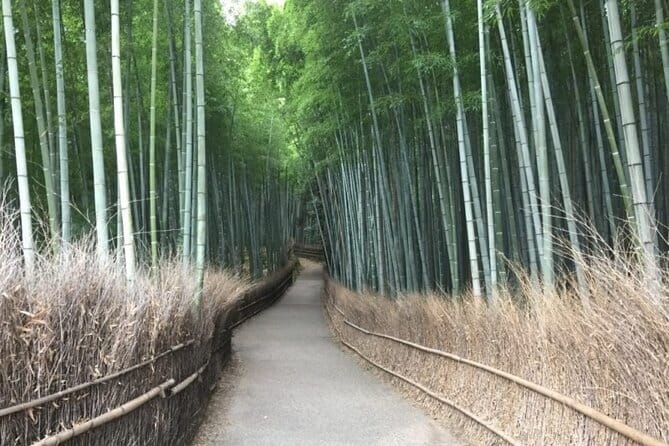
The plan centers on Gion. You join the walk to get the district basics and the cultural background that makes the show land better. It’s easy to visit Gion and just play geisha-spotting. This tour goes a step deeper by explaining what you’re seeing and how to interpret it.
Expect a guide-led explanation of the geisha world as it relates to Gion—enough to give you a framework before the maiko starts performing. You’ll also have a chance to ask questions during this portion, which is helpful because it shifts your mindset from watching for entertainment to watching for understanding.
A small caution: because the time is short, you’ll want to be ready with questions that matter to you. If you wander into the tour with vague curiosity, the hour can slip away. If you come with one or two specific topics—training, arts, etiquette, daily life—you’ll get more out of the conversation.
The maiko show: tea, snacks, and close-range artistry
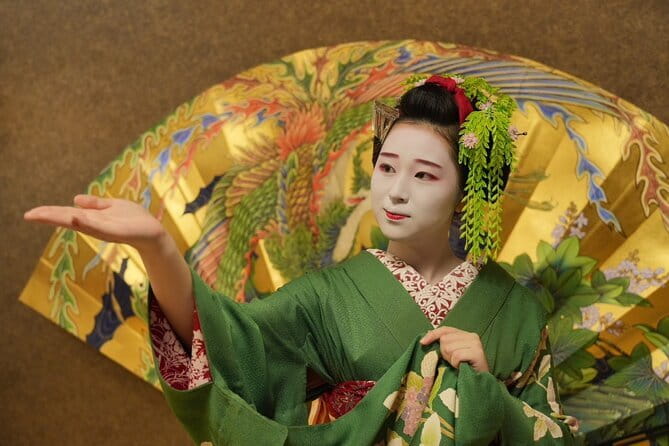
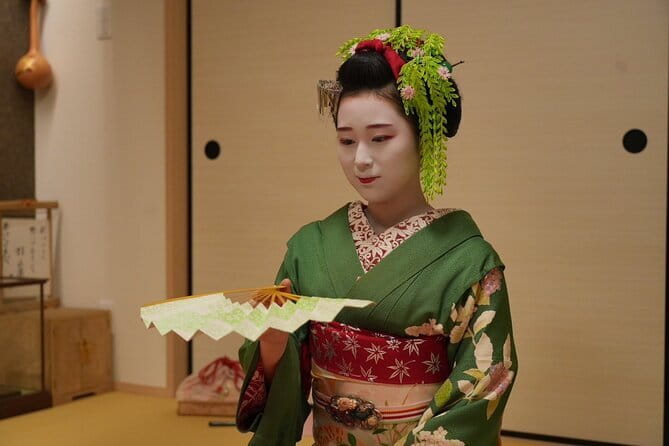
The core of the experience is watching a maiko (geisha apprentice) perform. In other words: this isn’t just a stage show for an audience of strangers. It’s designed for intimacy. With a maximum of six participants, you’re closer to the action, and you can follow the performance with less mental effort.
The tour includes Japanese tea and snacks, which is a quiet but important detail. Tea-and-snack breaks can feel like filler on some tours, but here it’s part of the atmosphere around the performance. It helps you slow down. And it keeps things comfortable during the structured portion of the evening.
What I like about seeing a maiko in a setting like this is the contrast. People often expect geisha culture to feel distant and purely ceremonial. Up close, you start to appreciate how much practice and discipline go into the movement and the timing. One review explicitly pointed to the dedication and the fact that training takes years, and that theme holds up here: you’re not just watching pretty performance. You’re seeing a craft built over time.
The conversation and the traditional game (why this beats a standard show)
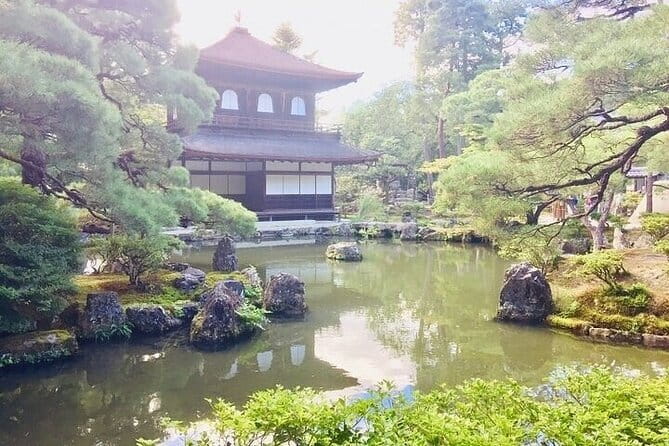
Watching is good. But the standout value is what happens after you sit down.
You’ll get time to chat with the apprentice and ask questions. This changes the vibe from spectator mode to participant mode. You’ll likely learn how the arts are approached, how questions are meant to be asked, and what the maiko is comfortable sharing in a guided setting. It also helps you understand that geisha culture is not just costumes and performances—it’s a system of skills and expectations.
Then comes the interactive part: a traditional Japanese game where you challenge your own skill against the maiko. The best part is the spirit of it. It’s not a high-pressure test; it’s an amusing way to participate. In past experiences, people have described winning or at least enjoying the playful back-and-forth, which tells you the game is set up to keep you engaged rather than intimidated.
If you’re the kind of person who loves hands-on moments, this is the piece that turns a great show into a memorable one. You’ll walk away with more than photos—you’ll walk away with a story and the feeling that you took part, even briefly.
You can also read our reviews of more tours and experiences in Kyoto




Price and value: what $124.21 buys you in Kyoto

At $124.21 per person, this isn’t a bargain-basement cultural activity. So you should ask: what are you really paying for?
You’re paying for:
- Small-group access (max six)
- A live maiko performance tied directly to the group experience
- Tea and snacks, included
- English-speaking guide support
- Time to ask questions plus the traditional game
In Kyoto, many “geisha experiences” are either distant, timed for crowds, or focused more on the photo moment than on real understanding. This one feels priced for interaction. If you want to see the normally hidden world of geisha and also talk with a maiko, the cost makes more sense than a generic cultural event.
I’d also think about your priorities. If you’d rather spend your money on a long multi-stop tour with lots of sights, you might feel the hour is short. If your priority is geisha culture with a real human connection, this hour can be dense in the best way.
What to expect from the guide (and how to get the most)
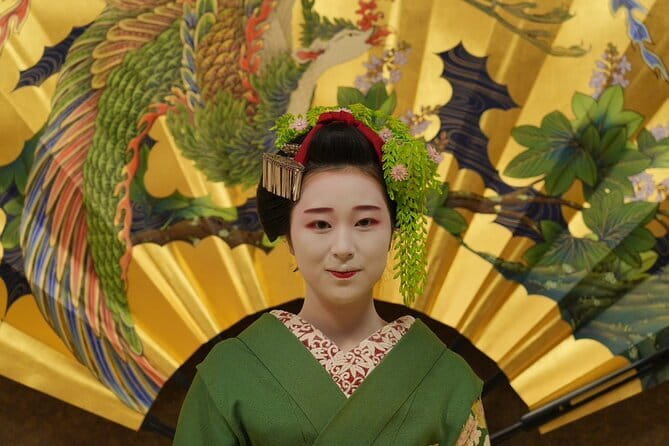
The tour is led by an English-speaking tour guide. Past experiences mention guides such as Ai and Yoshino, and the tone seems consistently friendly and focused on both Kyoto history and practical cultural context.
Here’s how to maximize your time:
- Have 2–3 questions ready. Short questions work best in a small group.
- Listen for guide prompts that explain what you’re about to see.
- Treat the interaction like a conversation. It’s not a performance-review session; it’s a cultural exchange.
One more small strategy: if you’re nervous about asking questions, start with something simple like how the arts are practiced or what training means. It gives you a gateway to deeper answers without putting anyone on the spot.
Who this tour is best for (and who might feel a mismatch)

This is a strong fit for:
- You if geisha and maiko culture is a top interest and you want more than street-view curiosity
- You if you like small-group experiences where you can actually talk and ask questions
- You if you enjoy interactive activities like the traditional game
It might not be the best fit if:
- You want a long, multi-hour walking tour with lots of stops and photo opportunities
- You’re traveling with young kids who can’t join (children under 6 can’t participate, based on the tour rules)
- You dislike structured activities with a set start time (it starts at 3:00 pm and runs about an hour)
Also, this tour is listed as near public transportation, which is helpful. But because it meets at a specific landmark and ends at a different address, you’ll want to plan your next stop nearby after the show rather than far away.
Quick practical notes before you go
You’ll use a mobile ticket, which is easy if you’re traveling light. The experience also emphasizes confirmation at booking time, so you should be set once you register.
Dress-wise, aim for comfort. You’ll be seated and participating at a human pace, not sprinting around for photos. And keep your expectations respectful and calm. This isn’t a theme park act; it’s a cultural performance with a real person at the center.
Cancellation is free if you cancel up to 24 hours in advance. If you’re building your Kyoto schedule, that flexibility can help you avoid stress when plans shift.
Should you book The Art of Geisha in Gion?
If your Kyoto goal includes seeing a maiko perform and you want to ask questions in a real, guided setting, I think this is the kind of tour that pays off. The combination of small-group access, tea-and-snacks comfort, and an interactive game makes it feel more personal than a standard show.
Book it if you’re ready for an hour focused on geisha culture, not a full evening of wandering. Skip it if you’d rather spend that time exploring more streets on your own or you’re traveling with kids under six.
If you’re hoping for a memorable, respectful encounter with Gion’s performing arts world, this one is built for exactly that.
FAQ
How long is The Art of Geisha: Exclusive Show & Gion Walking Tour?
It’s listed as about 1 to 2 hours, with the Gion portion described as about 1 hour.
Where do I meet for the tour?
You meet at the Statue of Izumo-no-Okuni in Higashiyama Ward, Kyoto. The tour ends at Hangesho 535 Morishitachō, Higashiyama Ward.
What time does the tour start?
The start time is 3:00 pm.
How big is the group?
The tour has a maximum of 6 travelers.
What’s included in the price?
The included items are the Geisha show, Japanese tea and snacks, and an English speaking tour guide.
Can children join?
Children under age 6 and below cannot join.