REVIEW · KYOTO
Kyoto Gion Cultural Walk & Geisha Show with Dining Options
Book on Viator →Operated by Ken's Tours Kyoto · Bookable on Viator
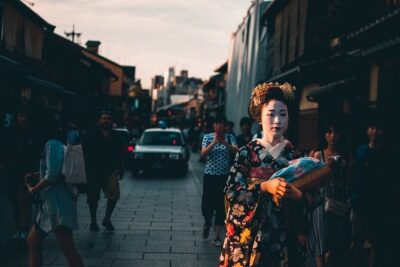
Kyoto’s Gion has a hidden rhythm. This 3-hour walk pairs Gion storytelling with a maiko geisha show and Q&A, so you’re not just looking at pretty streets—you’re learning how the whole world fits together. I love that the route is built to help you get oriented fast, with a guide leading the way through shrines, temples, theaters, and Gion’s riverside lanes.
Two things I really liked: the cultural context linking geiko/maiko life to older Kyoto arts, and the chance to meet an apprentice geisha up close. One possible drawback: if you book the dining add-on, your experience will depend heavily on what meal option you chose, and portion expectations can be a sore spot for some people.
In This Review
- Key things to know before you go
- Why the Gion walk plus maiko show is such a smart combo
- Starting at Izumo-no-Okuni: kabuki history you’ll actually remember
- Minamiza Theater: architecture meets performing-art trivia
- Gion Shirakawa and Hanamikoji: where the atmosphere hits hardest
- Tatsumi-jinja Shrine: Shinto in plain language
- Kennin-ji and Zenkyoan: Zen Buddhism and boar guardians
- The real reason to book: meeting the maiko and watching the dance
- Dining options: when the meal helps—and when it can disappoint
- Price and value: what $121.37 buys you in real terms
- Weather, comfort, and how to show up prepared
- Who should book this tour, and who should skip it
- Should you book this Kyoto Gion Cultural Walk & Geisha Show?
- FAQ
- How long is the tour?
- What’s included in the geisha portion?
- Is there a mobile ticket?
- Where does the tour start?
- Are admission fees included for all stops?
- How big is the group?
- What if the weather is bad?
Key things to know before you go
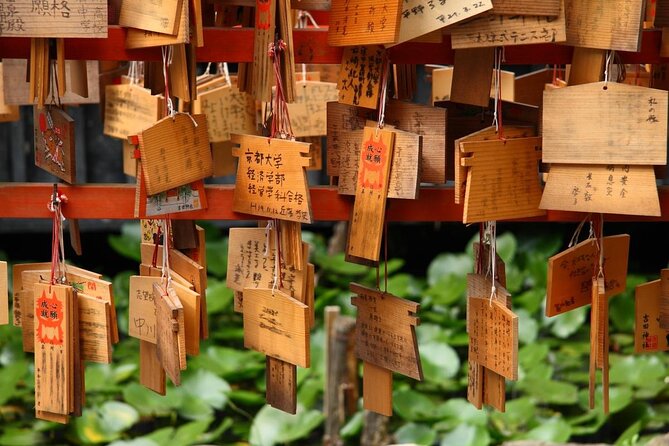
- Small group (max 9): easier questions during the Q&A and less crowd chaos on narrow lanes
- A route with cultural connections: kabuki origins, Zen Buddhism, and Shinto all show up in the walk
- 45-minute maiko meeting + dance: short enough to feel focused, long enough to ask real questions
- You may see geiko signs, not guarantees: Hanamikoji is where you might spot them walking
- Some stops aren’t free: Kennin-ji and Zenkyoan have admissions not included
Why the Gion walk plus maiko show is such a smart combo
Most Kyoto nightlife tours do one thing well: either they show you streets, or they give you a performance. This one tries to do both, and it works because it gives you context first. You start in places tied to Japan’s performing arts and religion, then you end in the setting where you can ask an apprentice geisha about traditions you just learned. By the time the dance begins, you know what you’re looking at.
The other thing I like is the pacing. You’re walking for about 1.5–2 hours in Gion, then you get about 45 minutes for the meeting and show. That structure keeps the night from turning into a marathon of waiting and repeating. And with a group capped at nine, you’re not stuck being the invisible person in the back holding up photos.
You can also read our reviews of more walking tours in Kyoto

Starting at Izumo-no-Okuni: kabuki history you’ll actually remember
The tour begins at the Statue of Izumo-no-Okuni, and that first stop matters more than it seems. It sets a theme: how Japanese theater began, including the early role women played in kabuki history. It’s a useful reminder that lots of what we think is tradition today was shaped by people in earlier times.
The stop itself is quick—about 15 minutes—and there’s no admission ticket required. Still, it primes your brain for the rest of the night. You’ll be watching the geiko/maiko world later with less mystery and more meaning.
Quick tip: If you like asking questions, this is a great early moment to test your guide. You’ll get better answers later when you’ve already learned the key terms and background.
Minamiza Theater: architecture meets performing-art trivia
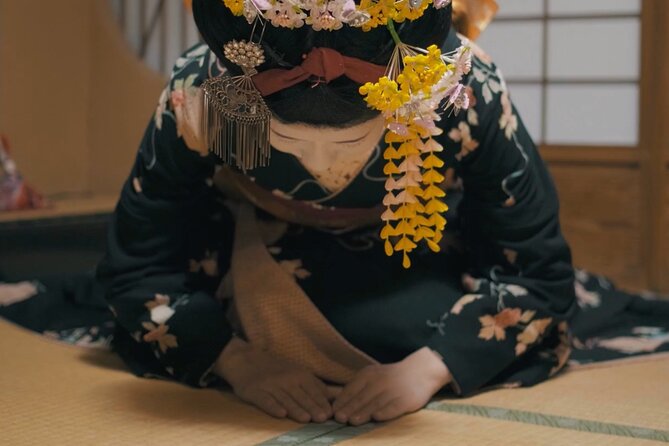
Next up is Minamiza Theater, where you’ll spend about 10 minutes. You get to see the theater’s architecture up close, and you’ll hear a story that connects modern life—like VR—with kabuki.
Now, a small caution: this is a short stop. If you want photo-heavy sightseeing, you’ll need to move quickly here. But if you enjoy hearing how cultural forms adapt over time, it’s a fun piece of the puzzle. It also helps explain why the arts in Kyoto feel so rooted and yet still current.
Admission is free for this stop, so you can focus on the guide’s talk instead of budgeting time for tickets.
Gion Shirakawa and Hanamikoji: where the atmosphere hits hardest
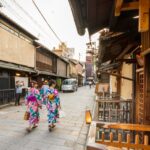
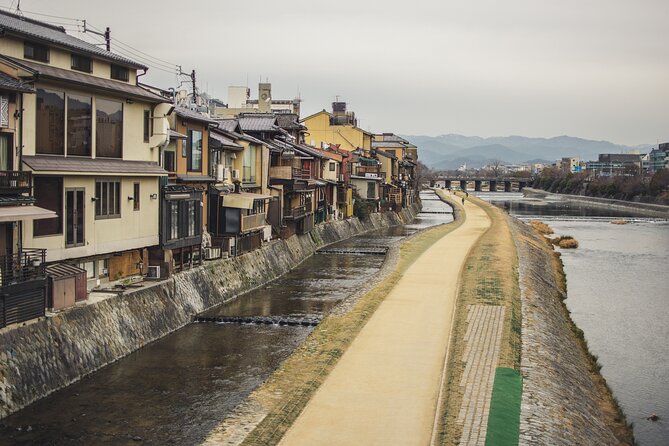
After the theater history, the tour shifts into the Gion vibe. Gion Shirakawa is a highlight for the scenery: old-fashioned streets, traditional buildings, and the riverside setting. You’ll get around 15 minutes here, again with no admission ticket required.
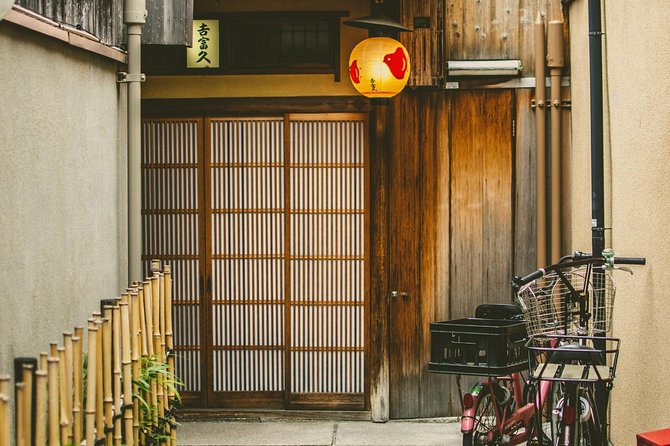
Then you hit Hanamikoji Street, Gion’s main artery. This is the part where you might spot geisha and geiko walking around—though sightings are never guaranteed. Still, this stop is valuable even without a sighting because the street layout shows you how the district works: where people pass, where you pause, and how the lanes funnel you toward the smaller, quieter corners.
Hanamikoji is also where many visitors unintentionally get lost. Having a guide keeps you from wandering into the wrong side streets, and it keeps the group moving at a pace that respects the neighborhood.
One more note: it’s easy to treat these streets like an outdoor museum. Your guide nudges you to see them like a living workplace, not a set.
Tatsumi-jinja Shrine: Shinto in plain language
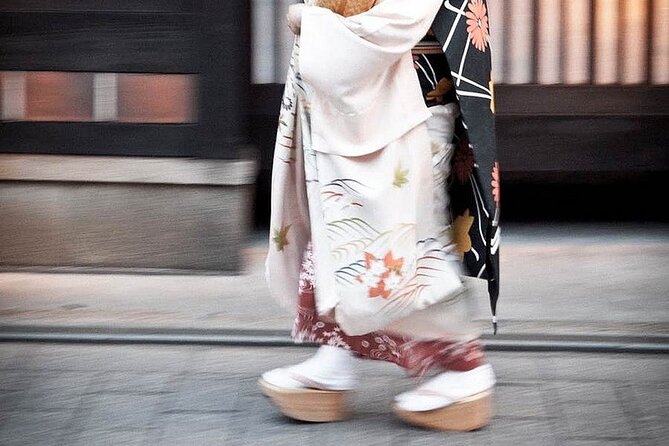
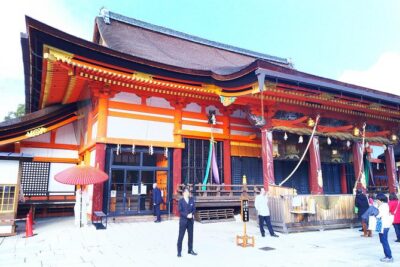
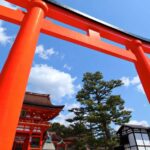
At Tatsumi-jinja Shrine (Tatsumi Dai-myojin), you’ll spend about 15 minutes learning what Shinto is and why it matters in Japan. The tour mentions the idea of millions of gods in Japan (often phrased as eight million). Even if you don’t remember every number, you’ll walk away with a clearer sense of how shrines fit into everyday life—not just festivals and photos.
Admission is free here. It’s also a nice contrast after Gion’s street-level visuals. You get a calmer pause, and your mind has a moment to reset before the temple stops later.
If you tend to glaze over at religious sites, don’t worry. The shrine stop is short and designed to explain the basics without turning into a lecture.
You can also read our reviews of more tours and experiences in Kyoto

Kennin-ji and Zenkyoan: Zen Buddhism and boar guardians
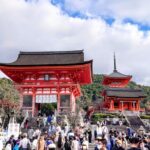
Now you get to Kennin-ji, one of Kyoto’s older Zen Buddhist temples, built in 1202. You’ll spend about 15 minutes, but admission isn’t included for this stop. That’s important for planning: bring a little extra cash (or confirm in advance how your payment works on-site).
Zen is the focus here—what it means and how it shows up in practice. The good part is that it doesn’t feel like abstract philosophy. It’s framed as a way to understand Kyoto’s mindset and aesthetics.
After that comes Zenkyoan, a Kennin-ji subtemple in Gion, known for its boar guardians tied to luck and safety. You’ll spend about 15 minutes, and again admissions aren’t included.
I like this pairing because it gives you two layers of the same spiritual world. Then the boar guardians make it memorable. You’ll leave with a specific image and a reason behind it, which makes the rest of your Kyoto sightseeing feel more connected.
The real reason to book: meeting the maiko and watching the dance
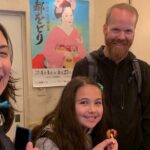
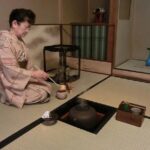
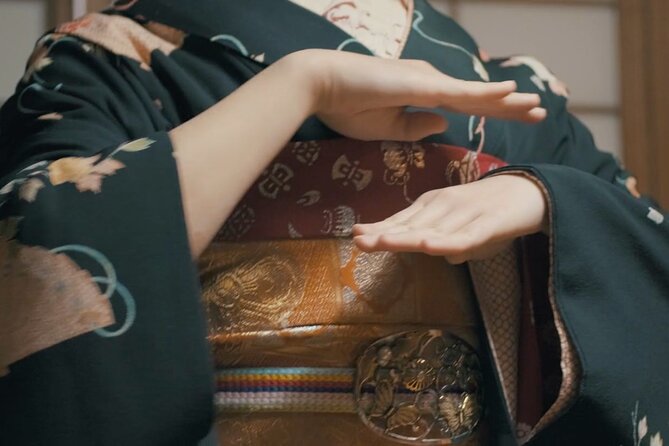
The finale is the star: a geisha show with an apprentice geisha. The format is about 45 minutes, and it includes a dance performance with one or two songs plus time to ask questions. This is the part that most tours can’t fake with words, because you’re in the room with a person living that tradition.
One thing you should do mentally before you arrive: prepare questions that go beyond What is geisha? The best questions relate to how tradition works day-to-day—training, routines, what audiences should understand, what visitors often misunderstand.
Also, be ready for answers to be translated and explained clearly by the guide. Guides like Akari and Ken are often praised for guiding the conversation and handling questions with care, including correcting misconceptions. That matters because it shapes how respectful your Q&A feels and how accurate the information is.
Another practical note: some experiences limit photos. If social posting is a big deal for you, assume you might not be able to share images freely. Plan on experiencing it first, then posting later only if you’re allowed.
Dining options: when the meal helps—and when it can disappoint
The tour name includes dining options, and some versions of this experience pair the cultural walk with a meal. In that scenario, you may find a family-style service with multiple options, and the experience is described as accommodating dietary restrictions.
That said, there’s one caution I’d give you: if your booking includes dinner, read the details carefully and manage expectations on portion size. One unhappy review mentioned feeling hungry after paying extra for a dinner component. That doesn’t mean every meal is like that, but it does mean you shouldn’t assume the meal will replace a full Kyoto dinner plan.
My advice: treat dining as a bonus that adds comfort to the night, not as the main event unless you’ve confirmed exactly what’s included. If you’re a big eater, consider eating something light before you start so you’re never stuck hoping the meal is enough.
Also watch timing. With a 3-hour total experience, the food slot needs to fit the flow of the meeting and performance. If you’re sensitive about schedule, ask your booking for the specific order of events for your date.
Price and value: what $121.37 buys you in real terms
At $121.37 per person for about 3 hours, the value isn’t just “a walk in Gion.” You’re paying for three main things:
- A guided route that explains what you’re seeing (and helps you avoid getting off-course)
- Access to a structured meeting and dance time with an apprentice geisha
- A small-group experience (max 9), which makes the Q&A actually work
That last part is quietly huge. With fewer people, you can ask questions and you’re less likely to feel rushed by a crowd.
If you’re considering cheaper walking tours, the trade-off is usually depth and access. Here, the performance and meeting component is the expensive piece, and it’s exactly why you’re paying for this night rather than just wandering Gion on your own.
Weather, comfort, and how to show up prepared
This experience requires good weather. If conditions are poor, it may be canceled, and you’re offered another date or a full refund. Kyoto rain can be dramatic, so pack for it.
Also, it’s not recommended for travelers with leg problems. The stops are close enough to make it doable for most people, but it’s still a walking-based route through older streets.
What I’d bring:
- Comfortable shoes with grip
- A light layer, even in warmer months (temples and theaters can feel cooler)
- A small umbrella or poncho, since weather can change fast in Kyoto
Small group size helps here too. With fewer people, the guide can slow down for the person who needs a breather, instead of dragging everyone at once.
Who should book this tour, and who should skip it
This is a strong match if you:
- Want more than photos and want cultural context you can explain later
- Like asking questions in a guided setting
- Are specifically curious about the apprentice geisha world and what audiences often misunderstand
- Prefer a small group experience over big crowds
You might want to skip (or adjust expectations) if you:
- Need a lot of rest breaks or have mobility limitations
- Are only interested in temples or only in street views
- Have very firm expectations about meal size if your booking includes dining
Should you book this Kyoto Gion Cultural Walk & Geisha Show?
I think it’s worth booking if your goal is a respectful, guided night that combines the Gion district with a real meeting and a short dance performance. The strongest value is the structure: history and religion early, then the maiko meeting and Q&A when the questions are freshest.
If you’re debating, my tie-breaker is simple: if you want the chance to sit down with an apprentice geisha and ask questions, book it. If you’re mainly chasing nightlife vibes or shopping streets, you might get more value from a different kind of tour.
Either way, choose the version that matches your meal expectations, wear good shoes, and go in ready to learn. This is one of those Kyoto nights where the details change how the whole city feels afterward.
FAQ
How long is the tour?
The tour runs about 3 hours.
What’s included in the geisha portion?
You get a geisha meeting and show with an apprentice geisha, including about 45 minutes of interaction plus a dance performance with one or two songs.
Is there a mobile ticket?
Yes, the tour includes a mobile ticket.
Where does the tour start?
The start point is the Statue of Izumo-no-Okuni in Kyoto (Kawabatacho, Higashiyama Ward, Kyoto 605-0076, Japan).
Are admission fees included for all stops?
Some stops are free, while admission for Kennin-ji and Zenkyoan is not included.
How big is the group?
The tour has a maximum of 9 travelers.
What if the weather is bad?
This experience requires good weather. If it’s canceled due to poor weather, you’ll be offered a different date or a full refund.