REVIEW · KYOTO
Dinner with Maiko in a Traditional Kyoto Style Restaurant Tour
Book on Viator →Operated by MagicalTrip Inc. · Bookable on Viator
A maiko dinner in Gion feels like a secret. You start with a guided stroll through Gion’s preserved streets, then move into a private, intimate dining room where the maiko performance and Q&A are the main event. It’s designed to help you understand the etiquette and role of geisha arts without feeling like you need a cheat sheet.
What I like most is how smoothly the night flows—first Gion orientation, then the culture moment, then dinner—plus the small group size (max seven) that makes questions feel natural. One possible drawback: your view can depend on where you’re seated during the performance, and the interaction follows a structured format rather than an open-ended conversation.
In This Review
- Key things that make this Maiko dinner stand out
- Why a Maiko dinner in Gion hits harder than a standard show
- Strolling Gion’s wooden streets: where the night begins
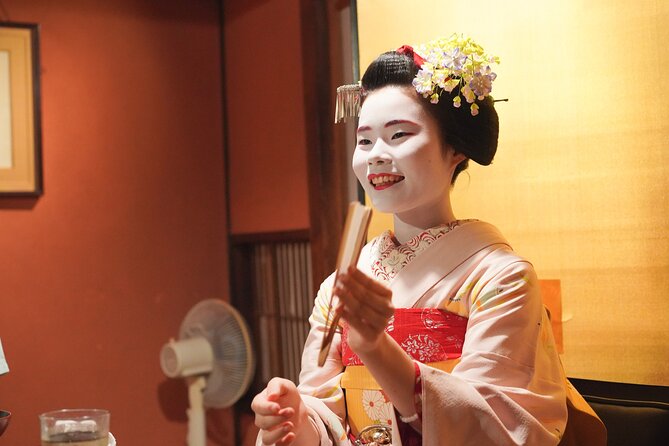
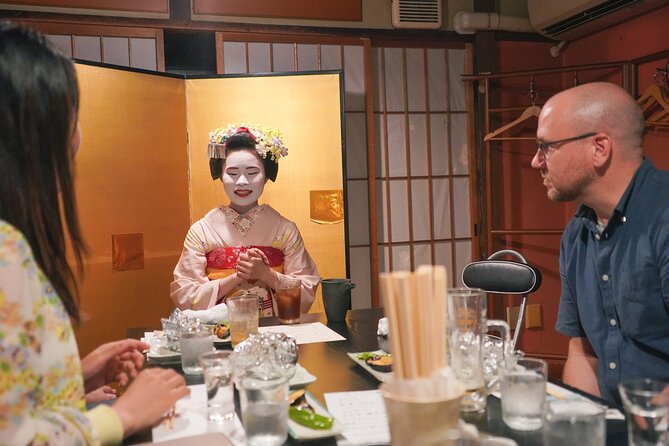
- The private maiko moment: questions, games, and elegant performance
- What you eat in a traditional Kyoto-style restaurant (and why it’s part of the story)
- Afterward: a short nighttime walk and landing at the restaurant
- Price and logistics: is $299.95 worth it?
- Practical tips so you get the best night possible
- Should you book this dinner with maiko tour?
- FAQ
- How long is the Dinner with Maiko in a Traditional Kyoto Style Restaurant Tour?
- What’s the group size?
- Where do we meet, and where does it end?
- What ages can join?
- Is the tour suitable for people with mobility issues?
- Can I request a dietary change or mention allergies?
- What if the weather is unsafe?
Key things that make this Maiko dinner stand out
- Max seven people, so you’re not lost in a crowd when questions come up
- Gion walking first, so the meal and performance land in context (not as a random show)
- Interpreter support with guides like Hikari, Peco, and Josh, which helps you actually understand the answers
- Private room dining, with a teahouse-style feel that makes it feel special, not touristy
- Maiko-centered entertainment, including performance and traditional-style engagement games
- A format that prioritizes respect, so don’t expect a long, spontaneous talk
Why a Maiko dinner in Gion hits harder than a standard show
This tour is about more than watching. You’re placed in the role of a thoughtful guest—learning the basics of Gion manners, then meeting a maiko (an apprentice geisha) in a setting designed for guests to observe, listen, and ask questions in the right way.
The biggest value is that the performance comes with meaning. You’re not just seeing elegant movement; you’re getting context for how this art is taught and practiced, and why so many details matter. The private setting also helps you feel calm. You can focus on what’s in front of you instead of fighting for attention in a busy room.
If you want a “one-night memory” in Kyoto, this is one of the clearer bets. It’s the kind of experience where you leave with a better sense of how the tradition works day to day, not just how it looks on stage.
You can also read our reviews of more tours and experiences in Kyoto
Strolling Gion’s wooden streets: where the night begins
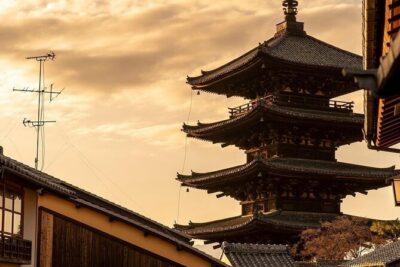
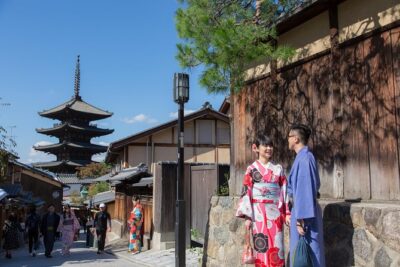
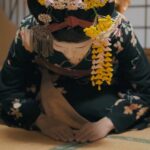
You meet at the Statue of Izumo-no-Okuni on Kawabatacho (Higashiyama Ward). From there, the tour walks through Gion—Kyoto’s famous geiko and maiko neighborhood—where preserved wooden machiya houses line the streets.
This first stretch matters. Gion can be confusing at night if you don’t know what you’re looking for. Early on, your guide helps you get your bearings fast, so the evening feels less like following a route and more like understanding a neighborhood.
Expect about 40 minutes of walking. It’s long enough to take in the atmosphere, but not so long that you’ll be wiped out before dinner. The guide also points out details you’d likely miss on your own, including street-level clues that make the area feel more real than postcard Kyoto.
The private maiko moment: questions, games, and elegant performance
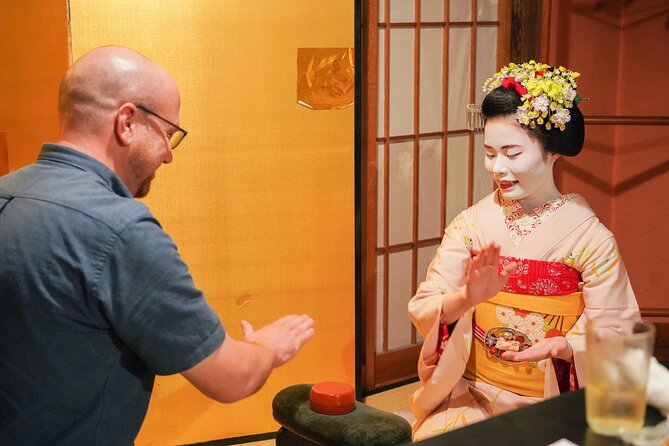
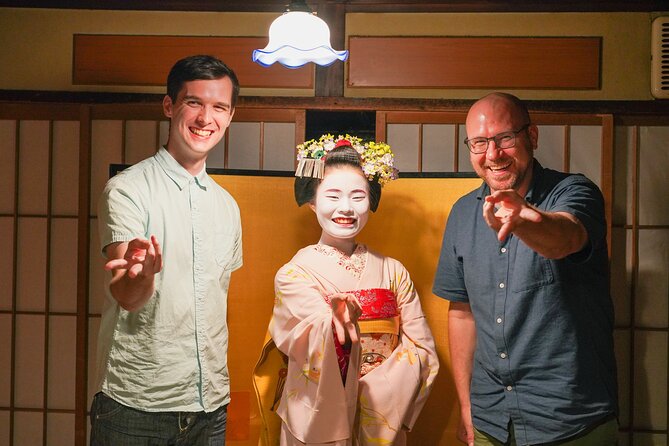
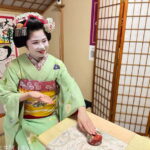
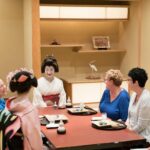
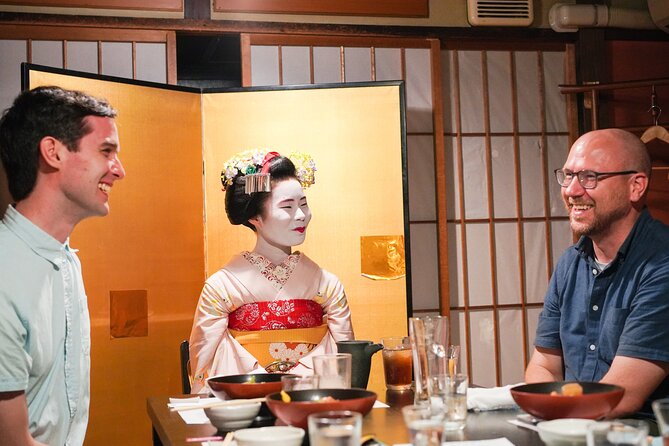
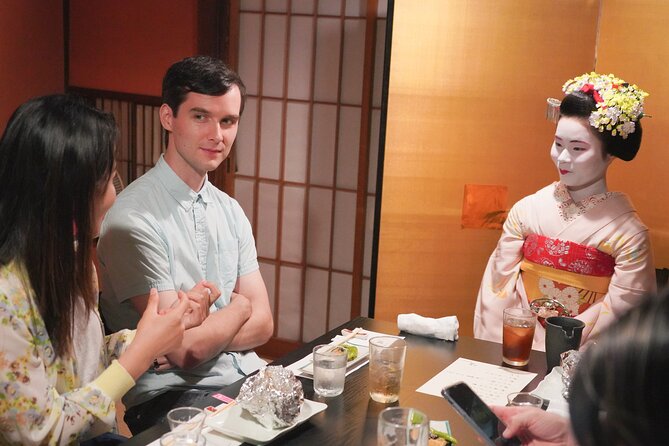
The heart of the experience is the time you spend with the maiko in a private and intimate setting. This is where the tour earns its reputation.
You’ll see a cultural performance showcasing the refined skills that make maiko and geiko arts instantly recognizable. And you’ll also get structured interaction—time for questions, plus traditional-style engagement (the format varies, but the goal is the same: learning what you’re seeing and understanding the maiko’s path).
A big practical help here is interpretation. People specifically mention guides such as Hikari who translate and explain so you can actually ask things and understand the answers. Other credited guides include Peco and Josh, so you can expect a similar focus on making the moment feel understandable, not awkward.
One thing to keep your expectations steady: the interaction is respectful and organized. If you’re hoping for hours of free-flowing conversation, you might feel the structure more than you expected. But if you want something guided by tradition (and supported by translation), this format usually works very well.
What you eat in a traditional Kyoto-style restaurant (and why it’s part of the story)
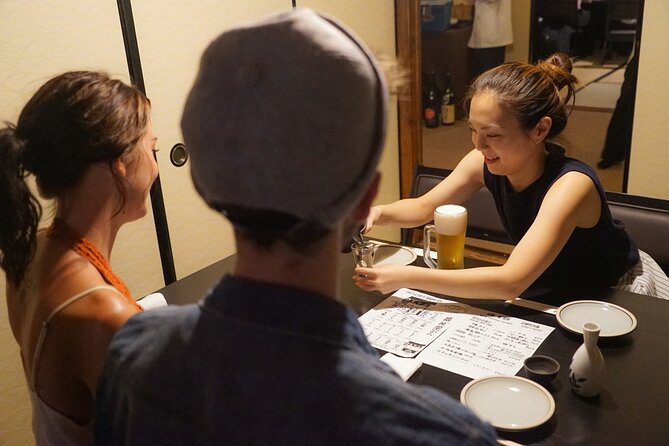
Dinner is the other half of the show. The meal happens after the geisha arts moment, in a restaurant setup described as cozy and private—often like a small teahouse room reserved for your group.
Food details from the experience stand out in two ways:
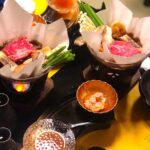
- People describe a multi-course meal, including mentions of many courses and nine small dishes.
- Drinks can include options like wine, sake, plum wine, tea, beer, and other non-alcoholic choices, with some guests highlighting free-flowing drinks.
That drink variety matters more than it sounds. It helps you match the meal to your preferences without turning the evening into a negotiation. And because the meal is part of the cultural flow, it tends to feel less like “dinner after a show” and more like one continuous event.
One balanced note: while the food is widely praised, a couple of experiences place the focus more on the performance and atmosphere than on the dinner itself. So if you’re only chasing the most mind-blowing cuisine, keep your expectations open. Still, the meal is clearly treated as an important piece of the night.
Afterward: a short nighttime walk and landing at the restaurant
Toward the end, there’s a brief segment of strolling through Kyoto as the evening settles. You spend about 10 minutes moving through quiet streets after the main geisha arts moment, then you finish at the restaurant.
That short walk is useful because it resets your body after sitting and watching. It also gives you a final look at the neighborhood after dark, when Gion’s atmosphere feels calmer than midday.
It’s not a big sightseeing sprint. It’s more like a gentle transition—good if you like your tours to feel paced, not rushed.
You can also read our reviews of more tours and experiences in Kyoto

Price and logistics: is $299.95 worth it?
At $299.95 per person for about 3 hours 30 minutes, this is not a bargain. But it’s also not priced like a simple dinner.
You’re paying for a combination of:
- Small-group size (max seven), which is a major limiter in Kyoto experiences
- A private setting for the maiko interaction and performance
- A guided walk through Gion first, so the night has context
- Interpreter-led Q&A, which can make or break the experience
- A traditional multi-course meal in a reserved room
If you compare it to the “pay for entry, sit, watch, leave” model, the value here comes from the time you get and the support you receive. People consistently rate it highly for the chance to ask questions and feel welcomed, not just observed.
Where it may feel less worth it is if you’re purely food-driven or if you’re sensitive about visibility. Seating can affect your ability to see the dance clearly, and there’s at least one mention of people on the ends struggling with partial sightlines. If you’re planning for this, pick your expectations around the overall experience—not only the perfect front-row view.
Practical tips so you get the best night possible
- Plan for walking and weather. The tour can be affected by seasonal extremes—summer can reach around 40°C (104°F) and winter can drop to about -5°C (23°F). Bring layers and a weather-ready layer for rain or cold.
- Be ready for a pace that values timing. The tour is designed to start on time, since it’s coordinating the private portion of the evening.
- If you have allergies or dietary requests, message at least 1 day before. Requests made on the day can’t be accommodated, and allergy-free meals can’t be guaranteed because the food is prepared in kitchens you don’t control.
- Dress for comfort, not just style. You’ll be walking first, then sitting. Comfortable shoes help you enjoy the night rather than count blisters.
- Have a few question prompts ready. Since you’re supported by interpretation, it helps to come with one or two topics you truly care about—how the path works, what training feels like, or what the maiko wants people to understand.
Should you book this dinner with maiko tour?

Book it if you want a Kyoto Gion night that goes beyond a quick photo stop. This experience is strongest when you care about cultural context, respectful interaction, and a private maiko-led performance paired with a real dinner.
Skip it (or consider a different style of tour) if:
- you need excellent visibility for the entire performance, since seating can affect what you can see
- you want a long free-form conversation rather than a structured Q&A and traditional engagement
- you have mobility limitations, since the tour isn’t recommended in that case and a private tour may fit better
If you’re choosing one “big culture moment” during your Kyoto stay, this is one of the more coherent, well-supported options—because the pacing, translation, and private setting all work together.
FAQ
How long is the Dinner with Maiko in a Traditional Kyoto Style Restaurant Tour?
The tour lasts about 3 hours 30 minutes.
What’s the group size?
It’s a small-group tour with a maximum of seven travelers.
Where do we meet, and where does it end?
You start at the Statue of Izumo-no-Okuni on Kawabatacho in Higashiyama Ward, Kyoto, and the tour ends at the restaurant in Gion.
What ages can join?
Participants must be at least 15 years old. Small children and babies aren’t allowed, even if accompanied by parents.
Is the tour suitable for people with mobility issues?
It’s not recommended for people with mobility issues. If walking is difficult, a private tour is suggested.
Can I request a dietary change or mention allergies?
Yes, but you must inform them at least 1 day before. Requests made on the tour day can’t be accommodated, and allergy-free meals can’t be guaranteed because the food is prepared in kitchens not controlled by the tour.
What if the weather is unsafe?
The tour may be canceled due to unsuitable weather for safety reasons. The timing is coordinated for safety.