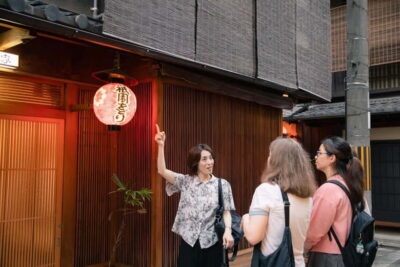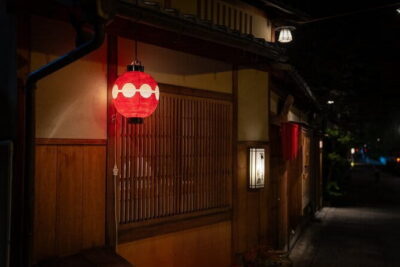
Gion looks like a movie at night. A small guided walk there turns Kyoto’s famous alleys into something you can actually understand, from the geisha world to the lantern glow. I especially like the tiny group size (max 10), which keeps it relaxed instead of herding people around.
I also love how the evening is built around places that feel different after dark. You’ll get stories tied to real corners of Higashiyama, plus major photo moments like Yasaka Shrine’s lantern area and the view stop near Yasaka Noto. Guides such as Kevin and Niall (seen helping past groups) are the kind who answer questions without making it feel like a lecture.
One thing to plan for: this is a night walk that depends on conditions. The tour requires good weather, so if it’s canceled for rain or storms, you’ll need to pivot to another date or choose a refund.
In This Review
- Key highlights that make this tour worth your time
- Why Gion at night feels different than daytime
- Meeting point and start: find Tsuruha Drug, then get moving
- Stop 1: Miyagawacho Kaburenjo and the geisha arts behind the curtain
- A short Zen detour: quiet temple grounds and the Shaping of Kyoto
- Stop 2: Yasakanoto at night for that Kyoto-photo glow
- Stop 3: Yasaka Shrine lantern light and a good-fortune prayer
- Stop 4: Gion Shirakawa walkpast scenes, modern life included
- Getting the most from geisha stories (and how to act when you spot them)
- Price and value: what $33.03 gets you on a 2-hour walk
- Who this night walk is best for (and who might want a different plan)
- Practical tips for an easier, smoother night in Gion
- Should you book the Gion Night Walking Tour?
- FAQ
- How long is the Gion Night Walking Tour?
- How many people are in the group?
- Where do I meet for the tour?
- What kind of ticket do I need?
- Are there admission tickets required for the stops?
- What stops are included in the walk?
- Is the tour suitable for children and older adults?
- Are service animals allowed?
- What if the tour is canceled due to poor weather or if I cancel?
Key highlights that make this tour worth your time
- Max 10 people means you get more attention and more chances to ask questions.
- About 2 hours on foot keeps it manageable, even for first-timers to Kyoto.
- Easy meeting spot near Yasaka Shrine at Tsuruha Drug (and the wider area near Miyagawasuji).
- Free-entry stops are part of the itinerary, so you’re not paying surprise admissions.
- Lantern-lit Kyoto scenes: Yasaka Shrine and Gion Shirakawa are gorgeous after dark.
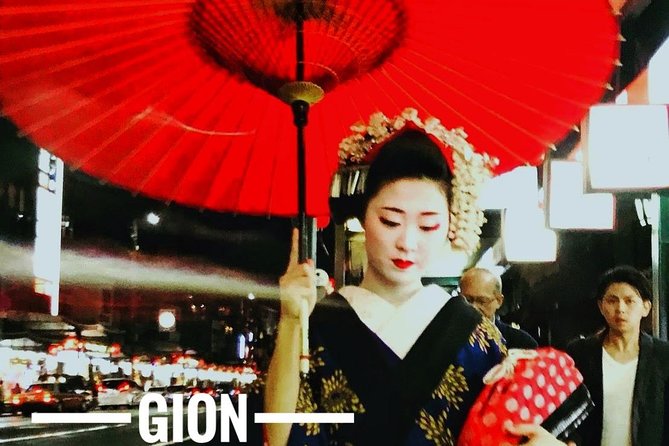
- Geiko and maiko spotting is part of the fun, even though sightings aren’t the whole point.
Why Gion at night feels different than daytime
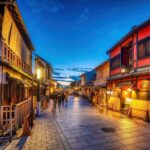
Daytime Gion can look like a postcard. Nighttime is where it starts to feel like the real neighborhood people live in. The alleys cool down, lanterns come on, and the whole place shifts from sightseeing mode to atmosphere mode.
This tour leans into that shift. You’re not just looking at streets—you’re learning what those streets connect to, what the geisha world is (and isn’t), and why Kyoto treats these traditions with care.
You can also read our reviews of more walking tours in Kyoto

Meeting point and start: find Tsuruha Drug, then get moving
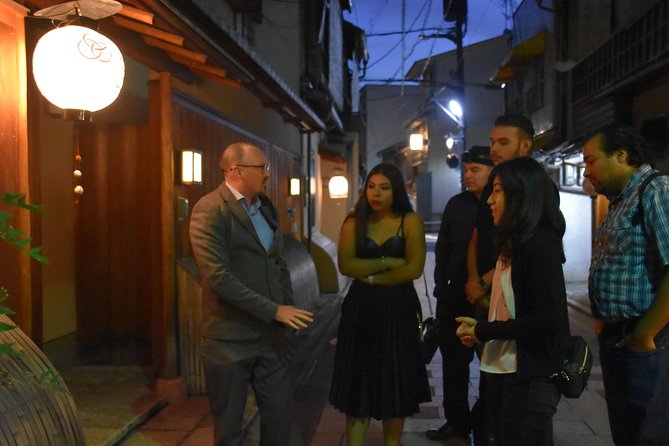
You’ll start at Tsuruha Drug Yasaka Shrine Store, 543番地 Gionmachi Minamigawa, Higashiyama Ward, Kyoto. The meeting area is also described as easy to reach near Miyagawasuji (so if you’re using public transit, you’ll likely find it straightforward to orient yourself).
You’ll use a mobile ticket, so bring your phone with enough battery. And because the group is small, it helps to arrive a little early and get settled before the guide gathers everyone.
Stop 1: Miyagawacho Kaburenjo and the geisha arts behind the curtain
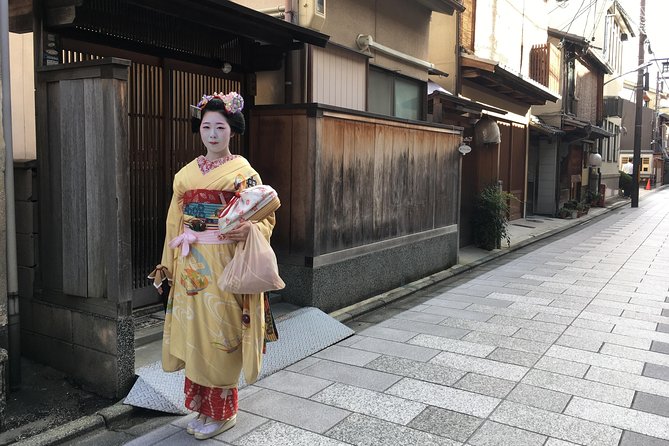
Your first major stop takes you through the geisha quarters, with explanations about the “secret lives” of geisha as masters of the arts. The value here isn’t gossip. It’s context—how training, roles, etiquette, and performance culture fit into the broader life of Kyoto.
You’ll spend about 30 minutes at Miyagawacho Kaburenjo, and the itinerary lists the admission ticket as free. This is a good time to ask the questions you’ve been wondering since landing in Japan: how geiko/maiko differ, what “being a hostess” really means, and why respect and rules matter so much.
A short Zen detour: quiet temple grounds and the Shaping of Kyoto
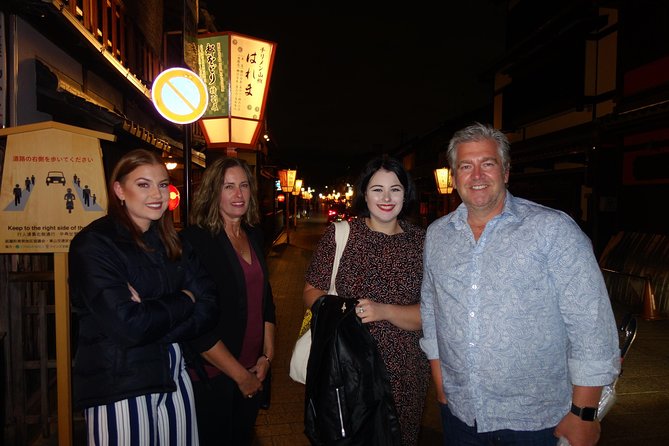
Between the geisha-focused moments, the walk includes time on the grounds of a temple, with a brief introduction to Zen Buddhism. It’s short, but it works. Kyoto’s street life makes more sense when you know the spiritual rhythm underneath it.
This isn’t a long meditation retreat. Think of it as a mental gear shift: one moment you’re learning about performance and tradition, and the next you’re getting a quick framework for how Zen thinking influences daily life and space.
Stop 2: Yasakanoto at night for that Kyoto-photo glow
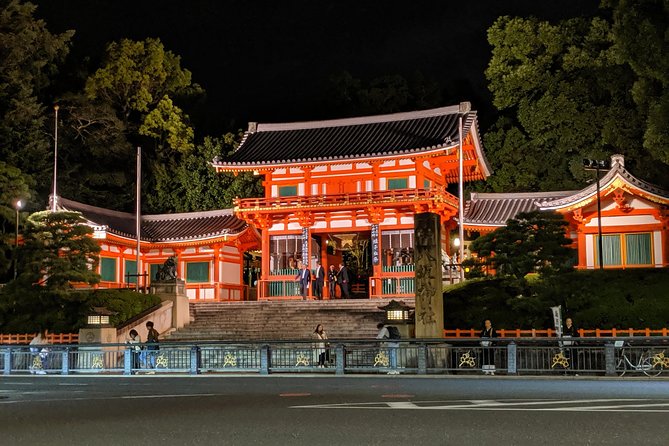
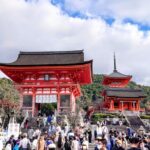
Next up is a photo-forward pause at Yasakanoto, described as one of Kyoto’s most remarkable views at nightfall. Plan for about 15 minutes here, and the stop is listed as free-entry.
If your phone camera tends to struggle at night, this is still a great time to try. Lantern light is kinder than people expect, and the scene is built for seeing contrast—shadows, reflections, and the warm glow that makes Kyoto feel cinematic.
You can also read our reviews of more evening experiences in Kyoto

Stop 3: Yasaka Shrine lantern light and a good-fortune prayer
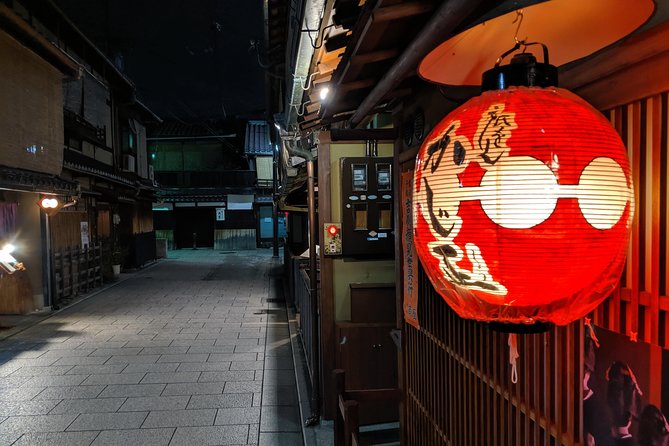
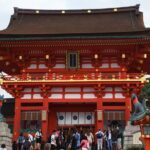
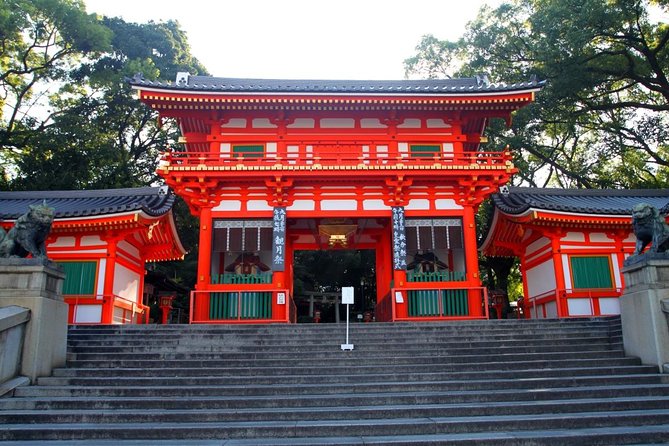
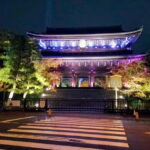
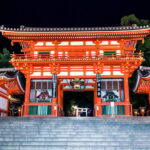
Yasaka Shrine is a key stop, lit up by lanterns, and it’s where the tour connects culture with emotion. You’ll learn about Shinto faith and you’ll have a chance to make a prayer for good fortune.
Time here is about 20 minutes, with free admission listed for the stop. I like this part because it’s not just information. It’s a simple experience you can participate in, even if you don’t know the rituals. The guide’s role is to help you do it respectfully and understand what you’re seeing without turning it into a performance.
Stop 4: Gion Shirakawa walkpast scenes, modern life included
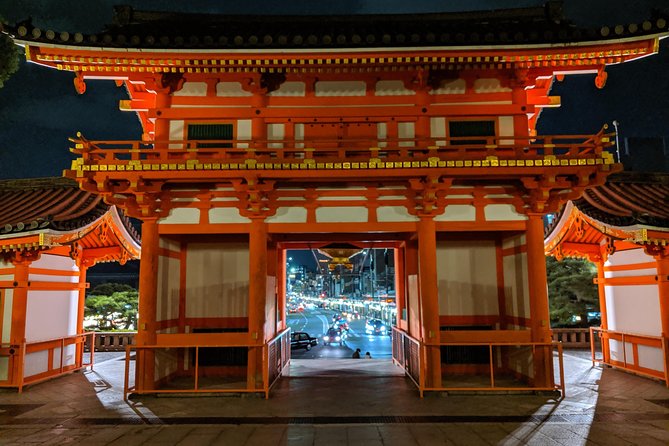
The final walk takes you through Gion Shirakawa, one of the most beautiful areas of Gion. You’ll pass modern clubs and high-end restaurants along the way, so you don’t leave thinking tradition lives in a museum.
You’ll spend about 15 minutes in this section, with admission listed as free. The best part is how the guide points out the contrast: historic architecture and traditional craft next to today’s nightlife and dining culture. Kyoto doesn’t freeze in time. It layers.
Getting the most from geisha stories (and how to act when you spot them)
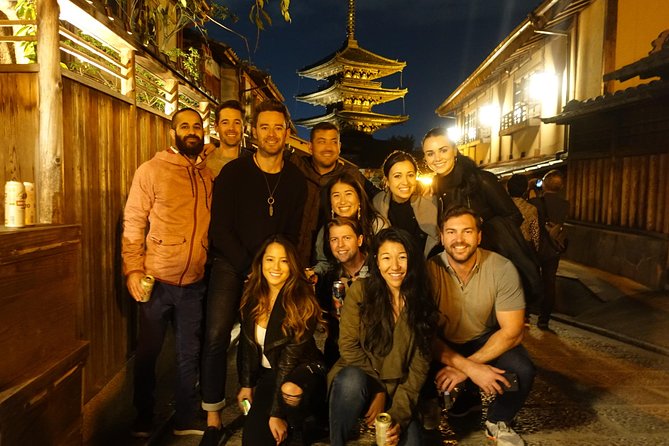
The tour is built around learning about geisha culture in Kyoto, with the goal of seeing geiko and maiko walking in real life. Past groups have reported sightings, including examples ranging from maiko and geiko to older geiko—but no one should count on a specific number.
Your job is simple: be observant, keep your distance, and let people pass. If you spot movement near the edges of the alleys, slow down rather than rushing. This is one of those evenings where good manners actually improve the experience.
Also, ask questions. Guides are clearly a big part of why this tour scores so high. Names like Karim, Nile, Cha cha, Shanda, Philippe, Niall, and Raphael show up in past groups, and the common thread is a friendly, natural explanation style—plus solid local context.
Price and value: what $33.03 gets you on a 2-hour walk
At $33.03 per person for about two hours, you’re paying for three things: a guided route, meaningful context, and timed stops in the right places. This isn’t a long bus tour. It’s focused, walkable, and built around evening atmosphere.
The value improves because the itinerary’s stops are listed as free-entry. So your money goes toward the experience (the guide and the flow of the walk), not ticket stacking. In other words: you’re buying time with someone who knows what to point at and when.
Who this night walk is best for (and who might want a different plan)
This tour fits ages 10 to 77, which tells you a lot about the pacing and format. If you can handle an evening walk and you’ll enjoy learning as you go, you’ll likely feel comfortable. The small group also helps with questions and attention, especially if you’re traveling solo or with family.
Families with teens and adults often like it because it’s entertaining without being childish. Older visitors tend to like that it’s short—about two hours—rather than a half-day commitment.
The only clear mismatch is for people who want a purely “see-it-all” itinerary with minimal learning. This is a cultural walk, not just a photo scavenger hunt.
Practical tips for an easier, smoother night in Gion
- Wear shoes you don’t mind on uneven ground. The area is full of old-street surfaces.
- Keep your phone battery charged. You’ll likely use maps and photos once lantern light starts.
- Bring a light layer. Evenings can cool down, and this is a night walk that doesn’t disappear once you get uncomfortable.
- If you’re hoping for sightings, don’t sprint for them. Let your guide set the rhythm, and stay respectful of the people moving through the neighborhood.
And one more tip: arrive a bit early so you can get oriented before the guide starts. With a max of 10, the meeting moment matters.
Should you book the Gion Night Walking Tour?
If you want Kyoto at night with real context—and you like the idea of a small-group evening instead of a crowded loop—this is a strong choice. The itinerary is compact, the stops are free-entry, and the tour is clearly designed to explain what you’re seeing, not just point it out.
I’d especially recommend it if you’re the type who likes stories that help you understand culture, plus photo moments like lantern-lit Yasaka Shrine and the Yasakanoto view. If you’re sensitive to weather or you dislike walking at night, you might want a backup plan for your evening schedule.
FAQ
How long is the Gion Night Walking Tour?
The tour is about 2 hours (approx.).
How many people are in the group?
The group size is limited to a maximum of 10 travelers.
Where do I meet for the tour?
You meet at Tsuruha Drug Yasaka Shrine Store, 543番地 Gionmachi Minamigawa, Higashiyama Ward, Kyoto 605-0074, Japan. The tour also notes an easy-to-find area near Miyagawasuji.
What kind of ticket do I need?
You’ll have a mobile ticket.
Are there admission tickets required for the stops?
The itinerary lists Admission Ticket Free for the stops.
What stops are included in the walk?
The walk includes Miyagawacho Kaburenjo, a temple grounds stop with an introduction to Zen Buddhism, a view stop at Yasakanoto, time in the preserved district streets, Yasaka Shrine, and Gion Shirakawa.
Is the tour suitable for children and older adults?
Yes. It’s suitable for ages 10 to 77.
Are service animals allowed?
Yes. Service animals are allowed.
What if the tour is canceled due to poor weather or if I cancel?
The experience requires good weather. If it’s canceled due to poor weather, you’ll be offered a different date or a full refund. You can cancel for a full refund up to 24 hours in advance. If you cancel less than 24 hours before, the amount you paid isn’t refunded.