REVIEW · KYOTO
Kyoto Private Tour with Customized Itinerary
Book on Viator →Operated by Flip Japan Guide · Bookable on Viator
Kyoto can feel like a blur of buses and ticket lines. This private tour is built around your interests, mixing big icons with calmer lanes and letting you set the pace. Two things I like right away: the private, customizable itinerary and the local host who adds real context instead of reciting facts.
I also love how the route is structured for flow: Fushimi Inari first, then the old-town atmosphere of Higashiyama around Kiyomizudera, followed by Gion and finishing with Arashiyama. If you want stories, photo stops, or a route that feels more personal, guides like Alejandra, Laura, Maya, and Milo have a track record of tailoring the day.
One consideration: not everything is covered in the price. Some stops may have entrance fees (listed as $8 per person when applicable), and if you jump between areas you might use buses or the subway for about $5 per person. Comfortable shoes help too, since this is a walking-focused day.
In This Review
- Key highlights worth planning around
- Why a private Kyoto route beats the group shuffle
- Morning at Fushimi Inari: the fox gates and the calm minutes
- Kiyomizudera and Higashiyama: temples plus narrow streets
- Yasaka Shrine and Gion: the festival landmark and the evening mood
- Arashiyama bamboo grove: the end-of-day payoff
- Price and logistics: what $293.19 per group really means
- What the guides do well (and how to get more out of them)
- Who should book this tour, and who might want a different style
- Should you book this Kyoto private tour?
- FAQ
- How much does the Kyoto Private Tour with Customized Itinerary cost?
- What’s the tour length and start time?
- Is pickup included, and where do we meet?
- Are temple and other entrance fees included?
- Will we need to pay for transportation during the tour?
- What is the cancellation policy, and what if weather is bad?
Key highlights worth planning around
- Truly private group time for up to 6 people, not shared with strangers.
- Pickup from your hotel or accommodation so you lose less time starting.
- A custom route that can steer you toward temples, quiet neighborhoods, or both.
- Major Kyoto anchors plus side lanes, including Fushimi Inari, Kiyomizudera/Higashiyama, Yasaka Shrine, Gion, and Arashiyama.
- Off-the-beaten-path instincts from guides like Alejandra, Laura, Maya, and Milo.
- Flexible pacing during the day so you can linger when something catches your eye.
Why a private Kyoto route beats the group shuffle
Kyoto is famous for being photogenic, but it can also be exhausting. A big-group day often turns into: walk fast, see fast, wait in line, repeat. This format swaps that for a simple idea: you pick your interests, and a local host adjusts the day so it feels like Kyoto, not a checklist.
This tour runs about 5 hours, starting at 10:00 am, and it’s designed for a private group of up to 6. That matters because Kyoto sightseeing is dense. With a private setup, you can spend time where you actually want it, whether that’s the dramatic arches of Fushimi Inari or the smaller streets around Higashiyama.
Another practical win: hotel pickup plus a mobile ticket. Even if you know how to use trains, it’s nice to remove one decision from your morning.
The best part is how the guides use the route as a framework, not a cage. In different reviews, guides like Alejandra and Milo are praised for steering people away from a rigid tourist circuit and toward places they would not have found on their own. That’s the kind of value that doesn’t show up on a map.
You can also read our reviews of more private tours in Kyoto

Morning at Fushimi Inari: the fox gates and the calm minutes
Your day typically starts at Fushimi Inari-taisha Shrine, home to thousands of red torii gates climbing Mount Inari. Even if you’ve seen photos, the first moment still hits. The tunnel effect feels like walking through a red forest.
This stop is about 1 hour 10 minutes and admission is free. The guide’s role here is more than interpretation. A good host helps you pace the walk so you don’t burn your legs early. You’ll likely see the torii path going upward, and you can aim for viewpoints halfway up where the scenery opens.
You’ll also get the spiritual story that makes the place more than scenery. Inari is closely tied to fox symbolism, and you’ll notice fox statues and guardians. The host can connect those details to what you’re seeing right now, which makes the gates feel intentional instead of random.
Possible drawback: this is one of Kyoto’s most photographed sites, so you should expect crowds at points. Going at 10:00 am often lands you in the mix. If your group is slow-walking or you get overwhelmed by people, tell your host early. The best custom tours react in real time.
Kiyomizudera and Higashiyama: temples plus narrow streets
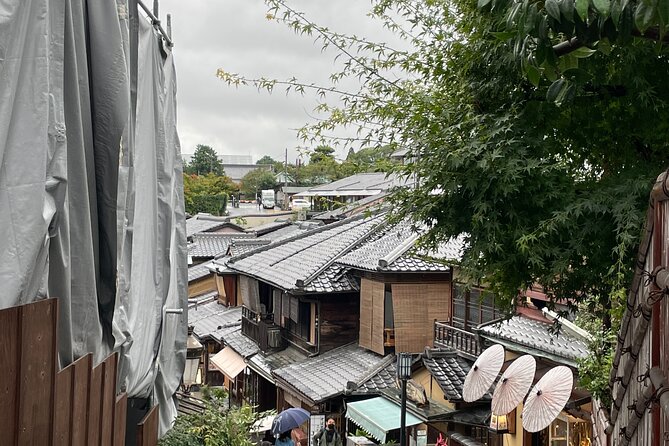
Next comes Kiyomizu-dera, and then you transition into the atmosphere of Higashiyama, the old-streets district with wooden buildings and classic shops and cafés. This part is about 1 hour and the temple admission is not included in the base tour price.
Kiyomizudera is one of those Kyoto stops where the “must-see” status is earned. You’re paying for more than a building. You’re paying for the way the site sits in its landscape and how the surrounding neighborhood feels lived-in.
What I like about pairing Kiyomizudera with Higashiyama is timing. You get a big moment at the temple, then you can switch into a slower mode—shopping lanes, small food breaks, and side streets that don’t feel like a theme park.
If you want better value, think about your trade-offs:
- If you’re the type who likes architecture and views, spend more time at the temple area and use the streets for a lighter stroll afterward.
- If you’d rather snack and browse, you might spend less time on the biggest viewpoint and more time in the lanes.
Since entrance fees are listed as $8 per person when applicable, plan on that as the likely cost for paid venues. The exact amount can depend on what you choose to include.
One more note: this is a walking tour, so you’ll want comfortable shoes. The uphill-and-stairs rhythm can stack up when your day also includes later stops like Arashiyama.
Yasaka Shrine and Gion: the festival landmark and the evening mood
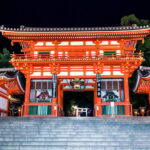
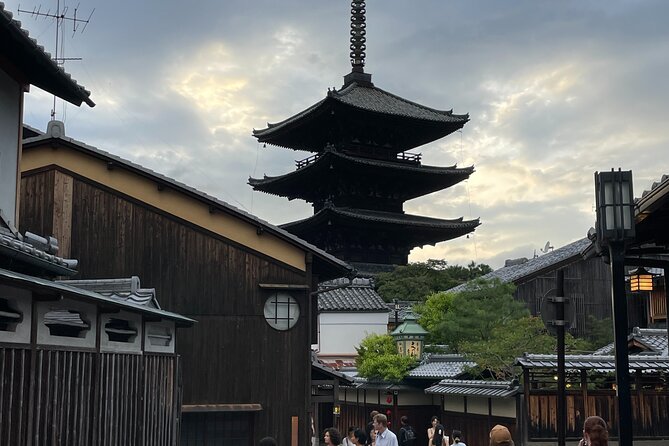
From Kiyomizudera, the day moves to Yasaka Shrine, a sanctuary established over 1,350 years ago. The stop is about 30 minutes, and admission here is free.
Yasaka Shrine is closely tied to Gion’s seasonal energy, especially the Gion Matsuri festival held in July. Even if you’re not there in summer, the shrine helps you understand why Gion matters. It’s not just a postcard district. It’s a living neighborhood shaped by traditions.
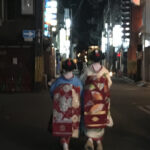
After that, you head into Gion, Kyoto’s best-known geisha district. This segment is about 1 hour and admission is free, since you’re mostly walking.
In Gion, it’s about the details:
- Hanami-koji street, known for its historic feel.
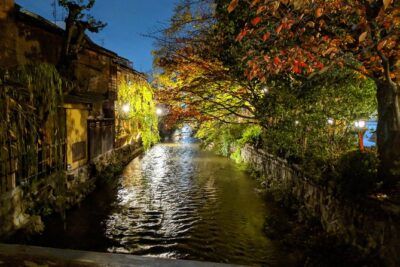
- Shimbashi area, with traditional wooden houses and higher-end restaurants, cafés, and tea houses.
The guide’s value here is subtle but real. A private host can point out where the streets feel calmer, where to step off the main flow for photos, and how to read the neighborhood without turning it into an odd scavenger hunt.
Possible drawback: Gion can also be crowded and photo-focused. If your group wants quiet, ask your guide for timing and micro-route suggestions. The best tours treat crowd management as part of the experience, not an annoyance to endure.
Arashiyama bamboo grove: the end-of-day payoff
The final major stop is Arashiyama, around Sagano village on Kyoto’s western side. This includes the signature walk through the Arashiyama bamboo grove, usually the emotional payoff for many people. The walk feels special because light filters through the bamboo, creating a soft, almost cinematic atmosphere.
This stop is about 1 hour 10 minutes, and admission is not included for paid areas you choose to visit. The bamboo grove itself is often approached like a public walk, but there can be paid features depending on what you add. The tour’s “paid venues” allowance of $8 per person is your clue to expect some costs here if you include entrance-based parts.
Why Arashiyama works as the end of the tour: by the time you arrive, your legs are warmed up but not totally shot. You’re also transitioning from the old neighborhoods of eastern Kyoto into a more scenic, atmospheric area.
Practical tip: bamboo groves are famous for photos, and people stop abruptly. If your group cares about walking rhythm, build in a slow lead-follow pace rather than rushing. With a private guide, you can usually pick a comfortable pace and still see the key viewpoints.




Price and logistics: what $293.19 per group really means
The price is $293.19 per group, up to 6 people, for about 5 hours. That’s not cheap if you’re traveling solo or as a couple. But the value equation changes fast when you split it.
Here’s the simple math you can use:
- For 2 people, the cost per person is roughly $147 each.
- For 4 people, it’s roughly $73 each.
- For 6 people, it’s roughly $49 each.
In other words, this tour is best when you’re not just one or two. It’s also best when you truly care about customization. If you’re okay with a fixed route and don’t mind crowds, you might find cheaper ways to see these places. But if you want a guide to reshape the day to your interests and help you move efficiently between zones, it’s easier to justify.
Logistics are also part of the value:
- Pickup is included, which can save time and stress.
- The tour is a walking experience, so your guide can adjust on the fly without constant planning.
- If you need public transportation, it’s listed as about $5 per person when bus/subway is used. This is realistic for Kyoto, since the city’s highlights are spread across different areas.
One more scheduling note: the experience is often booked about 54 days in advance on average. If your travel dates are fixed or you’re traveling in peak seasons, booking earlier is smart.
What the guides do well (and how to get more out of them)
The reviews paint a consistent picture: the strongest guides aren’t only good at facts. They’re good at reading the group.
Alejandra is specifically praised for taking people to unique spots they wouldn’t find alone and for being thoughtful and responsive. Laura is praised for Japanese culture and historical context plus being accommodating and flexible. Maya is praised for expertise and for helping with pictures during the day. Milo is praised for outreach ahead of the visit and for patience and flexibility with a family group.
So here’s how you can get more value from the private setup:
- Tell your guide what you want most in plain terms: temples, quieter streets, photo stops, shopping snacks, or simply a smooth pacing.
- Ask for alternatives if you see crowds building. A good host will often reroute you within the same neighborhood flow.
- If you care about photos, mention it at the start. One guide (Maya) has been credited with taking pictures, and it’s a reasonable request in a guided situation.
A small but important mindset: you’re buying time with a local host who can interpret what you’re seeing right now. That changes the whole feel of a place like Kyoto, where details matter.
Who should book this tour, and who might want a different style
This tour is a strong fit if you:
- Want a custom itinerary rather than a set list.
- Like major Kyoto sights but also want calmer backstreet texture.
- Travel as a group of up to 6, where the per-person cost gets more reasonable.
- Appreciate a guide who can explain the “why” behind shrines, neighborhoods, and traditions.
It may be less ideal if you:
- Have mobility limitations that make walking and stairs difficult. The tour is close to public transportation and service animals are allowed, but the core is still walking.
- Prefer a long time in one neighborhood. This itinerary mixes multiple areas in a single day, so it won’t feel like a slow drift through just one district.
- Want everything without any extra costs. Paid entrances can apply depending on what you choose.
Should you book this Kyoto private tour?
I’d book it if your goal is a Kyoto day that feels planned for you, not for a crowd. The combination of pickup, a private host, and a route that ties together Fushimi Inari, Kiyomizudera/Higashiyama, Yasaka Shrine, Gion, and Arashiyama makes sense for a first or second time in the city.
If your group is large enough to split the cost, the value gets easier to swallow. And if you care about small details—fox symbolism, shrine-festival connections, the shape of Higashiyama streets, and the end-of-day bamboo atmosphere—a guide can turn famous stops into a more personal experience.
If you hate walking or you want to spend hours in only one area, consider another format. But for most people, this is a smart way to see Kyoto without feeling rushed.
FAQ
How much does the Kyoto Private Tour with Customized Itinerary cost?
It costs $293.19 per group, up to 6 people.
What’s the tour length and start time?
The tour lasts about 5 hours and starts at 10:00 am.
Is pickup included, and where do we meet?
Pickup at your hotel or accommodation is included. The start time is 10:00 am.
Are temple and other entrance fees included?
Entrance fees for paid venues are not included. The listed estimate is $8.00 per person, depending on what you choose to visit.
Will we need to pay for transportation during the tour?
Transportation (bus and subway when used) is not included and is listed as $5.00 per person.
What is the cancellation policy, and what if weather is bad?
You can cancel for a full refund up to 24 hours before the experience’s start time. It also notes the experience requires good weather, and if canceled due to poor weather you’ll be offered a different date or a full refund.