REVIEW · KYOTO
Arashiyama’s Best Vegan Ramen & Gyoza Class
Book on Viator →Operated by Kyoto green cuisine · Bookable on Viator
Ramen that makes you rethink vegan food. In Arashiyama, I love Arashiyama-style cooking meets real technique, turning kombu, shiitake, and Kyoto vegetables into a deeply satisfying broth. You also get hands-on guidance from Satoru and Akiko in a clean, homey kitchen setting.
I also like the focus on results: you leave with recipes plus the exact ramen broths and crispy gyoza you helped make. One drawback to consider is the home has a pet dog, so animal-allergy guests may want to skip this class or message first.
In This Review
- 6 key things you should know before you go
- Arashiyama Station to a Real Kyoto Kitchen
- The Host Team: Satoru and Akiko Teach Like Cooks, Not Performers
- The Big Idea: Vegan Ramen Built to Match Real Umami
- What you’ll learn in plain terms
- Two Ramen Broths From Scratch: Why the Difference Matters
- Gyoza From Scratch: The Crunch You Can Replicate
- Timing and What the Meal Feels Like (Lunch or Dinner)
- Price and Value: $65.15 for Technique, Recipes, and a Full Experience
- Dietary Notes: 100% Plant-Based, Dashi-Free, and Gluten-Free Options
- The Pet Dog Note: One Practical Consideration That Matters
- What to Expect in the Room: Clean, Organized, and Friendly
- Who Should Book This Arashiyama Ramen and Gyoza Class
- Should You Book This Vegan Ramen and Gyoza Class?
- FAQ
- Where does the class meet?
- How long is the experience?
- Is it a private class?
- What do I make during the class?
- Is the ramen dashi-free and plant-based?
- Are gluten-free options available?
- Do they provide drinks or alcohol?
- Are aprons and towels included?
- Is there an English-speaking instructor?
- What about allergies and the pet dog at the home?
6 key things you should know before you go

- Dashi-free plant-based broth built for umami, not excuses
- Two types of ramen broth you create from scratch
- Crispy gyoza made with the same hands-on approach as the ramen
- English-speaking instruction so you can follow along without guessing
- Recipes included, so the class doesn’t vanish the moment you leave
- Tea and water are freely available during your meal
Arashiyama Station to a Real Kyoto Kitchen
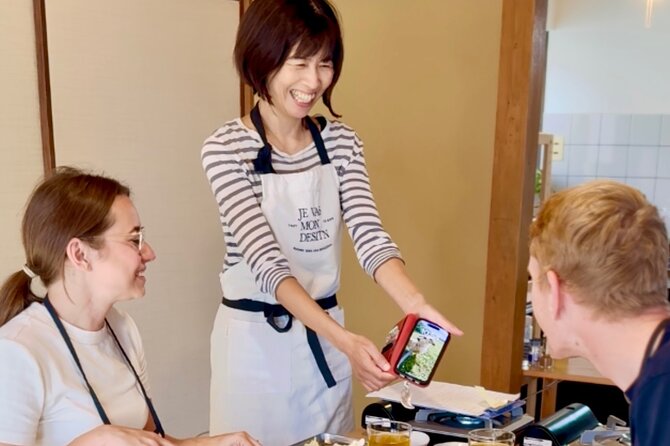
Arashiyama is a great base for food-focused Kyoto time. The class meets at Arashiyama Station (Arashiyama Higashiichikawacho, Nishikyo Ward, Kyoto 616-0002), and it ends back at the meeting point, which makes it easy to plug into your day.
This is a private activity, so it’s designed for your group rather than a constant conveyor belt. That matters because ramen and gyoza are hands-on. You want real instruction, not “watch and hope.”
It also helps that it’s near public transportation and uses a mobile ticket. You won’t burn time figuring out logistics, and you can focus on cooking.
You can also read our reviews of more tours and experiences in Kyoto



The Host Team: Satoru and Akiko Teach Like Cooks, Not Performers
The vibe is calm, organized, and practical. Satoru and Akiko are the hosts behind Kyoto green cuisine, and the instruction is in English. From what you can expect, the pacing is meant to keep you moving without feeling rushed.
One of the most praised parts is how clearly things are explained. When a cooking class goes well, it’s not about fancy words—it’s about knowing what to do with your hands. Here, the teaching style is designed around that idea: step-by-step, with enough detail that you can actually repeat the dish later.
If you’ve taken cooking classes before, you know the danger zone: vague directions, then a product that tastes like a science experiment. This one leans the other way, with structured guidance and a relaxed, friendly atmosphere.
The Big Idea: Vegan Ramen Built to Match Real Umami
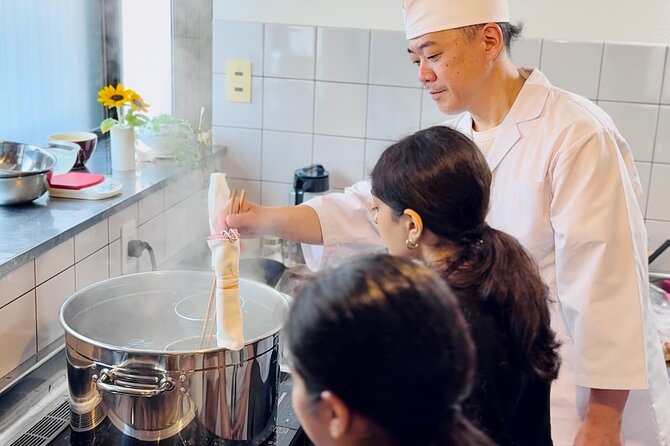
Let’s tackle the pitch head-on. This class doesn’t frame vegan ramen as light or apologetic. The whole point is depth—the kind you normally associate with meat-based broths.
You start with a broth approach that’s 100% plant-based and dashi-free. Instead of reaching for shortcuts, the broth gets built from scratch using kombu (kelp), shiitake, and fresh Kyoto vegetables. The goal is the same one good cooks chase everywhere: layered flavor, not one-note seasoning.
They also stress one key promise: even if you like meat-based ramen, you won’t miss it. That’s a bold claim, but it’s backed by the technique philosophy here. Kombu and shiitake bring strong natural umami. Add the right Kyoto vegetables, and you can get that rounded, satisfying feel that makes a bowl disappear.
What you’ll learn in plain terms
You’re not just tasting. You’re learning how to think about broth:
- how umami ingredients behave together
- how a broth can taste “rich” without pork bones
- how to aim for that creamy, Tonkotsu-like satisfaction using plant ingredients
Two Ramen Broths From Scratch: Why the Difference Matters

You’ll make two types of rich ramen broth during the class. The exact flavor profiles aren’t laid out in the basics you’re given, but the concept is clear: you’ll learn how to produce more than one satisfying bowl style.
That’s valuable for you because most home cooks don’t need one recipe—they need options. If one broth turns out too intense for your taste, the other gives you a safer starting point. If one feels too heavy, the other can balance your next attempt at home.
Even better, this isn’t just about drinking broth. Ramen is a system. Broth performance matters, but so does how the rest of the components behave. By learning two variations, you’re training your palate and your instincts. That’s how you stop relying on packet seasoning.
You can also read our reviews of more tours and experiences in Kyoto






Gyoza From Scratch: The Crunch You Can Replicate
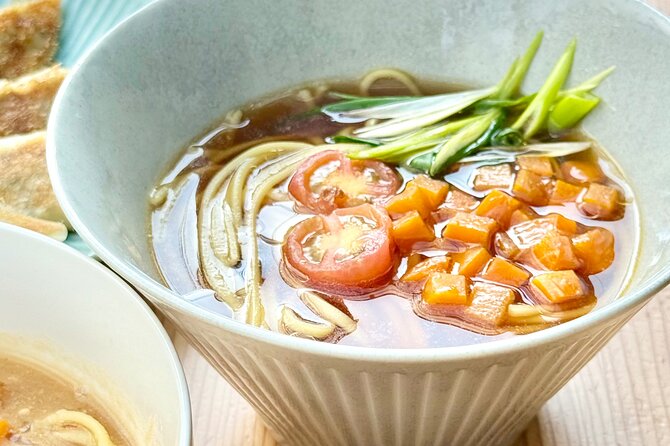
Then there’s the gyoza: crispy gyoza from scratch. This part is where cooking classes usually shine, because you get instant feedback. Your dumpling skins will tell you what you did right—or wrong—fast.
Gyoza is also a great skill-builder. It’s technical in a way that rewards attention:
- getting the filling balanced
- shaping and sealing
- cooking to crispness
Even if your first batch at home isn’t perfect, you’ll have the method to work from. That’s what you really pay for in a class like this: a repeatable process, not a one-time meal.
And yes, you’ll cook and eat together with the instructors. So you’re not making gyoza just to watch it sit on a counter.
Timing and What the Meal Feels Like (Lunch or Dinner)

The class runs about 2 hours. You can book either lunch or dinner, and during those time slots you cook and eat with them.
Two hours is a sweet spot. Long enough to actually make things from scratch, short enough that you’re not mentally fried by the time you finish. It also means you can usually pair it with other Arashiyama activities without throwing your whole day off.
Since you’re eating what you make, you also get that rare advantage: you can compare what you remember doing to how it tastes. That’s the part that sticks for later.
Price and Value: $65.15 for Technique, Recipes, and a Full Experience

At $65.15 per person, this class isn’t a cheap snack. But it also isn’t “paying for a show.” You’re paying for:
- an English-speaking instructor
- hands-on cooking time
- ingredients and equipment like aprons and towels
- bottled water and access to tea
- the recipes you can take home
In Kyoto, a great ramen meal can cost a similar chunk of money once you add extras like drinks or a second bowl. The difference here is you leave with skills. One is consumption. The other is education plus a meal.
Also, the class is private for your group, which can make the value feel better if you’re traveling with someone. You’ll likely get more direct attention, and the cooking steps don’t feel like they’re happening “at speed” for a large crowd.
If you’re the type who actually cooks at home, this can be a very smart use of travel time. If you only want to eat and move on, it may feel like more effort than you planned.
Dietary Notes: 100% Plant-Based, Dashi-Free, and Gluten-Free Options
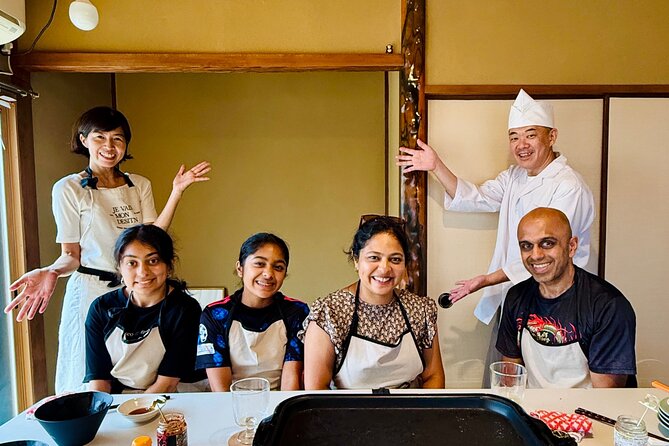
The dietary theme is straightforward: 100% plant-based and dashi-free. So even if you’ve been burned by bland vegan broth in the past, this class is trying to solve that problem at the root.
Gluten-free options are available. If you need this, confirm your needs when booking. The goal is to avoid a mismatch between what you avoid and what ends up on your plate.
They also ask you to notify them in advance if you have food allergies. That’s important in cooking classes, where shared equipment and ingredient cross-contact can be part of the reality. If you have a serious allergy, don’t wing it—say it clearly ahead of time.
The Pet Dog Note: One Practical Consideration That Matters
Here’s the one caution you can’t ignore: there’s a pet dog at the home, and it’s noted that this isn’t recommended for people with animal allergies.
If you’re sensitive, take that seriously. Allergy risk can ruin the experience fast, even if the food itself is perfect. If you’re not sure, message before booking and ask what they can accommodate. But the stated guidance is already leaning conservative.
What to Expect in the Room: Clean, Organized, and Friendly
Several comments point to a clean setup and clear structure. That’s exactly what you want in a class where the flavors come from technique. When tools are laid out well and instructions are easy to follow, you cook with confidence instead of stress.
You’ll also have aprons and towels provided for free. That small detail helps you show up without carrying extra gear, and it also makes it more likely you’ll actually enjoy the process (instead of worrying about your clothes).
Water and tea are available freely, which keeps the cooking rhythm comfortable. And the class includes recipes, so you’re not leaving with a fuzzy memory of what you tasted.
Who Should Book This Arashiyama Ramen and Gyoza Class
Book this class if you:
- want hands-on Kyoto food learning, not just restaurant hopping
- like ramen and want to understand broth building from scratch
- are vegan, vegetarian, or an omnivore curious about plant-based technique
- plan to cook at home and want recipes you can actually use
It may be less ideal if you:
- have animal allergies and can’t be around a home with a pet dog
- hate cooking or prefer very hands-off experiences
- only want quick eating with zero kitchen time
If you’re doing Arashiyama sightseeing that day, this class fits best when you can return to the station area without rushing.
Should You Book This Vegan Ramen and Gyoza Class?
I think this is a strong pick if you care about taste and technique. The central promise—plant-based ramen broth with real umami—matches the cooking approach: kombu, shiitake, Kyoto vegetables, and a dashi-free build that targets depth. You’re also not stuck with theory. You make two ramen broths and crispy gyoza, then eat what you cooked.
Two practical reasons to hesitate: the home has a pet dog, and gluten-free or allergy needs must be communicated clearly ahead of time. If those aren’t issues for you, the value is solid, especially if you’ll cook at home again.
If you want a Kyoto food experience that feels personal and skill-based, not just a meal, this class deserves a spot on your plan.
FAQ
Where does the class meet?
The start point is Arashiyama Station (Arashiyama Higashiichikawacho, Nishikyo Ward, Kyoto 616-0002, Japan). The activity ends back at the meeting point.
How long is the experience?
It lasts about 2 hours.
Is it a private class?
Yes. This is a private tour/activity, so only your group participates.
What do I make during the class?
You’ll make two types of ramen broth and crispy gyoza from scratch.
Is the ramen dashi-free and plant-based?
Yes. The broth is 100% plant-based and dashi-free.
Are gluten-free options available?
Yes, gluten-free options are available.
Do they provide drinks or alcohol?
Bottled water is provided, and tea is freely available. Alcoholic beverages are not included, and soda/pop is also not included.
Are aprons and towels included?
Yes. Aprons and towels are available free of charge.
Is there an English-speaking instructor?
Yes, the class includes an English-speaking instructor.
What about allergies and the pet dog at the home?
There is a pet dog, so it’s not recommended for people with animal allergies. If you have food allergies, you should inform the provider in advance.