REVIEW · KYOTO
Kyoto: Japanese Calligraphy Workshop
Book on GetYourGuide →Operated by Gojo Paradiso · Bookable on GetYourGuide
Brush meets ink on the Kiyamachi river. At Gojo Paradiso, you practice SHODO calligraphy with step-by-step guidance in central Kyoto. I like that it starts from basics and quickly turns your effort into real kanji shapes.
The class is led by instructor Takako, and she is patient enough to slow down for each person. I also love the moment you see your work on rice paper, signed in kanji and stamped, then you do a quick photo stop before exploring the gallery.
One thing to plan for: this workshop is not suitable for children under 10, so it’s aimed at adults and older teens. If you’re traveling with younger kids, you’ll need a different Kyoto activity.
In This Review
- Key highlights worth your time
- Gojo Paradiso: a calm Kyoto workshop beside the Takase River
- What the 1–2 hour SHODO lesson actually feels like
- 1) Quick introduction to calligraphy’s meaning
- 2) Brush-stroke basics (where beginners win)
- 3) Writing kanji with guidance
- 4) Finishing touches, photos, and the gallery
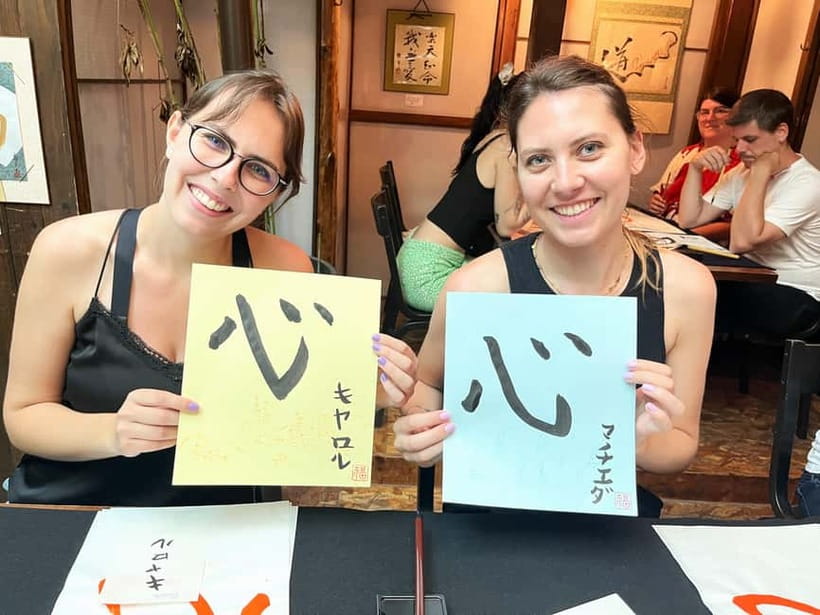
- Your final piece: rice paper, kanji signature, and a stamp
- Price and value: why $32 can make sense in Kyoto
- Getting there: central Kyoto logistics without stress
- Who this class fits best (and who should skip it)
- Instructor style and class attention: what you should hope for
- Practical tips so you get the most from the workshop
- Should you book this Kyoto calligraphy workshop?
- FAQ
- How long is the Kyoto Japanese calligraphy workshop?
- Where do I meet for the workshop?
- What is the price?
- Do I need to reserve in advance?
- What languages are used during the class?
- What’s included in the workshop?
- Is the workshop suitable for children?
- Is the workshop wheelchair accessible?
- What is the cancellation policy?
Key highlights worth your time
- Central Kyoto, easy to reach from Keihan Kiyomizu Gojo and Keihan Shichijo stations
- Small group size (limited to 10) so you actually get hands-on help
- Beginner-friendly instruction with brush strokes first, then kanji practice
- Take-home keepsake on rice paper, signed in kanji and stamped
- Photo time plus gallery visit at the end of class
Gojo Paradiso: a calm Kyoto workshop beside the Takase River
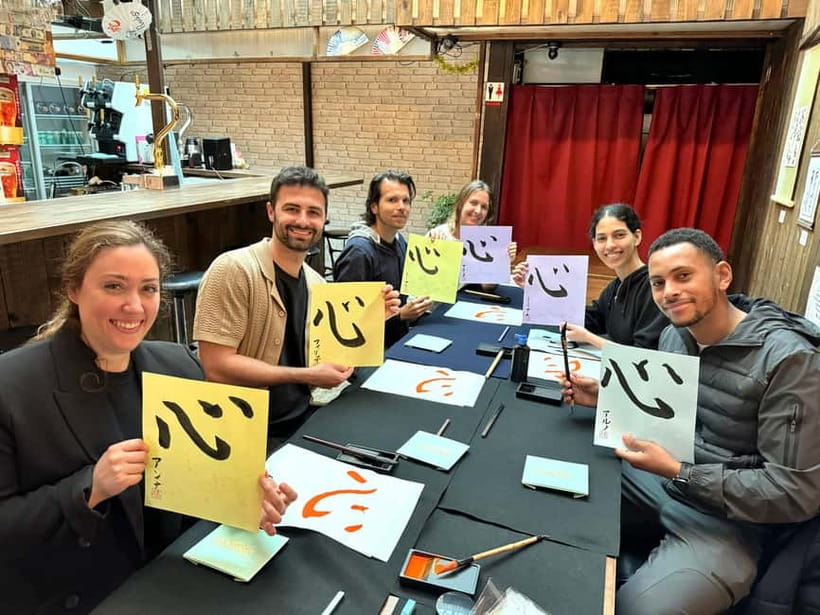
If you’re looking for a Kyoto experience that doesn’t require you to “perform” all day, this calligraphy class fits the bill. It runs in a small, calm setting at Gojo Paradiso along the Takase River on Kiyamachi Street. The vibe is the kind where you can focus on one thing at a time: your brush, your ink, and getting the strokes right.
Two things make this setup especially appealing. First, you’re not stuck at a crowded studio where someone explains and you watch. The class is built for doing, not observing—so even if you’ve never picked up a brush, you can still follow along. Second, it’s located in a part of central Kyoto where it’s simple to pair with other activities before or after.
Also, the class is designed for small groups (10 participants max). That matters. When you’re learning calligraphy, details are everything—pressure, angle, and stroke order. Smaller groups mean the instructor can correct what you’re doing while you’re still in the middle of practice.
You can also read our reviews of more tours and experiences in Kyoto


What the 1–2 hour SHODO lesson actually feels like
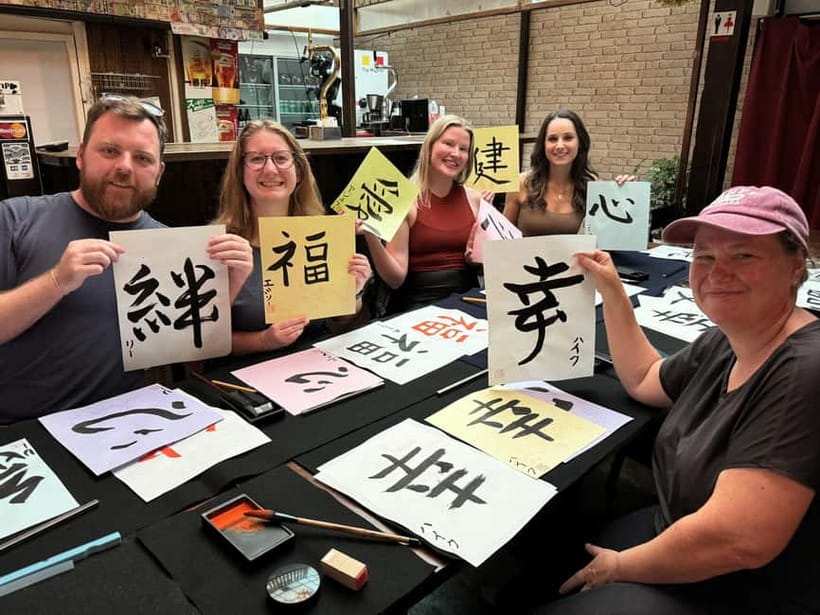
The workshop is scheduled for 1–2 hours, and you check available starting times when you book. In that window, the flow is structured so you get context, then skill practice, then a final piece you can take home.
Here’s the rhythm you can expect:
1) Quick introduction to calligraphy’s meaning
The session begins with a primer on the history and meaning of calligraphy. You don’t need prior knowledge. The goal is to help you understand what you’re about to do, not to quiz you. Even a short introduction changes the experience—your brushwork starts to feel intentional instead of random marks.
2) Brush-stroke basics (where beginners win)
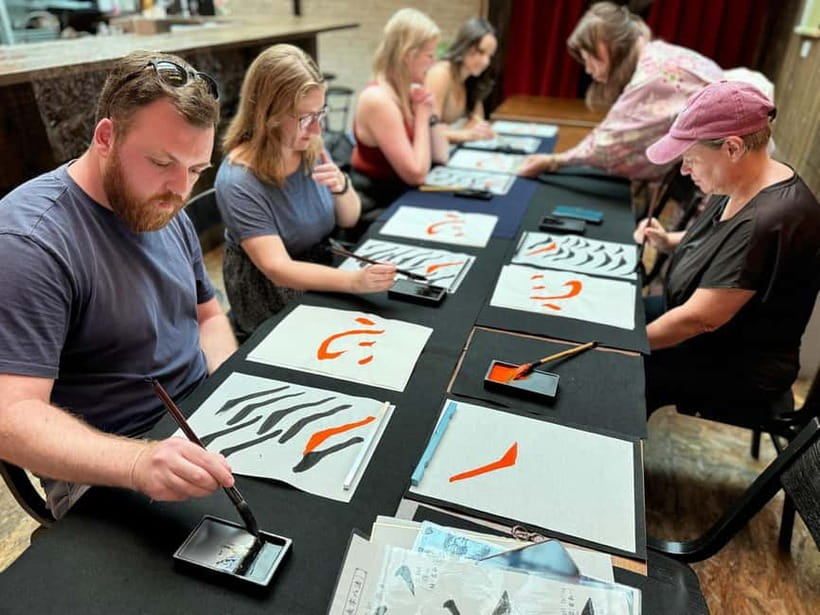
Next comes the part that makes this workshop work for beginners: you practice basic brush strokes first. You’ll learn how to control the brush and how each stroke looks when you do it correctly.
This is also where you’ll notice the instructors’ teaching style. The guidance is step by step, and it’s practical. If you’re worried you’ll be overwhelmed, don’t. The pace is built around repetition, and you get support as you go.
3) Writing kanji with guidance
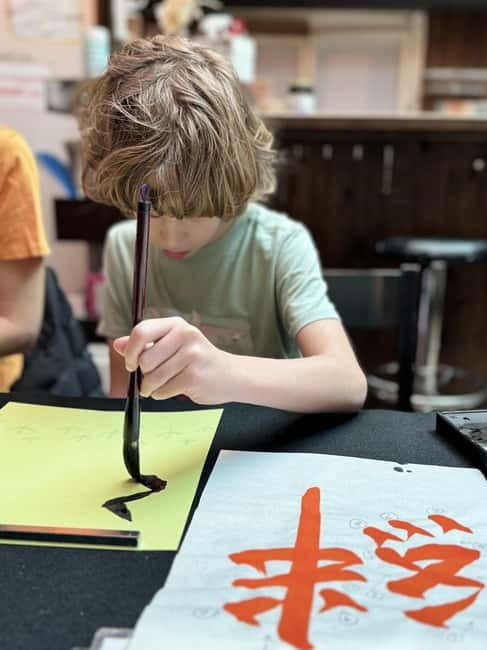
After you’ve practiced the strokes, you move toward kanji characters. This isn’t just copying a model. You’re guided through what the character should look like and how to shape the strokes so it reads as something intentional.
Some classes also include writing your name in kanji, which turns your practice into something personal. It’s a fun detail—and it helps you remember the strokes later because you’re not just doing exercises for the class. You’re making something tied to you.
4) Finishing touches, photos, and the gallery
Toward the end, you get time to take photos and check out the gallery. There’s also mention of the chance to place special orders, so if you decide you want more calligraphy pieces later, the option is there.
Then you transition into the best part: leaving with your own work.
Your final piece: rice paper, kanji signature, and a stamp
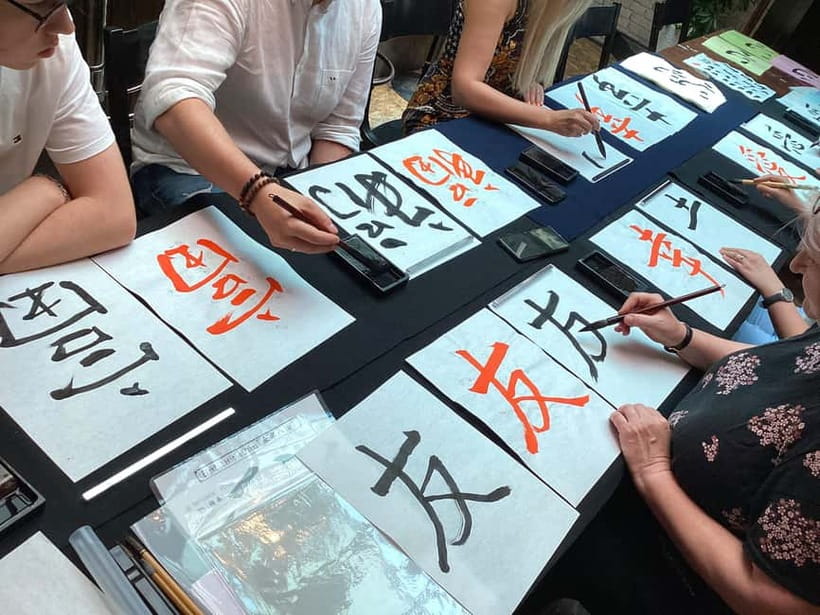
The take-home aspect is a big reason this activity gets strong ratings. You don’t just leave with a feeling that you tried something new. You leave with a real, physical reminder of your Kyoto day.
What you make is typically:
- A calligraphy piece created during class on rice paper
- Your name written in kanji
- A stamp added by the instructor (so your work feels official, not like a classroom worksheet)
This is also where the studio touch shows up. The instructors take care with presentation, and the result is something you can display. If you’re the type who saves ticket stubs and small souvenirs, this will likely replace at least a few of them.
A small extra note: at least one recent session included the instructor presenting an additional handmade calligraphy gift accented in gold. Even if that isn’t guaranteed every time, it gives you an idea of the care and generosity in the room.
Price and value: why $32 can make sense in Kyoto
At $32 per person for 1–2 hours, this workshop isn’t trying to be the cheapest thing in Kyoto. But it also isn’t priced like a high-end experience either. The real question is value, and here the value is mostly in the “done-for-you basics.”
You get:
- An expert calligraphy instructor
- All necessary supplies
- A small-group learning format focused on actually making a piece
In other words, you’re not paying for materials you have to buy or bring. You’re paying for guided coaching. And when you’re learning something tactile like calligraphy, coaching is the whole product.
If you’re balancing a Kyoto budget and want one activity that feels meaningful—not just photo-based—this is the kind of class where your money turns into something you can hang on a wall back home.
Getting there: central Kyoto logistics without stress
The meeting point is Gojo Paradiso on Kiyamachi Street, along the Takase River. It’s listed as:
- A 5-minute walk from Keihan Kiyomizu Gojo Station
- A 10-minute walk from Keihan Shichijo Station
- About 386 meters from Kiyomizu Gojo Station
That’s useful because it means you’re not stuck navigating a far-flung location. You can usually fit this around other Kyoto stops without needing a taxi.
My practical suggestion: build a little slack into your timing. Kyoto streets can be easy to misread at first, and you’ll want a couple of minutes to settle in before the class begins.
Who this class fits best (and who should skip it)
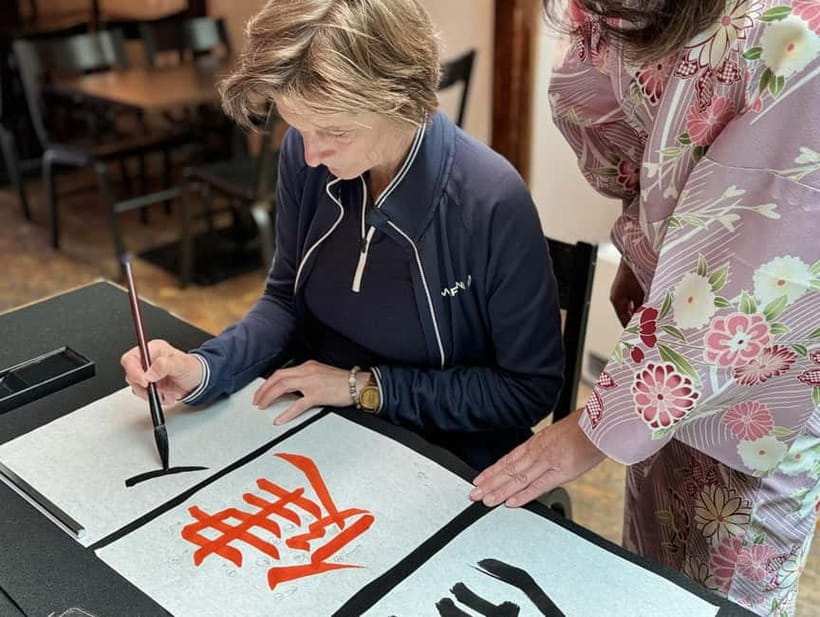
This workshop is a great fit if you want:
- A hands-on cultural activity that isn’t just watching
- Clear instructions that work for total beginners
- A small-group class where your questions get answered
It’s also a solid choice if you enjoy slower activities. Calligraphy has a calming, repetitive rhythm once you get into the stroke practice. And when the instructor pauses to correct what you’re doing, it becomes less about perfection and more about learning how to steer the brush.
There is one clear limit: children under 10 are not suitable. So if you’re traveling with younger kids, don’t plan on making this your family activity.
Instructor style and class attention: what you should hope for
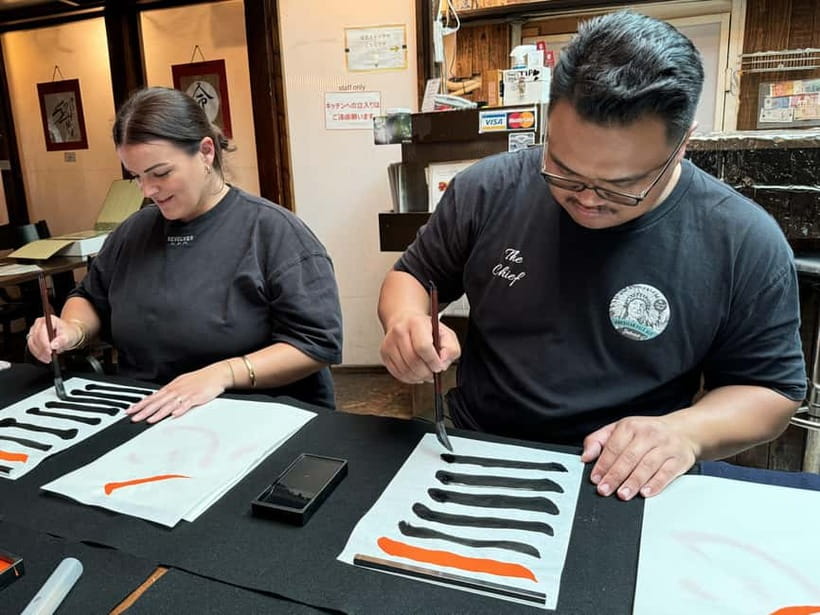
A theme shows up in the way the workshop is taught: patience and individual help. In particular, instructor Takako is described as friendly, encouraging, and careful with instruction. The teaching approach includes giving people time on exercises and checking what each person is doing rather than lecturing from the front.
Also, instruction is available in English and Japanese. If you don’t speak Japanese, that matters. You can still learn the structure of strokes and the steps of the character without feeling lost.
One more helpful detail: the class setup includes additional support (helpers are mentioned in some sessions). That typically means smoother pacing and quicker correction if your brush angle or pressure is off.
Practical tips so you get the most from the workshop
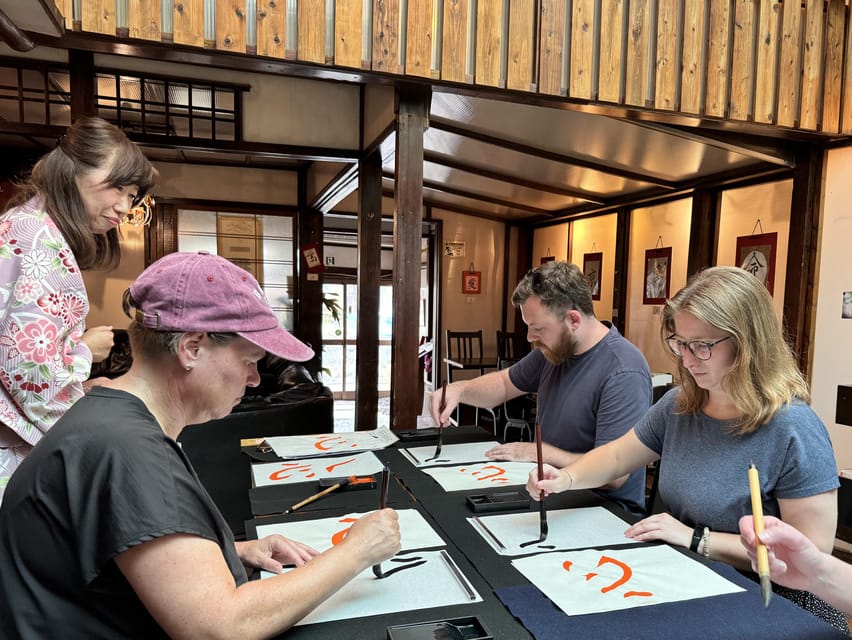
You can’t speed-run calligraphy, but you can set yourself up for success.
- Arrive a little early and take a quick look around so you’re not rushing into concentration mode.
- Focus on the stroke you’re doing, not the final character. Good calligraphy comes from getting each stroke right.
- If you’re given a character sequence, follow it in order. Stroke order is part of the look.
- When you get to the part that includes writing your name in kanji, slow down. That’s the moment where the class becomes personal.
Even if your first attempt looks wobbly, that’s normal. The point is that you learn what to adjust and how to repeat it until it clicks.
Should you book this Kyoto calligraphy workshop?
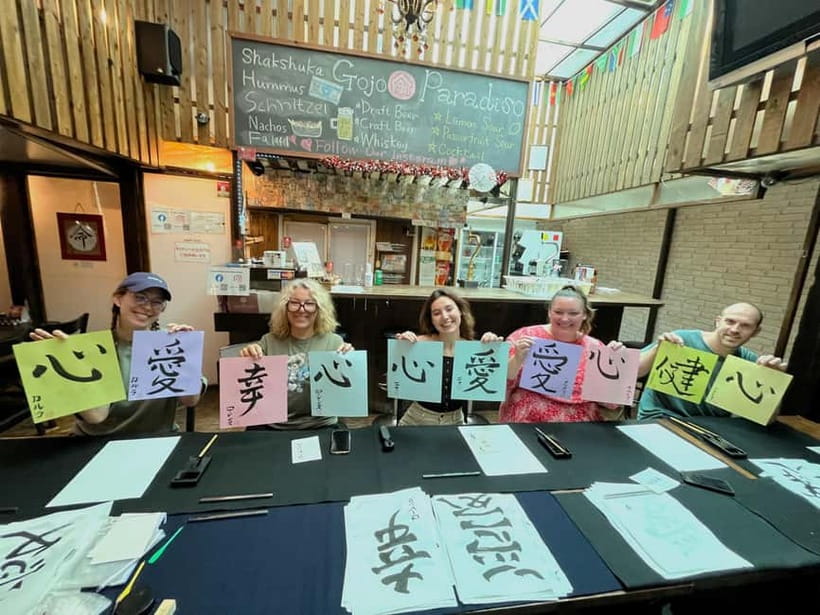
I’d book it if you want a beginner-friendly, small-group Kyoto activity that ends with a real, beautiful keepsake. It’s especially good value because supplies and instruction are included, and the class doesn’t assume prior skill.
Skip it if you’re traveling with kids under 10, or if you’re only interested in fast, high-energy sightseeing. This is a slower, skill-based workshop. It rewards attention.
If you want one authentic Kyoto memory you can hold in your hands, this SHODO class is a strong choice.
FAQ
How long is the Kyoto Japanese calligraphy workshop?
It runs for 1–2 hours, depending on the starting time you select and class schedule.
Where do I meet for the workshop?
You meet at Gojo Paradiso on Kiyamachi Street along the Takase River. It’s about a 5-minute walk from Keihan Kiyomizu Gojo Station and about a 10-minute walk from Keihan Shichijo Station.
What is the price?
The price is $32 per person.
Do I need to reserve in advance?
Yes. Reservation is required at least 1 day in advance.
What languages are used during the class?
The instructor can teach in English and Japanese.
What’s included in the workshop?
You get an expert instructor, all necessary supplies, and a memorable cultural experience.
Is the workshop suitable for children?
It is not suitable for children under 10.
Is the workshop wheelchair accessible?
Yes, it is listed as wheelchair accessible.
What is the cancellation policy?
You can cancel up to 24 hours in advance for a full refund.