REVIEW · KYOTO
Kyoto 5-Star Geisha Night Walk: Small-Group Authentic Experience
Book on Viator →Operated by TripTomo · Bookable on Viator
Gion at night feels like a secret. This 3.5-hour small-group walk takes you through Kyoto’s geisha streets after the day crowd fades, with a guide who connects what you see to how the traditions work. You also get stops tied to Shinto, Zen, and Kyoto’s classic entertainment culture.
What I like most is the small group size (max 8), which makes it easy to ask questions and actually hear the details. I also love that the route is built for night: lantern-lit streets, better photo light, and a chance to notice things you’d miss during the daytime crush. One consideration: this is still a walking tour with steps and uneven paths, so it is not the best choice if you have mobility issues or tire easily.
In This Review
- Key things I’d actually pay attention to
- Gion at 5:20 pm: why night changes everything
- Small-group energy (max 8) and the guide’s storytelling
- The route’s big idea: see entertainment, then see the training
- Kabuki theater stop: a quick cultural warm-up
- Hanamikoji Street: lantern lanes and the meaning behind the details
- A note on etiquette cues
- Gion Corner and the training story you’ll carry all night
- Zen at the oldest temple in Kyoto: calm between the lanterns
- Yasui-Konpiragu Shrine: Shinto traditions up close
- Hōkan-ji (Yasaka Pagoda): best photo energy, short stop
- Ninenzaka and Nene-no-Michi: streets that feel like a movie set
- Yasaka Shrine: the big shrine moment with guided meaning
- “Can’t miss” photo spot, then a lesser-known geisha street
- Pontocho District at the end: lively, narrow, and lit
- Price and value: is $98 reasonable for 3.5 hours?
- Logistics that matter on a Kyoto night walk
- Who should book this geisha night walk
- Should you book the Kyoto Geisha Night Walk?
- FAQ
- How long is the Kyoto Geisha Night Walk?
- What time does the tour start?
- How many people are in the group?
- Is there an included snack?
- Is the guide fluent in English?
- Do I need to pay admission at the stops?
- Is the tour suitable for people with walking issues or strollers?
Key things I’d actually pay attention to
- Max 8 people means you’re not yelling over a crowd.
- Geisha training context: you’ll hear how the system works, not just geisha stereotypes.
- Night photos are easier thanks to the timing and the lit streets.
- Multiple shrine/temple stops keep the cultural mix real and varied.
- A Kyoto snack break is included, so you’re not paying mid-walk.
- You may spot geiko or maiko heading out, but it’s never guaranteed.
Gion at 5:20 pm: why night changes everything
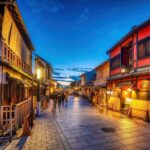
Start time is 5:20 pm, which is a smart move. Daytime Gion can feel like you’re walking through a theme park. At night, the streets slow down, the lanterns take over, and the architecture starts to make sense instead of just looking pretty.
This tour also ends near Pontocho, so your evening has a natural flow: geisha district lanes first, then the lively riverside area. If you like Kyoto in “story mode” (not just photo mode), the timing does a lot of work for you.
You can also read our reviews of more walking tours in Kyoto


Small-group energy (max 8) and the guide’s storytelling
The tour runs with a maximum of 8 travelers, and you feel it quickly. In a big group, you get a slideshow. In this setup, you can ask follow-ups and listen to the details the guide brings to each corner.
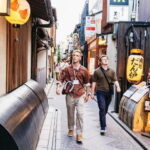
In many groups, the guide has been identified as Richard—American and Japanese, and very focused on clear explanations. Even if your guide is someone else, the goal is the same: help you understand what you’re seeing, from kimono culture cues to shrine beliefs. You’re not just passing by doors and alleys; you’re learning how to read the place.
Also worth noting: the tour is described as an expert-led walking experience in native English, so you won’t be stuck guessing what the guide means.
The route’s big idea: see entertainment, then see the training
The walk is built around context. You start with a brief stop by a Kabuki theater area, where the guide explains interesting details about traditional Japanese performance culture. That’s a useful opener because Kyoto’s arts aren’t isolated. Theater, fashion, etiquette, and ritual all overlap in how people understand tradition.
Then you move into the heart of Gion, starting with Hanamikoji Street. This is where the guide can point out how geisha arts and traditions connect to daily life and local customs. And you’ll pass by places tied to training and study, including Gion Corner, where geisha study and train.
If you’ve only ever seen geisha in movies, this part is the reality check you didn’t know you needed. You’ll come away with a framework for what you’re noticing: practice, discipline, and the social rules that shape everything.
Kabuki theater stop: a quick cultural warm-up
The Kabuki stop is short, but it sets the tone. You’re reminded that traditional entertainment in Japan isn’t only about what’s on stage. It’s also about costume, timing, movement, and public etiquette.
Even if you don’t plan to attend a Kabuki show, this stop helps you “hear” Kyoto as performance culture. That makes the later geisha stories land better, because the guide isn’t treating geisha as a separate topic. It’s all part of how Kyoto historically presented art to the public.
Hanamikoji Street: lantern lanes and the meaning behind the details
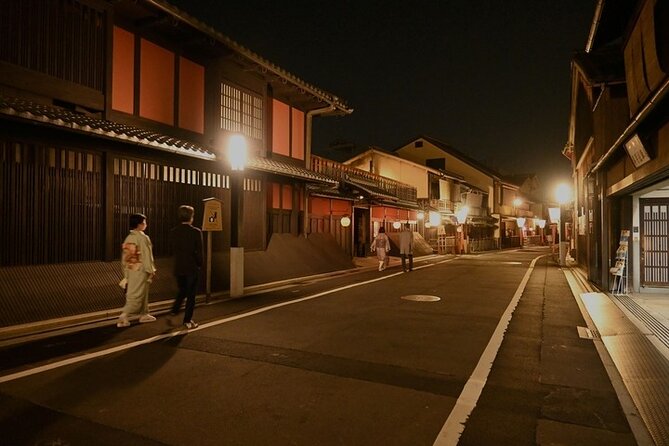
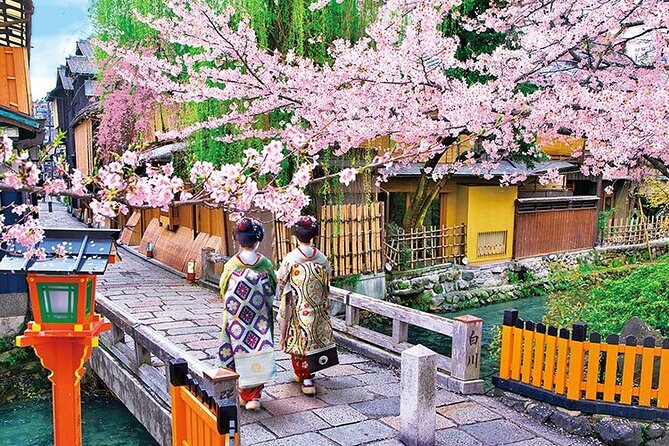
Hanamikoji Street is the classic geisha district spine. Walking it at night is easier on your senses. You’re not fighting crowds, and the lighting makes the street feel less like a checklist and more like an atmosphere.
Here’s the real value: the guide explains the geisha arts and traditions in detail as you walk the geisha streets and alleys. You’ll pass places that relate to geisha living quarters and working geisha houses, and the guide gives you the cultural background that turns “interesting buildings” into “understandable buildings.”
You might also catch a glimpse of geiko or maiko heading out—some groups have reported seeing geisha during the walk. Don’t bet your whole night on it. But do keep your eyes up and your camera ready, because that possibility is part of why night matters.
You can also read our reviews of more evening experiences in Kyoto

A note on etiquette cues
You’ll be in areas where residents and workers share the space with visitors. The best approach is simple: slow down, stay aware, and let the guide handle the pacing. If you’re too eager to chase a photo, you’ll miss the point—and you’ll feel it later when the tour moves on.
Gion Corner and the training story you’ll carry all night
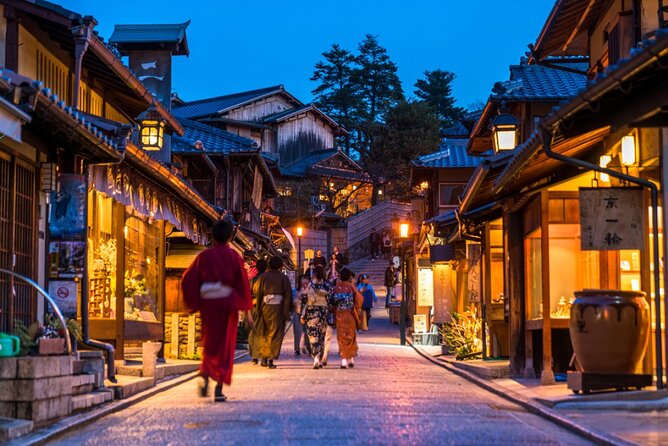
You’ll pass by Gion Corner, described as a place where geisha study and train. Even from the sidewalk, it’s a reminder that the geisha world is built on practice.
That matters because many visitors go in with one big question: are geisha like performers who just show up? This walk gives you a different answer. You learn the “system” view—training, responsibility, and the way arts are maintained over time. Once you hear that, you start noticing other signs of preparation, like the attention people give to appearance and manners.
This is one of the most praised parts of the experience, because it turns sightseeing into understanding.
Zen at the oldest temple in Kyoto: calm between the lanterns
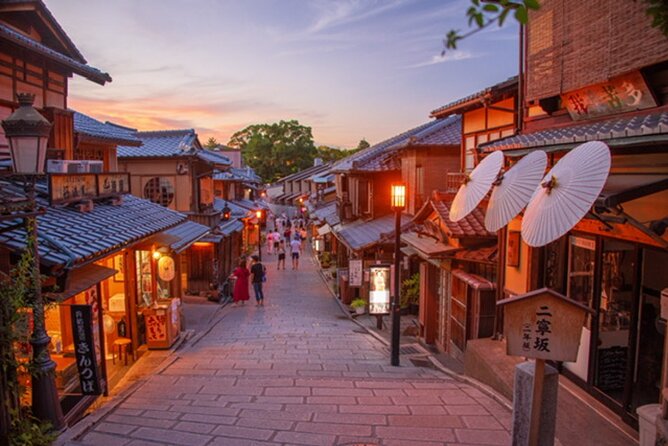
After the geisha lanes, the tour shifts to quieter spiritual stops. You’ll visit an area described as the oldest temple in Kyoto, where the guide provides insight into Japanese Zen.
This is a smart pacing move. Gion after dark is visually intense. A Zen stop gives you breathing room and context for why Kyoto’s traditions are so closely tied to philosophy and daily conduct.
You’ll also likely get a better appreciation for why shrines and temples show up again and again during this type of evening walk. The culture isn’t only about the geisha district. It’s about how Kyoto people built their lives around belief, ritual, and observation.
Yasui-Konpiragu Shrine: Shinto traditions up close
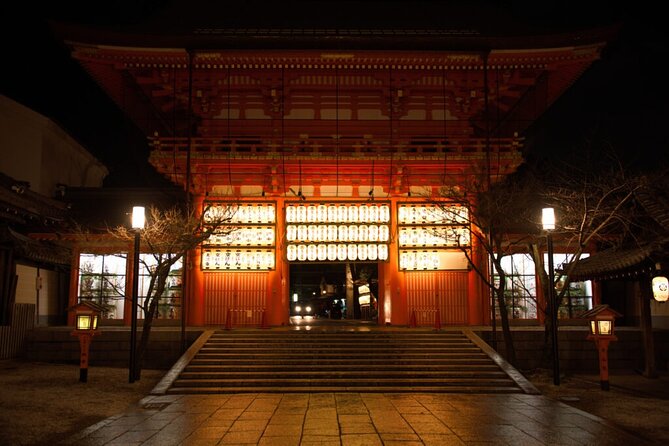
The tour then heads to Yasui-Konpiragu, an intimate Shinto shrine stop. Expect a guided look at ancient Shinto traditions and what people connect with at shrines.
This is where the tour earns its keep. A lot of geisha tours focus only on Gion. Here, you get the religious backbone that helps explain why Kyoto’s arts, etiquette, and seasonal rituals are so tightly linked.
Hōkan-ji (Yasaka Pagoda): best photo energy, short stop
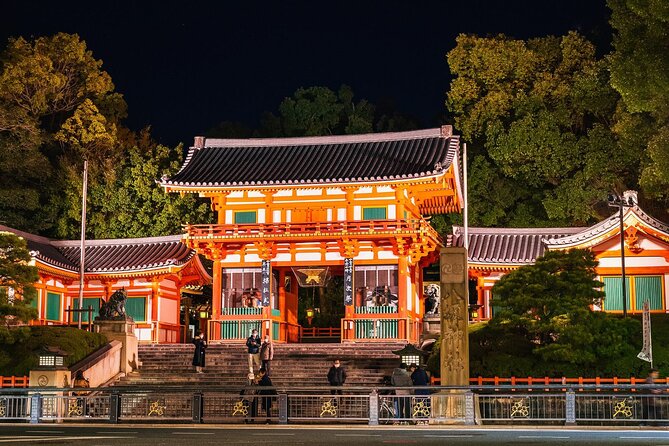
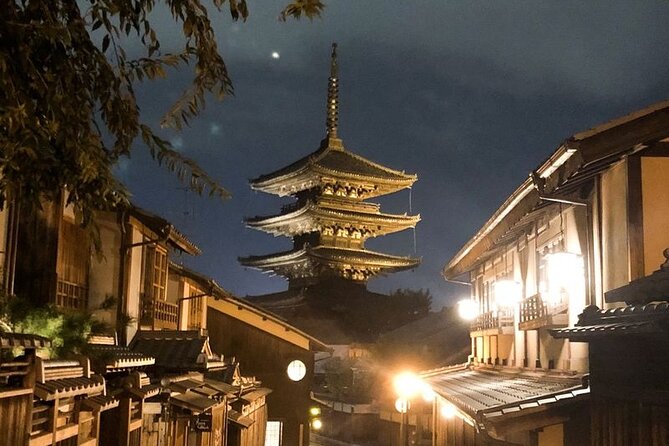
Next comes Hōkan-ji Temple, specifically the area tied to the Yasaka Pagoda. This is a classic nighttime-photo spot, and the tour includes about 15 minutes here.
Fifteen minutes sounds short, but it usually works. You’ll get enough time to take pictures without rushing the guide through the explanation. The night light on pagodas and temple structures is one of those Kyoto “yes, that’s why people come here” moments.
Ninenzaka and Nene-no-Michi: streets that feel like a movie set
From there, you’ll walk through Ninenzaka, described as a magical alleyway especially beautiful at night. This is a slow-down section. It’s where Kyoto’s old-street vibe shows up in architecture, slopes, and the way the street curves.
Then comes Nene-no-Michi, your included snack break. This is not just a pause. It’s smart logistics. After 90 minutes of walking and learning, you need fuel and a moment where your brain can reset.
The snack is a Kyoto-style local treat included in the price. Some people may find specific flavors different from what they usually like, but the guide also explains parts of it, which can turn it into another mini lesson instead of just a quick bite.
Yasaka Shrine: the big shrine moment with guided meaning
Your next major stop is Yasaka Shrine, where the guide highlights important features of the shrine. This is one of Kyoto’s top shrines in the tour’s description, so you can expect a more “center-stage” feeling than the smaller side stops.
Again, what makes this valuable isn’t only seeing a famous place. It’s the guided framing. Once you understand what you’re looking at—structures, symbolism, and how people relate to the shrine—you stop treating the site like scenery and start treating it like a living place.
“Can’t miss” photo spot, then a lesser-known geisha street
Mid-to-late in the walk, you’ll hit a picturesque spot you should not skip while exploring the geisha districts. The tour also takes you through a lesser known geisha street, which is exactly what you want after a day of crowded main lanes.
This is where the small-group factor helps again. You can actually notice the change in street mood. You’re not just moving from one landmark to the next. You’re seeing how the district feels when it’s not packed.
Pontocho District at the end: lively, narrow, and lit
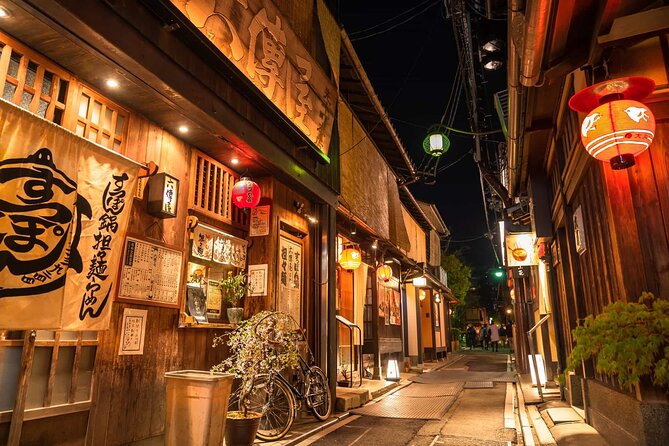
The last stop is Pontocho District, about 30 minutes. This is a narrow nightlife area with geisha houses, bars, and late-evening energy. Walking it at the end of the tour makes sense: your brain has context now, so Pontocho feels like a chapter rather than a random ending.
The tour ends at the Sanjō Ōhashi Bridge side, near the northern end of Pontocho alley. That puts you in a good spot to keep exploring on your own—grab a drink, look at menus, or follow your feet toward dinner.
If you’re the type who asks questions, this can also be a good time to request restaurant ideas. Some groups have reported that the guide provides local recommendations on request, which can help you avoid the tourist traps that sell convenience over comfort.
Price and value: is $98 reasonable for 3.5 hours?
At $98 per person, you’re paying for three things: a guided storytelling experience, a timed night route, and the included snack. This isn’t a bargain in the budget sense. But it can be good value if you care about understanding Kyoto instead of just collecting stops.
A few value signals stand out:
- Max 8 travelers usually means more direct attention.
- The snack break prevents the mid-walk food scramble.
- Stops like shrines and temples are listed as admission free at the stops shown, so your money is more about guide time than ticket fees.
If you compare this to booking random “see-this-see-that” walks, the difference is interpretation. You’re paying for the ability to connect the sights to the culture.
Logistics that matter on a Kyoto night walk
You start near the Disney Store Kyoto Shijo-Kawaramachi at 5:20 pm, and you end at Sanjō Ōhashi Bridge. Because you’ll be walking, plan your dinner after the tour rather than during it.
The tour also requires good weather. If it’s canceled for weather reasons, you’ll be offered another date or a full refund. In Kyoto, evenings can change fast, so bring a light layer and keep an eye on the sky.
Wear comfortable shoes. This is a walking tour in old streets, and the surfaces can be uneven. Strollers are mentioned as needing maneuvering around steps and unpaved rocky paths.
Who should book this geisha night walk
You’ll probably love it if:
- You want Kyoto at night, when the streets feel calmer and more cinematic.
- You enjoy cultural explanations, not just photos.
- You like small groups and a guide who answers questions.
You should skip or think twice if:
- Walking for about 3.5 hours is hard for you.
- You need stroller-friendly, fully flat routes.
- You get grumpy when the evening is dependent on weather.
This is also a great “first night in Kyoto” type of experience. It helps you understand how the district works, which makes the rest of your days easier to plan.
Should you book the Kyoto Geisha Night Walk?
If your goal is to understand Gion and Kyoto tradition—not just stroll it—then yes, I’d book it. The strongest reason is the combination of small group size and story-first guidance. You’ll get a structure for geisha training, Shinto and Zen context, and nighttime street reading, plus a snack break that keeps you human.
If you mainly want a cheap walk and don’t care about explanations, this may feel like spending money for stories. But if you’re the kind of traveler who likes details, asks questions, and wants your Kyoto evening to mean something, this is a very solid choice.
FAQ
How long is the Kyoto Geisha Night Walk?
The tour lasts about 3 hours 30 minutes.
What time does the tour start?
It starts at 5:20 pm.
How many people are in the group?
The tour has a maximum of 8 travelers.
Is there an included snack?
Yes. A refreshing Kyoto snack is included during a short break.
Is the guide fluent in English?
Yes. The guide is listed as speaking clear, native English.
Do I need to pay admission at the stops?
No admission ticket fees are listed for the stops in the itinerary.
Is the tour suitable for people with walking issues or strollers?
It is not suitable for anyone having walking issues. Strollers can be difficult because there are steps and unpaved rocky paths to maneuver.