REVIEW · KYOTO
Kyoto Private Car Tour – Full Day with Local Guide & Nara Option
Book on Viator →Operated by Riku · Bookable on Viator
Kyoto, packed into one smooth day. This private car tour takes the stress out of route planning and gets you efficiently between Kinkakuji, Arashiyama, Gion, and Fushimi Inari. I love the hotel pickup and drop-off, and I also like that you are not stuck waiting for other passengers. One thing to watch: lunch and many temple admission fees are not included, so your final cost depends on your choices.
The real payoff is having an English-speaking guide who can shape the day to your pace, including families and people managing mobility needs. You’ll also get an air-conditioned ride with parking, gas, and expressway fees handled. If you want zero flexibility and zero extra spending, this might not be the perfect match—Kyoto costs add up fast once you start choosing what to enter.
In This Review
- Key things to know before you go
- Why a Private Kyoto Car Tour Beats the Usual Shuffle
- The One-Day Kyoto Route: Golden Pavilion to Torii Gates
- Stop 1: Kinkaku-ji (Golden Pavilion) and the Gold-Leaf Factor
- Stop 2: Arashiyama’s Nature + the Bamboo Forest Timeline
- Stop 3: Gion Stroll Without Turning It Into a Theme Park
- Stop 4: Fushimi Inari-taisha and the Torii Walk Strategy
- Nara Option: Deer Parks and Big Temples, Done by Car
- What You Actually Get From a Guide (Riku, Tatsuya, and Others)
- Food Breaks: Lunch Is on You, but the Best Choices Aren’t Always Obvious
- Value for $170: What’s Included and How to Judge the Real Cost
- Who This Kyoto Private Car Tour Fits Best
- Small Practical Tips That Help the Day Feel Easier
- Should You Book This Kyoto Private Car Tour?
- FAQ
- Is this tour private?
- How long is the Kyoto private car tour?
- What stops are included in the Kyoto portion?
- Are attraction tickets included?
- Is lunch included?
- Is cancellation free?
Key things to know before you go
- Private group comfort: just your party, so the day runs to your timing
- Hotel-to-hotel logistics: pickup and drop-off means less time fighting transit
- A timed Kyoto highlights route: major stops laid out so you do not have to plan
- Admission coverage is mixed: some sites included, others you pay for
- Nara option available: add deer parks and big temples without extra hassle
Why a Private Kyoto Car Tour Beats the Usual Shuffle
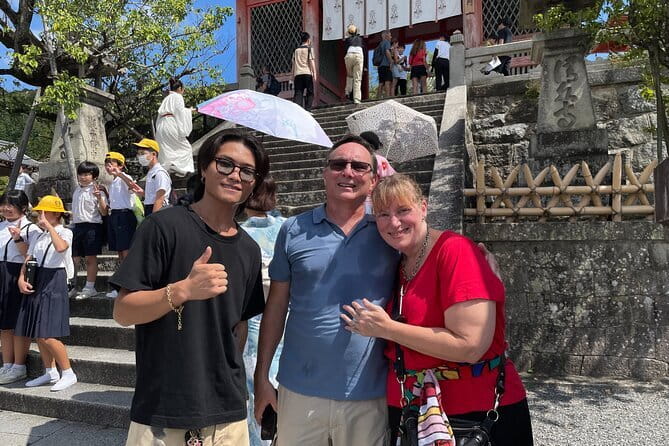
Kyoto is one of those places where the “where do we go next?” question can steal the whole day. A private car changes that. You get a plan, you get transportation, and you keep your focus on the sights instead of the bus routes.
I also like the way a private day helps your group move like a unit. You can slow down if a shrine line is long, duck out briefly if the weather turns, or linger if something grabs your attention. That matters in Kyoto, where walking and stairs are part of the game.
You can also read our reviews of more guided tours in Kyoto
The One-Day Kyoto Route: Golden Pavilion to Torii Gates
This full-day tour is about 8 hours. The Kyoto portion follows a logical loop through the city: Golden Pavilion (Kinkakuji), Arashiyama, Gion, then Fushimi Inari-taisha.
What you’re really buying is time and sequencing. Many independent itineraries end up with too much backtracking, especially if you start in one area and then decide you also want the other side of town. Here, the stops are arranged to reduce that scramble.
Stop 1: Kinkaku-ji (Golden Pavilion) and the Gold-Leaf Factor
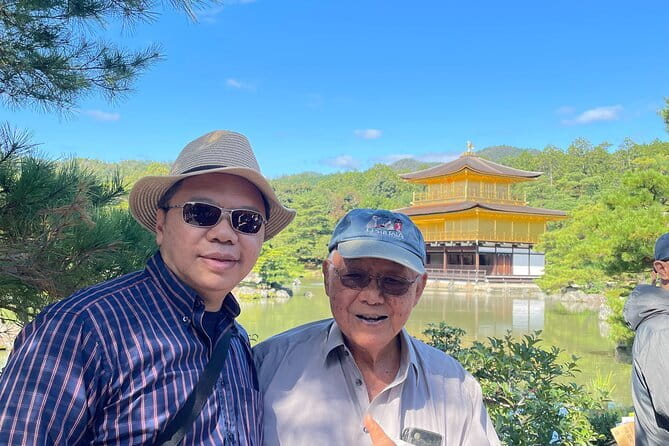
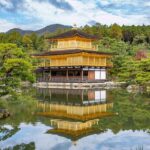
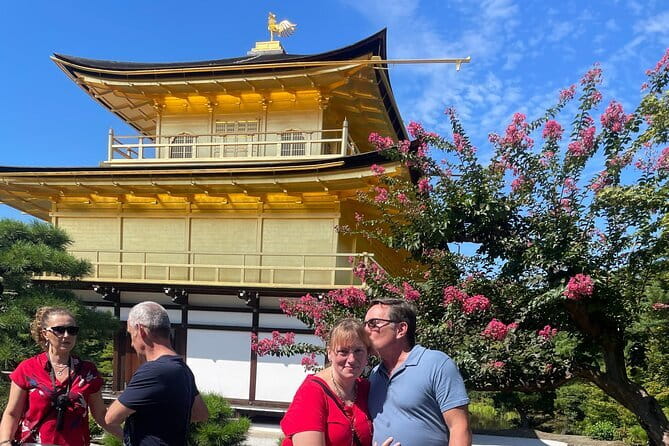
Kinkakuji is famous for a reason. The top floors are covered in gold leaf, and the whole scene is designed for that mirrored look in the pond. It feels both peaceful and instantly recognizable—like Kyoto’s signature pose.
Your allocated time here is about 1 hour, and admission is not included. That’s not a deal-breaker, but it does affect value. If you know you want the full temple experience, set aside the admission cost so you are not mentally surprised later.
Practical tip: if your group is sensitive to crowds, plan to arrive ready to move. Even with a guide, the grounds can be active, and you will get more out of your hour if you do not spend the first 10 minutes figuring out where to go.
Stop 2: Arashiyama’s Nature + the Bamboo Forest Timeline
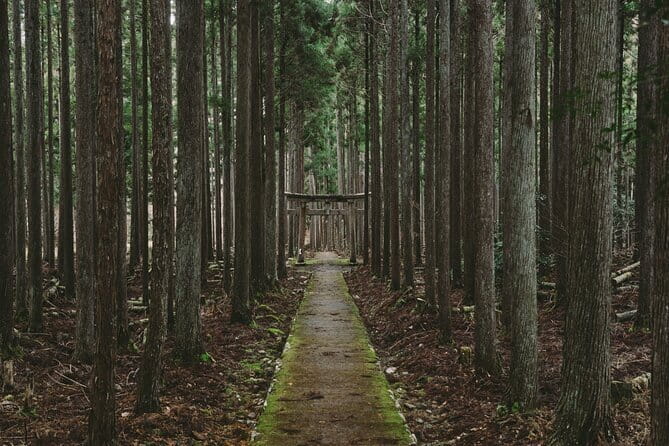
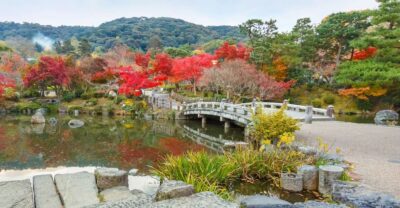
Arashiyama is a west-Kyoto escape. You get the riverside and park vibe, but you also get the biggest “Kyoto postcard” moment most people come for: the bamboo forest area.
You’ll spend about 2 hours here, and admission ticket is included for this stop. That inclusion is a nice value bump compared with sites where you pay separately.
Here’s the key consideration: 2 hours in Arashiyama can feel perfect for most people, but it depends on what your group wants to do inside the area. If your priority is strolling and photos, you will be happy with this time. If your priority is a long, multi-activity bamboo plan, you may want to ask your guide about what fits without cutting your other stops too tight.
Stop 3: Gion Stroll Without Turning It Into a Theme Park
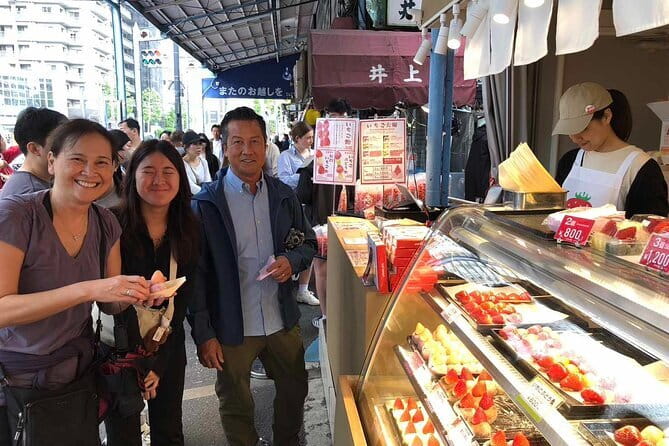
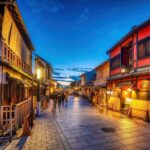
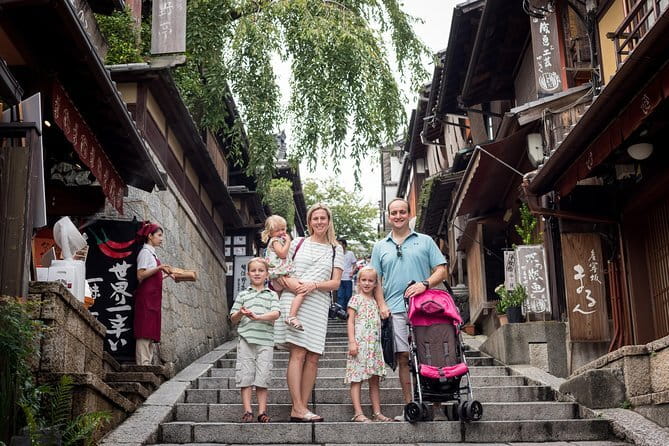
Gion is Kyoto’s most famous historic district and the core of maiko and geisha culture. It is less about ticking boxes and more about atmosphere—old streets, side lanes, and the sense that you’re walking through a living neighborhood.
Your time here is about 1 hour, and admission is free. That’s helpful, because it lets you treat Gion like a sensory stop: slow walking, small photo breaks, and a chance to notice details like shop signs and traditional architecture.
One practical note: Gion can be crowded in places. With a private guide and controlled timing, you can usually get through the busiest parts efficiently and still enjoy the walk without turning the whole stop into a standstill.
You can also read our reviews of more private tours in Kyoto
Stop 4: Fushimi Inari-taisha and the Torii Walk Strategy
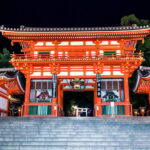
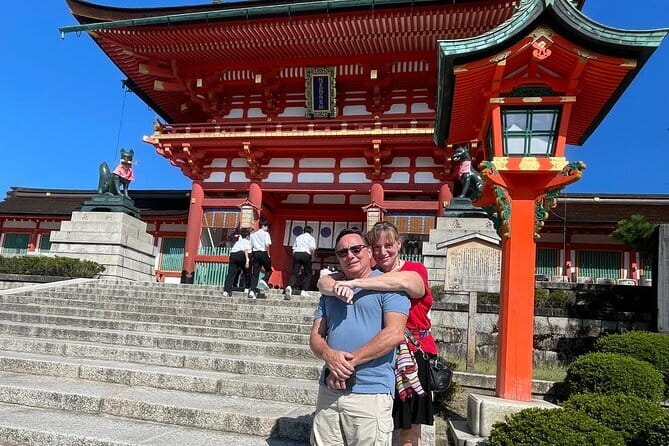
Fushimi Inari is the shrine of thousands of torii gates. The climb gives you that escalating tunnel effect, where each turn brings a new angle and another stretch of gates fading into the distance.
You’ll have about 2 hours, and admission ticket is included here. This is one of the spots where having time matters. If you only skim the base, you miss the gradual reward of climbing into the denser gate scenery.
I like thinking of Fushimi Inari in layers:
- First layer: the main gate area and the immediate photo viewpoints
- Second layer: walking paths where the gates feel more “you’re inside it”
- Third layer: the higher viewpoints, if you still have energy
If your group has mobility limits, you can adjust the plan. A good guide will help you choose a stopping point that still feels satisfying, instead of forcing a full climb.
Nara Option: Deer Parks and Big Temples, Done by Car
If you add the Nara option, you trade a little Kyoto time for a powerful change of scenery. This is not just “a quick add-on.” Nara has its own rhythm, and the deer experience adds a fun, slightly chaotic element that kids and adults often remember for years.
From what’s offered in this style of tour, Nara can include Todaiji Temple and the Deer Park, and it may also add places like Kasuga Taisha, where deer roam the outer grounds. You’ll spend time eating and walking there, then continue back toward Kyoto highlights.
The benefit is simple: you skip the transfers and keep your day organized. The tradeoff is also simple: Nara adds time and walking, so it’s best when you still have energy for a full day.
What You Actually Get From a Guide (Riku, Tatsuya, and Others)
This tour’s strongest ingredient is the guide. Names you might meet include Riku (the listed provider), Tatsuya, Patsu, Shunsuke Nishio, and Shrun. The common thread across these guides is practical care: they help you make the most of each stop instead of just moving you along.
I especially appreciate the way guides handle pacing. Several guides are described as accommodating families with young kids and people managing mobility issues. That can mean choosing less tiring routes, taking breaks when needed, or adjusting the day when the group is not walking at the same tempo.
Guides also tend to improve the experience through context. You get explanations of what you’re seeing while you’re there, not a lecture at the car door. That makes the shrines and temples feel less like scenery and more like places with meaning.
Food Breaks: Lunch Is on You, but the Best Choices Aren’t Always Obvious
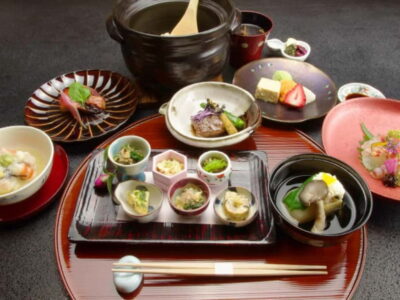
Lunch is not included, and that’s common for private city tours in Japan. But what matters is whether your guide helps you avoid the generic trap. In this case, guides often suggest local spots—sushi and ramen show up in the experience repeatedly.
In Kyoto-style planning, having a recommended restaurant can save you time. You are not hunting for a place that fits your tastes and your schedule at the same moment everyone else is hungry.
Budget note: since lunch is separate, decide early how you want to handle it. If your priority is sit-down comfort, plan for a full meal. If you want flexibility, you might do something lighter and keep energy for the later gates and walks.
Value for $170: What’s Included and How to Judge the Real Cost
At $170 per person, you’re paying for more than a ride. You’re paying for organization, an English-speaking guide, and transportation that handles the ugly parts of the day—parking, gas, and expressway fees are covered. That’s a real cost saver if you’d otherwise rent a car or take multiple taxis.
What isn’t included matters just as much:
- Lunch (you pay)
- Attraction admissions (some stops are included, some not)
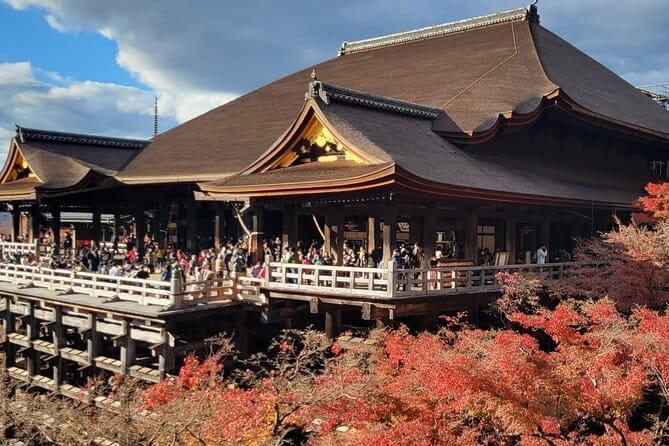
- Kiyomizudera admission if that extra stop is added (listed as about $10)
So the best way to judge value is to think like this: if your group is likely to enter paid sites anyway, the mixed admission structure is easier to stomach. If you’d rather only look from outside, you might not get full value.
Also consider the “private” element. If you’re traveling as a small group, the cost per person can still feel reasonable compared with paying for separate taxis or building a complicated day on public transit.
Who This Kyoto Private Car Tour Fits Best
This tour fits best if you want:
- Major Kyoto highlights in one day without planning stress
- A private format where your group decides the pace
- Less time in transit and more time at sights
It’s also a strong option if someone in your party is dealing with mobility challenges. The tour structure and guide support are described as attentive to needs like partial wheelchair use, knee issues, and breaks for tired legs.
If you are the type who enjoys spending lots of time wandering independently with no schedule, you might find a set order less fun. But even then, the guide’s ability to adjust timing can make the day feel freer than it sounds on paper.
Small Practical Tips That Help the Day Feel Easier
A private day still has real-world limits: gates, lines, walking surfaces, and weather. To keep the day smooth, I’d go in with these habits:
- Wear shoes you trust for stairs and uneven ground
- Bring a small layer for sudden weather shifts
- Decide on your must-do for each stop before you arrive
- Ask your guide where it makes sense to stop earlier if energy runs out
If you’re adding Nara, treat it as a full additional commitment, not just a quick detour. You’ll get better enjoyment when you plan your expectations for a long day.
Should You Book This Kyoto Private Car Tour?
If you want Kyoto highlights with less stress, I’d say yes. The combination of hotel pickup/drop-off, a private group, and an English-speaking guide makes this a practical way to do Kyoto in limited time.
Book it especially if:
- You have one shot at Kyoto and want a packed-but-reasonable route
- Your group includes kids, older adults, or someone who needs pacing help
- You care about comfort between stops and not battling transit
Skip it or rethink it if:
- You want lunch and admissions fully included with no extra budgeting
- You prefer total independence and don’t want an organized order of stops
If your plan is flexible and you budget for lunch and paid admissions, this tour style is one of the most efficient ways to see the big names of Kyoto—and still feel like you had a real day, not a rushed checklist.
FAQ
Is this tour private?
Yes. It is described as a private tour/activity where only your group participates.
How long is the Kyoto private car tour?
The duration is listed as about 8 hours.
What stops are included in the Kyoto portion?
The itinerary includes Kinkakuji Temple, Arashiyama, Gion, and Fushimi Inari-taisha Shrine.
Are attraction tickets included?
Not all of them. Kinkakuji admission is listed as not included, while Arashiyama and Fushimi Inari include admission tickets. Gion is listed as free. Lunch is not included.
Is lunch included?
No. Lunch is listed as not included, and you will pay lunch fees when taking a break.
Is cancellation free?
Free cancellation is available up to 24 hours in advance for a full refund.