REVIEW · KYOTO
Kyoto : Family-Friendly Sword Lesson at Samurai Ninja Museum
Book on GetYourGuide →Operated by GLOBA Inc. · Bookable on GetYourGuide
Kyoto lets you wield a katana. I love how fast you go from normal visitor to a modern-day samurai, and I also love learning two structured sword kata instead of just posing with a blade. One thing to plan for: kids under 3 can’t enter the samurai venue, and the activity is physical in places.
A big win is the small-group feel. When I read the experiences connected to instructors like Raito, Maestro Ken, Nobu, and Jukia, the pattern is the same: you’re not rushed, and you get real coaching on how to hold and swing safely.
You’ll spend about 2 hours in total, and you skip the ticket line, so you lose less time waiting around. The only catch is that transportation to and from the activity is on you.
In This Review
- Key highlights worth showing up for
- Turning Into a Samurai in Kyoto’s Samurai Ninja Museum
- Katana Lesson: How the Swing and Kata Actually Work
- Ninja Weapons Trial: Shuriken Target Practice
- Museum Time at the Samurai and Ninja Museum
- The Photo Moments: Samurai and Ninja Backdrops That Don’t Feel Random
- What You’re Really Getting for $66
- Timing, Group Size, and Why It Matters in Kyoto
- Accessibility and Practical Comfort Points
- Who Should Book This Samurai Sword Lesson
- Should You Book This Experience?
- FAQ
- How long does the Kyoto family-friendly sword lesson last?
- What is included in the ticket?
- Is the instructor able to teach in English?
- Are there age limits for children?
- Is the venue accessible for wheelchairs and strollers?
- Does the price include transportation to and from the activity?
- How big is the group?
Key highlights worth showing up for
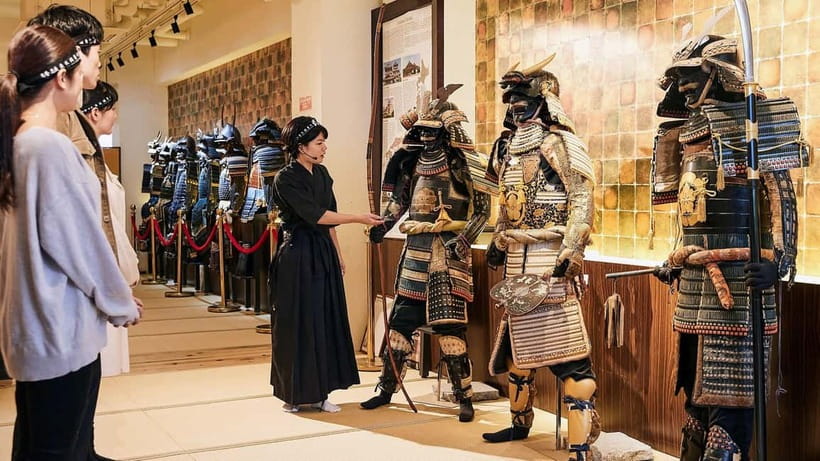
- Dress as a samurai with hakama, helmet, and even armor pieces
- Learn katana kata after a demonstration, not just photo tricks
- Get guided ninja practice, including a shuriken target trial
- Studio-style photo moments with samurai-themed and ninja-themed backdrops
- Small-group instruction with a limit of 10 participants
- A museum add-on at the Samurai and Ninja Museum after the hands-on training
Turning Into a Samurai in Kyoto’s Samurai Ninja Museum
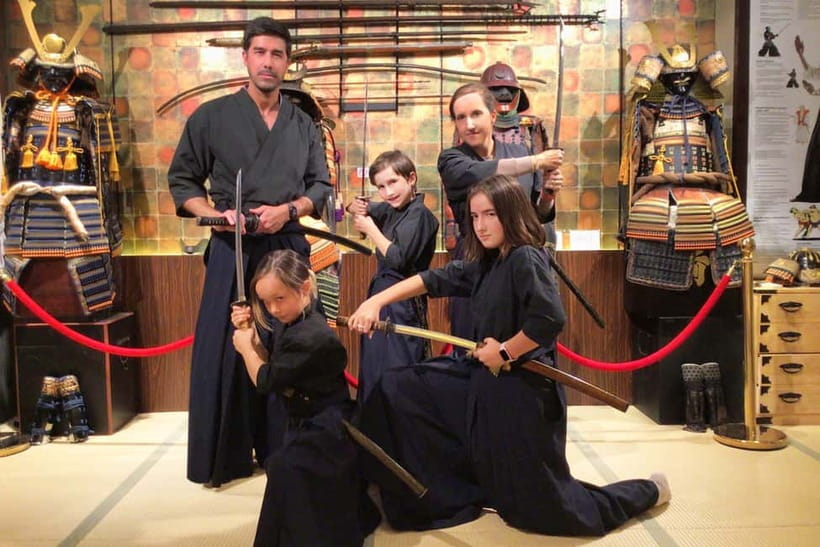
This is the kind of Kyoto experience that makes you stand straighter the moment you put on the clothing. You start by dressing in samurai gear that includes a hakama and accessories like a helmet, and you’ll also get armor elements for the full look. It’s not just costume. The staff set you up to move in a way that makes the sword lesson make sense.
Once you’re dressed, the whole thing shifts into a story. You’re basically playing the role of a modern-day samurai in a themed space, then taking that role into practice. That theme matters, because it helps you remember what you’re learning, and it makes the photos feel earned instead of staged.
A practical note: the time is limited to around 2 hours, so you’ll want to arrive a bit early, ready to follow directions. When an activity is fast-paced, your best results come from listening the first time.
You can also read our reviews of more museum experiences in Kyoto

Katana Lesson: How the Swing and Kata Actually Work
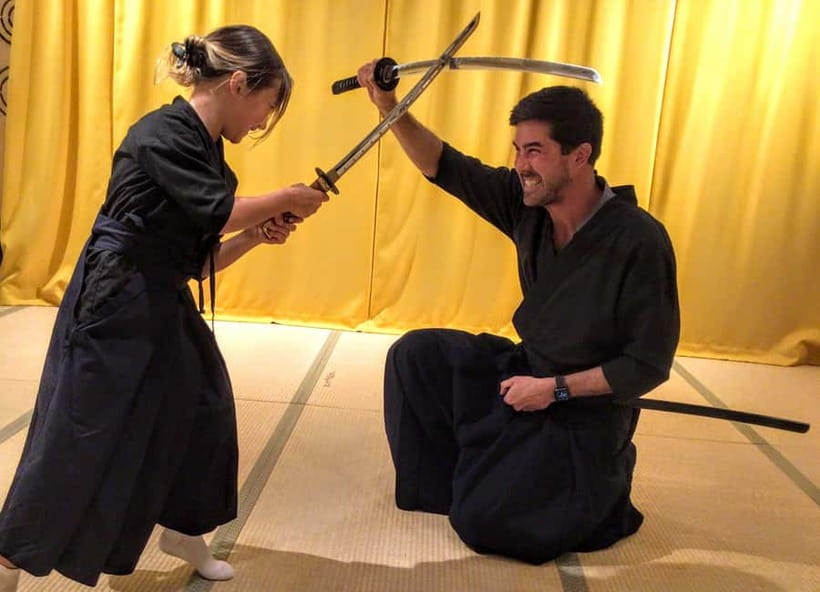
The sword part is the heart of it, and it’s built around a simple rhythm: watch a demonstration, then try. You’ll learn about the history of samurai and the basics of proper katana handling, then you’ll practice sword movements under instructor guidance.
What I like here is that the training isn’t framed as “be brave and swing.” It’s framed as “learn the form.” In multiple experiences, students described learning two kata sequences with the katana after being coached on technique. That matters for value, because it turns the lesson into something you can feel and repeat, not just something you try once.
You’ll also get help that stays in an instructor-friendly lane: you’re led in a way that supports beginners while still giving adults something satisfying. The instruction is in English, which is a big deal if you don’t want the experience to become a guessing game.
Consideration: sword practice can be a little intimidating at first, especially if you’re not used to controlled movement. The good news is that the group size stays small, so you’re not one of dozens being herded through.
Ninja Weapons Trial: Shuriken Target Practice
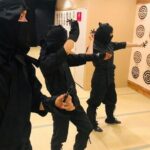
After the sword training, the experience shifts to the ninja side. You’ll try ninja weapons, including a shuriken target trial. This is a fun change of pace, and it also gives you a different kind of skill challenge than the kata practice.
Even if you’re not aiming to master anything, you’ll still walk away with something memorable: the moment the motion clicks and you’re actually hitting the target area. That practical feedback is what makes these trials stick in your memory.
If you’ve ever wanted a taste of ninja training without the action-movie chaos, this is a calmer way to do it. You get structure, a chance to try, and themed photo moments that match what you’re doing.
Museum Time at the Samurai and Ninja Museum
The hands-on lesson connects to a guided visit at the Samurai and Ninja Museum afterward. This is where the experience moves from “do” to “understand,” with a guided look that helps explain what you just experienced with your body.
From what’s described in real participant experiences, the museum portion is interesting, but the most fun moments often come from the hands-on parts: the sword coaching, the kata practice, the ninja shuriken trial, and the themed photos. Still, the guided museum time is useful because it gives you context. You leave not just with pictures, but with a clearer sense of how samurai and ninja culture gets interpreted in today’s Japan.
Your takeaway: if you like learning while you travel, the museum component will make your photos feel more grounded. If you’re purely there for the action and the costume, the main value is still the lesson.
The Photo Moments: Samurai and Ninja Backdrops That Don’t Feel Random
Let’s be honest: you’re going to take photos. The difference here is that the photo moments are built into the experience and tied to what you’re wearing and practicing.
You’ll get themed photo opportunities, including posing with swords in front of samurai-themed studio backgrounds and also ninja-themed setups. People tend to remember this part vividly because it’s the payoff: you see yourself as the character you’ve been acting as for the last couple of hours.
One small tip: treat the photos like part of the training, not an afterthought. If you follow the instructor’s stance suggestions during the sword practice, your posed shots will look cleaner and more natural.
Also, because the group is small, you typically won’t feel like you’re waiting forever for your turn. That makes the photo time more relaxed.
You can also read our reviews of more tours and experiences in Kyoto



What You’re Really Getting for $66
At $66 per person for a roughly 2-hour experience, you’re paying for more than access to a room. The value comes from the package: sword lesson coaching, costume items like hakama and helmets, armor elements, themed photo opportunities, and a ninja weapons trial.
If you priced these parts out separately in Kyoto, the bundled experience starts to make sense. You’re also paying for the instruction quality that comes from small group limits.
Here’s how I judge value for experiences like this:
- Does it include gear and setup? Yes.
- Do you get real instruction and practice time? Yes, with demonstration and kata practice.
- Do you get more than one “activity moment”? Yes, sword plus ninja shuriken plus museum time.
- Is the group size small enough to feel personal? It’s designed around that.
Potential drawback on value: it’s not a cheap souvenir workshop. If your goal is only one quick photo and you don’t want any physical practice, you might feel the price more than someone who wants the full lesson.
Timing, Group Size, and Why It Matters in Kyoto
This experience is designed for a manageable pace. It runs for about 2 hours, with starting times based on availability. The group is small: limited to 10 participants, and the experience has a stated maximum size overall (so you should expect a controlled setting rather than a mass activity).
That matters because sword lessons work better when you can see and be seen. The smaller the group, the easier it is for an instructor to correct your stance and how you hold the katana.
Language is English, and the instructors run the lesson with a clear, student-friendly approach, especially for beginners. If you’re traveling with kids older than the minimum age, the small-group format helps keep everyone on track.
Logistics note: transportation to and from the activity isn’t included, though it’s near public transportation. If you’re planning a day in Kyoto, this is one of those activities that fits well between other nearby sights.
Accessibility and Practical Comfort Points
This experience is described as wheelchair accessible and stroller accessible. That’s good to know in Kyoto, where some venues can be tricky. Still, remember that there’s a sword and ninja weapons trial component, so you’ll want to consider how comfortable your group members feel with movement and standing during parts of the lesson.
If you’re bringing very small children, the key rule is clear: children under 3 can’t enter the samurai venue. For families with toddlers, plan accordingly.
Who Should Book This Samurai Sword Lesson
I’d point this experience toward travelers who like doing, not just watching.
It fits best for:
- Families with kids who can handle a structured, guided activity and basic safety rules
- Adults who want a hands-on skill moment in Kyoto, not a passive museum day
- Beginners who want instruction in English and a clear kata structure
- Photo lovers who want the photos to match something real you learned
It may not be the best fit if:
- You’re hoping for a mostly quiet cultural talk with little physical practice
- You’re traveling with very young kids under the minimum age
- You want a long, slow deep-dive into Japanese weapons history (this is shorter and more action-focused)
Should You Book This Experience?
Book it if you want the full Kyoto costume-and-lesson combo: samurai gear, katana coaching, structured kata practice, ninja shuriken target time, and a guided museum visit, all in a compact 2-hour window. At $66, it’s a fair value when you consider the gear and the fact you’re actually practicing, not just posing.
Skip it if your priorities are only sightseeing photos, or if your group can’t handle any physical movement. Also skip if you’re traveling with a child under 3, since they can’t enter the samurai venue.
If you’re on the fence, here’s the simplest test: if the idea of wearing a samurai outfit and learning sword form sounds exciting, this is one of those rare activities where you’ll likely feel like the star of the show.
FAQ
How long does the Kyoto family-friendly sword lesson last?
The experience lasts about 2 hours.
What is included in the ticket?
You get a samurai sword lesson, use of hakama, a samurai helmet, samurai armor, themed photo opportunities, and a ninja weapons trial.
Is the instructor able to teach in English?
Yes. The instruction is provided in English.
Are there age limits for children?
Children under 3 years cannot enter the samurai venue.
Is the venue accessible for wheelchairs and strollers?
Yes. The experience is listed as wheelchair accessible and stroller accessible.
Does the price include transportation to and from the activity?
No. Transportation to and from the activities is not included.
How big is the group?
It’s a small group, limited to 10 participants.