REVIEW · KYOTO
From Kyoto: Japanese Drum Taiko Workshop in Osaka
Book on GetYourGuide →Operated by EE tour · Bookable on GetYourGuide
Taiko hits different when you actually play it. This workshop turns a short trip from Kyoto into a hands-on session with a pro demonstration, step-by-step teaching, and a fun finale where you play together. I especially like the cultural add-ons like writing wishes on a hachimaki and the end-of-class costume photo. The main drawback is timing: the train schedule is fixed, so you’ll need to arrive early and be ready to go.
You start at JR Kyoto Station and ride to the Osaka-area studio with your guide, then get a short private-car transfer to the venue. It’s a small group, limited to 15 people, and the instruction is in English, which matters when you’re learning movements and rhythms.
In 150 minutes (about 2.5–3 hours total including travel), you’ll hear taiko’s background, watch a powerful performance, learn basics from a friendly instructor, and then play a simple piece with the rest of the class. The finale includes a commemorative photo with traditional costume pieces like a happi and your hachimaki.
In This Review
- Key takeaways before you go
- A taiko workshop that starts at JR Kyoto Station
- Getting to Takatsuki: the short train hop and studio car ride
- Culture first: taiko history plus a hachimaki wish
- Watch the pros, then learn the basics like a drummer
- Your turn at the drums: learning rhythms and playing together
- The finale photo in happi and hachimaki
- What $112 buys: the value of an instructor-led taiko session
- Who this tour fits best (and who may want to pass)
- Booking tips so you don’t miss the start
- Should you book the Kyoto-to-Osaka taiko workshop?
- FAQ
- Where is the meeting point in Kyoto Station?
- How do I get to the studio from Kyoto?
- What language is the tour guide?
- How long does the experience last?
- What is included in the price?
- Who can participate?
- Is free cancellation and reserve & pay later available?
Key takeaways before you go
- A Kyoto-to-Osaka experience built around short, included transfers (train to Takatsuki, then a car to the studio).
- Pro demonstration first, then instruction—so you learn faster and understand what you’re aiming for.
- You write your own wishes on a hachimaki using simple calligraphy.
- Everyone plays in the finale, even if you’re not a musician.
- A real photo moment in traditional costume, including happi and hachimaki.
- Small group size (15 max) keeps the class friendly and manageable.
A taiko workshop that starts at JR Kyoto Station
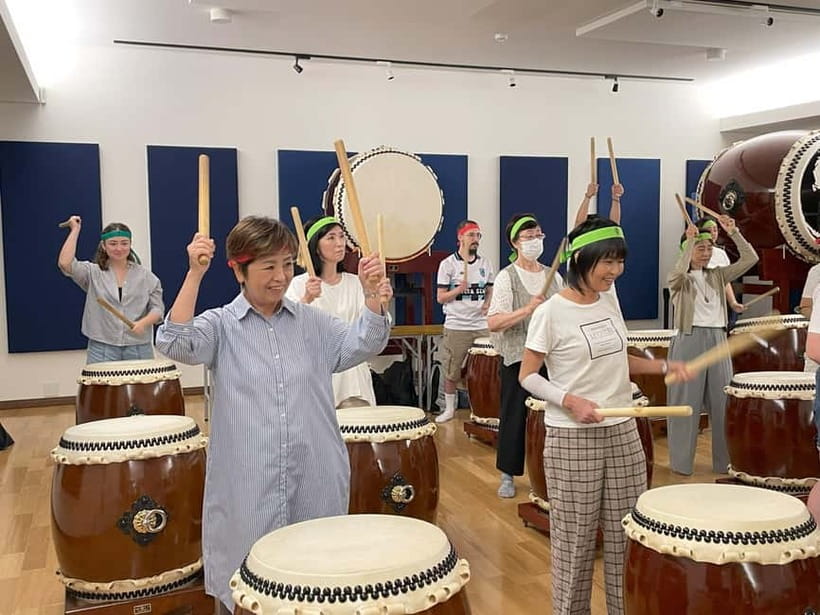
This is one of those Kyoto-based activities that lets you taste another side of Japan without turning your day into a logistics puzzle. The workshop is in the Osaka area, but your day begins at JR Kyoto Station with an English-speaking guide meeting you in person.
What you’re buying for your time is not just “watching a show.” You’re learning taiko basics in a structured class: a short history intro, a professional performance, instructor-led technique, then group practice that ends with everyone playing a simple piece.
If you like hands-on cultural activities, you’ll probably enjoy how active this is. Taiko is loud, physical, and rhythmic, so you’re fully involved from the start.
You can also read our reviews of more tours and experiences in Kyoto


Getting to Takatsuki: the short train hop and studio car ride
Here’s the part that makes or breaks the day: getting to the correct meeting point inside Kyoto Station. Meet at the Central Ticket Gate of JR Kyoto Station on the north side (the side where you can see Kyoto Tower). This is not the Shinkansen Central Ticket Gate.
If you’re coming by JR, exit through the Central Exit and head to the north side. If you arrive by subway, use the Central 1 ticket gate, then take Exit 6 to the ground level and walk along the station building—Kyoto Tower should be on your right.
Your guide holds a banner showing Taiko, Japanese Drum Experience, so you can quickly spot the right group. Plan to arrive 15 minutes early. The schedule is fixed, and you can’t join once the start time passes.
Transport-wise, the ride is short and included. You’ll take a JR train from Kyoto to Takatsuki Station (listed as about 12 minutes), then transfer by private car (listed around 5–10 minutes depending on the segment). Taxi from Kyoto isn’t recommended because it’s long and costly, and honestly, the included rail-and-car route is simpler.
Culture first: taiko history plus a hachimaki wish
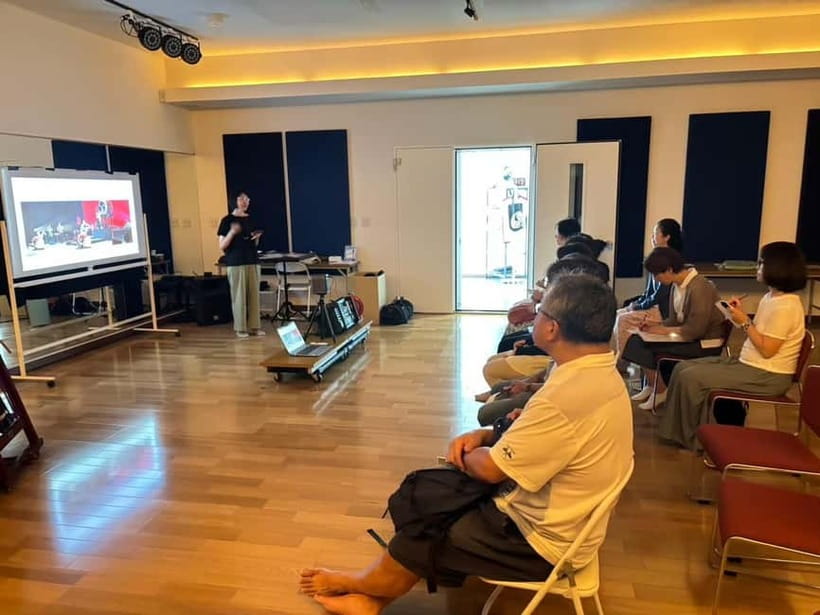
Before your hands ever touch the drum, you’ll get context. The class starts with a brief explanation of taiko’s history and why it matters in Japanese life. You’re not stuck reading a script—you’re getting the quick foundations so the rhythms feel meaningful rather than random beats.
Then comes a fun, very Japanese ritual-style moment: you do simple calligraphy to write a wish on a hachimaki, the traditional headband. It’s not presented like a craft fair project. The point is personal: you’re creating something you’ll wear and carry as part of the experience.
This part is also a great reset if you’ve been sightseeing all morning. You slow down for a moment, listen, and connect the activity to the culture instead of treating it like a pure performance class.
Watch the pros, then learn the basics like a drummer
After the history and the hachimaki moment, you’ll watch an impressive taiko demonstration by a professional player. This is one of the most valuable segments because it sets a reference point for sound, power, and timing.
Then your instructor steps in to teach basics: movements and techniques you’ll use right away. The instruction is aimed at beginners, and that matters, because taiko requires coordination, posture, and timing—not just swinging your arms.
In the class experience, you’ll hear names of the team. Michiko has been mentioned as part of the Kyoto pick-up and coordination, and the drumming instruction has been associated with Yusuke. English guidance makes it easier to follow the cues and correct small technique details while you practice.
You’ll likely find that the class structure makes progress feel natural. You watch, you learn, you practice the same idea repeatedly until your body starts to remember the rhythm.
Your turn at the drums: learning rhythms and playing together
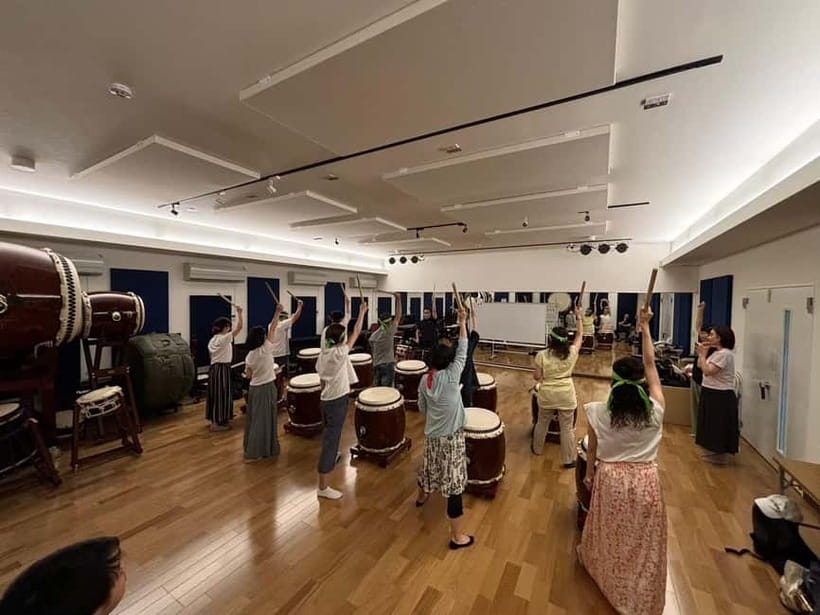
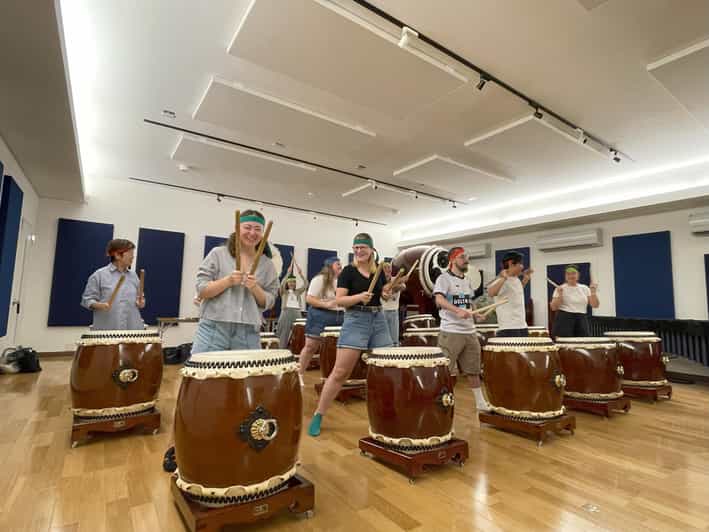
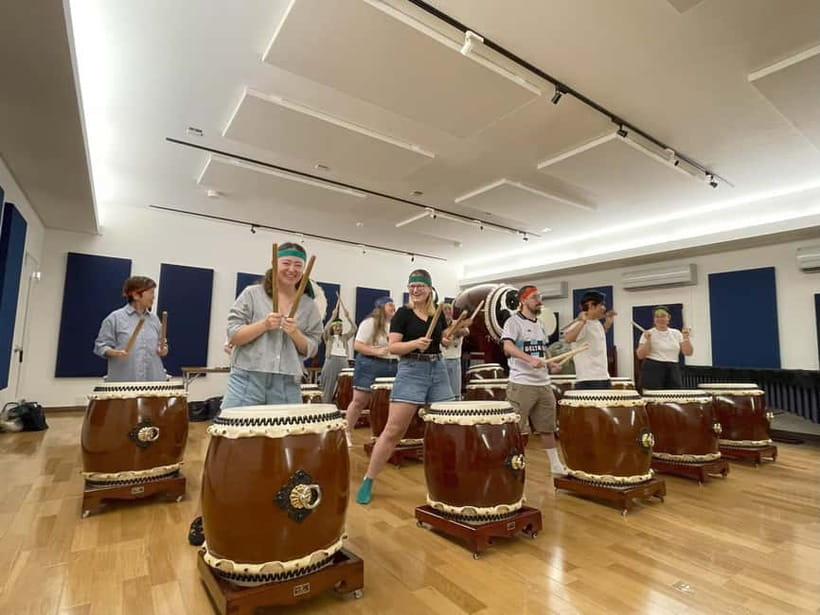
Once you start drumming, you get the heart of taiko: rhythm you can feel. The lesson focuses on basic movements first, then you build toward playing a short piece as a group.
The key word here is simple piece, but don’t expect it to be mindless. Several people note that it isn’t easy at first, yet it’s fun because the rhythms have clear structure and the instructor keeps the learning step-by-step. You practice enough that the final group playing feels like an achievement.
Also, you’re not just tapping once in the finale. Everyone joins in the drumming part, and the class is designed so you can play as a unit with the other participants.
In practical terms, you’ll want to be ready for physical drumming. Taiko uses big arm motion and strong hits, so wear comfortable clothing and expect that you’ll use energy. The payoff is that you’re part of the performance, not an observer.


The finale photo in happi and hachimaki
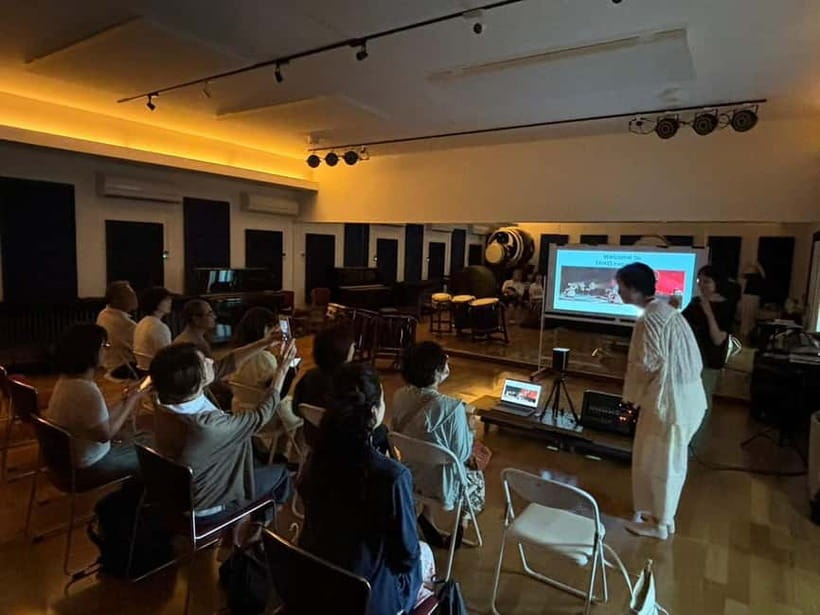
The end of the workshop is built for memories, not just completion. You’ll get a commemorative photo where you wear traditional costume pieces, including a happi and your hachimaki.
This matters more than it sounds. When you leave with the photo, you also leave with a tangible reminder of what you made—your wish on the headband—and what you learned—your rhythm on the drum.
If you’re traveling solo or with friends, the photo also gives you something easy to share without needing extra explanation. It visually sums up a hands-on afternoon.
What $112 buys: the value of an instructor-led taiko session
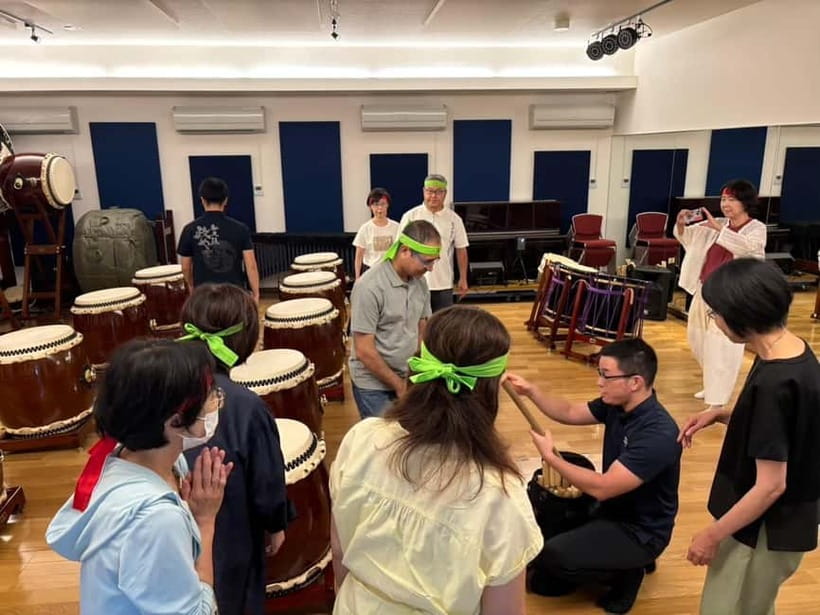
At $112 per person for 150 minutes, the value depends on what you want from a “class.” If you’re looking for a quick demo or a short cultural talk, you’ll likely feel like it’s too much.
If you want a guided, structured taiko experience with real instruction, it starts to make sense fast. Your price includes:
- the taiko experience itself with an instructor
- an English guide
- a hachimaki for the calligraphy and to use during the class
- the JR one-way ticket from Kyoto to Takatsuki
- the private car transfer to and from the studio
- the costume photo moment
That’s a lot packed into one booking. You’re not paying separately for transport and materials, and you get a guided flow from meeting point to finale. Small group size (max 15) also supports better learning, since the instructor can keep an eye on basics and technique.
So for me, the best way to judge this price is simple: you’re paying for an organized day where you play, learn, and leave with a keepsake, not just watch a performance.
Who this tour fits best (and who may want to pass)
This workshop is a strong match if you want:
- an interactive cultural experience where you can play the instrument
- English instruction that makes the movements understandable
- a structured experience that doesn’t require music knowledge
It’s also a decent family option for older kids, since the activity can’t be done by children under 7. If you’re traveling with a child who’s comfortable participating and following instructions, taiko can be a great way to keep the day engaging.
You might want to skip if:
- you hate strict timing and fixed transport schedules
- you need extra flexibility on the meetup time (you must arrive early)
- you’re hoping for a longer, performance-only show rather than a lesson and group playing format
One more practical note: on some days, single-participant bookings may not be allowed. If you’re traveling alone, check availability before counting on a solo spot.
Booking tips so you don’t miss the start
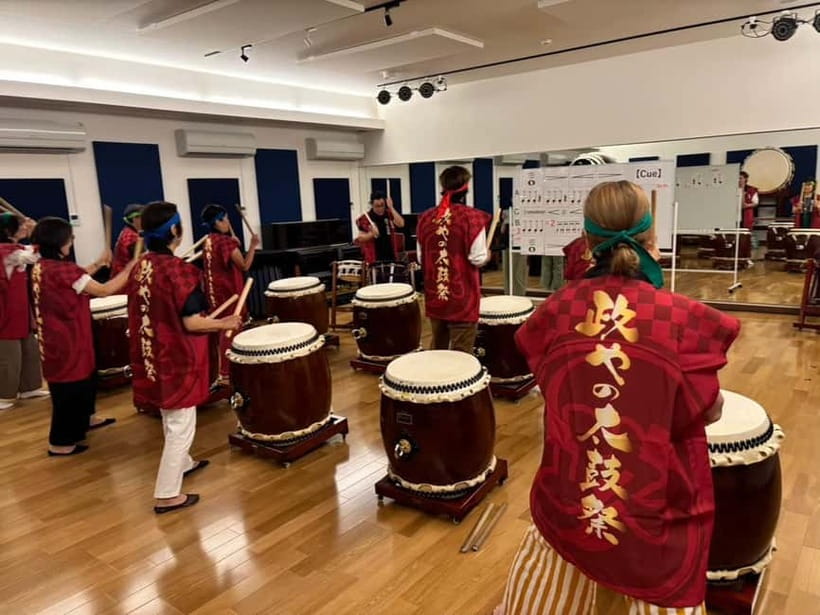
First, check the meeting point twice before you leave. Kyoto Station is big, and the guide will only be at the correct north-side Central Ticket Gate area.
Second, plan your day around the full duration. The activity runs 150 minutes, and the total time including travel is about 2.5–3 hours, so don’t schedule something tight right after. Returning early isn’t recommended, so give yourself breathing room afterward.
Finally, bring energy. Even if you’ve never played drums, the class format is beginner-friendly. Your biggest job is showing up on time, listening carefully to the cues, and being willing to try a louder, more physical form of rhythm than you may be used to.
Should you book the Kyoto-to-Osaka taiko workshop?
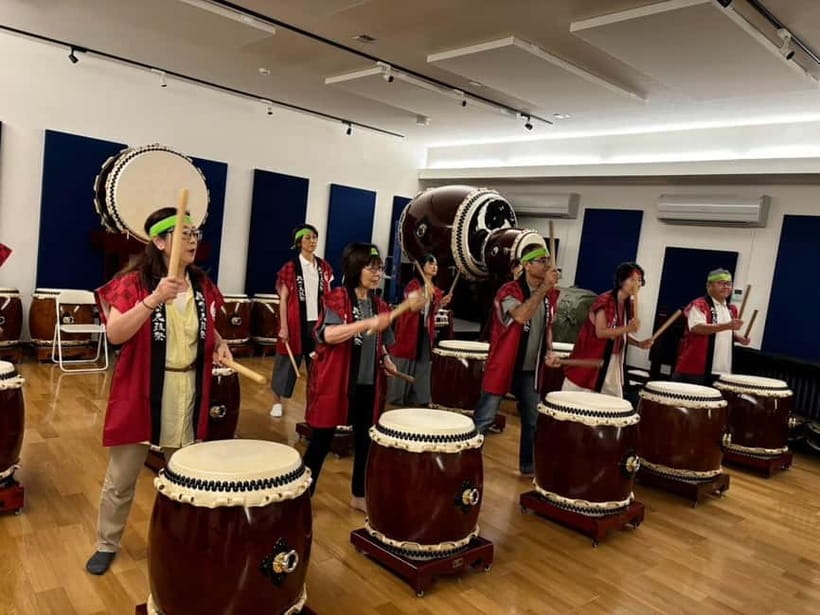
I’d book it if you want hands-on Japanese culture in a small group, with English guidance and a clear structure that leads to you playing the drum by the end. The combination of the taiko demo, the history context, the hachimaki calligraphy, and the costume photo makes it feel like more than a standard short class.
I’d hesitate if your schedule is fragile or you’re the type who gets stressed by fixed meet times and missed-start rules. This one rewards preparation.
If you’re in Kyoto and want a real taste of Osaka-area taiko without complicated planning, this workshop is a smart choice.
FAQ
Where is the meeting point in Kyoto Station?
Meet at the JR Kyoto Station Central Ticket Gate on the north side of the station, where you can see Kyoto Tower. The guide will be holding a banner for the Taiko experience.
How do I get to the studio from Kyoto?
You’ll take the included JR train from Kyoto to Takatsuki Station, then ride in the studio’s private car to the venue and back afterward.
What language is the tour guide?
The live tour guide offers English.
How long does the experience last?
The experience duration is 150 minutes, and it includes travel time (about 2.5–3 hours total).
What is included in the price?
It includes the Japanese taiko experience, the instructor and guide, a hachimaki (headband), a JR one-way ticket to Takatsuki Station, and private car transport to and from the studio and Takatsuki Station.
Who can participate?
Children under 7 cannot participate. Also, on some days single-participant bookings may not be available.
Is free cancellation and reserve & pay later available?
Free cancellation is available up to 24 hours in advance for a full refund. You can also reserve now and pay later to keep plans flexible.