REVIEW · KYOTO
Kyoto Ninenzaka : Japanese Calligraphy Class in Townhouse
Book on GetYourGuide →Operated by Kangetsu Kyoto · Bookable on GetYourGuide
One quiet afternoon can teach you more than you expect. This Japanese calligraphy class in a Kyoto townhouse near Kiyomizu Temple turns a culture stop into something you actually do with your hands.
What I like most is the focus on real shodō basics—brush pressure, stroke shape, and letter balance—taught in a way that doesn’t assume you know anything. I also love the practical reward: you finish with your own handwritten kanji to keep, not just photos. The main consideration is that it’s only 50 minutes, so it moves briskly through the fundamentals.
If you’re coming from sightseeing, plan for a bit of practical prep: you’ll need socks and clothes that can handle ink stains (you’re working with brush and ink). The class also isn’t set up for strollers, pets, or large bags, so keep things light.
In This Review
- Key highlights to know before you go
- Kyoto calligraphy in a townhouse by Kiyomizu: what you’re really booking
- Price and value: $49 for 50 minutes of hands-on technique
- Finding the meeting point on Ninenzaka without stress
- What happens in the 50-minute class: a step-by-step flow
- 1) Calligraphy basics and why it matters
- 2) Tools: brush, ink stick, inkstone, and paper
- 3) Brush handling and pressure control
- 4) Set up the paper and the meditative routine
- 5) Basic techniques: lines, strokes, dots, and sweeps
- 6) Writing basic kanji with balance and placement
- 7) Seasonal themes and cultural expressions
- The classroom vibe: calm focus with real instructor attention
- What you take home: a kanji keepsake that’s more than a photo
- Practical tips so your class goes smoothly
- Who this class is best for
- Should you book Kyoto Ninenzaka: Japanese Calligraphy in Townhouse?
Key highlights to know before you go
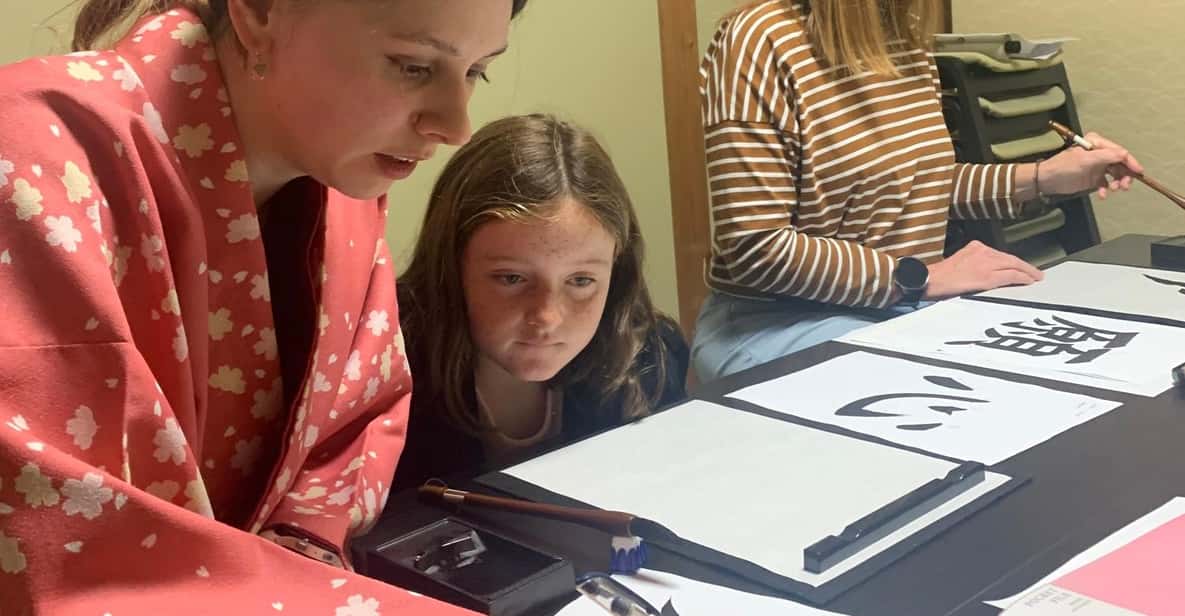
- True shodō instruction with step-by-step brush handling and stroke practice
- Townhouse setting near Kiyomizu/Ninenzaka, ideal for a calm break from the crowds
- Beginner-friendly guidance with frequent chances to ask questions
- You prepare the writing setup (paper, tools, and the meditative routine)
- You produce a take-home kanji piece as a souvenir you’ll actually value
- Small class feel that keeps the pace friendly and the attention personal
Kyoto calligraphy in a townhouse by Kiyomizu: what you’re really booking
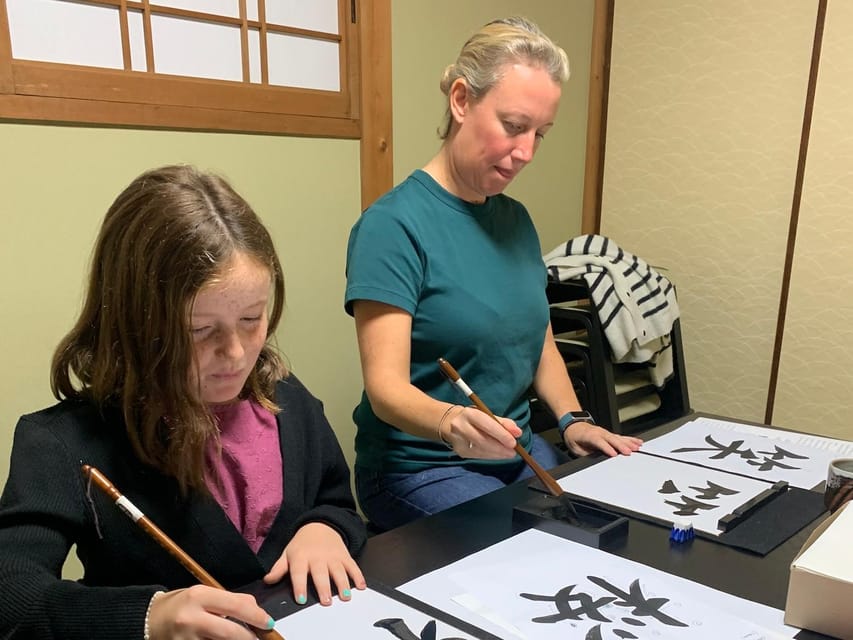
This isn’t a “watch and smile” workshop. You’re learning Japanese calligraphy the way it’s meant to be learned: through careful technique and repetition, with an instructor close enough to correct your grip and brush pressure.
The location also matters. The meeting point is near Kiyomizu Temple, at the end of the alley next to Starbucks on Ninenzaka. That means the class plugs neatly into a real Kyoto day—Ninenzaka stone lanes, Kiyomizu nearby, and that slow, walkable energy you only get in this part of town. You’re not commuting to some far-off studio; you’re stepping into a quieter pocket of the city.
The teaching style seems designed for first-timers. You don’t need Japanese or an art background. You’ll still learn the fundamentals—tools, handling, and the basic brushwork that makes shodō look right on the page.
You can also read our reviews of more tours and experiences in Kyoto

Price and value: $49 for 50 minutes of hands-on technique
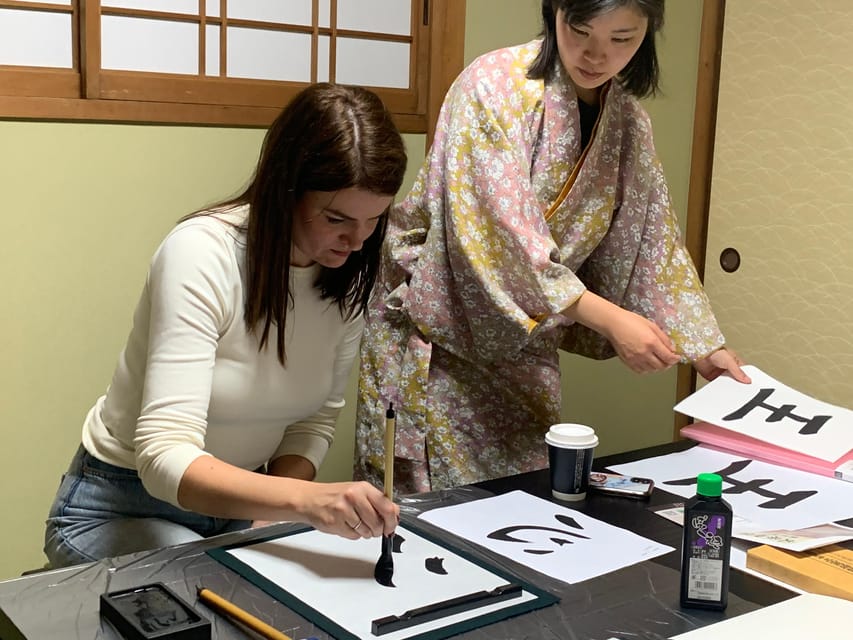
At $49 per person for about 50 minutes, the cost makes sense if you compare it to how much focused instruction you get in a short time. Calligraphy can take hours to get the feel of it, and most people don’t have that time on a Kyoto itinerary.
Here, you’re not paying mainly for the tools or a paper souvenir—you’re paying for the correction and guidance. The class includes experienced instructors, careful coaching, and an original booklet about calligraphy. That booklet is especially valuable because it gives you something to refer back to after you get home, when the memory of the steps starts to fade.
If you’re hoping for a full multi-hour artistic session, this may feel short. But for most visitors—especially those pairing it with nearby sightseeing—50 minutes is a sweet spot. You leave with a finished piece and a clear understanding of how to practice the basics.
Finding the meeting point on Ninenzaka without stress
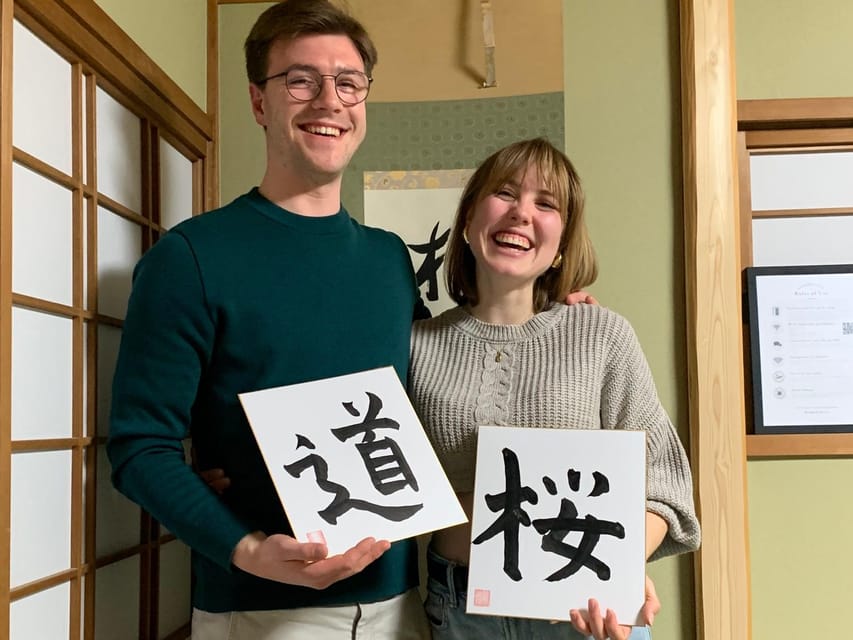
You’ll meet near Kiyomizu Temple at the end of the alley next to the Starbucks on Ninenzaka. That’s helpful because it anchors you in a landmark area. Still, Ninenzaka lanes can twist, and you don’t want to arrive late while you’re hunting.
My practical advice: treat the meeting point like a fixed appointment. Give yourself extra time from Kiyomizu, then slow down as you approach Ninenzaka. If you’re already in the neighborhood, it’s easy to arrive early, breathe for a minute, and get settled before the class starts.
If you’re booking for the day before or the same day, there’s a note that they may not accommodate your request in some cases, and the class may be conducted in English. That’s not a drawback—just know the language plan can be adjusted depending on your reservation timing.
What happens in the 50-minute class: a step-by-step flow
The session is built like a guided sequence. You move from context to tools to hands-on practice, then back to paper and technique, and finally into writing basic kanji with attention to balance.
1) Calligraphy basics and why it matters
You start with an introduction to calligraphy and its background. You’ll learn the cultural context and the basic ideas behind shodō, including how calligraphy connects to Japanese traditions. Even if you’ve never taken an art class, this part helps you understand what you’re aiming for: strokes aren’t random decoration. They’re controlled expression.
This matters because it changes how you look at your own work. Instead of thinking, I can’t draw, you start thinking, I’m controlling pressure and shape.




2) Tools: brush, ink stick, inkstone, and paper
Next comes tools and how to use them and care for them. The class covers the essential kit: brushes, ink sticks, inkstones, and writing paper. Knowing what each tool does saves you from common beginner frustration. For example, ink isn’t just “ink”—it’s part of the line quality.
They also explain how to handle and maintain the materials, which is great if you plan to keep practicing later. A lot of beginners feel like they’re guessing; here, you’re given a method.
3) Brush handling and pressure control
Then you work on how to hold the brush and how to adjust brush pressure. This is the part that turns learning into muscle memory.
You’ll practice the feel of the brush and learn how pressure changes what the stroke does. Once you get this, everything else gets easier: the brush finally starts responding the way you expect.
4) Set up the paper and the meditative routine
Before you write, you learn how to prepare for calligraphy—how to use the writing paper and paperweight. Even though the session is short, the preparation is treated as a calm step, not a rushed setup.
That matters more than it sounds. When the paper is properly positioned and your body is ready, your strokes look steadier. It also makes the class feel like a mental reset in the middle of a day of walking.
5) Basic techniques: lines, strokes, dots, and sweeps
Now you practice core brushwork: drawing lines, making strokes, and shaping dots or sweeps. This is where the instruction becomes practical. You aren’t asked to write a full composition immediately. You build the building blocks.
This is also why the workshop works for beginners. You get repeated chances to try again while you’re still learning the rules of the brush.
6) Writing basic kanji with balance and placement
Once the basic strokes make sense, you move to writing simple kanji. You’ll focus on vertical and horizontal balance and on letter placement.
This part is crucial. Many first-timers think calligraphy is about making the “right” lines. But in shodō, the spacing and balance are what makes the character look intentional. When you get this guidance, the character looks better even if you’re still learning control.
7) Seasonal themes and cultural expressions
Finally, the class deepens your understanding of Japanese culture through seasonal themes and expressions connected to calligraphy. This isn’t just trivia. It gives meaning to the marks you’re making, which is why your finished piece feels more personal than a random souvenir.
The classroom vibe: calm focus with real instructor attention
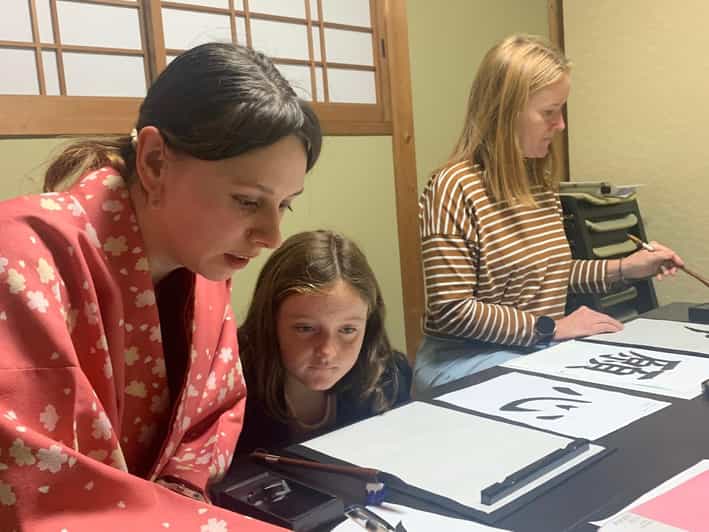
The atmosphere is described as peaceful, and that shows in the way the class is structured. There’s a tone of calm and careful instruction. The pacing also feels beginner-friendly, especially because the class tends to be small, which means more time for questions.
In the feedback, the most consistent praise is that the teachers are both kind and patient, and that instruction is specific—not vague. You’re not just told what to do; you’re guided through technique until your stroke looks closer to what they’re aiming for.
Also, you get an English host/greeter, which matters if you’re nervous about explanations. And even if the class runs in English rather than another format on some reservation timings, you’re not left out.
What you take home: a kanji keepsake that’s more than a photo
You get to keep your calligraphy, which is the point of doing the workshop at all. A take-home piece becomes a personal memory because you made it. Even if it’s not “perfect,” it’s yours—proof that you followed the process and learned something real.
The included original booklet about calligraphy is a smart add-on. It helps you remember the basic steps and tools, so your souvenir doesn’t fade into a single weekend activity.
There’s also an option to pay for a kimono (a 2-piece type kimono), but it’s not included. If you want the full Kyoto feel, it could be a fun extra. If you’re visiting for technique and time efficiency, you can skip it and focus on getting the strokes right.
Practical tips so your class goes smoothly
Here’s how to make it easy on yourself.
- Bring socks. You must have them. If you don’t, they provide socks with a fee.
- Wear clothes that can get dirty. Ink mishaps happen. Don’t show up in your best outfit.
- Keep your kit simple. No luggage or large bags, and no selfie sticks.
- Avoid noise and distractions. Smoking indoors is not allowed, and making noise isn’t allowed either.
- Plan for limited comfort items. Pets and baby strollers aren’t allowed, and luggage restrictions are strict.
- Think about timing with kids. The class isn’t suitable for children under 10.
If you’re the type who likes to travel light, this class fits your style. It doesn’t ask for a lot of gear. It asks for a little readiness and a steady attitude.
Who this class is best for
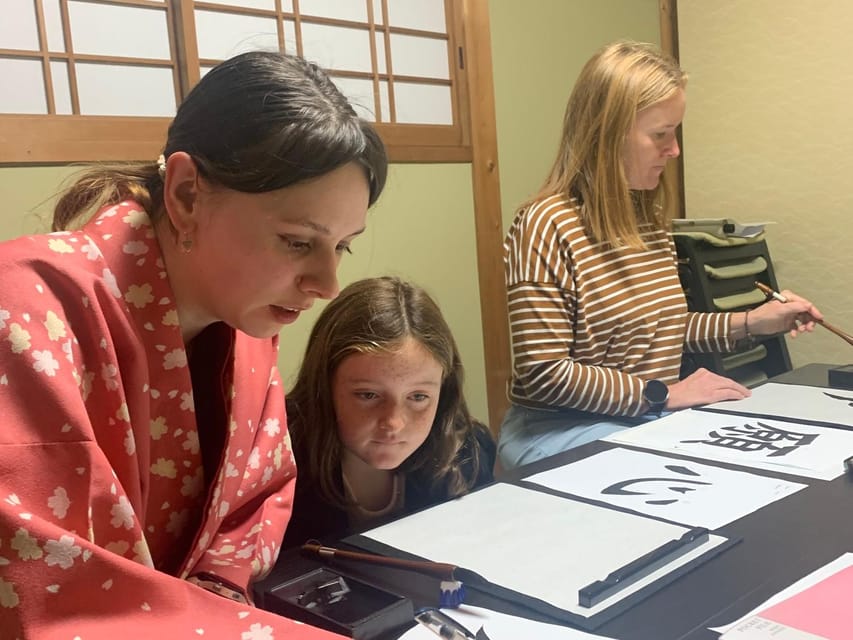
This is ideal if you want a cultural activity that’s interactive, not passive.
You’ll probably love it if:
- You’re a first-time Kyoto visitor and want something close to Kiyomizu/Ninenzaka that breaks up the day.
- You like slow, focused activities where instructions matter.
- You want a souvenir with meaning, not just a postcard.
- You enjoy beginner-friendly skills where correction is part of learning.
It’s also a good match if you’re traveling solo or as a couple. The workshop format and small-group feel make it easy to participate without performing.
If you’re traveling with small kids or you rely on strollers or large bags, the rules may make it a poor fit.
Should you book Kyoto Ninenzaka: Japanese Calligraphy in Townhouse?
Book it if you want a calm, hands-on skill in the middle of a classic Kyoto neighborhood. For $49 and 50 minutes, you get real technique, English support, an included booklet, and a take-home kanji piece. That’s strong value when you consider you’re learning a craft, not just watching it.
Skip it if you’re looking for a long art session, or if your travel setup can’t handle the sock and “no large bag” rules. Also, if you dislike ink-related mess risk, wear caution and expect your clothes to be the only thing you regret.
If you want one of your Kyoto days to end with something you made, this is a smart choice.