REVIEW · KYOTO
Best of Kyoto: Red Gates of Fushimi Inari & Kiyomizu Temple
Book on GetYourGuide →Operated by Kyoto Fun · Bookable on GetYourGuide
Red gates at dawn feel like a history shortcut. This early-bird Kyoto walk pairs Fushimi Inari’s torii tunnels with Kiyomizu-dera’s famous temple views, then rolls into classic Higashiyama streets when the day is still quiet.
I especially like how the tour is set up to feel stress-free: train and taxi costs and entrance fees are covered, so you’re not hunting tickets mid-morning. I also like the way the guides bring Buddhism and the sites to life with clear, engaging explanations, with guides such as Shanda and Diana praised for being upbeat and giving time to take photos.
One thing to think about: there are quite a few stairs and you’ll likely clock 10,000+ steps, and the early start can mean some shops are still closed along the way. If you pace carefully and wear good shoes, it’s very doable for most active travelers.
In This Review
- Key things to know before you go
- Why the Inari Station meetup matters for your whole morning
- Fushimi Inari Taisha: torii gates, sacred paths, and why your timing counts
- Kiyomizu-dera: the iconic temple and the viewpoints you came for
- The photo stop: a pause that actually helps your pictures
- Higashiyama, Sannenzaka, and Ninenzaka: walking the preserved streets for real atmosphere
- The included transport: fewer decisions, less stress
- Price and value: what $58 buys you in practical terms
- Comfort checklist: shoes, stairs, and how to keep energy up
- Ending at % ARABICA Kyoto Higashiyama: coffee as a reward, not an afterthought
- Who this tour fits best (and who should look elsewhere)
- Should you book this Best of Kyoto morning tour?
- FAQ
- How long is the tour?
- Where exactly do I meet the guide?
- Are train tickets and taxi fares included?
- Are entrance fees included?
- Is food included?
- What languages are the guides?
- Is this tour suitable for mobility impairments?
Key things to know before you go
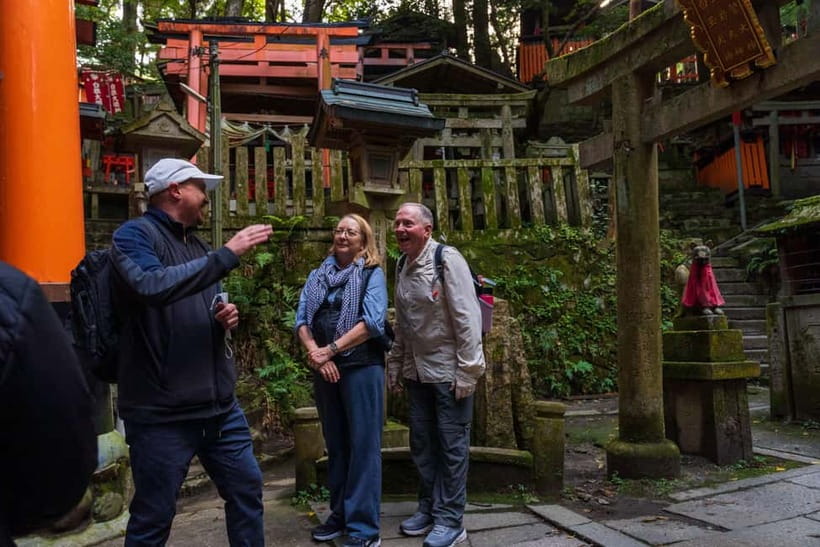
- Early morning start helps you see the torii and temple areas with fewer people in the background.
- Guide-led stops at Fushimi Inari and Kiyomizu-dera keep you oriented instead of wandering.
- Entry fees plus transport (train fares and a taxi) are included, so your budget stays predictable.
- Photo stop built in gives you a breather to capture the red gates and Kyoto views.
- Finish at % ARABICA Kyoto Higashiyama for an easy coffee or light breakfast after walking.
- Stairs are real: comfortable shoes are not optional.
Why the Inari Station meetup matters for your whole morning
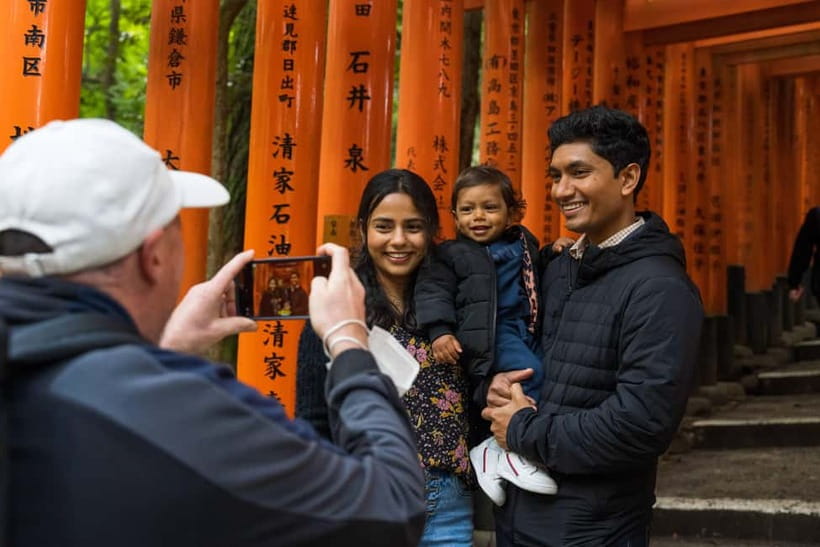
This tour starts at JR Inari Station, right in front of the station entrance (near a small mailbox and a public phone). It’s a smart meeting choice because it drops you right at the edge of Fushimi Inari’s world—no long transfer and no “how do we get there?” moments.
You’ll get a guided route that’s timed to match the morning flow. That matters in Kyoto. Even when a site is big and famous, the early hours can change the feel of the place: you can actually look up, absorb details, and take photos without battling a wall of people.
Group size is kept small or private, which helps the guide manage pacing and makes it easier to hear explanations. Language options include English and French, and it’s a live guide rather than audio-only.
You can also read our reviews of more tours and experiences in Kyoto.



Fushimi Inari Taisha: torii gates, sacred paths, and why your timing counts
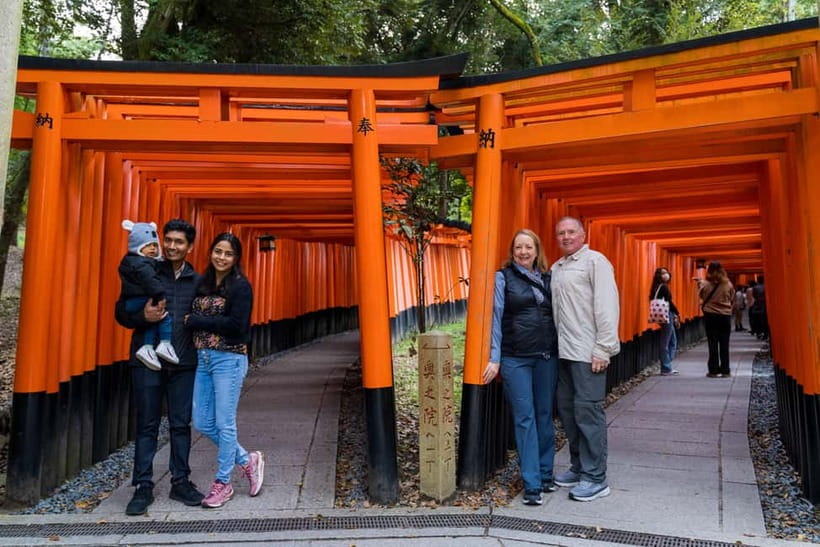
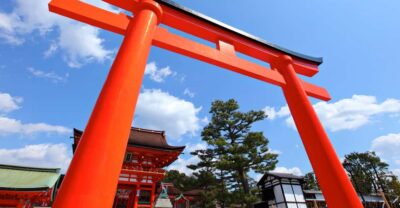
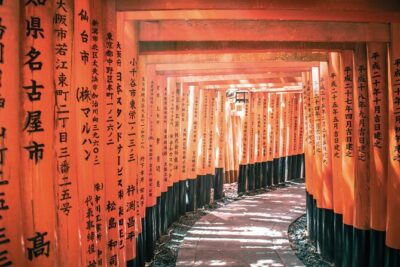
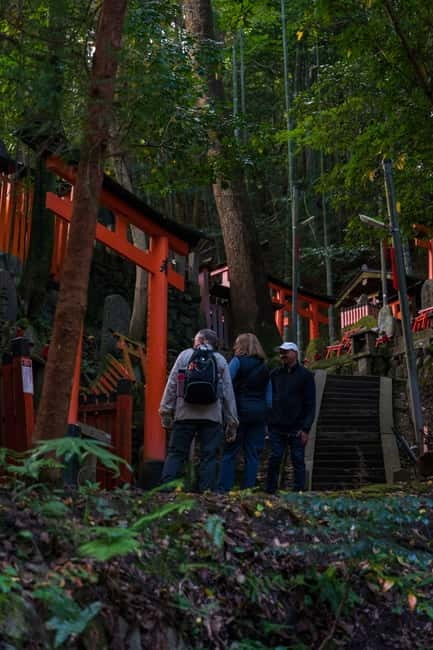
Your first major stop is Fushimi Inari Taisha, guided for about 50 minutes. The headline here is the torii gates. Walking through them early gives you a different mood than midday crowds. Light stretches across the red structure, shadows deepen, and the whole scene feels more devotional than touristy.
What you’ll do in this portion is exactly what most people hope for but often don’t get: you’re not just walking in straight lines. You’re learning what you’re looking at. The guide explains the historical and cultural significance tied to the shrine and the Buddhist context around the area. That turns the experience from “pretty gates” into “I understand what this place is doing here.”
You’ll also be moving. Comfortable clothes and shoes are important because even within a 50-minute guided block, torii paths involve stairs and uneven footing in places. Plan on the fact that your body will start warming up immediately, not at the end of the tour.
A practical tip: bring a water bottle if you can, even though drinks aren’t included. You’ll want to sip during the walk, especially if you’re sensitive to morning walking heat.
Kiyomizu-dera: the iconic temple and the viewpoints you came for
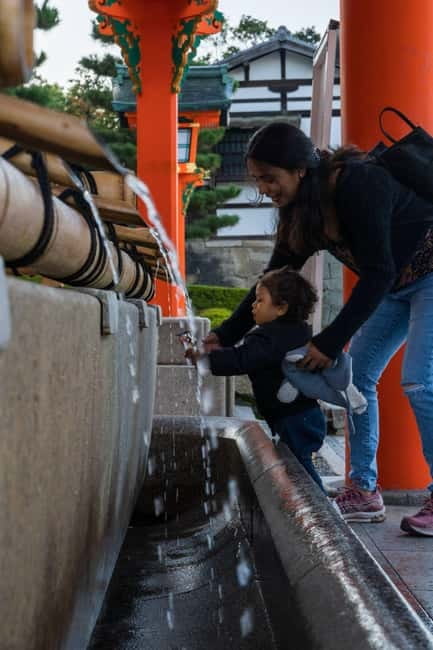
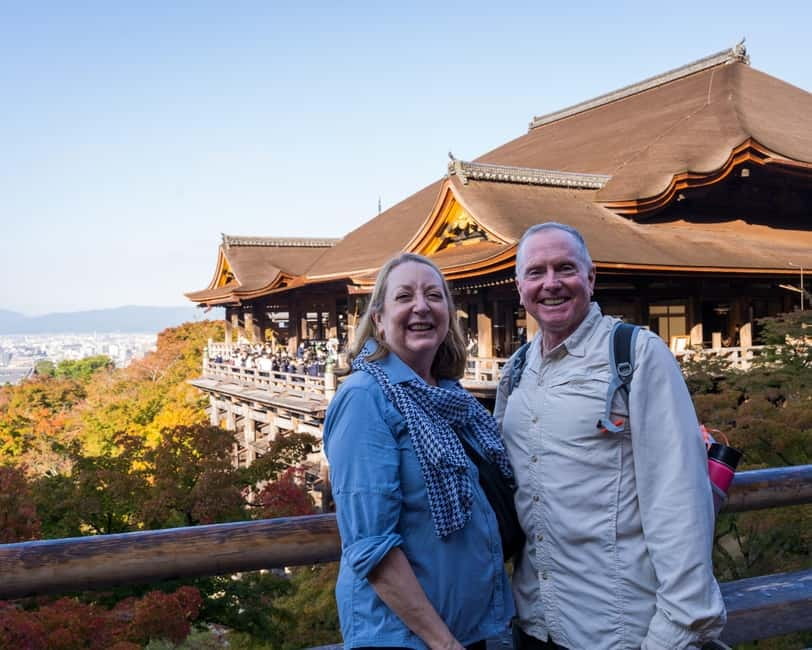
Next comes Kiyomizu-dera, guided for about 1 hour. This is Kyoto’s big recognizable moment: the temple’s visual impact is why so many people put Kiyomizu-dera on their first trip list.
In the best version of this experience, you arrive not rushed, not jostled, and with a guide who helps you notice more than the main postcard angle. That’s where having a live guide pays off. You’ll get context on what you’re seeing—especially around how Buddhism connects to the temple’s role in the city’s spiritual life. When explanations are clear, the carvings, the layout, and the overall purpose of the space start to make sense.
The views from Kiyomizu-dera are part of the reason people return year after year. From there, Kyoto looks layered—streets, roofs, and hills stacked like a slow-moving panorama. In the early hours, your view often feels cleaner too, because the day’s haze and crowds haven’t fully built up yet.
Drawback to plan around: you’ll keep climbing and stepping during the whole tour. This stop alone is memorable, but it’s also physically demanding, especially if you’re carrying a camera bag or you’re not used to stairs.
The photo stop: a pause that actually helps your pictures
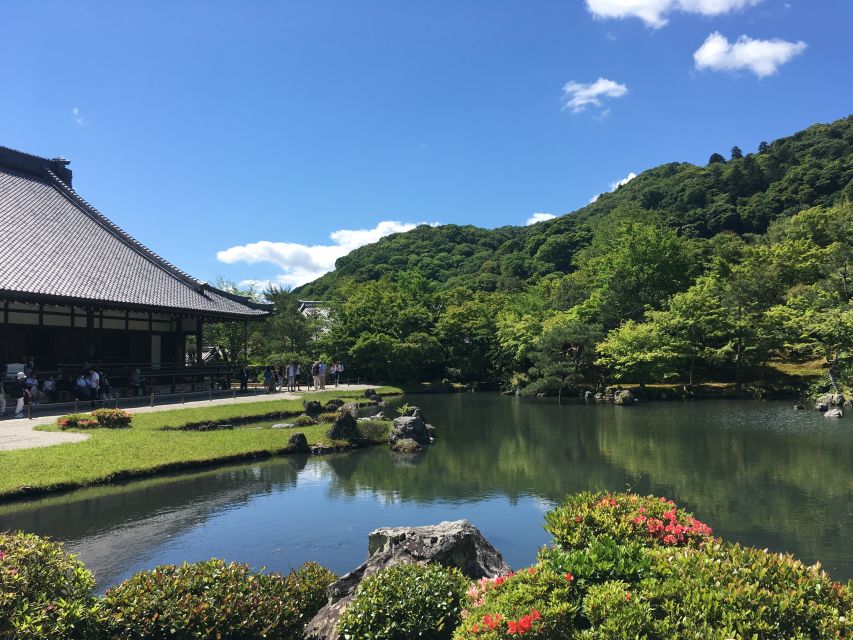
Between the major stops, there’s a 30-minute photo stop. This is a nice piece of the puzzle because it’s not left to chance. You get time to slow down, choose angles, and frame shots that show the red, the temple geometry, and the Kyoto views without feeling like you have to sprint.
If you care about photos, this is where you’ll appreciate guides who know how to handle timing. Some guides—like Shanda—have been praised for giving time to take photos calmly rather than rushing everyone along.
Use this time wisely:
- take a few shots quickly so you don’t miss your best light,
- then take a second pass to get the view you actually want,
- and finally, step back and look with your eyes for a minute. The gates and the viewpoints reward a moment of stillness.
Higashiyama, Sannenzaka, and Ninenzaka: walking the preserved streets for real atmosphere
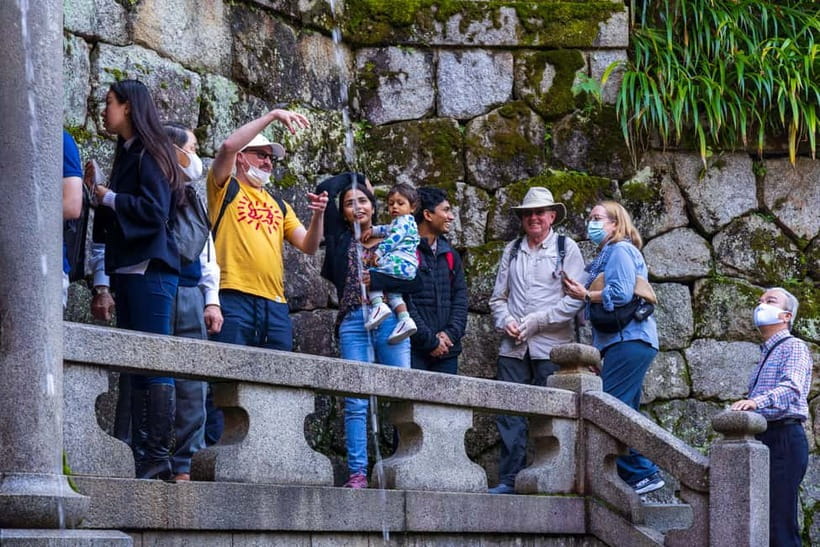
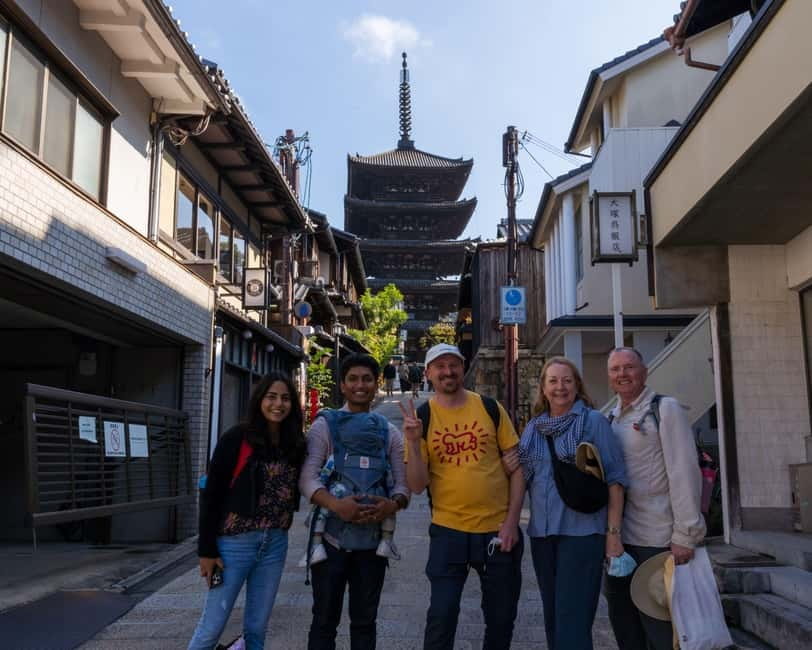
Part of the payoff of a “best of Kyoto” route is that it connects the big icons to the surrounding neighborhoods. Here, that means time in the preserved Higashiyama area, including Sannenzaka and Ninenzaka.
These streets are famous for a reason. Narrow lanes lined with traditional-style buildings create a feel you don’t get when you skip the neighborhood pieces. Even if you’re only there for a short window, the character is strong: it’s the kind of place where you’ll slow your pace automatically because every corner looks like it belongs on a screen.
One note: because this is an early bird tour, you might find shops that you expected to be open are still closed. It’s a small trade-off for fewer crowds in the main sightseeing zones.
If you’re the type who likes to browse cafés and little stores, you’ll still enjoy the walk. Just treat it like a sightseeing corridor first, shopping second.

The included transport: fewer decisions, less stress
A hidden value in this tour is how it handles movement between zones. You’ll be using train fares and a taxi for the transfer from Fushimi Inari to Kiyomizu-dera, and those costs are included. That reduces decision fatigue and keeps your morning on rails.
You also won’t be juggling entrance tickets. Entry fees are covered, which matters at big-name sites where ticket lines and payment methods can eat time.
If you like your travel days tidy—show up, walk, learn, eat—this setup matches that style.
Price and value: what $58 buys you in practical terms
At $58 per person for about 3 hours, the value depends on what you’d otherwise do on your own.
Here’s what you’re getting without extra spending on the day:
- guided time at Fushimi Inari Taisha
- guided time at Kiyomizu-dera
- a photo stop
- train fares and taxi fare
- entry fees
- train-and-walk route support through the morning
What’s not included is also clear: food and drinks. You’re expected to buy what you want, and the tour conveniently ends at a coffee stop, so you can treat it like breakfast-with-a-view.
In my opinion, the best way to see the value is to ask: do you want to spend your morning planning transfers and figuring out ticketing, or do you want a guide to do the logistics? If you’re in Kyoto for the first time and you want to hit the big icons efficiently, this price starts to look reasonable fast.
Comfort checklist: shoes, stairs, and how to keep energy up
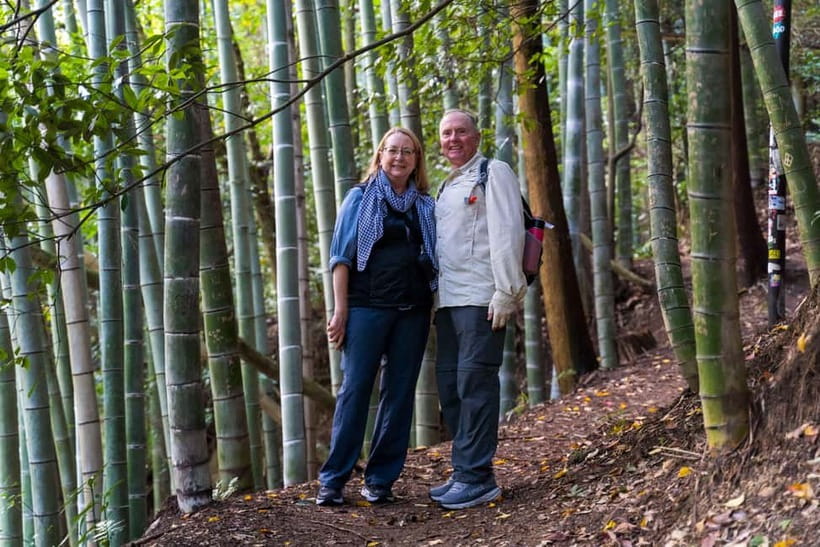
This tour involves a lot of walking and stairs. The expectation is that you’ll do 10,000 or more steps. That doesn’t mean “stop early” is required. It means you should plan your body.
Bring:
- comfortable shoes (not “cute for photos” shoes)
- comfortable clothes you can move in
If you wear insoles, consider them. If your feet get sore easily, use this day as a reason to pack good socks. You’ll be happier in the viewpoints when your legs aren’t screaming.
Also, you can make the morning easier by grabbing a simple breakfast before you meet, then letting the tour’s end be your coffee reward.
Ending at % ARABICA Kyoto Higashiyama: coffee as a reward, not an afterthought
The tour finishes at % ARABICA Kyoto Higashiyama. That’s a smart close because it gives you an immediate place to sit down, cool off, and process what you just saw.
You’ll also get local guide tips at the end—useful suggestions for restaurants, cafés, and bars. This is the kind of information that saves you time later, because you can choose where to go next without guessing.
Order something easy, take a breather, and then use your remaining Kyoto time with clearer priorities.
Who this tour fits best (and who should look elsewhere)
This is a strong match if you:
- want Fushimi Inari and Kiyomizu-dera in one efficient morning
- like the idea of an early start to beat crowds
- enjoy guided explanations that add meaning beyond the scenery
- want a tidy package with entry fees and transport included
It’s less ideal if you:
- have mobility impairments, since the tour involves stairs and lots of steps
- need a very slow pace with minimal walking
Should you book this Best of Kyoto morning tour?
Book it if you want the classic Kyoto duo—Fushimi Inari and Kiyomizu-dera—with less stress and better timing. The early-bird plan plus included costs (entry fees, train fare, and taxi) makes it feel efficient without being rushed.
Skip or rethink if you’re not comfortable with stairs, or if you’d rather spend your morning wandering independently at your own pace. Also consider that some shops along the preserved lanes may not be open right away, so don’t bank on heavy shopping during the walk.
FAQ
How long is the tour?
The tour lasts about 3 hours.
Where exactly do I meet the guide?
Meet your guide in front of the entrance to JR Inari Station at the time on your voucher, near a small mailbox and a public phone.
Are train tickets and taxi fares included?
Yes. Train fares and taxi fares are included, including the taxi transfer from Fushimi Inari to Kiyomizu-dera.
Are entrance fees included?
Yes. Entry fees are included in the tour price.
Is food included?
No. Food and drinks are not included.
What languages are the guides?
The live tour guide is available in English and French.
Is this tour suitable for mobility impairments?
No. It is not suitable for people with mobility impairments due to stairs and walking.
If you want, tell me your travel dates and whether you prefer a faster pace or lots of photo time, and I can help you pick a start time that fits your day.