REVIEW · KYOTO
Guided Gion Tour: Explore Kyoto’s Historic Geisha District
Book on Viator →Operated by Ahmed Abu Tayeh · Bookable on Viator
Gion can feel like a living postcard. This private guided tour helps you walk the historic lanes with a real sense of what you’re seeing, from Yasaka Shrine lantern vibes to Hanamikoji’s classic machiya streets. If you’re aiming to spot geisha or maiko in the wild, the timing and the route matter.
I especially love the photo-friendly stop list and the way a guide like Ahmed Abu Tayeh (and guides such as Ahmed and Mat) can turn casual sightseeing into actual cultural context. You’ll get time to ask questions as you go, so the walk feels like conversation, not a lecture.
One possible drawback: geisha or maiko sightings aren’t guaranteed, and on a very hot day the pace may feel quick for some people. If you’re sensitive to heat, plan for water and a comfortable speed with your guide.
In This Review
- Key things you’ll notice on the walk
- Gion with a guide: why this part of Kyoto is worth paying for
- Price and what you’re really getting for $350 (up to 8 people)
- Booking timing: when to reserve (and why 40 days matters)
- Pickup, getting there, and staying flexible during the walk
- Itinerary walk-through: what each stop gives you (and what to watch for)
- Stop 1: Gion streets and the Hanamikoji atmosphere
- Stop 2: Izumo no Okuni Statue and the arts link
- Stop 3: Chion-in Temple gate and what a big gate teaches you
- Stop 4: Yasaka Shrine and its lantern-lit energy
- Stop 5: Maruyama Park for a breather
- Stop 6: Hanamikoji Street, machiya houses, and your main photo spine
- Spotting geisha or maiko: what you should expect (and what you shouldn’t)
- How the guides can change the whole experience
- Best time to go: early morning vs night streetlights
- Who this tour fits best
- Should you book this Gion guided tour?
- FAQ
- FAQ
- How long is the guided Gion tour?
- Is this tour private, and how many people can join?
- Is pickup included, and do I get a ticket on my phone?
- What stops are included on the route?
- Will I meet or spend time with a geisha or maiko?
- Is cancellation free, and does weather affect the tour?
Key things you’ll notice on the walk
- Private group up to 8 means you can move at a pace that fits your crew
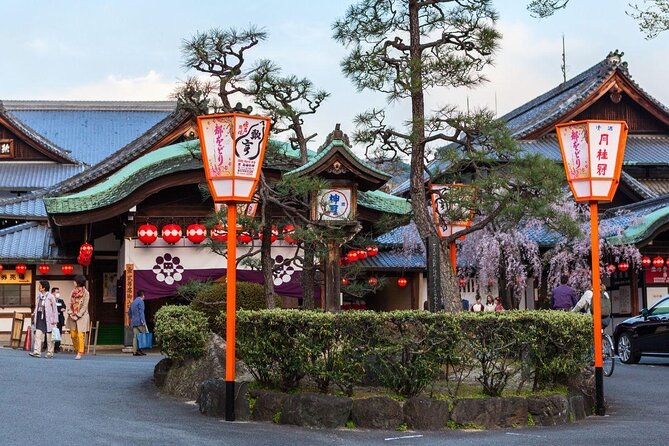
- Yasaka Shrine + Maruyama Park + Hanamikoji Street cover the most “Kyoto” postcard angles
- Built for spotting, not guaranteed meetings with geisha or maiko
- Two-hour format works well even if you’re juggling a packed Kyoto itinerary
- Pickup and a mobile ticket make the logistics simpler than DIY wandering
- Free admission at each listed stop keeps your spending predictable
Gion with a guide: why this part of Kyoto is worth paying for
Gion is Kyoto’s best-known geisha district for a reason. It’s not just the idea of elegance; it’s the preserved street layout, the old wooden buildings, the shrine-and-park rhythm, and the way the area changes with light. Walking it with a guide is how you start noticing the details that you’d miss on your own.
You’re also paying for something practical: the tour is designed to help you find the spots where you’re most likely to see geisha or maiko as you move through the district. That’s a big difference from wandering randomly and hoping.
The other “value” piece is Q&A time. When you can ask questions on the spot, you stop collecting trivia and start understanding local customs—like why a shrine visit looks the way it does, or what makes one street feel distinctly different from another.
You can also read our reviews of more guided tours in Kyoto

Price and what you’re really getting for $350 (up to 8 people)
The price is $350 per group, up to 8 people, for about 2 hours. That’s not cheap in absolute terms, but it can be very reasonable when you split it. Think of it as buying time with someone who knows how to read the area for you.
This is also a private tour, which changes the math. You’re not stuck in a slow-moving crowd where your questions go unheard. With a private group, you can pause for photos without the whole line getting annoyed behind you.
Two more small-but-real value points:
- Stops listed on the route are free admission, so you won’t get surprise ticket costs for temples or viewpoints on this plan.
- You get management and guiding fees bundled in, plus a mobile ticket.
If you’re traveling with family or a mixed-age group, a private format can be the difference between a “we saw some sights” day and a “we understood Kyoto” day.
Booking timing: when to reserve (and why 40 days matters)
This tour is commonly booked about 40 days in advance. That matters in Kyoto because the best light and the most convenient times can sell out, especially for morning slots (quieter) or evening options (streetlights on).
If your goal is to maximize chances for spotting geisha or maiko, booking earlier gives you more choice. It also helps you line up with the rest of your day, since this tour runs multiple times throughout the day.
Pickup, getting there, and staying flexible during the walk
The tour offers pickup, and it’s near public transportation, which usually makes it easier to slot into your schedule. In practice, you might find that guides meet you around major transit points and then move toward Gion by bus or local transit depending on the day.
For you, the key is this: with pickup, you can spend less energy figuring out logistics and more energy looking at the street scene. With a private tour, you can also adjust around small problems—like deciding to slow down for a break or changing where you spend your photo time.
Itinerary walk-through: what each stop gives you (and what to watch for)
You can also read our reviews of more historical tours in Kyoto



Stop 1: Gion streets and the Hanamikoji atmosphere
The tour begins right in Gion, where the area’s preserved architecture does half the work for you. This is where you’ll likely feel the shift from Kyoto’s big-street energy into a more intimate, traditional vibe.
A highlight is the chance to photograph along major pedestrian areas and to catch glimpses on streets like Hanamikoji. You’ll also have a built-in reminder that spotting is the theme here—meaning your guide can position you where you have a better shot than you would alone.
What to watch for:
- Keep your expectations grounded. You’re not guaranteed a face-to-face moment, but you can improve your odds by being present in the right spots and moving when your guide suggests.
Stop 2: Izumo no Okuni Statue and the arts link
Next is the Statue of Izumo no Okuni, dedicated to the figure associated with the beginnings of kabuki. This stop adds context that most visitors skip.
Why it matters: geisha and maiko are tied to more than fashion or romance-tour fantasies. They’re part of a broader performing-arts culture in Japan. Even a short statue visit can help you connect street scenes to the arts world behind them.
Time is brief (about 15 minutes), so treat it as a quick cultural “anchor point,” not a full museum moment.
Stop 3: Chion-in Temple gate and what a big gate teaches you
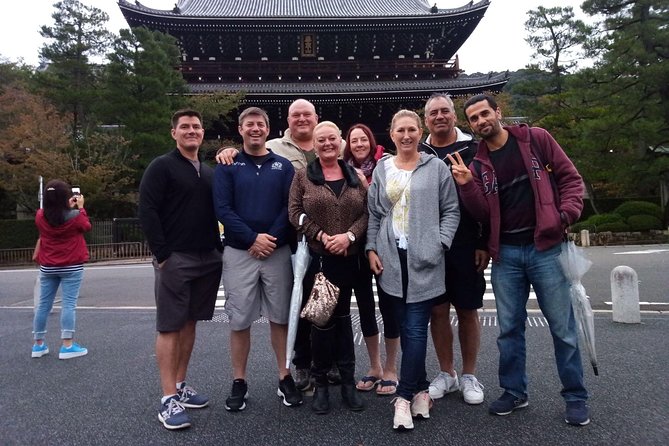
You then head to Chion-in Temple, focusing on the temple gate area. Gates like this are impressive in person, and the real value here is understanding scale—how massive structures can shape the feeling of entering a sacred space.
Since the stop is short (about 15 minutes), you won’t get a long, slow temple lesson. But with a guide, you’ll likely notice the carvings and the overall design logic rather than just thinking it’s a photo-op.
Practical note: gates and temple entrances often involve foot traffic and angles. If you’re photographing, aim to step aside when you’re done so you don’t block others.
Stop 4: Yasaka Shrine and its lantern-lit energy
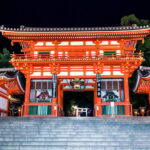
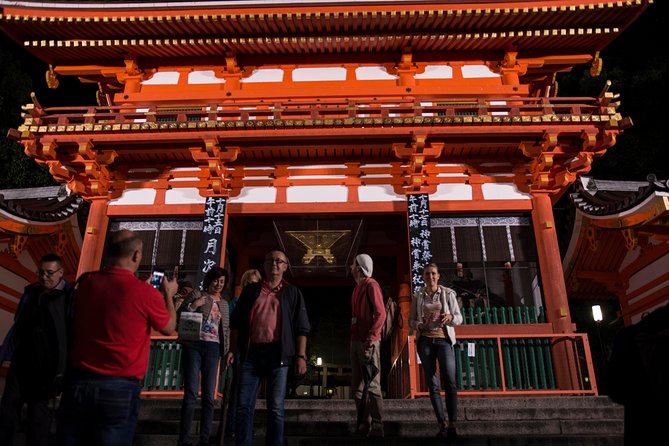
Then it’s on to Yasaka Shrine. This is one of the most recognizable spiritual landmarks in the city, and it’s especially famous for its festival energy and lantern-adjacent atmosphere.
The tour allows about 10 minutes here, which is enough time to absorb the space and get a few solid photos without turning it into a rushed sprint—assuming everyone in your group is moving together.
When you go can change the feel. If you choose an evening tour, the street glow can make this stop feel more dramatic. If you go early, you’ll likely enjoy a calmer pace to take in the details.
Stop 5: Maruyama Park for a breather
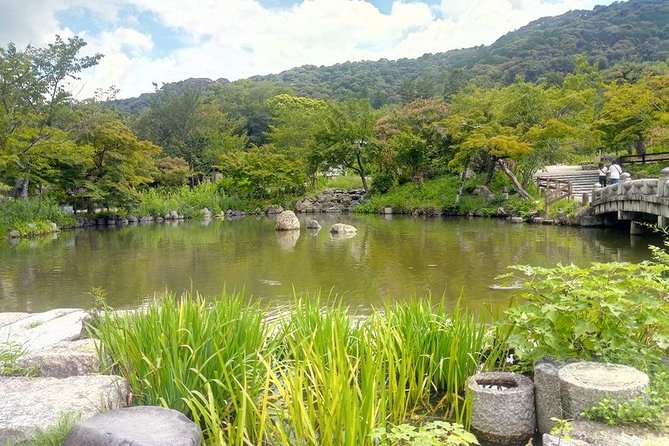
At Maruyama Park, the mood shifts. You get a green break from the dense street scene, with time to walk paths and pause.
This stop is about 10 minutes. It’s not meant to become a picnic or a long nature detour. Instead, it works as a mental reset so the rest of the district feels less like an uninterrupted grind of sidewalks.
If it’s a hot day, this is also the kind of stop where you can ask your guide for a slower pace or a moment to catch your breath.
Stop 6: Hanamikoji Street, machiya houses, and your main photo spine
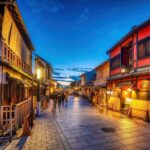
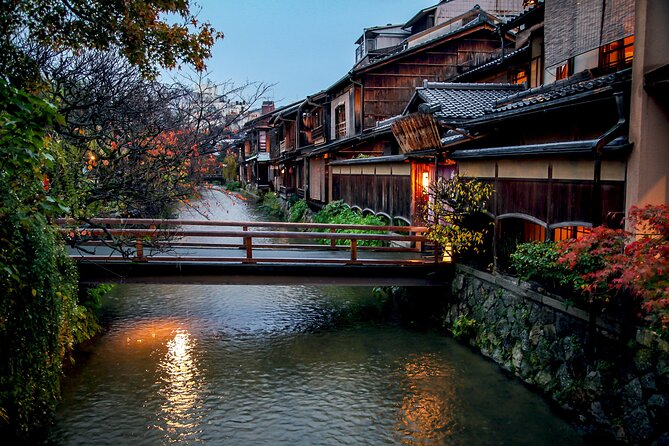
Finally, you walk Hanamikoji Street, the heart of Gion’s geisha district. Here you’ll see traditional teahouses and machiya (older wooden townhouses), giving you the street-level look that most people come to Kyoto hoping for.
You get about 10 minutes here. That sounds short, but it’s a smart structure: you get enough time to walk the main lane, take photos, and see the architecture without exhausting your energy right at the end.
This is also often where your “spotting” luck may happen, since it’s a known pedestrian corridor.
Spotting geisha or maiko: what you should expect (and what you shouldn’t)
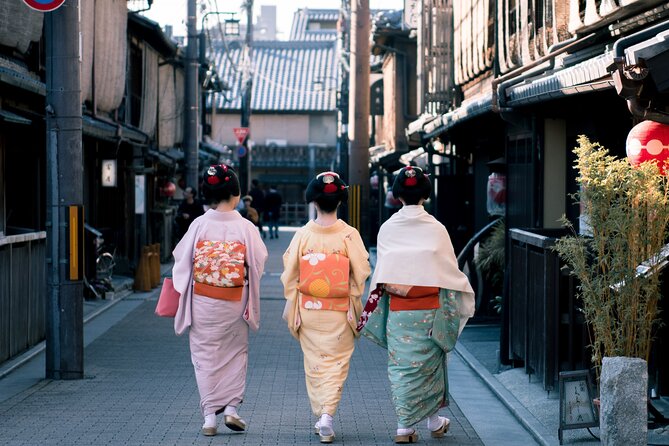
This tour is built around chances to see geisha or maiko, including stopping at areas where they’re most likely to appear. The goal is realistic: you’re watching the district with help, not waiting for a guaranteed reveal.
One important consideration: the tour format doesn’t promise reserved time with geisha or maiko. Think of it as a walking-and-looking experience where you might spot them as you go.
If your main goal is meeting or guaranteed time, you’ll want to adjust your expectations. If your goal is to understand the area while also keeping an eye out, this is exactly the kind of tour that makes sense.
How the guides can change the whole experience
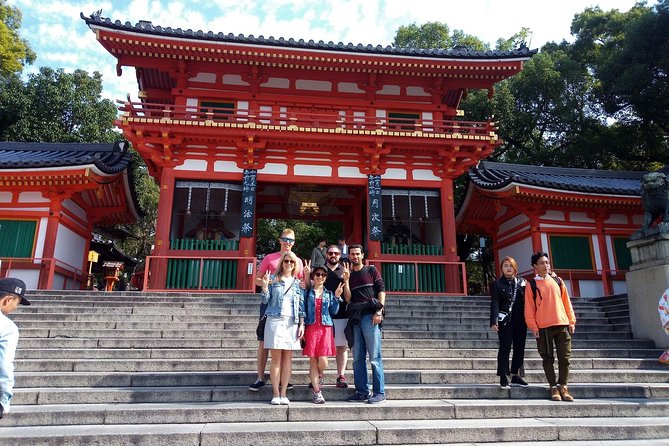
Guides really make or break this type of tour, because so much is about interpretation. In the feedback you’ll see a pattern: people value guides who are punctual and who explain customs and meanings as you walk.
You’ll also hear about guides like Ahmed and Mat being considerate and answering questions in a way that helps the streets make sense. That matters because Gion looks beautiful, but without context it can feel like you’re just taking photos of old buildings.
At the same time, pacing can be an issue. If it’s extremely hot, some people may struggle with the walk speed and may need a short rest. A good move is to tell your guide early if you need a slower pace so the tour stays comfortable for your group.
Best time to go: early morning vs night streetlights
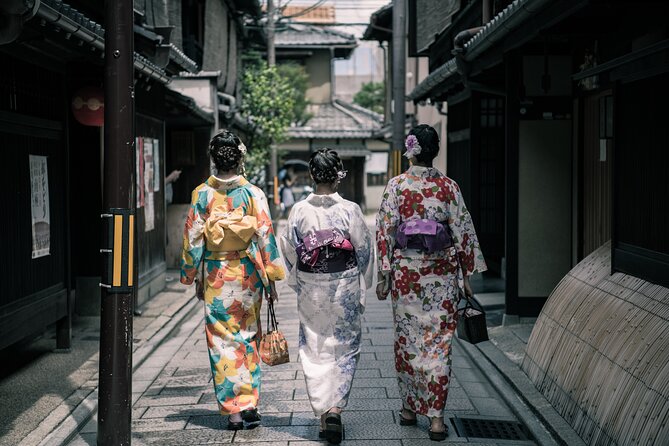
You’ve got flexibility. The tour runs through the day, and the district changes with the light.
- Early morning can mean fewer crowds, which helps you move, focus on photos, and enjoy the quieter street feel.
- Night can add atmosphere, especially when streetlights come on and the shrine-and-street scenery feels more dramatic.
If geisha or maiko spotting is your priority, timing can affect your odds simply because pedestrian patterns shift. Book the slot that matches your energy level and your photo style.
Who this tour fits best
This guided Gion walk is a strong match if you:
- Want a private experience rather than a group shuffle
- Care about getting the meaning behind the sights, not just images
- Enjoy architecture and shrine-and-street contrast
- Are traveling with people who will appreciate Q&A along the way
It can also work well for many traveler types since it’s designed for most participants and is near public transport. If anyone in your group has mobility concerns, the walking format matters, so talk with your guide about pace and comfort from the start.
Should you book this Gion guided tour?
Yes, if you want a guided walk that helps you see more than just the obvious postcard points. The combination of Yasaka Shrine, Maruyama Park, and Hanamikoji Street hits the district’s main moods in a tight 2-hour window, and the private format makes it feel personal.
I’d think twice if your top priority is a guaranteed geisha or maiko encounter. This tour focuses on the chances you’ll have by moving through the right places, and the district is unpredictable in that way.
If you’re on the fence, book a time that matches your style: early for calmer streets, night for more glow. And bring a bit of flexibility—your best photos and best sightings usually happen when you’re not rushing.
FAQ
FAQ
How long is the guided Gion tour?
It’s about 2 hours (approx.), with shorter timed visits at each main stop.
Is this tour private, and how many people can join?
Yes. It’s private, and only your group participates, with pricing listed for up to 8 people.
Is pickup included, and do I get a ticket on my phone?
Pickup is offered, and you’ll receive a mobile ticket.
What stops are included on the route?
The tour includes Gion, the Statue of Izumo no Okuni, Chion-in Temple gate, Yasaka Shrine, Maruyama Park, and Hanamikoji Street.
Will I meet or spend time with a geisha or maiko?
The tour is designed to visit spots where you may see geisha or maiko, but it’s not described as a guaranteed meeting or a dedicated time with them.
Is cancellation free, and does weather affect the tour?
Free cancellation is available up to 24 hours in advance for a full refund. The experience requires good weather, and if it’s canceled due to poor weather, you’ll be offered a different date or a full refund.