REVIEW · KYOTO
Kyoto: Gion Walking Tour
Book on GetYourGuide →Operated by LAMBDA CUBE LLC · Bookable on GetYourGuide
Gion changes when you walk it slowly. This 2-hour Kyoto: Gion Walking Tour threads together the alleys, bridges, and preserved neighborhoods that most people miss, with guides like Jose and Saskia using photos and quick explanations to make the area click. You cover three hanamachi in one outing, so you get more than the postcard version.
I especially love the way the guide keeps things practical: you’ll learn what you’re looking at in the moment—Machiya houses, old lanes, and the rhythm of the Gion area—while also hearing personal takes on daily life in Japan. I also like that the experience is built for questions. If you point at something odd or interesting, you can ask and the guide will keep answering.
One thing to consider: seeing a maiko or geiko isn’t guaranteed, and Hanamikoji-dori isn’t included in the route. If your only goal is a sure sighting, you may feel a little limited; if you want context, you’ll get a lot.
In This Review
- Key takeaways before you go
- A two-hour walk that makes Gion make sense
- Finding the Disney Store meeting point (and starting on time)
- Pontocho alley and the Kamogawa side: where the atmosphere starts
- Sanjo Ohashi to Yamato-dori: bridges that change your perspective
- Gion-Kobu (north) on Gion-Shinbashi dori and Gion Shirakawa
- Tatsumi Jinja and Tatsumi Hashi: a break that’s more than scenic
- Gion-Higashi and Yasaka Shrine: understanding why the name is Gion
- What you’ll actually learn about maiko, geiko, and local life
- Price and value: why $35 can be a solid deal here
- Logistics you should plan for: shoes, weather, and a 2-mile route
- Optional time: the Gion Gallery add-on
- Who this tour suits best
- Should you book this Kyoto: Gion Walking Tour?
- FAQ
- How long is the Kyoto: Gion Walking Tour?
- How much does the tour cost?
- How many people are in the group?
- What languages does the guide speak?
- Where do we meet?
- What hanamachi areas are included?
- Is Hanamikoji-dori included?
- Can I expect to see a maiko or geiko?
- What should I bring?
- Can I cancel if plans change?
Key takeaways before you go
- Three hanamachi in two hours: Pontocho, Gion-Kobu, and Gion-Higashi
- Pontocho by the Kamogawa: you pass the alley stretch toward the river views
- Named stops you can picture later: Yagi-san and Kita-san statues, Sanjo Ohashi, Tatsumi Hashi
- A shrine stop that explains the district name: Yasaka Shrine ties to Gion’s origin
- Small group, question-friendly pacing: limited to 6 people
- Seasonal route tweaks: cherry blossom season can shift the walk for better sakura views
A two-hour walk that makes Gion make sense
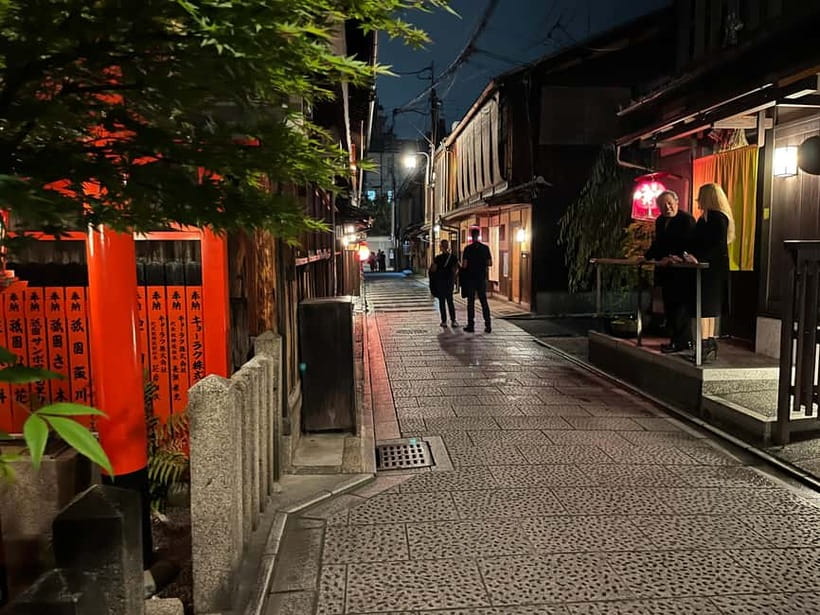
Gion is famous for geisha culture. But if you only focus on that one headline, you miss the bigger story. What I like about this tour format is that it treats Gion like a real neighborhood—one with history you can read off wood grain, street layouts, and the placement of shrines and bridges.
In just 2 hours, you cover about a 3.3 km / 2-mile route. That’s long enough to feel like a proper walk, but short enough that you’re not exhausted before you reach the best parts of the district. And because it’s a small group capped at 6, the guide can keep checking in with your interests instead of rushing through a script.
The tone from guides such as Jose and Saskia (based on what they’re praised for) tends to be energetic and story-led, with lots of back-and-forth. If you like learning how people live—what traditions are called, how routines work, and what the neighborhood is like outside the spotlight—this tour is designed for that.
You can also read our reviews of more walking tours in Kyoto

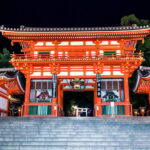
Finding the Disney Store meeting point (and starting on time)
Your meeting point is specific: the guide waits in front of the Disney Store – Kyoto Shijo-Kawaramachi. There’s only one Disney store in Kyoto, which makes this easier than it sounds.
The practical trick: look for the person holding an iPad displaying the GetYourGuide-style tour image and the time. That’s how you’ll spot your guide quickly in a busy shopping area.
Why this matters: Gion gets crowded, and a late start can turn your “slow and thoughtful” walk into a scramble. Starting together keeps the pacing relaxed for everyone.
Pontocho alley and the Kamogawa side: where the atmosphere starts
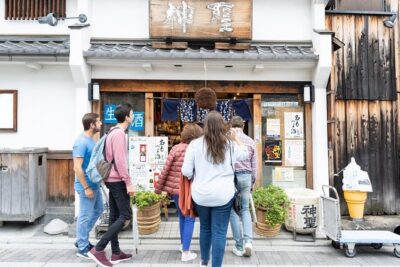
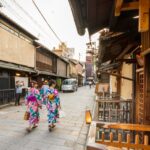
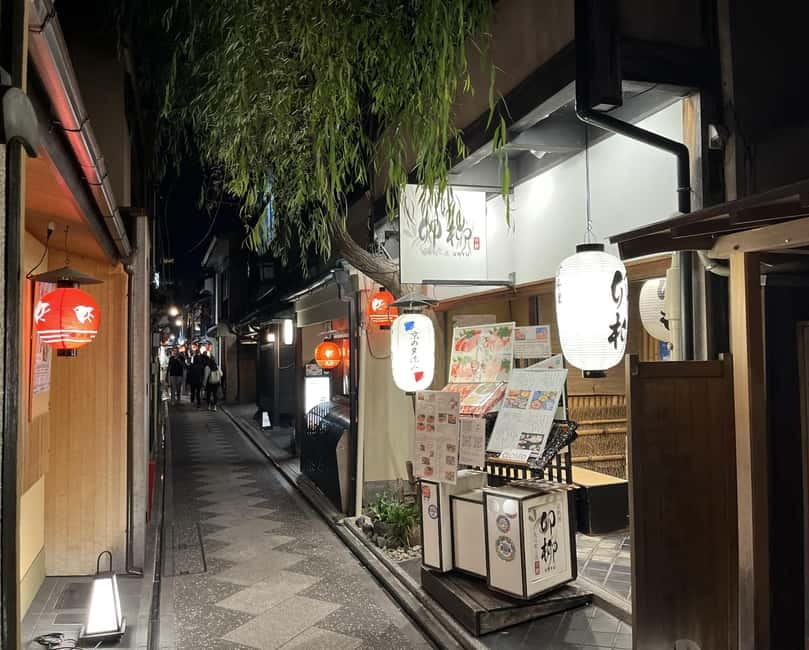
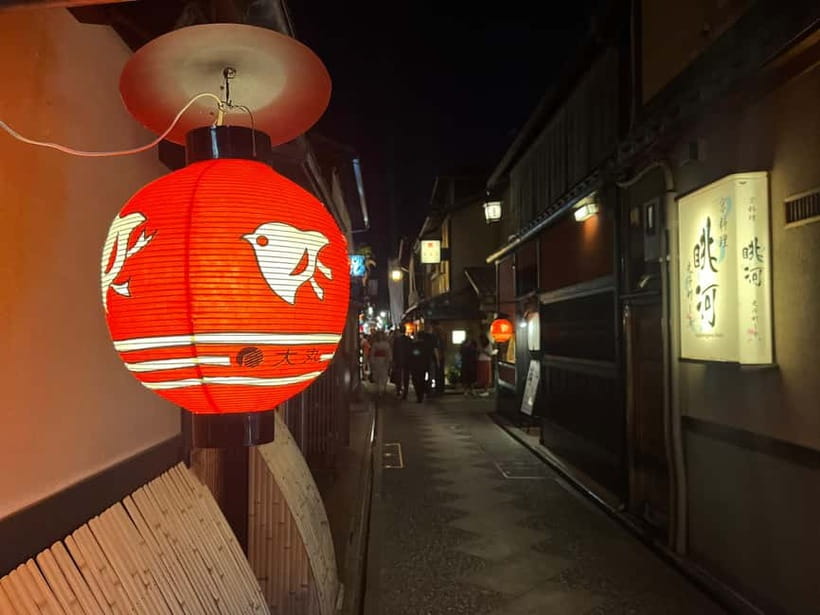
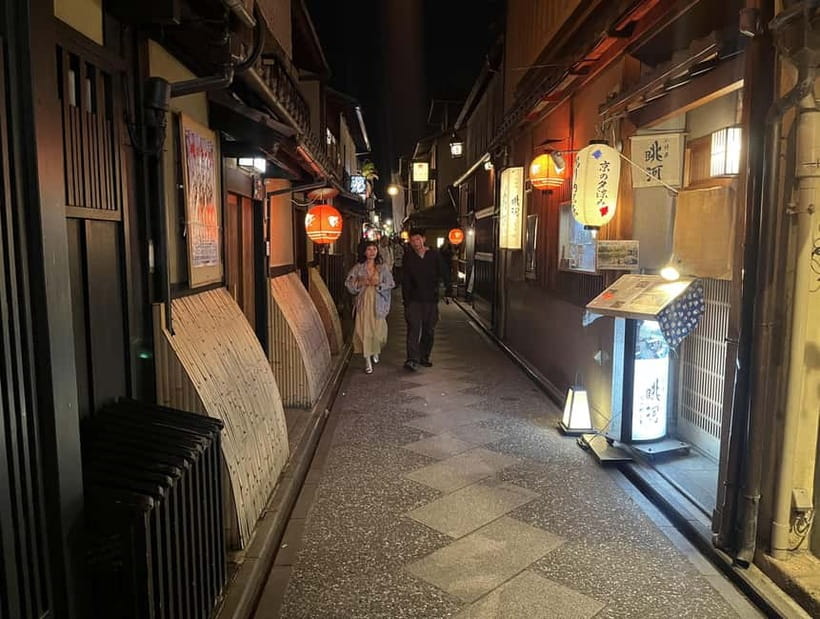
The walk typically begins with Pontocho Alley. This is the part of Kyoto that looks like a movie set even when you’re not trying. It’s also a great first stop because it sets the right mood: narrow lanes, old architecture patterns, and that feeling that the city is layered.
From there, you move toward the river area: Pontocho Kaburenjo, and then along the Kamogawa with notable statue stops—Yagi-san and Kita-san—that give you named landmarks you can later recognize on your own.
A practical note: the route isn’t just sightseeing. The guide uses these points to explain how Gion works as a district, not just as a brand. That’s where questions help. If you wonder why certain buildings face a lane a certain way, or why shrines are tucked where they are, this is when the explanations usually start feeling connected.
Sanjo Ohashi to Yamato-dori: bridges that change your perspective
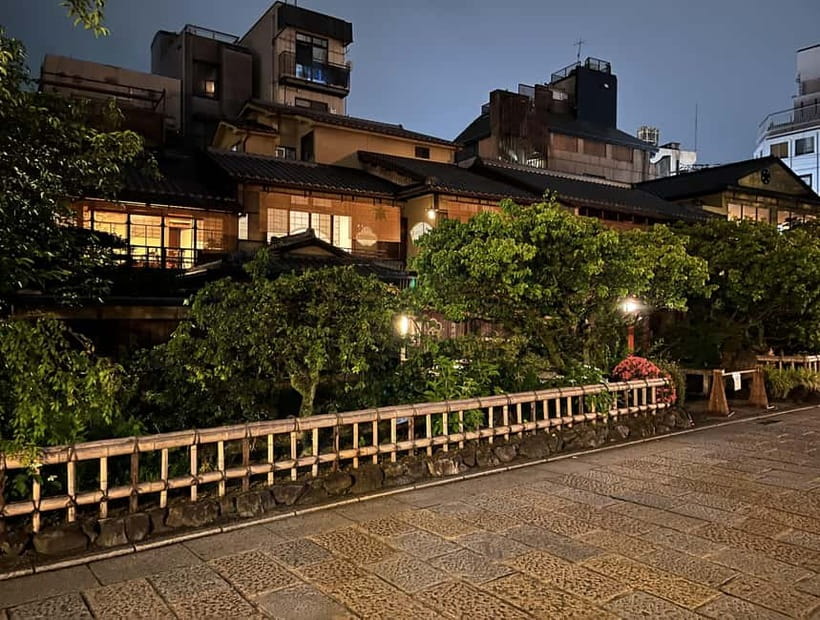
Next you hit Sanjo Ohashi (bridge) and then Yamato-dori. Bridges are a travel cheat code. You get an instant change in viewpoint without needing transport, and the guide can use that shift to explain how the city’s geography supports its culture and movement.
Yamato-dori works as a transition street—less dreamy than the alley portions, but important because it helps you understand where the neighborhood sits inside downtown Kyoto. If you’ve been using maps like a checklist, this is the part that helps you switch to reading the city as a system: lanes, crossings, and where people actually pass through.
Gion-Kobu (north) on Gion-Shinbashi dori and Gion Shirakawa
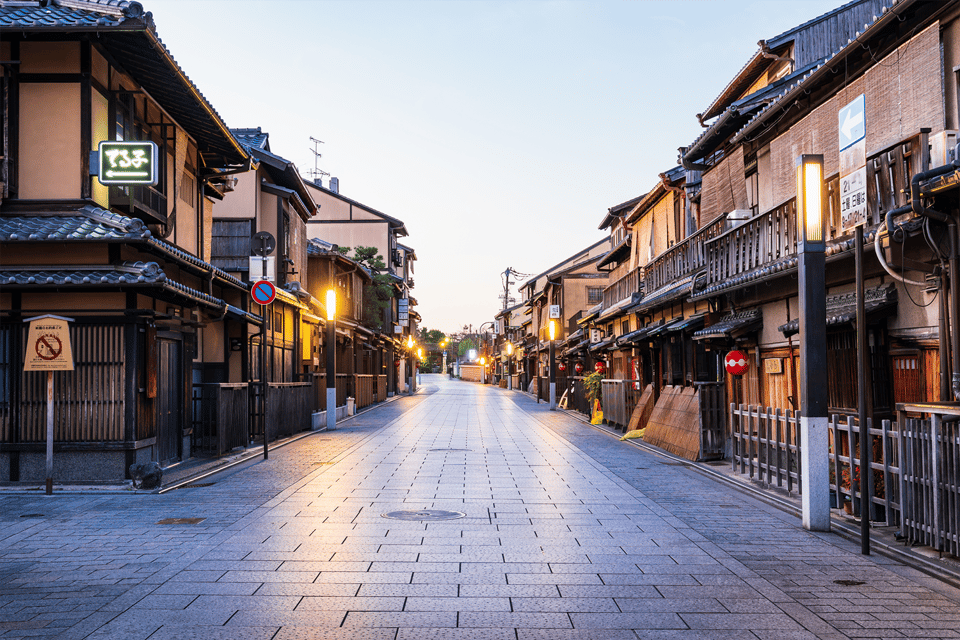
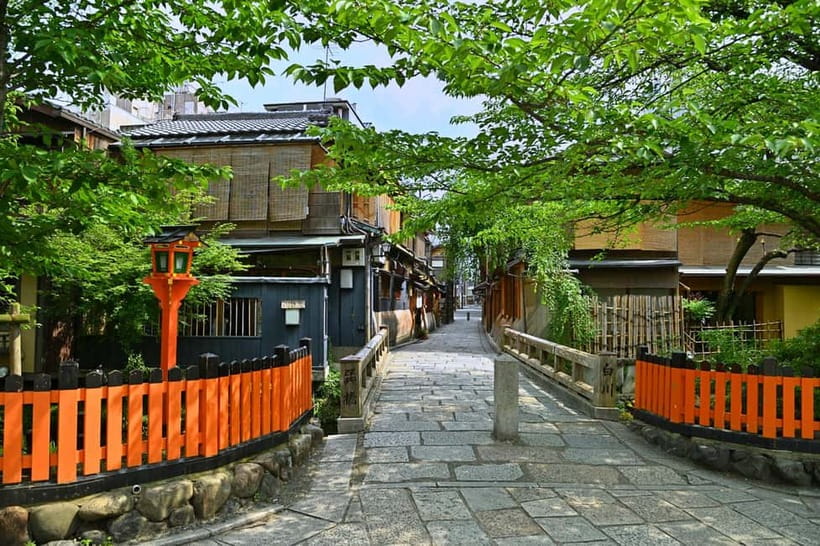
Then you enter Gion-Kobu, walking through areas sometimes described as the preserved, historical neighborhood side of Gion-Kobu. On the route you’ll pass through Gion-Shinbashi-dori (Gion Kobu) and then toward Gion Shirakawa.
This is a key section for two reasons.
First, you’ll start seeing how hanamachi districts are distinct. The tour covers three of the five hanamachi in Kyoto, and Gion-Kobu is one of them. Even if you don’t know the terminology at first, the guide makes it practical: you learn what the district is known for, how daily routines fit together, and how the area’s layout supports the lifestyle.
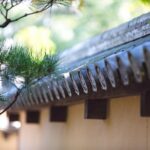
Second, you’ll get architecture details that don’t require advanced Kyoto knowledge. Guides can point out small features of Machiya houses—what to look for in facades and streetscapes—so you stop seeing “pretty old buildings” and start noticing specific clues.
One thing to keep in mind: this section is visually strong. If you’re the type who likes to pause for photos, factor that into your own pace. The tour pacing is designed to be sensible, but you’ll likely want a second to frame each scene.


Tatsumi Jinja and Tatsumi Hashi: a break that’s more than scenic
After the Gion-Kobu stretch, the route takes you to Tatsumi Jinja, and then onward to Tatsumi Hashi (bridge).
Shrines can feel like a detour if your only goal is street photography. But in Gion, a shrine stop is a real part of understanding the district. It helps you connect entertainment district fame back to everyday Japanese religious life—how sacred spaces shape neighborhoods across generations.
You’ll also benefit from the tour’s structure here: you’ve walked alleys, crossed a major bridge, and now you’re getting a change in atmosphere again. That keeps the experience from turning into a single long photo marathon.
Gion-Higashi and Yasaka Shrine: understanding why the name is Gion
The final major district on the route is Gion-Higashi, and the walk ends at Yasaka Jinja (commonly tied to the broader Yasaka Shrine area).
This is one of the most meaningful stops on the tour because it links the district name back to origin stories. The tour includes a visit to the formerly named Gion Shrine, currently known as Yasaka Shrine, where the district name is said to come from. The guide also can explain the Gion Festival—one of Japan’s three most famous and important festivals—whose roots trace back to the Gion district more than 1100 years ago.
Why I think this matters: it turns Gion from a “place to visit” into a place with a long-running identity. Even if festivals don’t sound like your thing, the context makes the district feel less like a themed attraction and more like a living community.
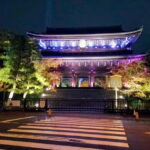
If it’s nighttime, this stop tends to be extra memorable because shrines glow differently after dark. Just don’t expect lighting to replace good walking shoes.
What you’ll actually learn about maiko, geiko, and local life
A lot of Gion tours stop at a quick lesson on costumes and history. This one aims at more day-to-day understanding.
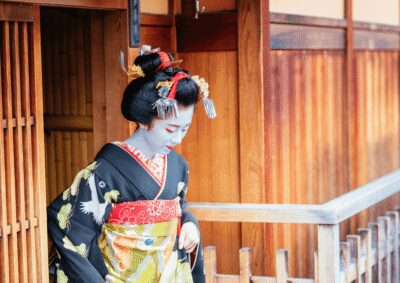
You’ll learn about maiko and geiko life style, including practices and routines, and you’ll get explanations about why certain behaviors and spaces are how they are. The tone from guides in the feedback is that they don’t just list facts—they connect them.
Two themes show up repeatedly in the experience style:
- You ask questions, and the guide answers them rather than waiting until the end.
- The guide shares personal experience living in Japan, so the “how it works” side is included, not just the “what it used to mean” side.
Also, a gentle reality check: the tour is set up as a culture-and-architecture walk. A maiko/geiko sighting cannot be guaranteed. Some people are lucky. Some aren’t. If you treat that as a bonus instead of the main goal, you’ll enjoy the walk more.
Price and value: why $35 can be a solid deal here
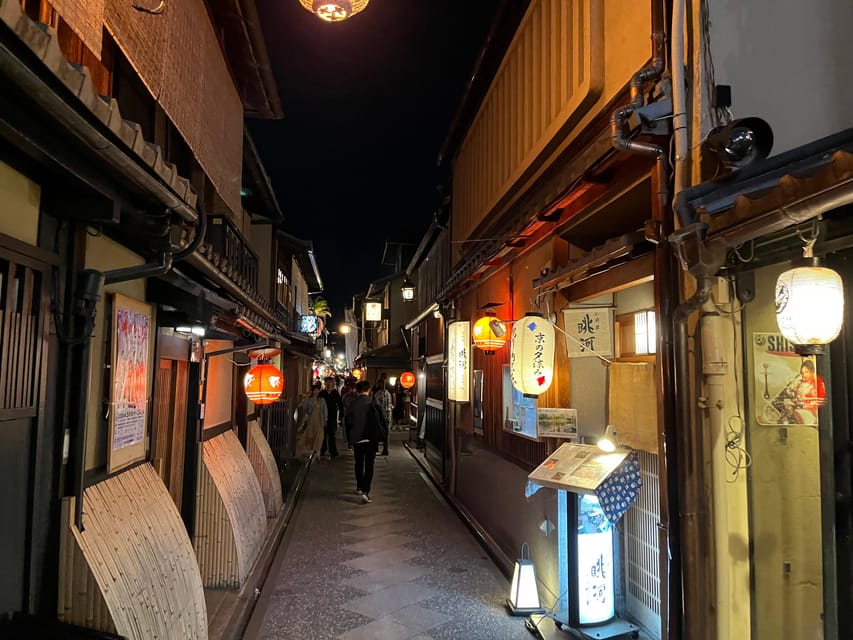
At $35 per person for 2 hours with a guide, this isn’t a “pay for transportation” experience. It’s you buying two things: a guided route and interpretation.
What makes it good value for the money is the combination of:
- Small group size (6 max), which usually means the guide can slow down and respond to your questions.
- A focused route that hits named areas and specific landmarks, not just general viewpoints.
- A structured tour length that fits into Kyoto timing. You can do this on a morning or afternoon without feeling like you lost half a day.
If you’ve done other paid city walks where the guide talks at you for 90 minutes, this one’s approach—lots of Q&A and frequent stops—tends to feel more interactive. And since the guide doesn’t provide amenities, you’re not “bundling” extra services into the price. You’re paying for the live interpretation and the route design.
Logistics you should plan for: shoes, weather, and a 2-mile route
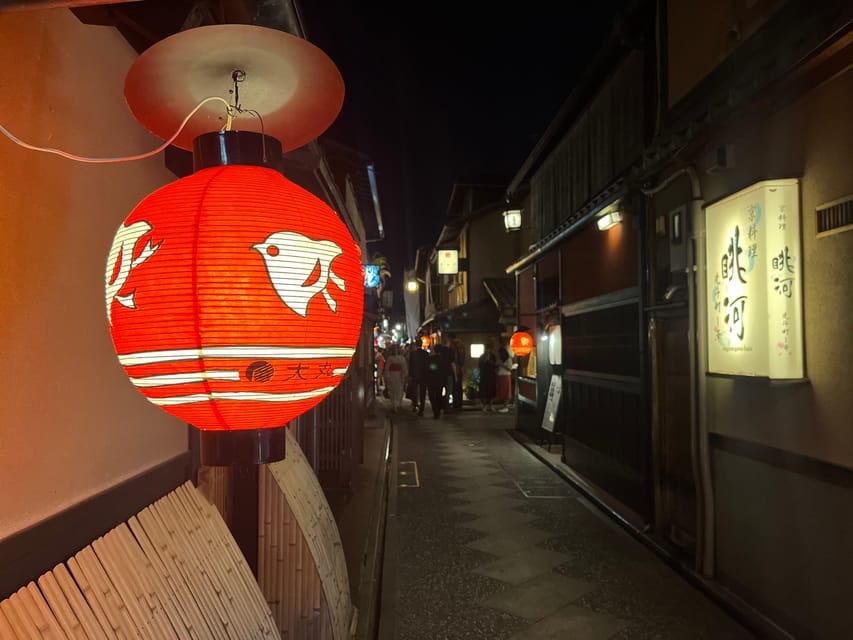
This tour is about 3.3 km / 2 miles, and it moves through lanes and shrine areas where sidewalks can feel uneven. Bring comfortable shoes first, then think weather.
The basics to pack:
- Sun hat, sunscreen
- Umbrella
- Water
Also: the tour notes that no amenities are provided. So don’t assume bottled water or snacks will be available during the walk. If you’re doing it in warmer weather, water planning is smart.
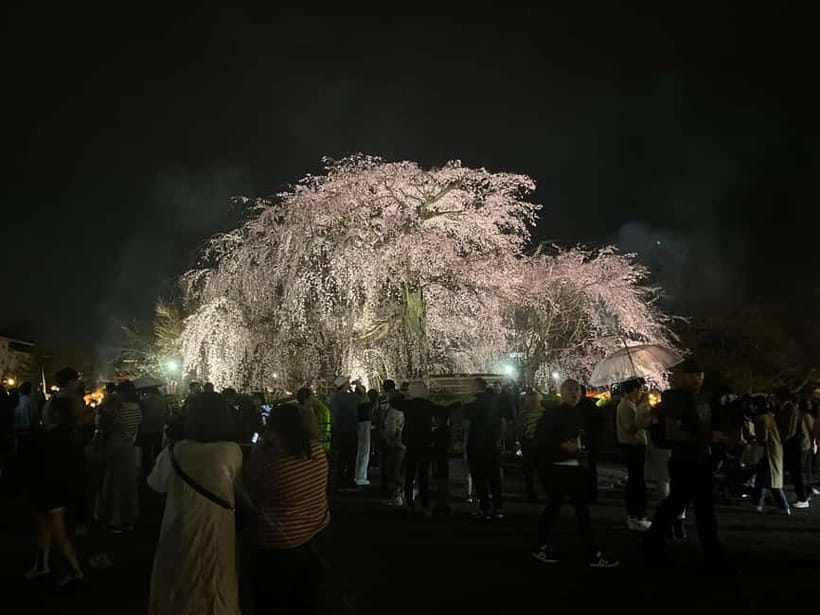
If you go in cherry blossom season (late March-ish to early April-ish), the route can be slightly altered to show sakura around Gion. That’s great if you love seasonal Kyoto changes, but it also means you might see a few route differences from what you expected.
Optional time: the Gion Gallery add-on
At the 9:45 and 12:30 departures, you may add a free visit to the Gion Gallery if you want to extend your tour time. This can be a nice way to round out what you just learned outdoors, especially if you like maps, photos, or explanations that are easier to absorb indoors.
Who this tour suits best
This is a strong fit if you:
- Want a first real orientation to Gion beyond just walking the main streets
- Like history explanations connected to what you can see now
- Enjoy asking questions while you walk
- Prefer small groups and a guide who adapts to your interests
It’s a weaker fit if:
- You want guaranteed sightings of maiko or geiko
- You specifically want Hanamikoji-dori included (it isn’t on this route)
- You’d rather do a longer self-guided exploration with fewer stops
Should you book this Kyoto: Gion Walking Tour?
Yes, I’d book it if your goal is understanding. The route hits three hanamachi areas, includes named landmarks, and ends with a meaningful explanation at Yasaka Shrine tied to Gion’s name. The small group of up to 6 and the strong emphasis on questions make it feel less like a lecture and more like a guided conversation.
Book it with the right expectations, though: you’re not buying a guaranteed maiko sighting, and you’re not getting Hanamikoji-dori on this itinerary. If you’re okay with that—and you want context, pacing, and a smart way to read Gion—this tour is a good value at $35.
FAQ
How long is the Kyoto: Gion Walking Tour?
It lasts 2 hours.
How much does the tour cost?
The price is $35 per person.
How many people are in the group?
The tour is limited to a small group of up to 6 participants.
What languages does the guide speak?
The live guide can conduct the tour in Spanish, Dutch, French, and English.
Where do we meet?
Meet at the Disney Store – Kyoto Shijo-Kawaramachi. The guide is seated in front and waiting, holding an iPad.
What hanamachi areas are included?
In 2 hours, the tour can visit three of the five hanamachi: Pontocho, Gion-Kobu, and Gion-Higashi.
Is Hanamikoji-dori included?
No. The tour specifically notes that Hanamikoji-dori is not included, so plan your expectations accordingly.
Can I expect to see a maiko or geiko?
A maiko/geiko sighting cannot be guaranteed.
What should I bring?
Bring comfortable shoes, sun hat, umbrella, sunscreen, and water.
Can I cancel if plans change?
Yes. There is free cancellation up to 24 hours in advance for a full refund, and you may be able to use reserve now and pay later options.