REVIEW · KYOTO
Japanese Traditional Sweets ”Nerikiri” making
Book on GetYourGuide →Operated by B.B.Advisors Inc. AN KYOTO · Bookable on GetYourGuide
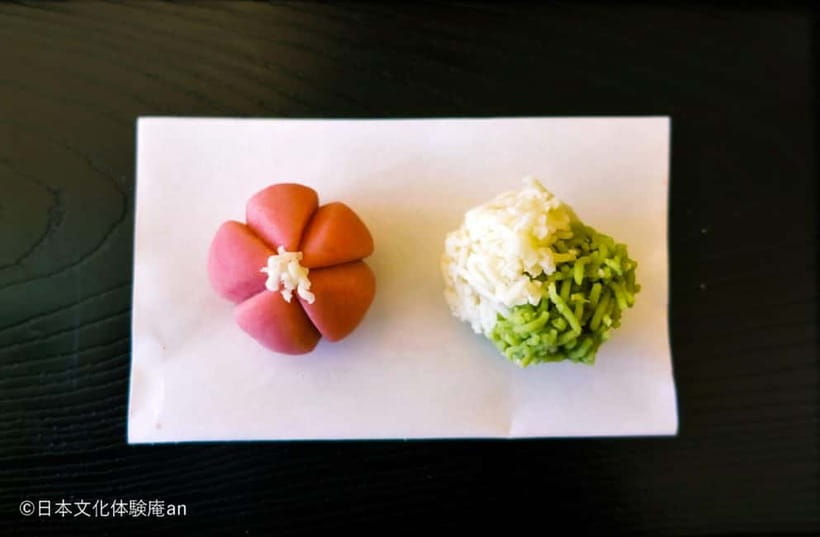
Turn food art into something you can eat. This hands-on Japanese traditional sweets workshop in Honshu lets you make two seasonal nerikiri by working with white/red bean paste from Kyoto’s long-established shops. I really like that you leave with something beautiful and practical, not just photos, and I also love the calm pace that ends with you eating what you made. One possible drawback: the workshop is Japanese-language focused, so if you need very detailed English explanations at each step, you may have to ask more directly.
You’ll spend about 65 minutes from start to departure, and the flow is built to keep you moving: quick background, flower-shaped nerikiri, then a second sweet called Kinton nerikiri, followed by picture time and an eating moment. It’s a short activity that fits well into a Kyoto day, especially if you want something quieter than another major sight.
The workshop experience centers on seasonal ingredients and skilled shaping—so you’re not just copying a recipe. You’re making small edible art pieces, then enjoying the result right away.
In This Review
- Key things to know before you go
- Where To Find The Workshop Near Gojo Station
- What You Make: Two Seasonal Nerikiri Designs
- 65 Minutes Of Steps: From Simple Shapes to Kinton Nerikiri
- The Bean Paste Makes The Difference (And Why It Matters)
- Making It Look Right: Flower Shaping and Presentation
- Eat What You Make: The Best Part of Nerikiri
- Price and Value: What $11 Gets You (And Optional Extras)
- Language and Instruction: Getting Help While You Shape
- Who Should Book This Nerikiri Workshop in Kyoto
- Should You Book This Nerikiri Workshop?
- FAQ
- How long is the nerikiri making experience?
- What will I make during the workshop?
- Is the class in English?
- What ingredients are used?
- Can I eat the sweets I make?
- Are take-out boxes or matcha included in the price?
- Where do I meet the instructor?
- Is there an elevator in the building?
Key things to know before you go
- Kyoto bean paste base: you use white/red bean paste from long-established Kyoto shops
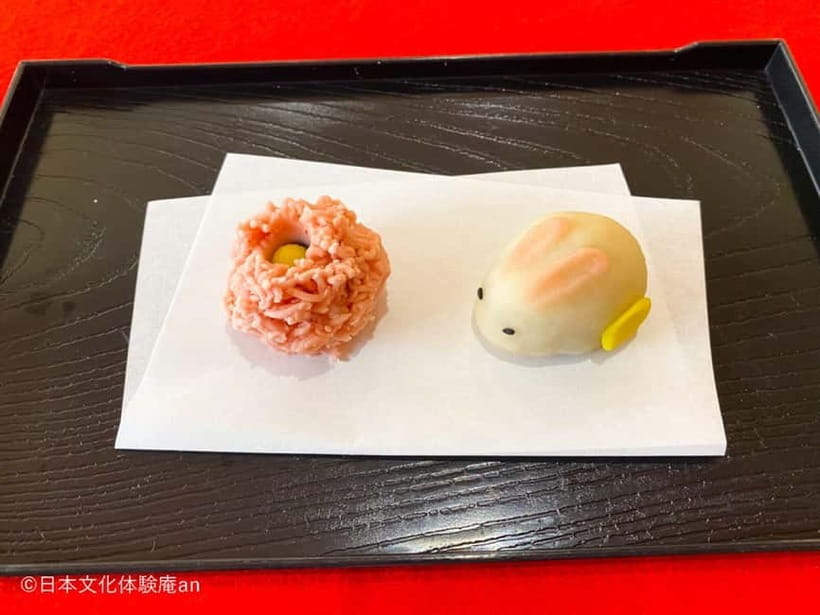
- Two sweets in one session: you’ll make both a flower-shaped nerikiri and Kinton nerikiri
- Seasonal choices: the sweets you make are matched to the season
- Eat on the spot: your finished sweets are meant to be tried during the session
- Short, structured 65 minutes: explanation, shaping, photos, then eating
- Mostly Japanese instruction: English help is provided as much as possible, but Japanese is the main language
Where To Find The Workshop Near Gojo Station
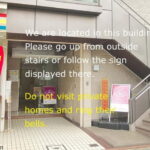
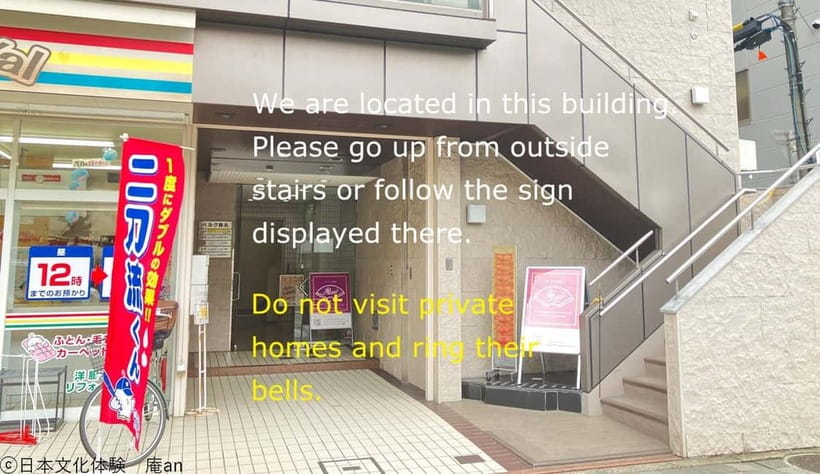
This is an easy meetup area in Kyoto. The meeting point is about a one-minute walk from Exit 1 of the Karasuma Line subway Gojo Station, and the store entrance faces Gojo-dori (the main street). If you’re using Google Maps, the coordinates in the listing are around 34.9964193, 135.7618026, which should keep you pointed in the right direction.
Plan on stairs inside the building. There’s wheelchair accessibility, but you still need to take stairs to reach each venue, so it’s worth thinking about that early if you have mobility limitations. Also, the event can’t be adjusted for delays—so arrive a bit early, especially if you’re navigating from the station.
One more practical thing: non-participants aren’t allowed to enter. If you’re traveling with a friend or family member who wants to observe but not make the sweets, it could change your plans, because the experience is built for participants only.
You can also read our reviews of more tours and experiences in Kyoto
What You Make: Two Seasonal Nerikiri Designs
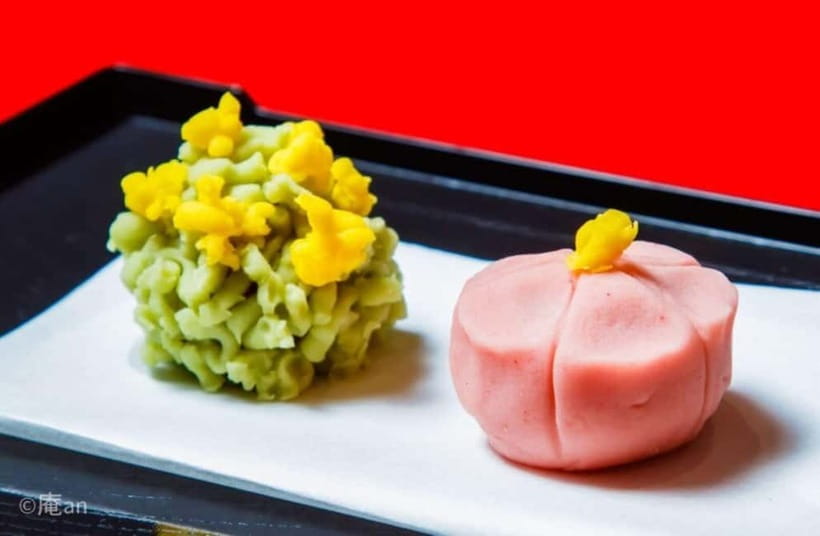
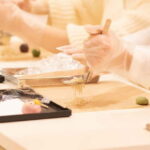
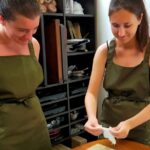
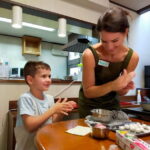
Nerikiri is one of those Japanese sweets that looks like a craft project first and dessert second—and that’s exactly the point. In this workshop, you’ll make two seasonal nerikiri sweets, using real ingredients instead of pre-made forms.
The session includes:
- A flower-shaped nerikiri
- Kinton nerikiri
The workshop highlights that you’ll use white/red bean paste made in Kyoto by long-established shops. That matters because nerikiri is all about the texture and pliability of the paste. If the base paste is good, the shaping feels smoother, and the final sweet tends to taste more balanced than a generic bean paste.
You’ll finish by placing your handmade sweets on a plate—this is treated like the final moment. It’s the “artwork” step, not just the “finished product” step. Even if your shaping isn’t perfect, the food still looks like something you made on purpose.
65 Minutes Of Steps: From Simple Shapes to Kinton Nerikiri
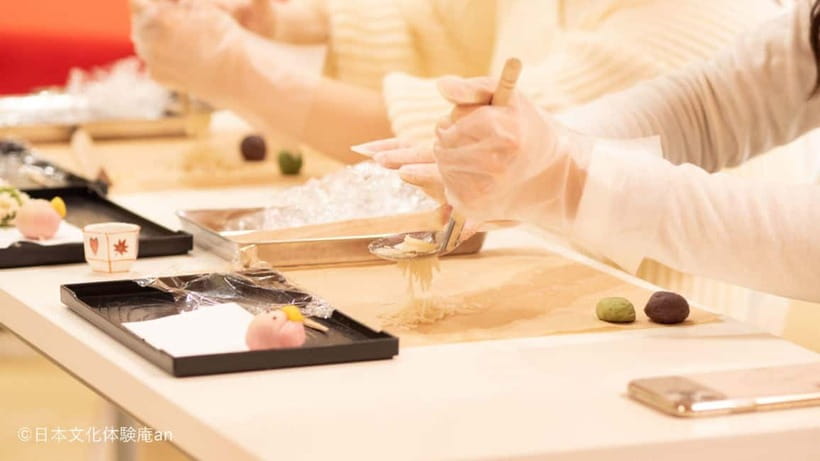
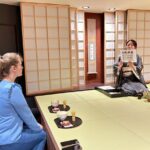
The flow is short and very structured, which is a real plus in Kyoto. You start with a brief introduction to Japanese traditional sweets, then you jump into hands-on work quickly so you’re not sitting around waiting.
Here’s what the timing is set up to do:
- Start (about 0 minutes): explanation of Japanese traditional sweets and what nerikiri is
- Flower-shaped nerikiri (early part of session): learn the basics of shaping and forming clean details
- Kinton nerikiri (middle part of session): work through a second style so you feel you progressed
- Picture time (around 55 minutes): you get a chance to show off what you made
- Eating time (around 65 minutes): you can try the sweets on the spot, not later
That picture-time window is more than just a photo break. It gives you a mental checkpoint: you’re not rushing through the craft without appreciating it. And the eating time at the end is where the workshop really justifies its effort. Nerikiri looks delicate, but you’re meant to enjoy it.
One consideration: because the workshop is designed as a full experience, you shouldn’t plan to be fashionably late or distracted. The format doesn’t mention flexibility for extended time, and the event can’t be held up to accommodate delays.
The Bean Paste Makes The Difference (And Why It Matters)
A lot of cooking classes in Japan are fun, but some feel like decoration. This one leans into ingredient quality. The workshop specifically says it uses white/red bean paste produced by Kyoto’s long-established shops.
From a practical perspective, that matters in two ways:
- The shaping process depends on how the paste behaves.
- The flavor and texture depend on the paste itself.
If you’ve ever had nerikiri that tasted more like generic sweetness, you know that the bean paste quality is the whole foundation. Here, the emphasis is on using real Kyoto-sourced paste, which helps explain why the workshop also promises the taste is guaranteed.
There’s also something calming about working with traditional ingredients. You’re not trying to reinvent Japanese sweets; you’re learning how they’re formed and presented. That’s a great fit if you want a Kyoto experience that’s quiet, tactile, and different from the typical sightseeing rhythm.
Making It Look Right: Flower Shaping and Presentation
The flower-shaped nerikiri portion is your first design, so it’s where you learn how to handle the paste and how to create details that still look clean after shaping. Flower nerikiri is a smart first choice because it teaches the basics of symmetry and edges without needing complicated structure.
Then Kinton nerikiri adds a second challenge so you don’t feel like you spent the whole time repeating one motion. The workshop frames these sweets as edible art, and the final plate moment is where that becomes visible.
What I like about this structure is that it doesn’t require advanced baking knowledge. You’re focused on shaping, not troubleshooting ovens. It’s craft-like, not technical, so most people can participate without feeling out of their depth.
Even if your first sweet isn’t perfect, the process is designed so you still end up with two finished sweets you can put on a plate and photograph. That’s important because nerikiri workshops can sometimes feel like you make one small portion and then watch someone else do the real finishing. Here, the session is built around your own two-sweet output.




Eat What You Make: The Best Part of Nerikiri
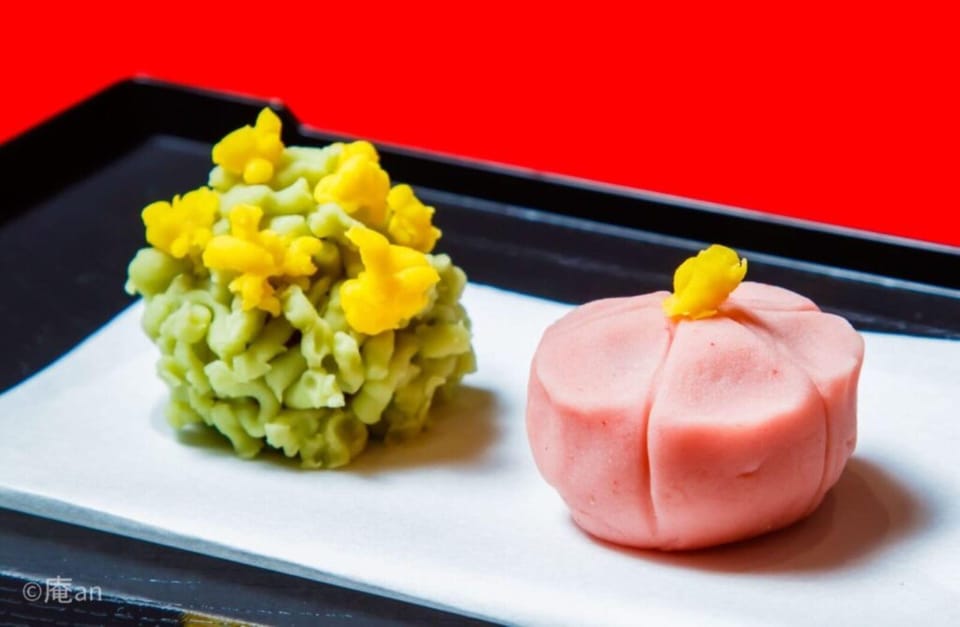
The workshop is refreshingly honest about the payoff: you get to eat the sweets you make. The schedule includes eating time by the end, and the highlights encourage you to try the sweets.
That’s a key value point. In many food experiences, you cook something and then it’s eaten later, somewhere else, or you’re mostly focused on tasting other people’s creations. Here, you get the full arc: create, present, and taste in one session.
Nerikiri also has that texture contrast that makes it fun to experience right after shaping. It’s not like a cake that tastes best after cooling for hours. You’re tasting the outcome of your own handling while the session energy is still fresh.
If you’re deciding between this and another short Kyoto food activity, the on-the-spot eating piece is a deciding factor. You’re not just learning; you’re also enjoying your result immediately.
Price and Value: What $11 Gets You (And Optional Extras)
The stated price is $11 per person for a 65-minute nerikiri making session. That includes the guided experience of making two Japanese sweets.
To judge value, look at what’s included versus optional add-ons:
- Included: the full nerikiri making set (experience making two sweets)
- Not included: sweets take-out box (100 JPY)
- Not included: experience completion certificate (300 JPY)
- Not included: Tatedashi Matcha (500 JPY)
That optional matcha is the kind of extra that can turn the workshop into a more complete snack break, but it’s not required. The same goes for the take-out box: if you only want to taste what you made right away, you can skip it.
The value logic is simple: you’re paying for an instructor-led craft session plus two finished seasonal sweets. Since you can eat on the spot, you get more than “a souvenir snack.” You get dessert plus a cultural learning activity.
Language and Instruction: Getting Help While You Shape
This is where your expectations should be tuned. The workshop’s listed language is Japanese, and it says English translation will be provided as much as possible. That’s helpful, but it also implies you might not get a full, step-by-step English walkthrough at every moment.
One thing that can make or break a workshop like this is whether the instructor can hover close enough for clarifications. If you’re the kind of person who needs to be shown how to mix or form the paste beyond general guidance, don’t be shy about asking questions during the session. Use simple phrases, point to what you’re doing, and ask whether you should adjust the shaping.
If your Japanese is limited, focus on the physical method:
- Watch the demonstrations
- Follow along step-by-step
- Ask for confirmation when you’re unsure
The workshop is designed for making, not testing. And because you’re producing a finished flower-shaped sweet plus Kinton nerikiri, you’ll have chances to correct course as you go.
Who Should Book This Nerikiri Workshop in Kyoto
This experience is a good fit when you want something short, hands-on, and culturally specific. I’d especially recommend it if you’re:
- Doing a Kyoto day with a packed sightseeing list and want a calmer break
- Interested in traditional Japanese sweets and presentation
- Traveling solo, as the session is set up for people participating at their own station
- Traveling with teens or older kids who can handle a guided food craft (the experience mentions children under 2 can be free if sitting on a parent’s lap)
Reviews also suggest the activity feels accessible for many ages and skill levels. That makes sense because it’s taught as a craft process, not a cooking test. You don’t need culinary training—just patience and a willingness to have fun shaping something edible.
If you’re traveling with someone who only wants to watch, note that non-participants aren’t allowed to enter. In that case, you’d want to either schedule separate slots or pick a different activity where observation is possible.
Should You Book This Nerikiri Workshop?
Book it if you want a high-value short Kyoto experience that turns traditional sweets into something you personally craft and then immediately taste. The combination of two seasonal sweets, Kyoto bean paste, and the built-in eating moment at the end makes it feel complete for the time you spend.
I would skip it or reconsider if:
- You strongly need detailed English instruction for every shaping step
- You’re looking for a long cultural deep-dive rather than a focused hands-on workshop
- You were hoping to attend mainly as an observer
If you’re okay with a Japanese-forward class and you like food crafts, this is an easy “yes.” It’s the kind of activity that gives you a small story to take home: not just a snack, but two sweets you shaped yourself, right in Kyoto’s nerikiri tradition.
FAQ
How long is the nerikiri making experience?
The experience lasts about 65 minutes, and it ends with an eating time before you depart the room.
What will I make during the workshop?
You’ll make two Japanese traditional sweets called nerikiri that are matched to the season. The session includes a flower-shaped nerikiri and a Kinton nerikiri.
Is the class in English?
Japanese is the main language, but English translation is provided as much as possible. If you need additional help, you can contact the provider to add English support.
What ingredients are used?
The workshop uses white and red bean paste produced by Kyoto’s long-established shops.
Can I eat the sweets I make?
Yes. The schedule includes eating time at the end, and you’re encouraged to try the sweets on the spot.
Are take-out boxes or matcha included in the price?
No. A sweets take-out box costs 100 JPY, Tatedashi Matcha costs 500 JPY, and a completion certificate costs 300 JPY. These are optional add-ons.
Where do I meet the instructor?
Meet about one minute from Exit 1 of the Karasuma Line Subway Gojo Station. The store entrance faces Gojo-dori.
Is there an elevator in the building?
No elevator is available. You’ll need to use stairs to reach each venue. Wheelchair accessibility is listed, but stairs are still part of the route.