REVIEW · KYOTO
Traditional Tea Ceremony with Matcha and Sweets in Kyoto
Book on Viator →Operated by Japan Wonder Travel · Bookable on Viator
Tea tastes better when you learn it. This Kyoto experience keeps the heart of chanoyu while making it practical: chair seating means you don’t have to do floor time, and you get real matcha whisking instead of just watching. I also like how the session explains the meaning behind the movements, not just the steps, so even if you’re short on time you leave with a clearer sense of Japanese tea culture. One watch-out: it’s about an hour, so this is a focused introduction rather than a long, ultra-traditional ceremony with extended courses.
You’ll meet in historic Gion, then sit with a tea master (Sa do) who demonstrates the ritual up close, weaving in the history of tea in Japan and how Zen philosophy shaped the ceremony. In the second half, you’ll taste carefully chosen traditional sweets from longtime artisans, make your own bowl of matcha using premium tea, and finish with time for a Q&A so the whole thing clicks into place. If you want maximum formality, you might notice the tone is meant to be welcoming and accessible—still authentic, just less intimidating.
In This Review
- Key things I’d highlight before you go
- Where in Kyoto this actually happens (and why Gion matters)
- Price and what you get for $22.86 in an hour
- Meeting the tea master: Sa do, Zen ideas, and omotenashi
- The first half: watching chanoyu without feeling lost
- A practical consideration
- Your hands-on moment: whisking matcha step by step
- What to do during your whisking time
- The sweets: why wagashi (or traditional sweets) belong with matcha
- Q&A time: turning a show into understanding
- Who this Kyoto tea ceremony is best for
- The authenticity level: what’s real, what’s simplified
- Should you book this Kyoto tea ceremony?
- FAQ
- How long is the traditional tea ceremony experience in Kyoto?
- Where does the tea ceremony start?
- Will I sit on the floor?
- What’s included in the tea ceremony?
- Is there a limit on group size?
- What kind of ticketing does this tour use?
- How much does it cost?
- What’s the cancellation policy?
Key things I’d highlight before you go
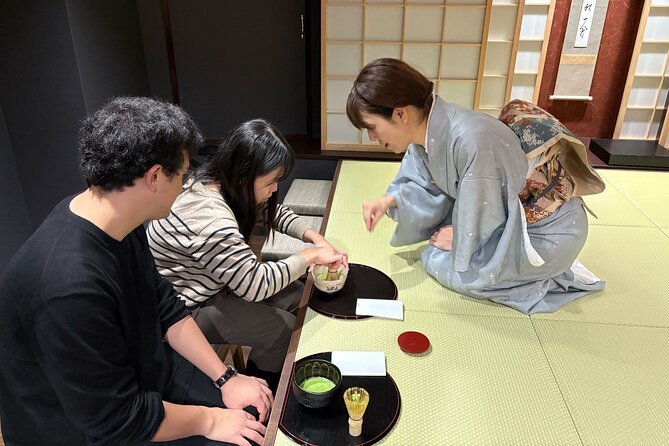
- Small group size (max 13): You’ll be close enough to see details and ask questions without feeling shuffled along.
- Chair-friendly seating: You can participate comfortably even if floor seating isn’t your thing.
- Tea master-led Sa do: The guide ties technique to Zen ideas and the spirit of omotenashi.
- Hands-on matcha, not just tasting: You’ll whisk your own bowl of matcha.
- Sweets + matcha pairing: Traditional sweets from long-established artisans add another layer to the flavor story.
Where in Kyoto this actually happens (and why Gion matters)
This experience starts and ends at a specific spot in Kyoto’s Higashiyama Ward, in the Gion area: Japan, 605-0802 Kyoto, Higashiyama Ward, Yamatochō, 1 祇園田中屋ビル. That matters for two reasons.
First, Gion is one of the places in Kyoto where you’ll see the “old Kyoto” vibe in real life—wooden lanes, historic storefronts, and that sense that culture here isn’t just for show. Second, being based here makes the experience easy to build into your day. You’re not trekking across town for one activity and hoping you’ll catch the right time slot.
Logistically, it’s also described as near public transportation, and you’ll receive confirmation at booking. The tour uses a mobile ticket, which is handy if you prefer not to manage paper during a busy Kyoto day.
You can also read our reviews of more tours and experiences in Kyoto
Price and what you get for $22.86 in an hour
At $22.86 per person, this is priced like a “high value cultural hour.” And you do get multiple things packed into that time.
You’re paying for:
- A tea master-led demonstration of chanoyu techniques
- A short explanation of tea history in Japan and the Zen philosophy behind the ceremony
- Your own hands-on matcha preparation (you whisk it)
- Traditional sweets from longtime artisan makers
- A Q&A at the end
Could you spend more and get a longer, slower, more formal ceremony? Yes. But for a first-time matcha moment in Kyoto, the balance here is strong. You get the key ritual beats and the meaning behind them, without needing half your day.
The only real trade-off is time. Since it’s about an hour, you won’t get a full extended ceremony timeline. Instead, you get a “learn it, taste it, do it” version that works well for travel schedules.
Meeting the tea master: Sa do, Zen ideas, and omotenashi
The ceremony is led by a tea master experienced in Sa do. That phrase is important, because it signals you’re not just learning a recipe—you’re learning a discipline.
In plain terms, the session is structured to answer three questions:
- What is Japanese tea ceremony, historically?
- Why does Zen shape the way tea is made and served?
- How does hospitality show up in the details?
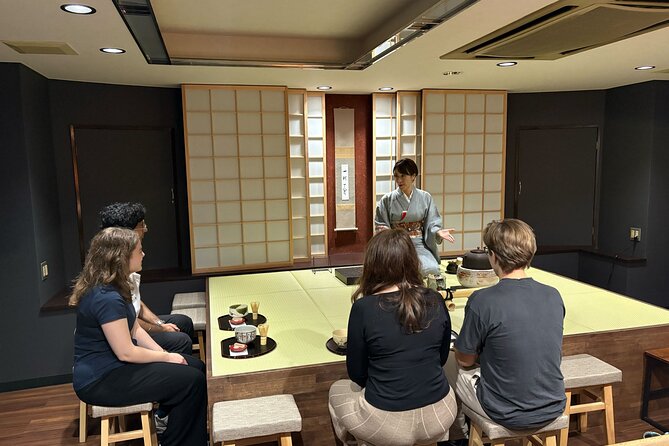
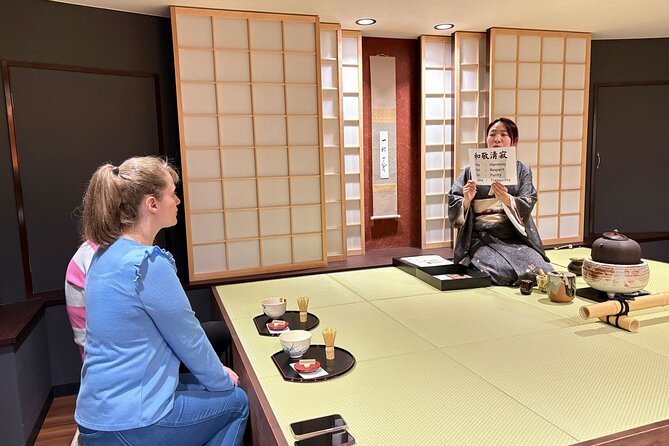
During the first half, the tea master demonstrates techniques up close, while you follow along from your seat. The guide also shares stories around the spirit of omotenashi—the idea that the host thinks carefully about comfort, timing, and respect. You’ll feel that in how the session is paced, not just in the words.
From reviews, instructors such as Mitsune and Yuki are specifically praised for connecting the Sado practice to philosophy and explaining the meaning in an easy, human way. That’s a big deal if you’ve ever felt lost in cultural performances where you don’t know what you’re looking at.
The first half: watching chanoyu without feeling lost
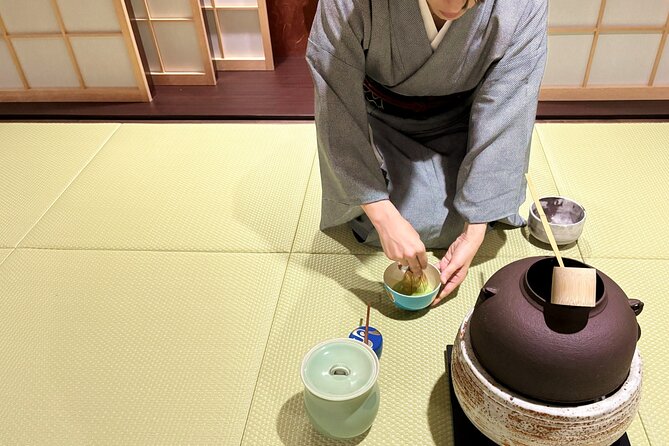
The start of the experience is the “watch and understand” portion. You’ll see authentic techniques performed up close by the tea master, and you’ll learn the history of tea in Japan and how Zen philosophy shaped the ceremony.
Here’s the value of that part: you get context before you handle anything. Instead of copying movements blindly, you learn what the ceremony is trying to express—calm, attention, and respect. Even if your matcha ends up tasting a bit different than you expected, you’ll know what the ritual is aiming for.
A practical consideration
Because this experience is designed to be welcoming and accessible, it’s not framed as a stern, ultra-formal ordeal. That’s good for most people. But if you’re looking for a strict, silent, no-conversation ceremony, you might find the tone more approachable than what you’ve seen in documentary-style versions. The techniques are still presented as authentic, though the vibe is intentionally comfortable.




Your hands-on moment: whisking matcha step by step
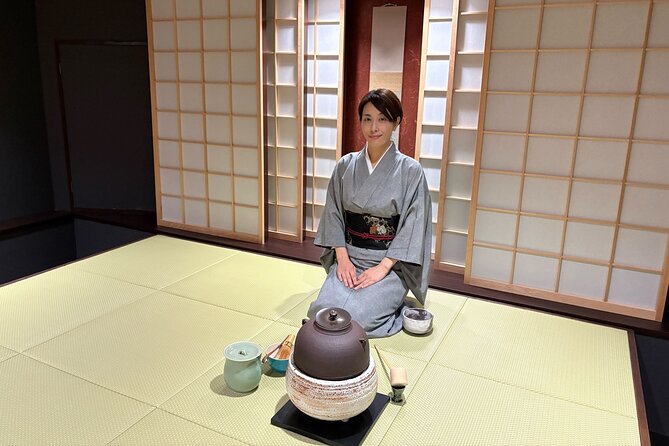
The second half turns into doing. After the demonstrations and tea context, you’ll savor traditional sweets and then make your own bowl of matcha using premium tea sourced from a family-run farm.
The most important part for me, as a value-and-experience reviewer: you don’t just sample matcha. You whisk it yourself. That changes everything.
When you whisk matcha:
- You learn how texture and foam relate to the tea-making process
- You notice that matcha isn’t only a flavor—it’s also a tactile experience
- You start understanding why ceremony steps matter for outcomes
You’ll also likely get guidance as you prepare it, and the group size staying at a maximum of 13 helps. In a too-large class, hands-on activities can turn into a blur. Here, you’re more likely to see what you’re doing and get corrections before it’s too late.
What to do during your whisking time
Keep your pace steady. Matcha whisking is simple, but it rewards attention. If you feel clumsy, that’s normal—tea ceremony is partly about patience and control. Your goal isn’t to become a tea machine. Your goal is to participate and understand the process.
The sweets: why wagashi (or traditional sweets) belong with matcha
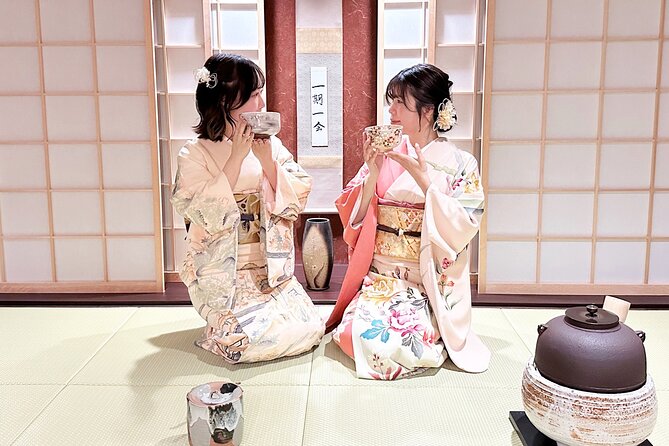
This isn’t matcha in isolation. It includes carefully selected traditional sweets from long-established artisans. That pairing is one of the reasons tea ceremony feels different from a standard café order.
Matcha has a distinct profile—earthy, sometimes grassy, with a gentle bitterness. Traditional sweets are often designed to balance that. Even without knowing every flavor detail, you’ll feel how the sweetness and texture change how the tea tastes.
The ceremony uses the sweets as a bridge between story and senses. You’re learning about the meaning behind tea, but the sweetness helps anchor that learning in taste. It’s also an easy win for people who aren’t sure they’ll like matcha. You might find yourself enjoying it more once the flavor contrast kicks in.
Q&A time: turning a show into understanding
The session ends with a Q&A. That’s one of those small details that can make a big difference in how much you take away.
In a short, one-hour format, you can’t ask every question you want. But a Q&A gives you a chance to:
- clarify what you just learned about tea history or Zen connections
- ask about techniques you didn’t fully catch during the demonstration
- connect what you tasted to what you’re likely to see later in Kyoto (tea shops, matcha menus, and small cultural details)
If you’re the type who likes to understand before moving on, this is a smart setup. And because the group is capped at 13, your questions have a better shot at being heard.
Who this Kyoto tea ceremony is best for
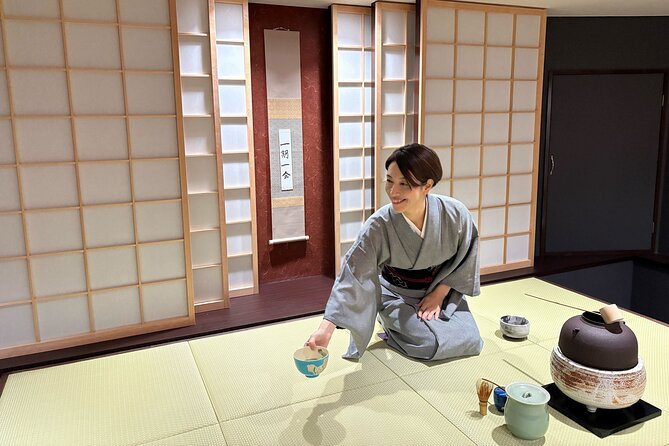
This experience is designed to welcome a wide range of visitors, and the chair seating is a strong sign that it’s not only for seasoned culture seekers.
I’d especially recommend it if:
- you’re visiting Kyoto for the first time and want a meaningful, manageable activity
- you’re curious about matcha but want more than a tasting
- you might struggle with floor seating or prefer a more comfortable approach
- you want a short cultural stop that still feels substantial
It may be less ideal if:
- you’re expecting a long, ceremonial deep dive with lots of formal silence and multi-course pacing
- you want something that feels more like a guided museum tour than a hands-on practice
The authenticity level: what’s real, what’s simplified
This is a “modern, approachable” take on a traditional Japanese tea ceremony. That phrasing could worry some people. But based on the structure—tea master demonstration up close, history and Zen philosophy context, hands-on matcha whisking, and traditional sweets—the core craft is still treated seriously.
The simplification is mostly about delivery:
- chair seating instead of floor participation
- a time-efficient format for a one-hour session
- a welcoming tone rather than a heavy formality
So you’re not getting a fake version designed just for tourists. You’re getting the ritual translated into a format that lets more people participate without barriers.
Should you book this Kyoto tea ceremony?
If you want a short, high-value introduction to Japanese tea culture in Kyoto’s Gion area, I think this is a smart booking. You’ll learn the why behind the movements, taste the key pairings, and—most importantly—whisk your own matcha with guidance.
Book it if:
- you like practical cultural experiences you can do, not just watch
- you want chair-friendly participation
- you’d enjoy a clear explanation of Zen and omotenashi alongside hands-on steps
Skip it or consider alternatives if:
- you want the longest possible traditional format
- you’re hoping for a fully quiet, ultra-formal ceremony that runs much longer than an hour
In a city full of things to see, this kind of experience gives you a different souvenir: a new skill and a clearer lens for what you’ll notice later in Kyoto.
FAQ
How long is the traditional tea ceremony experience in Kyoto?
The experience is listed as about 1 hour.
Where does the tea ceremony start?
It starts at Japan, 605-0802 Kyoto, Higashiyama Ward, Yamatochō, 1 祇園田中屋ビル.
Will I sit on the floor?
No. The experience is set up so guests sit on chairs, which makes it easier to participate.
What’s included in the tea ceremony?
You can expect to watch a tea master demonstrate chanoyu, learn about tea history in Japan and Zen philosophy, try traditional sweets, make your own bowl of matcha, and join a Q&A.
Is there a limit on group size?
Yes. The maximum group size is 13 travelers.
What kind of ticketing does this tour use?
It uses a mobile ticket.
How much does it cost?
The price is listed as $22.86 per person.
What’s the cancellation policy?
Free cancellation is available up to 24 hours before the experience’s start time for a full refund. If you cancel less than 24 hours before, the amount paid isn’t refunded.