REVIEW · KYOTO
Kyoto: Table-Style Tea Ceremony at a Kyo-Machiya
Book on GetYourGuide →Operated by Éclat Japon · Bookable on GetYourGuide
A tea ritual, minus the floor sit. This Kyoto Kyo-machiya experience lets you do the full ceremony in chairs and still practice the heart of it: making frothy matcha with a bamboo whisk. You also get time to enjoy the garden/house setting, plus fun photo moments with period-style props.
I especially like how the hosts teach the steps and manners without making it feel stiff. The one thing to plan for is logistics: it’s not in central Kyoto, there’s no hotel pickup, and the meeting point is on the outskirts—so you’ll want to follow the directions carefully.
In This Review
- Quick hits on Kyoto’s table-style tea ceremony
- Where the ceremony happens: a 100+ year Kyo-machiya, not a showroom
- Getting oriented fast: how the 90 minutes are paced
- Welcome drinks and sweets: the part that makes you feel instantly at home
- The core skill: making matcha with a bamboo whisk (creaminess matters)
- Chair-based tea ceremony: comfort changes how you experience manners
- Tea ceremony manners, plus the history part you can actually use
- Photos and props: umbrellas, fans, and katana-style moments
- Calligraphy: write your name in kanji or hiragana, then take it home
- Flower arranging for tea ceremony vibes
- The kimono option: worth it for photos and for the full experience
- Where it is: southern Kyoto, easy add-ons to Osaka and Nara
- How to find the place without stress: follow the blue curtain clue
- Price and value: what $45 buys you in real terms
- Who should book this Kyoto table tea ceremony (and who should skip it)
- Should you book Éclat Japon’s Kyoto table-style tea ceremony?
- FAQ
- Is the tea ceremony done on the floor?
- How long is the Kyoto tea ceremony experience?
- How much does it cost?
- What language is the instruction in?
- Do I get welcome drinks?
- What else is included besides the tea?
- Can I make my own matcha?
- Do I get to do calligraphy?
- Is kimono rental included?
- Is pickup from a hotel included?
- Is the experience wheelchair accessible?
- Where is the meeting point?
Quick hits on Kyoto’s table-style tea ceremony
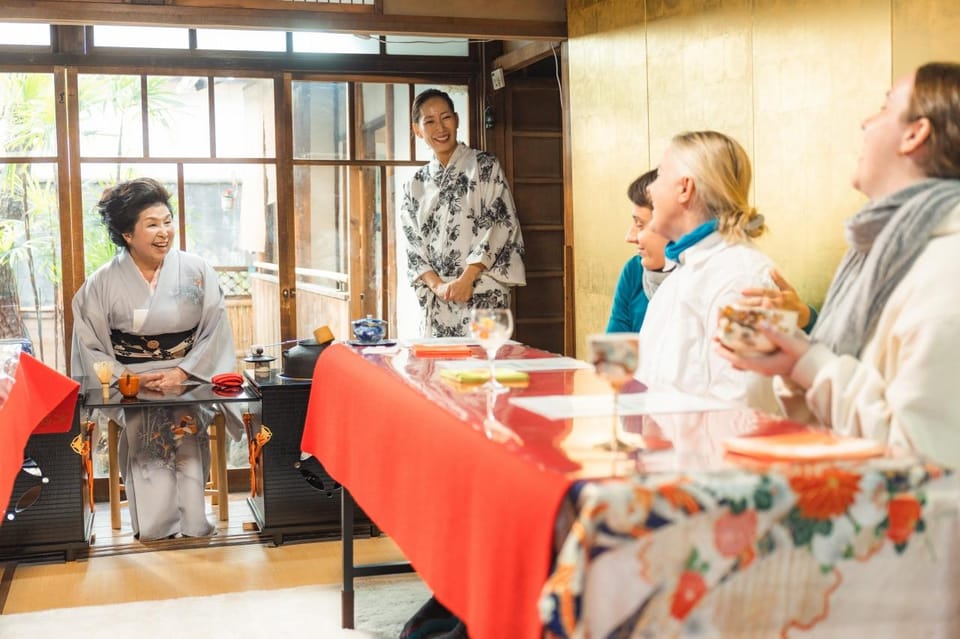
- Chair-based tea ceremony: no sitting on the floor, so it’s easier to keep your posture steady.
- Make matcha yourself: whisking for that creamy, frothy consistency with a bamboo whisk.
- Name calligraphy included: write your name in Japanese kanji or hiragana and take home a hanging scroll/envelope.
- Photo-friendly moments: umbrellas, folding fans, and katana sword-style props show up during the fun part.
- More than tea: traditional sweets, welcome drinks, latte art with thick tea, and a flower-arranging activity.
- Set in an older Kyoto townhouse: a 100+ year-old home with garden-style elements and old altars/antiques to look at.
Where the ceremony happens: a 100+ year Kyo-machiya, not a showroom
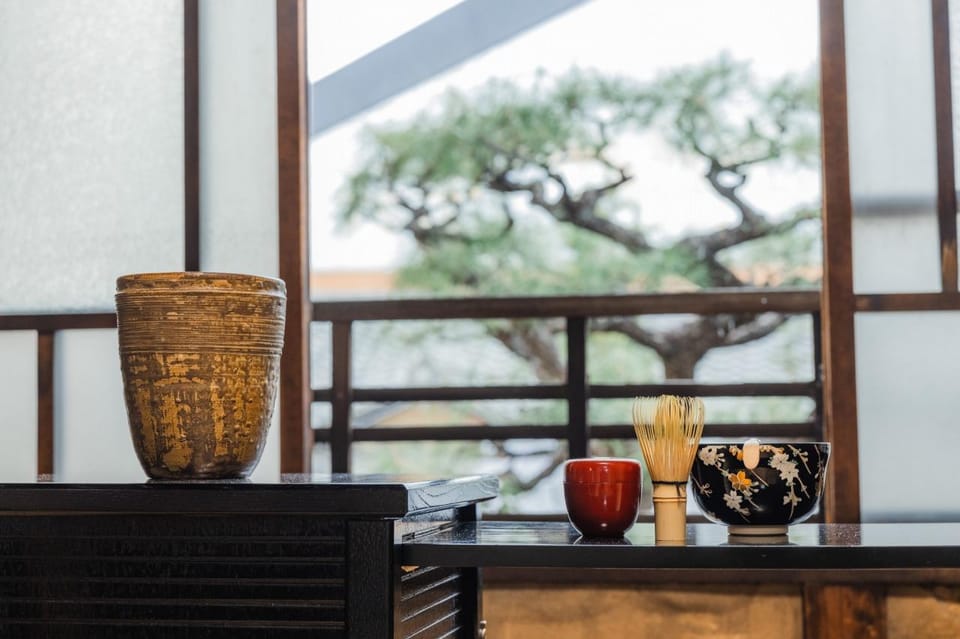
The setting is the kind of Kyoto you don’t have to search for. The ceremony is held in a traditional townhouse (a Kyo-machiya) that’s over a century old. Even before the tea starts, you can wander through the property and clock the textures: old architectural details, and areas that include Buddhist and Shinto altars or antiques.
In the southern part of Kyoto—also known for sake—this helps the experience feel practical and lived-in. You’re not just watching a performance. You’re stepping into a daily-life atmosphere, with enough time to look around and take photos in a garden/house backdrop.
One neat touch: before the tea-focused part, you can practice the idea of purification. You’ll purify yourself at a stone basin in the garden in a way that echoes shrine etiquette. It’s short, but it sets the mood and explains why the tea ceremony isn’t only about taste.
You can also read our reviews of more tours and experiences in Kyoto.



Getting oriented fast: how the 90 minutes are paced
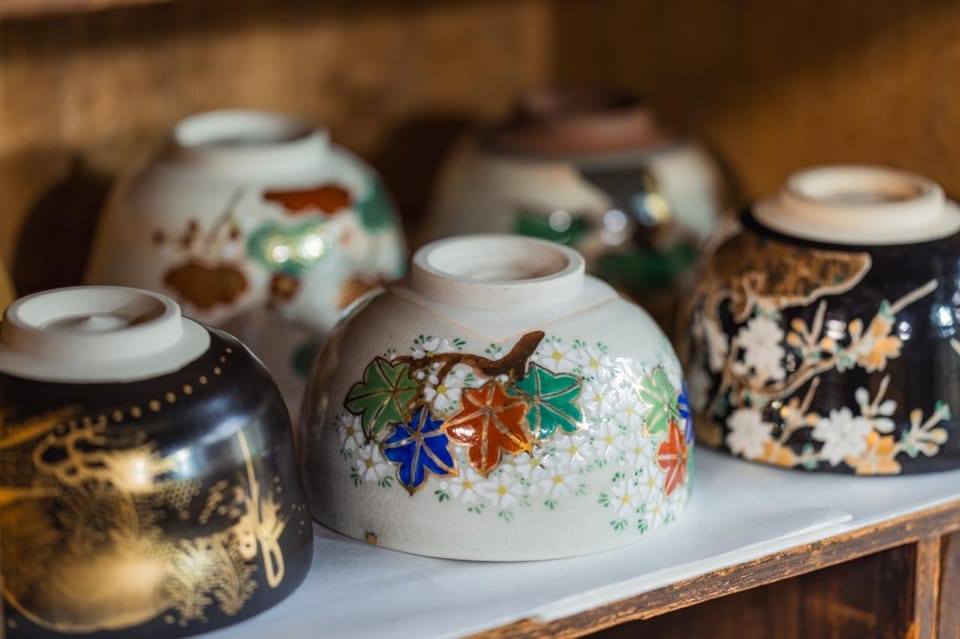
The whole experience runs about 90 minutes, and it’s built to keep you moving. That matters, because tea ceremony instruction can either drag or land. Here, it tends to stay active: you’ll receive explanations, then you’ll do steps yourself, then you’ll switch to creative bits like matcha, calligraphy, and flower arranging.
You’ll also get an English instructor. There are even PowerPoint presentations as part of the lesson, which helps if you want the why behind the how—development of the tea ceremony in Japan, plus manners and spirits of the ritual.
This is the sweet spot for first-timers. You don’t need background knowledge. You just need to pay attention during the early instruction so your matcha and your choreography feel confident.
Welcome drinks and sweets: the part that makes you feel instantly at home
Before the formal tea steps, you get a welcome drink—sake or juice are listed options. You’ll also have traditional sweets during the ceremony. This timing is smart: it helps you slow down, gives your mouth a clean baseline before matcha, and keeps the vibe relaxed instead of ceremonial-only.
There’s also a listed element of latte art using thick tea. In practice, it means you’re not stuck doing one repetitive action. The hosts guide you through how to handle the thick texture and shape it into a pattern.
If you’re worried the tea ceremony will feel too quiet or too formal for your personality, this “drink first, then learn” structure is a good sign.
The core skill: making matcha with a bamboo whisk (creaminess matters)
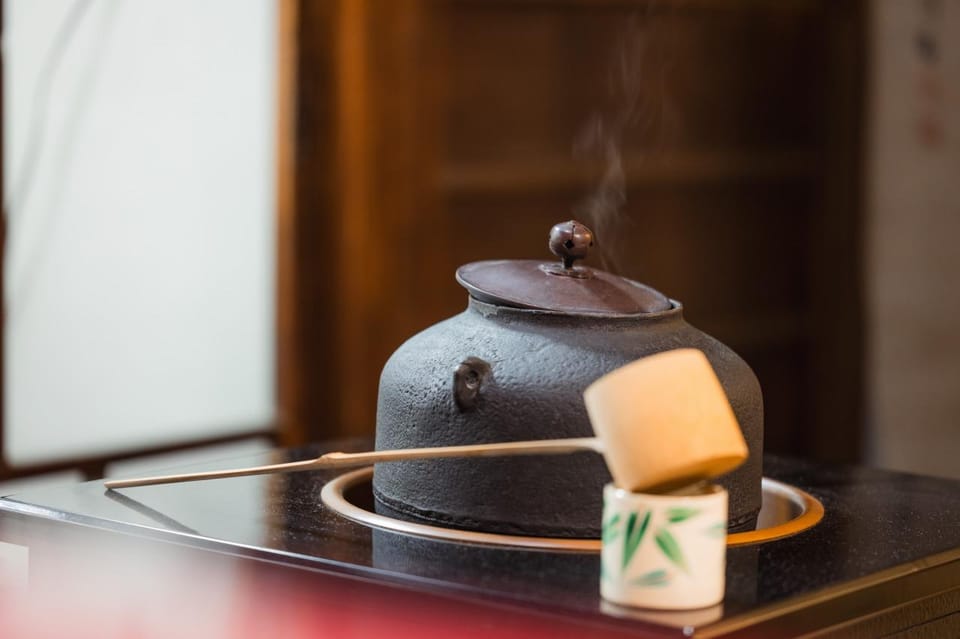
This is the main event, and it’s also where the chair setup really helps.
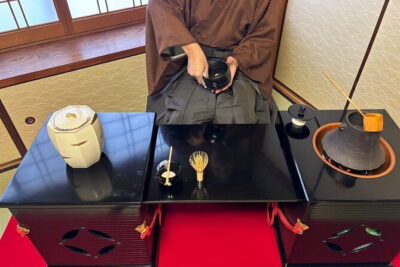
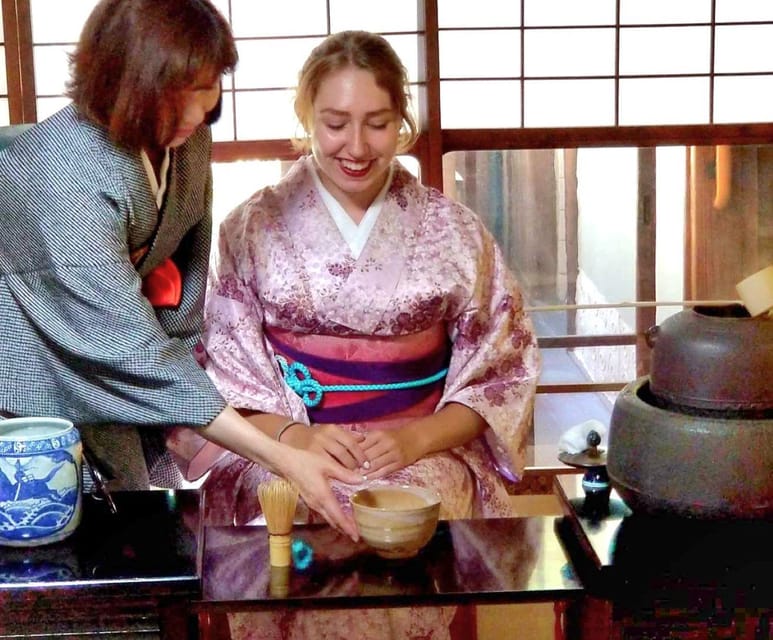
You’ll make your own matcha using a bamboo whisk. The goal is that creamy, frothy texture—the kind where you see tiny bubbles and feel the matcha has been worked properly. It’s not just a pour; it’s a technique.
What you’ll appreciate is that the experience doesn’t pretend the process is obvious. You get guidance through the steps, including how to handle the utensils and how to perform the motions. Then you get to do it yourself, not just watch.
And once you’ve made it, you’ll actually drink it as part of the ceremony flow. That closes the loop. You don’t just produce matcha for a photo and move on.
Chair-based tea ceremony: comfort changes how you experience manners
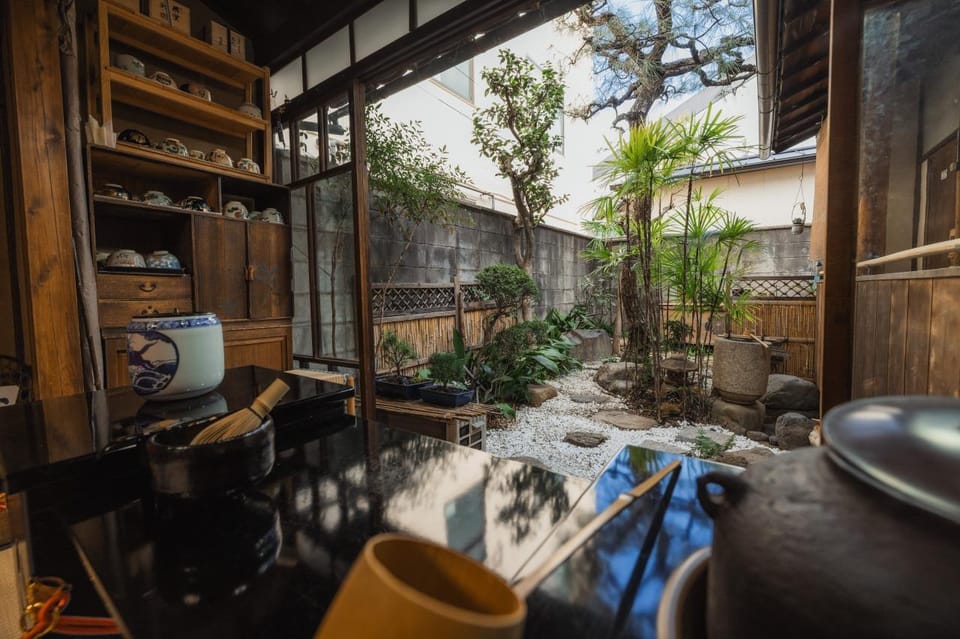
The headline feature is simple: this Kyoto tea ceremony is done at a table with chairs, not on the floor. If you’ve ever tried to sit on tatami for long minutes, you already know how quickly comfort becomes the enemy of attention.
Sitting upright means you can focus on:
- the rhythm of the steps,
- where your hands go,
- how you move with intention,
- and how you receive the tea and sweets.
That doesn’t make it less authentic. It makes the experience more accessible. You still learn the etiquette and the spirit behind the ritual. You just don’t fight your legs while you’re trying to pay attention.
One caveat: the activity is not suitable for wheelchair users, so if mobility is a concern, read that carefully and plan accordingly.

Tea ceremony manners, plus the history part you can actually use
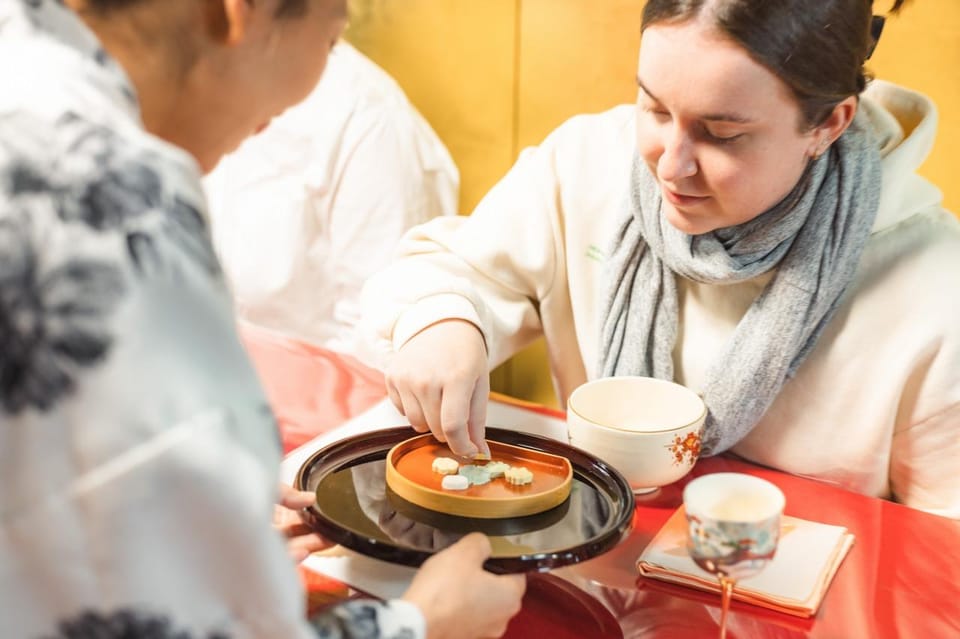
Yes, you’ll learn the “why.” And it’s presented in a way that fits into the 90 minutes, not as a lecture you have to survive.
You’ll watch PowerPoint presentations that explain:
- how the tea ceremony developed in Japan,
- Japanese spirit and manners tied to the ritual,
- and the meaning behind key steps and tools.
In my view, this history-and-manners combo is what keeps the ceremony from turning into a one-time craft. Once you understand the purpose—respect, quiet focus, preparation—you can appreciate the ceremony even after you leave the house.
Photos and props: umbrellas, fans, and katana-style moments
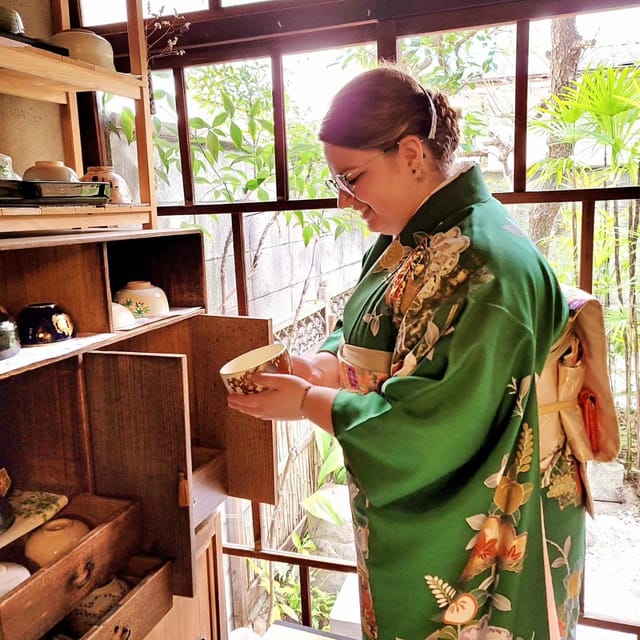
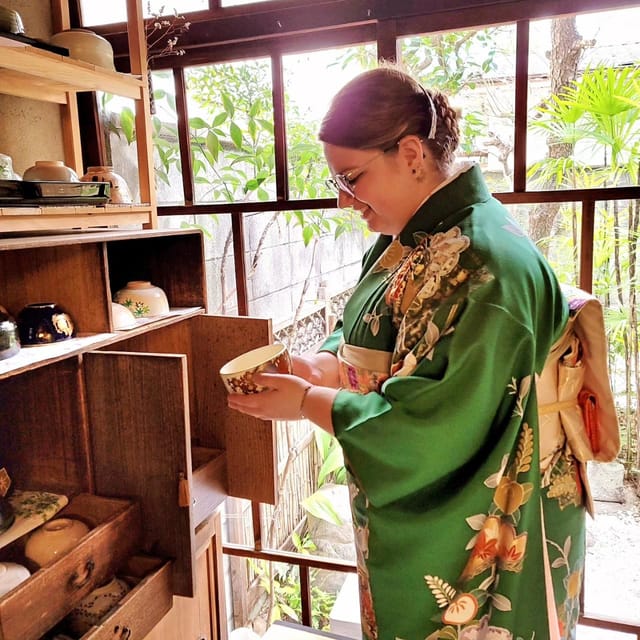
This experience is photo-friendly, and not in a vague way. You can take photos and videos using umbrellas and folding fans, plus katana sword-style props.
That’s fun, but it also helps you remember the cultural look and feel: the way people dress, the way they pose, the way the setting works as a frame.
Practical tip: if photos are important to you, treat the camera time like part of the choreography, not something you interrupt. That keeps the flow calm and lets the hosts guide you where they want you.
Calligraphy: write your name in kanji or hiragana, then take it home
After the tea and the matcha steps, you shift into calligraphy. You’ll write your name in Japanese kanji or hiragana (you can enjoy choosing which script you use).
Then you get a hanging scroll or an envelope with your name written in Japanese. This is one of those “small” inclusions that becomes a big souvenir. It’s personal. It also makes you slow down and pay attention to strokes, not just snap pictures.
If you’re traveling with friends or family, this is also a great equalizer. Everyone can try calligraphy, and it’s not dependent on drink taste or comfort with utensils.
Flower arranging for tea ceremony vibes
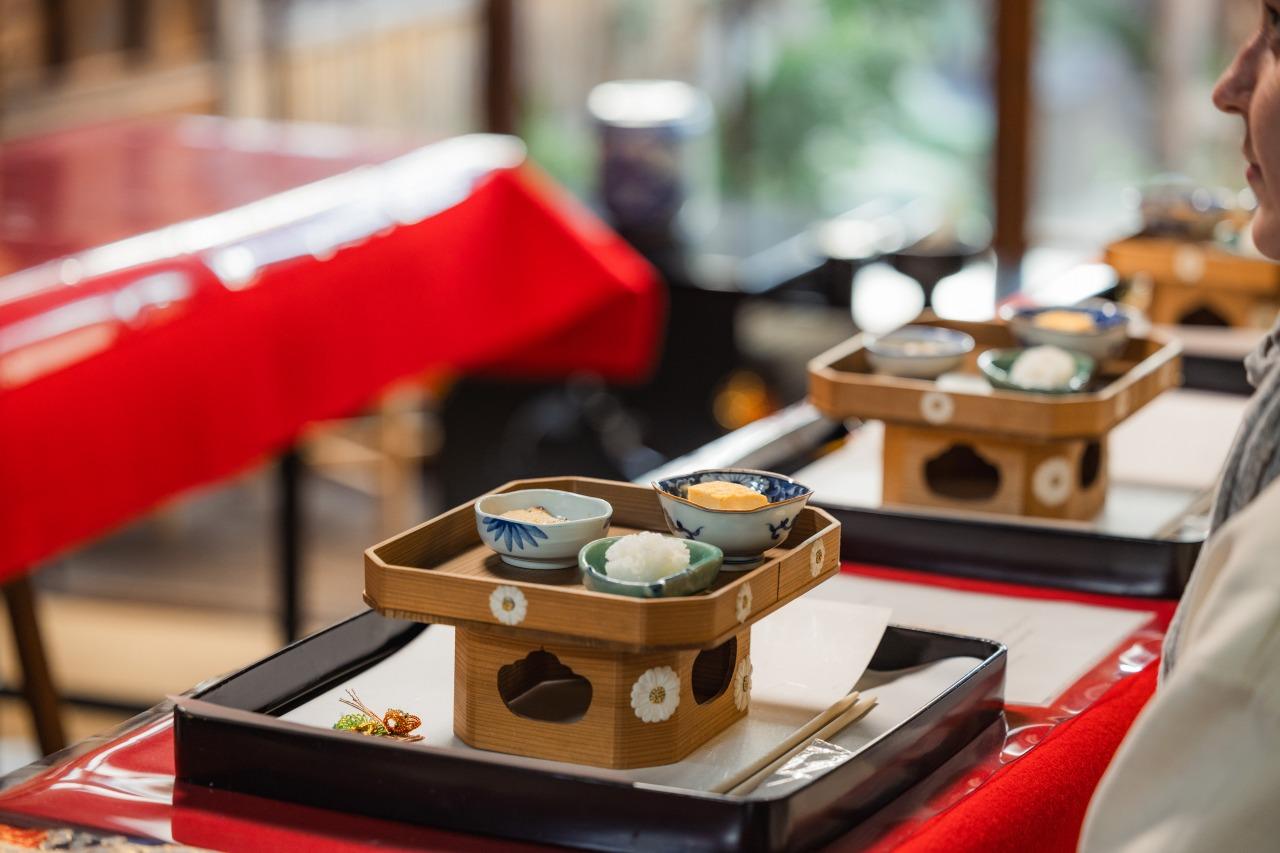
A flower-arranging activity is included as well. It’s the kind of extra that makes the ceremony feel like an entire roomful of Japanese aesthetics—tea, tools, space, and seasonal touches all grouped together.
You’ll get instruction during the arranging part, so you’re not expected to invent something from scratch. When it’s done, you’ll have a finished arrangement connected to the ceremony theme.
The kimono option: worth it for photos and for the full experience
Kimono rental is available as an option (and you should reserve it by clicking View Availability twice, as noted). If you choose it, you’re asked to arrive 30 minutes before the experience begins.
A kimono changes the whole feel of the afternoon. It turns the townhouse into a true time-capsule. It also gives you more “Kyoto mode” for photos, which matters because this is a camera-friendly experience anyway.
The kimono note about pregnancy is important: if you’re pregnant, the guidance is not to wear a kimono for health and safety. And since the activity isn’t suitable for wheelchair users, always prioritize your comfort and access needs.
Where it is: southern Kyoto, easy add-ons to Osaka and Nara
This takes place about 20 minutes by train from the main Kintetsu Kyoto area, or roughly 25 minutes from Kintetsu Kyoto Station depending on your route. From Keihan Gion-Shijo Station, it’s about 20 minutes by train.
The setting is in the southern part of Kyoto, in a sake-town area with casual restaurants and shopping streets nearby. That’s ideal because you can pair it with food right before or after your ceremony.
You’re also well positioned for day trips:
- Osaka is about 40 minutes by express train.
- Nara is about 50 minutes.
- On the way, you can consider Fushimi Inari Shrine (about 15 minutes from Keihan Fushimi Inari Station) or Uji City, which is famous for tea (about 20 minutes by train).
If you want a tight, efficient day, you can do a ceremony here and still fit in one major shrine or a tea-focused town without feeling rushed.
How to find the place without stress: follow the blue curtain clue
Meet-up info is detailed, and you’ll want it. There are multiple train routes, then a short walk along the Otesuji shopping arcade, turning right at a Mizuho Bank or a Rakuten mobile shop.
From the Momoyama station (JR) route, you pass a shrine called Gokogu (on the right) in about 300 meters, then continue on Otesuji Arcade, turning right near Mizuho Bank/Rakuten. In roughly 2 minutes you’ll see a traditional Kyoto townhouse with a blue curtain on the right.
Also, guides wearing kimono will be waiting for you. If you’re arriving early, this makes it easier to confirm you’re at the right spot.
Small advice: give yourself extra buffer time on the walk. You’re in a shopping arcade area where it’s easy to drift while looking at storefronts.
Price and value: what $45 buys you in real terms
At about $45 per person, this feels fair because you’re not just paying for one tea drink. You’re paying for a whole structured lesson plus multiple activities.
Included elements you’ll actually do:
- the tea ceremony experience,
- traditional sweets,
- a welcome drink (sake or juice),
- latte art using thick tea,
- matcha making with a bamboo whisk,
- calligraphy with a name written in kanji or hiragana,
- a hanging scroll or envelope as a takeaway,
- and a flower-arranging experience.
Kimono rental is optional, but it’s a meaningful add-on if you want the full Kyoto look and easier photo memories. Even without kimono, the chair-based setup makes this a smart match for many travelers who want the ritual without the discomfort.
If you’re comparing to a standard short tea tasting, the difference here is you get hands-on steps and several cultural crafts, all within 90 minutes.
Who should book this Kyoto table tea ceremony (and who should skip it)
Book it if you:
- want a Kyoto tea ceremony that’s more comfortable than floor-sitting,
- like hands-on activities (matcha, calligraphy, arranging),
- want a structured lesson in English,
- and care about photos in a traditional setting.
You might skip it if you:
- need wheelchair accessibility (the activity isn’t suitable for wheelchair users),
- or you’re specifically looking for a ceremony that requires floor seating as part of the authenticity style. This one is designed around the chair/table format.
Should you book Éclat Japon’s Kyoto table-style tea ceremony?
If you want your Kyoto day to feel both cultural and easy to handle, I’d say yes. The chair-based setup makes the ceremony doable, and the hands-on parts (matcha, calligraphy, flower arranging) keep it from feeling like a quick show.
Also, the location is useful: you’re in southern Kyoto, near sake-town food and shops, and not so far from Osaka or Nara. That helps if you’re building a multi-stop itinerary.
My best advice: if you can, add the kimono option. Arrive 30 minutes early, take your time with photos and the calligraphy moment, and then enjoy a meal nearby after your session.
FAQ
Is the tea ceremony done on the floor?
No. This experience is designed as a table-style tea ceremony, and you sit comfortably on a chair instead of on the floor.
How long is the Kyoto tea ceremony experience?
The duration is 90 minutes.
How much does it cost?
The price is listed as $45 per person.
What language is the instruction in?
The instructor is English.
Do I get welcome drinks?
Yes. Welcome drinks are included, such as sake or juice.
What else is included besides the tea?
Included items list traditional sweets, latte art using thick tea, calligraphy, a hanging scroll or envelope with your name written in Japanese characters, and a tea ceremony flower arranging experience.
Can I make my own matcha?
Yes. You’ll make your own matcha using a bamboo whisk.
Do I get to do calligraphy?
Yes. You’ll write your name in Japanese kanji or hiragana and then receive a hanging scroll or an envelope with your name.
Is kimono rental included?
Kimono rental is optional. If you select it, you’ll need to arrive 30 minutes before the experience begins.
Is pickup from a hotel included?
No, hotel pickup and drop-off are not included.
Is the experience wheelchair accessible?
It is not suitable for wheelchair users.
Where is the meeting point?
It’s on the outskirts of Kyoto, about 20 minutes by train from Kintetsu Kyoto Station via an express route to Kintetsu Momoyama-Goryo-mae Station, or about 20 minutes from Keihan Gion-Shijo Station via Keihan to Fushimi-Momoyama Station. Walking directions include turning right at a Mizuho Bank or Rakuten and looking for a townhouse with a blue curtain.