REVIEW · KYOTO
Factory Tour and Goshuin Book making workshop
Book on GetYourGuide →Operated by 株式会社 西川紙業 · Bookable on GetYourGuide
Paper craft turns your Kyoto day into something real. I love the guided factory tour where you see how the makers produce everything in-house, and I love that you leave with your own one-of-a-kind Goshuincho temple stamp book. One consideration: transportation to the shop isn’t included, and the whole thing moves fast at about an hour.
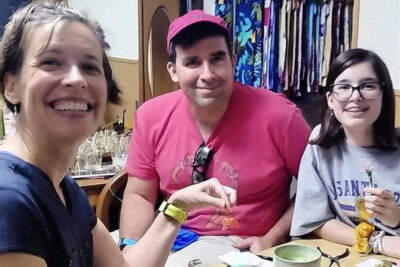
The best part is the hands-on payoff in a small group (max 10). I also like that the instruction is in English and Japanese, and the team I spoke with through the process (including Saori and her assistant Ayaka) keeps it friendly and manageable even if you’re new to this kind of craft.
In This Review
- Key things I’d clock before you go
- Inside Nishikawa Paper: Seeing Craft Done Up Close
- Goshuincho workshop basics: What you’re really making
- Choosing Yuzen washi paper: The part you’ll remember
- Using your Goshuincho in Kyoto right after
- Price, time, and who this is best for
- Should you book this workshop?
- FAQ
- How long does the Factory Tour and Goshuin Book making workshop take?
- How much does it cost?
- What will I create during the workshop?
- Is the factory tour included?
- How big is the group?
- What languages are the guides available in?
- Do I need to arrange transportation to the meeting point?
- Is there a minimum number of participants per booking?
- Is it suitable for young children?
Key things I’d clock before you go
- Factory access where paper-making craftsmanship is shown in-house
- A finished Goshuincho you can actually use right away
- Yuzen washi paper selection for a truly personal cover
- Support from instructors like Saori and assistant Ayaka
- Small-group pace, so you can ask questions and stay hands-on
Inside Nishikawa Paper: Seeing Craft Done Up Close
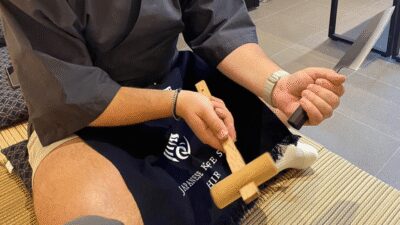
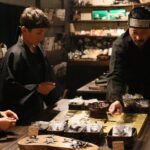
This experience is run by 株式会社 西川紙業, and it starts at a shop inside the company premises. That matters. Instead of bouncing between random photo stops, you get a real worksite setup, with explanations timed to what you’re seeing.
The factory tour is guided, and it’s built around the refined craftsmanship the artisans use to create the materials that end up in beautiful paper goods. You’ll get the sense that this isn’t “paper as decoration.” It’s paper as a carefully made product—hands, tools, and process all in the same place.
What I like most is the pace. It’s not a long lecture. You’re pointed at what’s happening, then you move on while it’s still fresh in your mind. That sets you up for the workshop right after, when you’ll be making decisions about paper and design instead of just watching.
You can also read our reviews of more tours and experiences in Kyoto


Goshuincho workshop basics: What you’re really making
A Goshuincho is a temple stamp book—basically a dedicated collection book you bring to shrine and temple stops in Kyoto. The idea is simple: you collect goshuin (the stamped artwork) into a book made for that purpose.
This workshop gives you the book first. You’re not just learning about the tradition; you’re creating the object you’ll use for it. That’s a big value shift. You leave with something personal that turns your later sightseeing into a follow-through, not just a memory.
And yes, the “one-of-a-kind” part is real here. Your book isn’t a blank souvenir with a pre-set look. You choose from a variety of Yuzen washi papers, so the cover and feel of your Goshuincho reflects the choices you make during the session.
Choosing Yuzen washi paper: The part you’ll remember
After the factory tour, you move into the making workshop, where you pick paper from a wide selection of beautiful Yuzen washi. That’s where the experience becomes creative in a practical way—your job is to select the papers that match your style, then build your Goshuincho using the materials provided.
Here’s what I found important for your expectations: you don’t need to be skilled to participate. People I read about specifically said they were able to complete the project without prior craft experience. So think of this as guided creation rather than an exam.
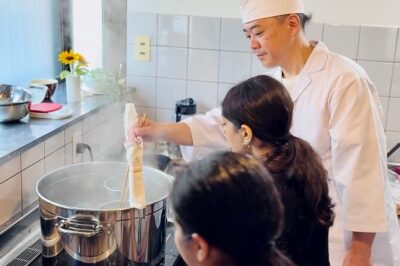
The instruction is live, with a guide present throughout and an assistant to help keep things smooth. If you’re the type who worries about messing up, this is the kind of workshop that’s designed for beginners. The staff I saw described as quick and skilled also shows up in how they teach: they keep the process moving so you still end the session with a book you genuinely like.
By the time you finish, you’ll have a completed original Goshuincho and that’s a tangible souvenir you can use, not just carry.
Using your Goshuincho in Kyoto right after
The experience is timed so you can turn what you make into immediate sightseeing. The highlights specifically call out using your handmade Goshuincho to explore Kyoto afterward, and that’s exactly how you’ll get the most out of it.
A practical way to think about it: once your book is in your hands, you start noticing the goshuin tradition differently. You’re already holding the collecting format, so when you visit shrines and temples, it’s easier to treat the day like a themed route rather than scattered stops.
This is also where the “one-of-a-kind” cover helps. It’s easy to spot and find your own book later—useful if you’re collecting multiple stamps over time. Plus, the cover you chose makes each stamp feel like it’s being placed into something you actually built yourself.
Price, time, and who this is best for
It costs $70 per person for a 1-hour experience. That price is easiest to justify if you look at what’s included: you get the factory tour, a guide, the material fee, and a finished original Goshuincho. So you’re paying for access plus the hands-on output, not just a view of how things are made.
Is it short? Yes. One hour is exactly the point. It’s enough time to see the craftsmanship, make key choices (your Yuzen washi), and complete the book. But it’s not a half-day craft retreat. If you want hours and hours of creative work, you might look for a longer workshop.
Best fit:
- You like Kyoto culture that feels practical, not just scenic
- You want a hands-on souvenir you’ll use during your trip
- You’re traveling with people who enjoy creative activities but don’t want an advanced skill test
- You enjoy small-group instruction, especially since the group is limited to 10 participants
One more thing to plan: transportation to the site isn’t included. So budget a little time getting to the company shop on your own. Also, the tour requires a minimum of 2 participants per booking, so start times can depend on how bookings line up.
Finally, it’s not suitable for children under 5. If you’re traveling with younger kids, you’ll want to match the workshop length and pace to what they can handle.




Should you book this workshop?
I’d book it if you want a Kyoto experience with a real result. The factory tour gives you context for the craft, and the workshop gives you the product—your own Goshuincho made from Yuzen washi you choose. That combination is what makes it feel worth it, even though the time is compact.
Skip it (or at least think twice) if you don’t care about making something you’ll carry and use, or if you strongly prefer sightseeing without structured activities. Also, if getting to the shop is a hassle for your schedule, the lack of included transportation could tip the balance.
If you’re aiming for Kyoto that goes beyond photos, this is a smart way to spend an hour.
FAQ
How long does the Factory Tour and Goshuin Book making workshop take?
The experience lasts 1 hour.
How much does it cost?
It’s $70 per person.
What will I create during the workshop?
You’ll make your own original Goshuincho (temple stamp book).
Is the factory tour included?
Yes. The package includes the factory tour and a guided tour.
How big is the group?
It’s a small group limited to 10 participants.
What languages are the guides available in?
The live tour guide is available in English and Japanese.
Do I need to arrange transportation to the meeting point?
Yes. Transportation to the site is not included. The tour meets at the shop within the company premises.
Is there a minimum number of participants per booking?
Yes. There must be a minimum of 2 participants per booking.
Is it suitable for young children?
It is not suitable for children under 5 years old.