REVIEW · KYOTO
Takashi’s local food adventure through Gion Kyoto tips of Ramen
Book on Viator →Operated by Amazing Kyoto Experience · Bookable on Viator
Ramen at night in Gion feels like secret Kyoto. I love how this tour strings together Gion street sights with real food choices, and I also love that the guide (Takashi or Natsuki) actively steers you to dishes you might not find on your own. One thing to factor in: the tour price covers the guiding, but food is bought by you, so your evening budget depends on what you order, and late arrivals can mean some short tasting stops close early.
You meet at Gion-Shijo Station at 7:30 pm and follow a compact downtown route that mixes shrine-and-street atmosphere with practical navigation. It’s set up as a private experience, so it fits best when you want someone to translate the city’s food logic, not just point at menus.
In This Review
- Key Things You’ll Notice on This Gion Food Adventure
- A Kyoto Night Walk That Makes Food Feel Like Part of the City
- Meeting Point and Timing: What the 7:30 pm Start Really Means
- Gion District First: Where the Night Atmosphere Becomes the Lesson
- Yasaka Shrine Stop: Free Entry, Real Context
- Canal Lanes and Lantern Alleys: Getting to the “Real” Kyoto Streets
- Kawara-machi Restaurant Time: Where the Meal Becomes the Finale
- A note on what’s included versus extra
- How Takashi and Natsuki Turn Food Into Questions You’ll Actually Want Answered
- Price and Value: Is $166.14 Per Person Worth It?
- Practical Advice Before You Go
- Who This Tour Fits Best (and Who Might Prefer Something Else)
- Should You Book This Gion Ramen and Local Food Tour?
- FAQ
- FAQ
- What is the duration of the tour?
- How much does the tour cost?
- What time and where does it start?
- Is this tour private?
- Are restaurant meals included in the price?
- Is there an admission fee for Yasaka Shrine?
- Does the tour use a mobile ticket and include transportation access?
Key Things You’ll Notice on This Gion Food Adventure
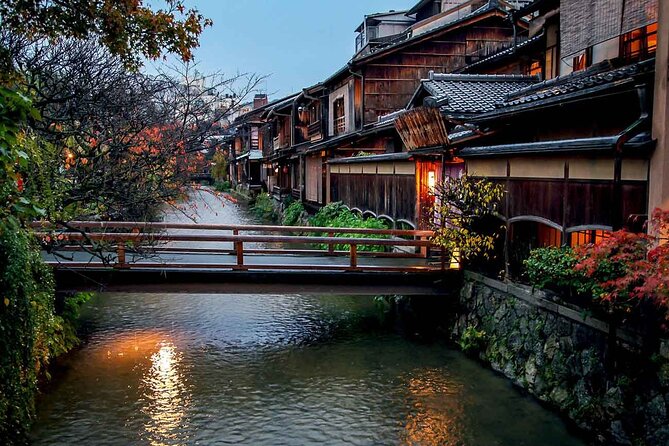
- A guided night walk through Gion with time to notice the lanes and canal-side atmosphere
- Yasaka Shrine stop included (admission is free for the time you’re there)
- Maiko and geisha sightings are possible since the route moves through the area where performances cluster
- Hidden-from-tourists restaurant routing that aims for places locals actually use
- A guide-chosen meal where you may eat something like ramen, katsu, or izakaya (varies by tour)
- Food is extra after the tour price, so plan to spend more during dinner
A Kyoto Night Walk That Makes Food Feel Like Part of the City
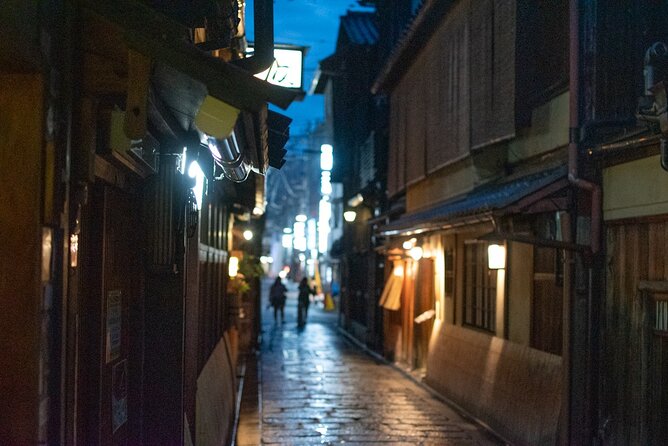
If you’ve only tried Kyoto restaurants by accident, this is a smart fix. This experience works because it treats food as part of the night’s rhythm. You’re walking through Gion’s lanes first, learning what the district is tied to, and then you move to dinner when you’re actually hungry.
I especially like the setup for English speakers who don’t want to fight through every menu detail alone. The description leans into the idea of English-unfriendly restaurants, and that’s exactly why the guide matters. Instead of you guessing what’s “good,” the guide helps you order the kind of items that make sense for Kyoto and for that particular place.
The other big win is the pacing. You’re not stuck touring shops for hours. You get a structured walk (roughly 3 hours total), then the plan turns to eating and talking with the guide.
You can also read our reviews of more food & drink experiences in Kyoto

Meeting Point and Timing: What the 7:30 pm Start Really Means
This tour starts at 7:30 pm at Gion-Shijo Station (1 Chome Miyagawasuji, Higashiyama Ward, Kyoto). It ends back at the meeting point, so you’re not dealing with a confusing “last stop” transit puzzle.
Because it’s an evening plan, timing is everything. One piece of real-world feedback tied to this tour: some short food stops can be impacted by arriving late, since evening shop hours can be tight. So I’d treat 7:30 pm as firm, not flexible.
The physical level is listed as moderate. That’s about the walking and the urban sidewalk situation, not about stairs to a mountain viewpoint. Still, if you’ve got mobility limits, it’s worth thinking through whether you’ll be comfortable with a steady downtown walk at night.
Finally, this is a private tour/activity, meaning only your group participates. That changes the feel: you can ask questions without waiting for the group rhythm to catch up.
Gion District First: Where the Night Atmosphere Becomes the Lesson
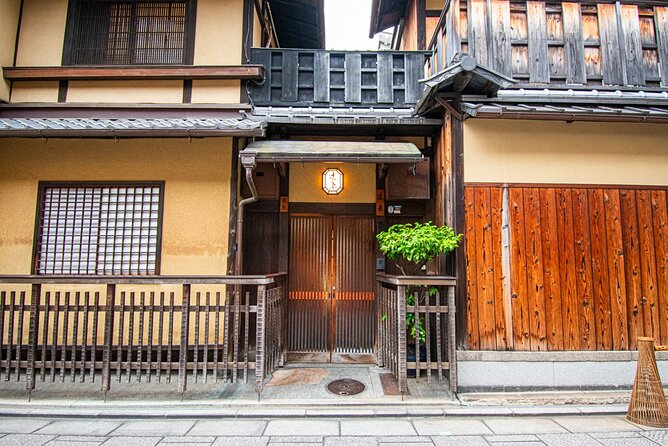
The itinerary begins in Gion, Kyoto’s well-known entertainment district that has been tied to performance culture for 500+ years. On a food tour, that might sound like a detour, but it isn’t. Gion’s background helps you understand why certain areas and shrine connections mattered historically to performers, theaters, and the kinds of social nights people used to have.
As you walk, you may also notice maiko or geisha. The tour frames this respectfully: these are traditional female performers associated with the entertainment world, and they’re identifiable by distinctive makeup. Even if you don’t see one close up, the guide’s explanation helps you stop treating the district like a theme park.
Two practical thoughts:
- Bring your patience. Gion can be crowded in certain pockets, and you’ll be moving through lanes where foot traffic changes minute to minute.
- Stay ready for “look up” moments. Kyoto architecture and signage matter, and the guide is the one connecting those details to the story.
Yasaka Shrine Stop: Free Entry, Real Context
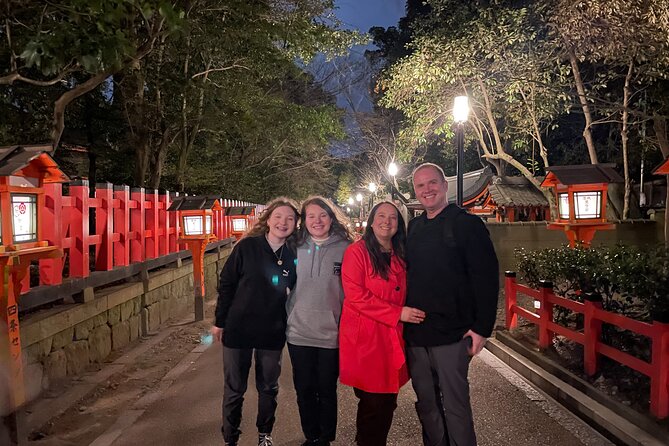
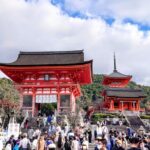
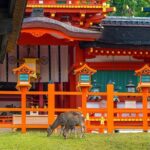
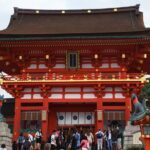
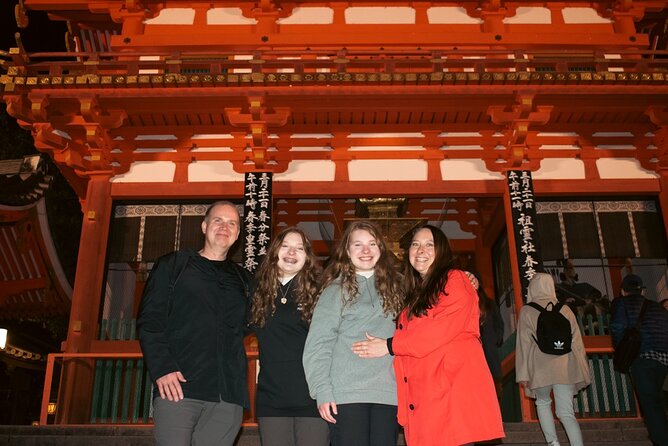
You’ll spend about 30 minutes at Yasaka Shrine, and admission for your time there is free.
What I like here is that the shrine is not treated as a quick photo checkpoint. The tour connects Yasaka Shrine to Gion’s role as a place where entertainment culture grew. That matters because it changes how you read the space: you’re not only looking at religious architecture, you’re learning how the entertainment district and cultural life interacted.
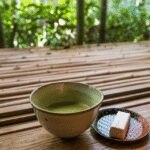
In addition, the route description suggests there may be small food moments around this area depending on timing. One example given for typical elements: you might encounter short tastings such as mochi and small stands connected to the shrine’s surroundings. These aren’t guaranteed in the sense of a fixed menu, but they’re part of the tour’s intent—show you what locals actually snack on during the evening walk.
Canal Lanes and Lantern Alleys: Getting to the “Real” Kyoto Streets
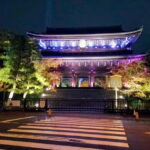
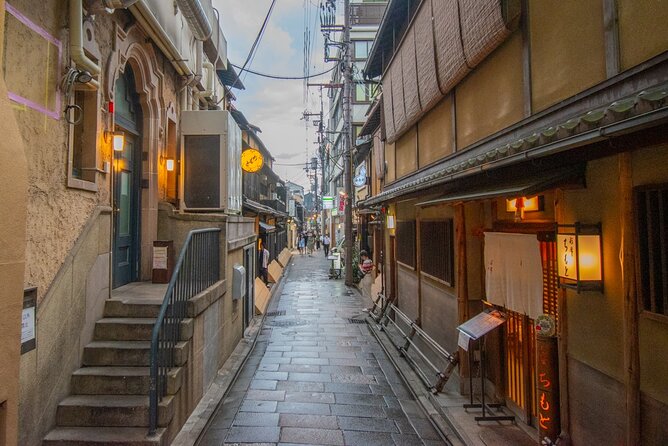
After Yasaka Shrine, you walk toward small alleys along the canal. This is one of the best sections of the tour because it’s visual and practical. The lanterns, shops, and tight lanes create that Kyoto night feel fast—without needing you to hunt for it.
This segment also does a job that a lot of tours skip: it physically relocates you away from the loudest tourist strips. The plan is to head toward where smaller restaurants are tucked into lively streets, the kind of places that can be hard to find and hard to interpret if you don’t have local guidance.
You’ll likely feel your hunger rising here, which is exactly the point. The tour doesn’t drag out the scenery right up to dinner. It builds momentum.
You can also read our reviews of more tours and experiences in Kyoto

Kawara-machi Restaurant Time: Where the Meal Becomes the Finale
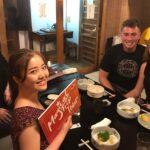
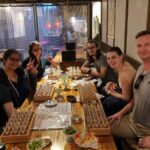
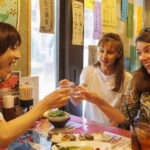
Eventually you arrive in Kawara-machi, and the tour shifts into restaurant mode. This restaurant portion is listed as about 2 hours, with the key idea that the guide will choose the best dishes at each place.
Here’s what you can expect at a realistic level:
- The guide steers you toward local choices rather than the most obvious, English-forward options.
- The tour’s food theme can vary by visit. You may end up with ramen, katsu, or izakaya-style dishes depending on what that specific tour selects.
- You’ll sit down, eat at a local pace, and talk with the guide during the meal.
I also like that the description openly acknowledges restaurants can be “shy” about serving foreigners. Translation: you’re not meant to wander alone and guess. You’re meant to arrive with someone who can handle the awkward parts—ordering, choosing, and understanding what to try.
A note on what’s included versus extra
The tour includes the guidance and navigation, but all food is bought by guests. So the value is in access, decision-making support, and local selection. You’re paying for someone to take you to the right table and help you order well, not to have dinner fully comped.
How Takashi and Natsuki Turn Food Into Questions You’ll Actually Want Answered
Two names come up in the tour description: Takashi and Natsuki. Both are described as enthusiastic and ready to chat. Takashi is also noted for professional guiding and for offering car tours across Kyoto, Nara, and Osaka, which signals you’re dealing with someone who knows the broader region, not just this single evening.
What’s useful isn’t just friendliness. It’s the topic range:
- You can ask about geisha, pagoda, and even Kyoto geography.
- You can ask questions about how performances shaped neighborhoods and why certain areas became associated with nightlife.
That sort of context makes the meal feel earned. You’re eating ramen or katsu in a place that fits into the district’s cultural logic, not just consuming food as an item on a checklist.
Price and Value: Is $166.14 Per Person Worth It?
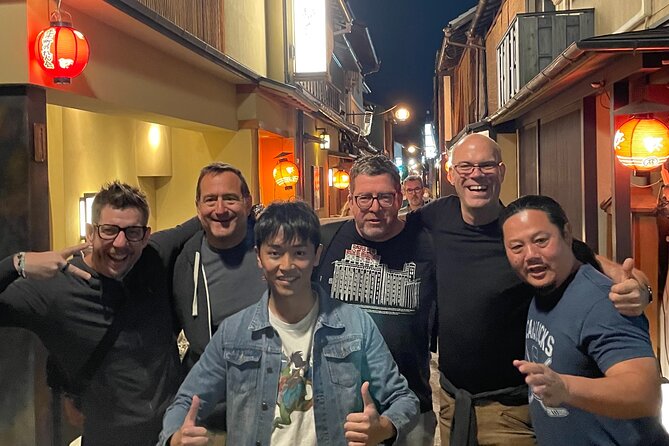
The stated price is $166.14 per person for about 3 hours. That includes guiding and navigation, plus the private tour format (your group only). It also mentions group discounts and a mobile ticket option.
But here’s the honest value equation: your biggest variable cost is the dinner itself, since food is purchased by you. So your total spend can be higher than the tour price, depending on how much you eat and what you order.
Where the price makes sense is when you’re trying to solve three problems at once:
- Finding restaurants that aren’t just the most obvious tourist choices
- Ordering confidently in English-unfriendly settings
- Connecting the food stop to the place you’re in (Gion and Yasaka Shrine connections)
If you already know your way around Kyoto menus and can comfortably order without help, you might not need a guided dinner selection. But if you want your first (or second) Kyoto night to feel guided and smooth, the cost can feel fair—especially since the guide is doing real decision work for you.
Practical Advice Before You Go
A few small things will make the evening more enjoyable:
- Arrive on time for the 7:30 pm start. Evening hours can shrink fast, and short tastings may depend on timing.
- Plan for dinner spending beyond the tour price. The guide selects dishes, but you’re the one paying for them.
- Wear comfortable shoes. You’ll be walking through lanes and streets in the Gion area and reaching Yasaka Shrine.
- Come with questions. If you ask about geisha culture or Kyoto geography, you’ll get more out of the meal conversation.
If you want to photograph: do it, but keep moving. This is a walking-and-eating format, not a “stand and shoot” itinerary.
Who This Tour Fits Best (and Who Might Prefer Something Else)
This is a great fit if:
- You want a Kyoto night food experience that includes both walking and a seated meal
- You’re curious about Gion’s cultural background and not just hungry
- You like the idea of trying foods like ramen, katsu, or izakaya with guidance
- You’d rather follow a local route than hunt on your own through Kyoto’s restaurant maze
You might want a different type of tour if:
- You hate extra food costs and want everything priced up front
- You’re expecting a multi-stop tasting buffet with lots of separate bites (the core structure is walk + shrine + one main restaurant meal)
- You struggle with evening walking on moderate terrain
Should You Book This Gion Ramen and Local Food Tour?
I’d book it if you want a confident first taste of Kyoto at night, with a guide who helps you choose the food and explains the Gion context while you’re there. The tour’s strongest value is that it handles the hard parts: restaurant selection and ordering in places that may not be built for English-first visitors.
If you’re budget-tight, go in knowing food is extra. If you’re short on time, double-check your arrival and plan to be punctual so you don’t miss the smaller evening moments.
Overall, this is the kind of tour that turns a single evening meal into a Kyoto experience, not just dinner.
FAQ
FAQ
What is the duration of the tour?
The tour lasts about 3 hours.
How much does the tour cost?
The price is listed as $166.14 per person.
What time and where does it start?
It starts at 7:30 pm at Gion-Shijo Station (1 Chome Miyagawasuji, Higashiyama Ward, Kyoto).
Is this tour private?
Yes. It is a private tour/activity, and only your group will participate.
Are restaurant meals included in the price?
No. All food is bought by guests. The guide will be able to pay for his/her own food.
Is there an admission fee for Yasaka Shrine?
Admission is free for the time you visit Yasaka Shrine.
Does the tour use a mobile ticket and include transportation access?
A mobile ticket is mentioned, and the meeting point is near public transportation.