REVIEW · KYOTO
Art Sushi Class At Local Home With Professional Instructor
Book on GetYourGuide →Operated by Kangetsu Kyoto · Bookable on GetYourGuide
Sushi rolling gets way more fun in a real home. This Kyoto sushi class near Nijo Castle teaches you to make Instagram-worthy rolls you usually won’t see in restaurants, with an instructor who can explain the why behind the technique. I particularly like the take-home skills (you’ll actually know what to do again later) and the careful, creative finishing touches. One possible consideration: the area around Nijo Castle can be confusing on outdated map apps, so plan to confirm the location details before you go.
In about 1 hour, you’ll learn the sushi-roll story from the Edo period through later refinements, then put it into practice with rice vinegar, sugar, sesame, ginger, vegetables, and nori. The result is a pretty flower-pattern style that’s the whole point of the class. The drawback to keep in mind is simple: video recording isn’t allowed, so if that’s your thing, you’ll need to rely on photos and memory.
In This Review
- Key Things To Know Before You Go
- A 1-Hour Kyoto Sushi Workshop in an Authentic Nijo Castle House
- Finding The Right Door Near Nijō Castle (and Why It Matters)
- What You Wear and Sip: Komono, Tea, and a Calm Classroom Pace
- The Sushi Roll Story You’ll Actually Use
- Making the Rice: Vinegar, Sesame, Ginger, and the Pattern Color
- The Flower Roll Technique: How You Get Restaurant-Looking Results
- Tools, Recipe Booklet, and Repeating It at Home
- Price and Value: Why $82 Can Feel Worth It
- Who Should Book This Sushi Class (and Who Might Skip It)
- The Logistics You’ll Be Glad You Checked
- Should You Book Art Sushi Class At Local Home?
- FAQ
- How long is the sushi class?
- What is included in the price?
- Where do I meet the instructor?
- What languages are used during the class?
- Can I record video during the class?
- Is the class suitable for young children and wheelchairs?
Key Things To Know Before You Go
- Authentic home setting: a Japanese-style house about 200 meters east of Nijo Castle, with a small wooden gate and noren curtain
- Flower-pattern sushi results: you’ll learn how to shape ornate rolls that match the class photos
- Tools and recipe booklet included: rental tools plus an original recipe booklet for repeating it later
- History + technique together: Edo-period origins, faster vinegar-based versions, and pattern-making refinements
- Naturally colored rice: the ornate patterns use natural edible pigments for coloring the rice
- Quiet rules to plan around: no video recording during the lesson
A 1-Hour Kyoto Sushi Workshop in an Authentic Nijo Castle House
This class happens in a Japanese-style home in the Nijo Castle area, not in a storefront kitchen. You’ll meet at a place you can spot: a small wooden gate at the front with a noren curtain, plus space to park a bike. It’s also close enough to fit into a day of Kyoto sightseeing without feeling like you’re losing half your afternoon.
Timing is refreshingly tight: the full experience is one hour. That matters because you won’t sit through long demos—your hands get busy early, and you leave with something you can recreate at home using the recipe booklet.
The best practical tip is logistical rather than culinary. The meeting point is search-based in maps under Sakura Experience Japanese Culture, and the listing notes that updated locations in Kyoto changed during COVID-19. If you still use an older map version, you might get sent to the wrong spot, so I’d rather you avoid stress by updating your map app and following the landmark directions.
You can also read our reviews of more tours and experiences in Kyoto

Finding The Right Door Near Nijō Castle (and Why It Matters)
You can locate the experience by searching さくら日本文化体験 Sakura Experience Japanese Culture on your map app. The location is described as about 200 meters east from Nijo Castle, and it’s roughly a short walk from major transit options:
- about a 3-minute walk from Nijo Castle and the Kyoto subway line Nijojomae station
- about 15 minutes on foot from the Hankyu line Shijo station
- about 3 minutes on foot from Kyoto city bus Fuchomae station
- about 10 minutes by taxi from JR Kyoto station
That’s useful because Kyoto can feel like a “maze with signage.” If you show up with clear directions in hand, you spend your class energy learning sushi, not negotiating streets.
Also, this is described as a private group experience. That’s a big deal in a hands-on food class, because you get more personal attention while you’re shaping the roll patterns.
What You Wear and Sip: Komono, Tea, and a Calm Classroom Pace
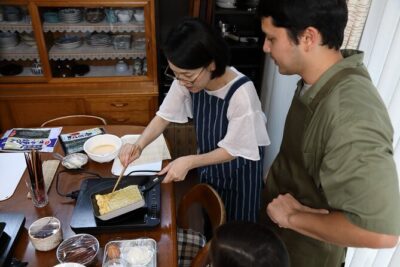
Once you’re inside, the experience leans into a traditional, “do it properly” feel. You’ll wear a komono during the class, which adds to the sense that you’re stepping into a real domestic routine rather than doing a quick tourist craft.
You’ll also be served Japanese tea or water. It’s not a dramatic detail, but it helps set a calmer pace. In one hour, that kind of reset matters because you’ll want your focus for the rice handling and the rolling technique.
And then there’s the ingredient list that tells you how the class is structured: rice vinegar, sugar, sesame, ginger, vegetables, and nori. This isn’t just rolling around an arbitrary filling—you’re working with the core flavors that make sushi rolls taste like sushi, not like a rice-and-topping snack.
The Sushi Roll Story You’ll Actually Use
Before you shape anything, you’ll learn the history and trivia behind sushi rolls from local experts. The class timeline highlights how sushi evolved during Japan’s modernizing eras.
You’ll hear that sushi rolls trace back to the Edo period, roughly 1750 to 1776, when popular culture was growing. During that time, vinegar-based and sake-associated sushi spread, and more food variety became mainstream. Later, in the early 1800s, quicker vinegar methods became more popular.
In the Showa period, sushi rolls shifted again, with patterns becoming more complicated. That directly connects to your class goal: the ornate flower-style roll isn’t just decoration—it’s part of the idea that sushi rolling can be both food and visual craft.
If you like food history, you’ll enjoy this. If you don’t, you’ll still benefit because understanding the “why” makes your shaping steps feel purposeful instead of random.
Making the Rice: Vinegar, Sesame, Ginger, and the Pattern Color
The rice is where sushi classes often separate “I ate sushi once” from “I can actually make sushi at home.” Here, you learn the base and then how it supports the final design.
You’ll work with rice vinegar and sugar, plus sesame and ginger. Those ingredients influence both flavor and how the roll tastes once it’s finished and sliced.
A standout detail for the look of the roll: the ornate patterns use natural edible pigments to color the rice. That’s practical information, not just trivia. It explains why the final pattern has that consistent, intentional look instead of being a random mix.
In a one-hour class, rice technique needs to happen quickly and accurately. When the teacher helps guide your hand movements at the moment you need them, you’re less likely to end up with uneven rice texture or messy edges.
The Flower Roll Technique: How You Get Restaurant-Looking Results
The headline promise of this class is that you’ll make sushi rolls that look like a beautiful flower. That’s not just marketing fluff here. The class is clearly built around shaping and finishing steps that create a pattern you can recognize from the class photos.
You’ll use nori (seaweed) as the roll structure, plus vegetables as your filling components. The rolling itself becomes a craft practice: lining up edges, controlling thickness, and shaping so the pattern holds when you slice.
This is where the instructor quality shows. In feedback, people praised patience and creativity, along with the fact that the sushi came out looking exactly like what was shown. You’re not just learning how to make sushi; you’re learning how to make the specific style of sushi that the class is built around.
You also get photos taken during the process. That’s a small thing, but it’s helpful if you want a record of your results for later practice at home.
One more rule to plan around: video recording isn’t allowed. Photos are implied to be part of the experience, but you’ll want to confirm how photography is handled in the moment so you don’t end up feeling rushed.
Tools, Recipe Booklet, and Repeating It at Home
You’ll leave with the means to practice again. Included in the class are:
- rental tools for sushi making
- an original recipe booklet
- Japanese tea or water
That recipe booklet is the key to value. Anyone can roll once. Fewer people can roll twice. Having the booklet means you’ll remember ingredient quantities and steps when the rice is on your counter and your first attempt doesn’t go perfectly.
Think of this as learning a method rather than just copying a moment. The history lessons and the practical rolling technique support that. Even if you don’t make the exact same flower pattern again immediately, you’ll understand how vinegar-seasoned rice, filling choices, and nori rolling work together.
If you’re the type who likes sending friends home with a story, this is a good one. People can see the result quickly when you slice it—and you’ll know how to explain what you did and why.
Price and Value: Why $82 Can Feel Worth It
At $82 per person for a 1-hour class, you’re paying for more than ingredients. You’re paying for instructor guidance, tools, tea/water, and the recipe booklet, plus a setting designed for hands-on learning.
Here’s what makes it feel like fair value:
- You get structured instruction focused on a specific ornate style, not a generic sushi demo.
- The class includes rental tools, so you don’t need to buy anything before you try it.
- You get an original recipe booklet, which is what turns the experience into something you can repeat.
- The home setting near Nijo Castle is part of the overall experience, not an afterthought.
It’s also a private group experience, which can improve the value if you’re traveling with a small group or want more hands-on attention rather than competing with a large class.
If you’re budget-stretching in Kyoto, consider what you want most: a one-time meal, or a skill you can bring home. This class is for the second category.
Who Should Book This Sushi Class (and Who Might Skip It)
This is a strong fit if you want a cultural food activity that’s creative and visual, but still rooted in technique. You’ll enjoy it if you like the idea of learning a process you can repeat, not just eating something tasty.
It’s also a good choice for:
- people who want to combine craft with local history
- anyone who appreciates traditional Japanese touches like komono and tea
- visitors who want a smaller, private-group experience
There are a few situations where it may not work as well. The class isn’t suitable for children under 4 years. And if you’re planning to record video content heavily, you’ll need to adjust expectations since video recording isn’t allowed.
The Logistics You’ll Be Glad You Checked
You can expect instruction in English and Japanese, and the class is described as wheelchair accessible, including the building itself and baby strollers.
Private group size can be a plus if you want attention while you’re shaping the roll pattern. You’ll also want to wear comfortable clothing—rolling is hands-on, and you’ll be focused for the full hour.
If you’re using public transit, plan your route toward Nijojomae (subway), Shijo (Hankyu), or Fuchomae (bus), then walk the short final distance. If you’re arriving by taxi, the directions are straightforward from JR Kyoto station.
And one more practical detail: the meeting point is described as an authentic Japanese style house. Bring a calm mindset for a small front gate and a noren curtain—Kyoto rewards people who look for the details.
Should You Book Art Sushi Class At Local Home?
I’d book it if you want a Kyoto food experience that mixes hands-on making with an actual craft outcome. The strongest reason is the combination of ornate results and learnable steps: you’re meant to take the skill home with you, not just pose with food.
I’d think twice if you need video recording or you don’t want to deal with a precise meeting point in a residential area. In that case, use updated maps, arrive a bit early, and follow the search name Sakura Experience Japanese Culture.
If you’re excited by the idea of a flower-pattern sushi roll near Nijo Castle—plus tea, tools, and a recipe booklet—this is one of those activities that turns Kyoto into a story you can repeat at your own kitchen table.
FAQ
How long is the sushi class?
The class lasts 1 hour.
What is included in the price?
Japanese tea or water, rental tools for sushi making, and an original recipe booklet are included.
Where do I meet the instructor?
You can locate the experience by searching さくら日本文化体験 Sakura Experience Japanese Culture on your map app. The house is about 200 meters east from Nijo Castle, with a small wooden gate and a noren curtain at the front.
What languages are used during the class?
The instructor speaks English and Japanese.
Can I record video during the class?
No. Video recording isn’t allowed.
Is the class suitable for young children and wheelchairs?
It isn’t suitable for children under 4 years. The building is wheelchair accessible, and it’s also accessible to baby strollers.