REVIEW · KYOTO
Osaka & Nara in 1-Day by Private Van with Local Expert Guide
Book on Viator →Operated by WadaF Tours · Bookable on Viator
Osaka and Nara in one day works because the route makes sense. You start with Nara deer and big-temple scale, then pivot to Osaka’s street energy and landmarks, all with a local English guide doing the heavy lifting.
I especially like two things about this kind of private setup: the flexibility to tailor what you actually care about, and the low-stress logistics of getting door-to-door by van. Your guide can also help with smart photo moments along the way, so you spend less time figuring out where to stand.
One thing to think about: the day is packed, and some streets and districts can feel intense (especially the adult-themed area). If crowds, nightlife, or walking through busy shopping zones aren’t your thing, you’ll want to keep expectations realistic.
In This Review
- Key things to know before you go
- A 1-Day Osaka and Nara Plan That Starts at 1 pm
- Private Van Comfort: Door-to-Door From Kyoto (or Osaka/Nara)
- Nara Park and the Deer-Time Morning: What to Expect
- Todai-ji and the Bell Tower Moment in Nara
- Osaka Castle and Yoshikien: A Quick History Break Plus a Garden Reset
- American Village and Osaka’s Fashion/Anime-Electronics Side
- Dotonbori, Shinsaibashi, and the Osaka Shopping Arcades
- Tsutenkaku Hondori Street Foods and Street-Level Osaka
- The Red-Line District Stop: Fun for Some, Awkward for Others
- Dinner Time With a Local Restaurant Guide (and How to Handle Lunch)
- Price and Value: When a Private Van Makes Sense
- Who This Tour Fits Best (and Who Might Prefer DIY)
- Should You Book This Osaka and Nara Private Day Trip?
- FAQ
- What cities can the guide pick me up from, and where can I be dropped off?
- What time does the tour start?
- How long is the tour?
- What vehicle will I ride in?
- What’s included in the price?
- What entrance fees should I plan for?
- Is lunch included?
- Can I cancel for a full refund?
Key things to know before you go
- Flexible pickup and drop-off across Kyoto, Osaka, and Nara, with different locations allowed
- Private van comfort (air-conditioned) with routes that usually run into evening lights
- Nara Park first for deer time and a calmer start to the day
- Todai-ji timing matters because the temple fee is not included, but you get the major stop
- Osaka streets include classic neon zones like Dotonbori plus shopping arcades
- A local dinner plan is part of the experience, but lunch and dinner costs are on you
A 1-Day Osaka and Nara Plan That Starts at 1 pm
This is a real day trip, not a half-sightseeing, half-waiting-around deal. The start time is 1:00 pm, and you’re looking at about 6 hours 30 minutes to 7 hours 30 minutes, so you finish with Osaka energy at night.
That timing is handy for first-timers. You get enough daylight for temples and landmarks, then you hit the neon districts when the city feels like a city. It’s a strong match for people who want a lot of variety in one shot from the Kyoto area.
You can also read our reviews of more guided tours in Kyoto

Private Van Comfort: Door-to-Door From Kyoto (or Osaka/Nara)
The big win here is simple: you don’t have to coordinate trains, transfers, and station-to-station walking. You can set pickup from Kyoto, Osaka, or Nara, and drop-off can be anywhere in those same cities, even if it’s different from your pickup point.
You travel in an air-conditioned private vehicle. Depending on your group size, it can be a Nissan Serena (listed for 2–6 pax) or a mini convertible (listed for 1 pax). Fuel, highway fees, and parking are covered, which removes a lot of hidden friction from the day.
And yes, you’ll have a guide in the car with you—so when you’re moving between areas, you’re not just staring out the window. You’re getting context, photo tips, and practical guidance on where you’ll want to stop next.
Nara Park and the Deer-Time Morning: What to Expect
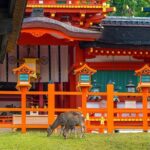
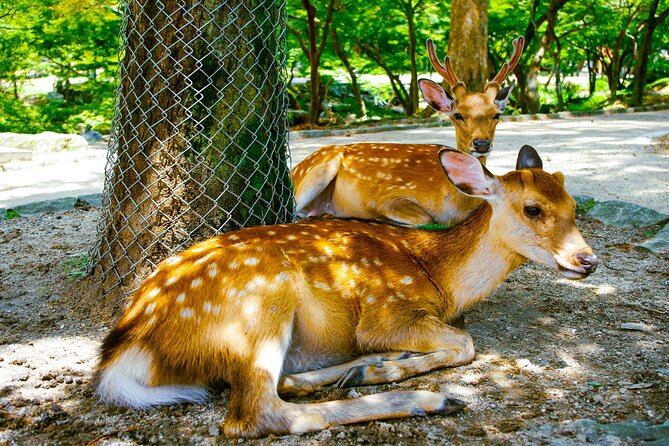
You start in Nara Park, and it’s hard to beat the immediate wow factor. The whole place has that deer-friendly, relaxed feel—deer hang out in nature, near temples, even around roads. It’s not staged. It’s just a very Nara thing.
This is also one of those stops where a little preparation helps. Wear shoes you can walk in without suffering. Give yourself a moment to watch how the deer move through the space, because the pace is more fluid than you might expect. In the experiences from this operator, you’ll also have chances to interact, including feeding time, as long as you follow the on-site guidance.
The duration here is about 1 hour, and that’s enough to get photos, watch the behavior, and still keep the day moving.
Todai-ji and the Bell Tower Moment in Nara
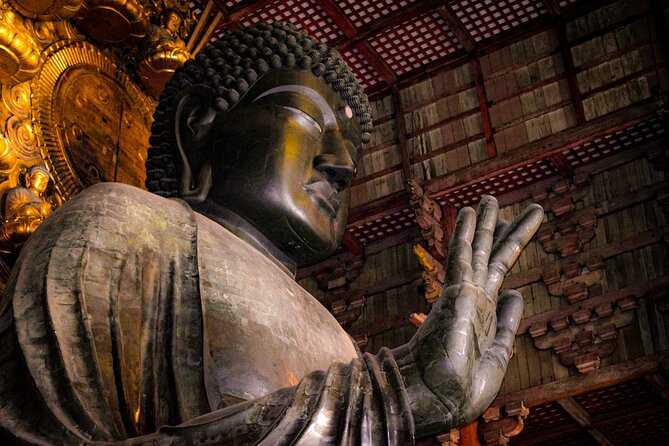
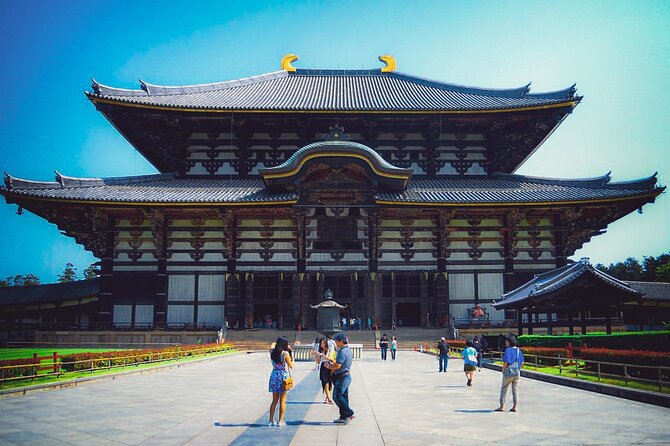
After deer time, you shift into the scale of Todai-ji Temple. This stop is about 1 hour, and it’s built around the temple’s monumental wooden architecture and its famous big Buddha presence. You’ll want to slow down here. Don’t try to sprint through.
Cost note: the Todai-ji admission fee is not included and is listed as ¥800 per person. That’s the main temple fee you should plan for, so it helps to budget it up front rather than being surprised at the gate.
There’s also a short bonus stop at Todai-ji Shoro (Bell Tower). It’s about 10 minutes, and the legend is part of the fun here: the bell is rung by a monk at 8 pm on a routine schedule, and it’s described as sounding for days. If your timing lines up, it’s a memorable way to connect Nara’s traditions to your evening schedule.
Osaka Castle and Yoshikien: A Quick History Break Plus a Garden Reset
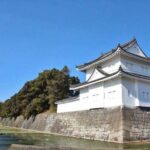
Osaka Castle is the next major landmark, with a short visit of about 20 minutes. Even in that limited time, it works because Osaka Castle is one of the city’s defining symbols, tied to centuries of samurai-era storytelling. It’s the kind of stop that gives you a visual anchor for the rest of the day.
Then you get Yoshikien, a Japanese garden designed in distinct areas with seasonal flowers and trees, plus moss elements that show up year-round. The garden time is about 15 minutes, so think of it as a reset between big sights and high-energy districts. It’s also a good moment for photos that aren’t neon-heavy.
If you’re the type who likes a little contrast—temples, then city buzz—this pair is smart. If you’re expecting long museum-style time, you’ll need to know this is paced for variety, not deep linger-at-one-place mode.
You can also read our reviews of more private tours in Kyoto


American Village and Osaka’s Fashion/Anime-Electronics Side
Once you’re in Osaka’s central zones, the vibe changes fast. You’ll stop around American Village, described as having a Tokyo-style youth atmosphere feel—more street fashion and nightlife energy than formal sightseeing.
The day also includes an area that’s likened to Akihabara for electronics and anime. That makes sense in a one-day route because it’s recognizable even if you don’t plan to shop heavily. You can snack, take photos, and people-watch without needing a long museum visit.
These stops are shorter on paper, which is exactly what helps them work in a packed schedule. You’re sampling different Osaka moods rather than committing to one theme for hours.
Dotonbori, Shinsaibashi, and the Osaka Shopping Arcades
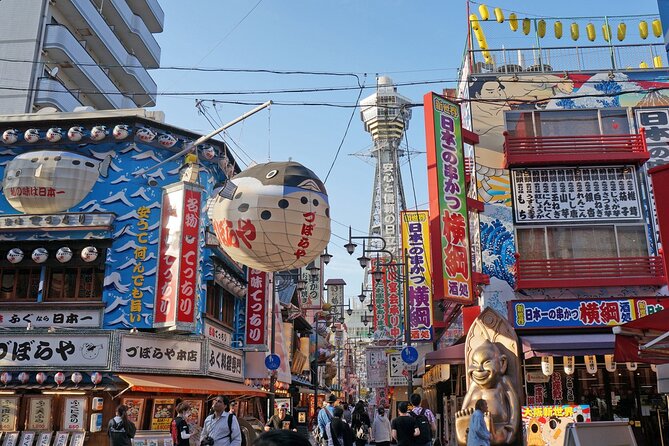
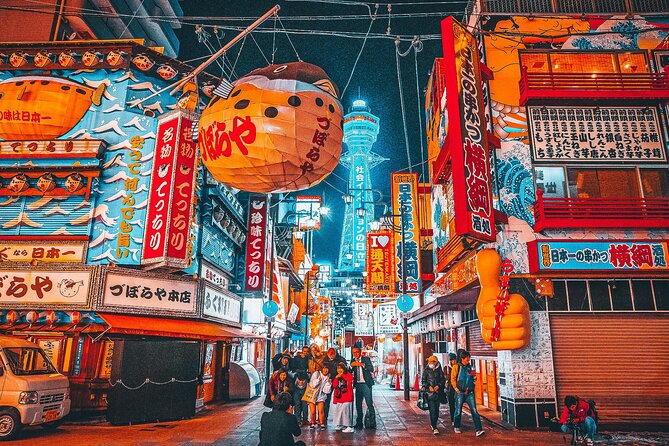
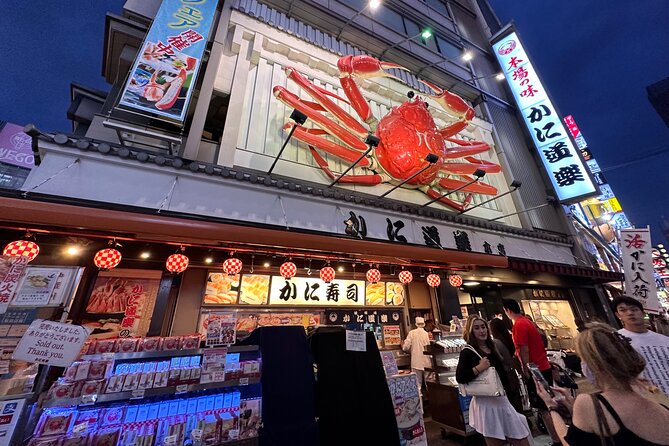
If you want the classic Osaka look, Dotonbori is where you go. This area is known for neon along the river and iconic signage, including the running-man style sign, plus a famous shopping stretch vibe.
The tour time here is brief—around 15 minutes—but Dotonbori is the kind of place where you don’t need much instruction to get a good experience. The challenge is actually choosing what to ignore. With so much visual noise, it helps to decide ahead of time: Are you here for photos, food, or shopping? You can do all three in parts, but it’s easier to enjoy if you pick your priorities and let the rest be background.
Then you move to the Shinsaibashisuji Kita Shotengai shopping arcade, described as extremely crowded and compared to Tokyo’s major pedestrian crossings. It’s a fast hit—about 5 minutes—and it’s more about feeling the crowd flow than shopping for a long time. Still, it’s a great place to see how Osaka moves at human speed.
Tsutenkaku Hondori Street Foods and Street-Level Osaka
Next up is Tsutenkaku Hondori Shopping Street, one of those Osaka-in-a-sentence spots. It’s described as a symbolic Osaka street with unique shops and a lively mix of people. The practical value here is that this is a street-food friendly zone.
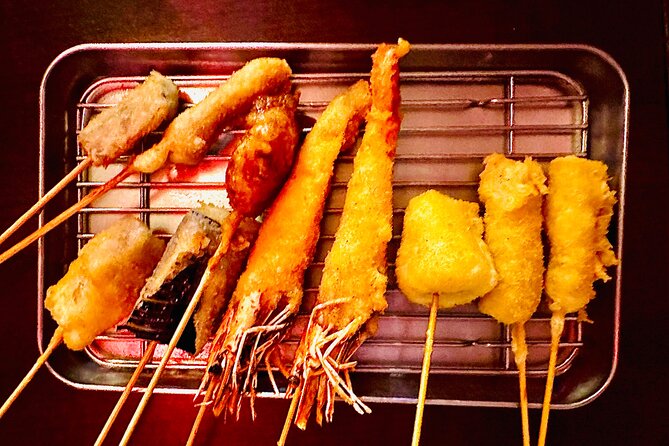
The day specifically calls out trying takoyaki—octopus balls—so this is a good moment for a quick local bite. You don’t need a sit-down restaurant to enjoy Osaka here. You can taste, walk, and keep going.
Tsutenkaku is also where the atmosphere feels more character-driven than purely landmark-driven. Even if you’re not shopping, the street energy helps make the day feel like a lived-in city rather than a checklist.
The Red-Line District Stop: Fun for Some, Awkward for Others
There’s a stop in Osaka’s adult-themed area, described as the so-called red-line district, with school-uniform costume performers waving from traditional houses. It’s mentioned as part of the depth of Osaka’s nightlife and it can surprise visitors.
Here’s my practical advice: treat this as a cultural reality stop, not a tourist-friendly carnival. If adult content, cosplay-style sexualized themes, or the sight of paid solicitation would make you uncomfortable, skip lingering and keep your distance. If you’re curious and respectful, you may find it adds contrast to the cleaner, family-oriented temple and shopping areas earlier in the day.
This kind of stop is short, but it can still affect your mood. I’d rather you plan for that than get blindsided.
Dinner Time With a Local Restaurant Guide (and How to Handle Lunch)
You get help with dinner time and a local restaurant guide, which is a big deal in a day this busy. Lunch isn’t included, and dinner cost isn’t included either, so plan to eat earlier or grab something light while you’re moving through neighborhoods.
The value of having a local guide for dinner is that you’re not stuck with the most obvious tourist trap. In the experiences tied to this operator, guides often steer people toward a solid local meal option, including ramen. If you have dietary preferences, this is the moment to flag them, because it’s easier to adjust on the fly with a guide in charge of the plan.
Price and Value: When a Private Van Makes Sense
At $300.61 per group (listed as up to 1), the price can feel steep if you’re thinking like a public-transit traveler. But this is a private setup, so the value is in time saved and stress reduced.
Here’s the simple math to think about:
- If you’re solo, you pay more for comfort and local guidance.
- If you’re traveling as a small group, the same private-van model spreads out the cost per person.
- You also get covered essentials like fuel and highway fees plus parking, which DIY sometimes forgets.
For me, the strongest value angle is this: you’re buying a route planner who knows how to keep the day flowing while still hitting big-name Osaka and Nara highlights. When your time is limited and you want variety, that often beats spending extra hours on transit and mapping.
Who This Tour Fits Best (and Who Might Prefer DIY)
This works best for:
- First-timers who want Nara + Osaka without the logistics headaches
- People who like a mix of temples and street neighborhoods
- Anyone who appreciates an English-speaking guide doing interpretation and photo planning
- Small parties who want a private vehicle and flexible pickup/drop-off
You might consider a different approach if:
- You want long, slow stays at fewer sites
- You’re sensitive to crowded shopping areas or adult-themed streets
- You dislike itineraries that move fairly quickly between zones
The day is designed to hit a lot. That can be exactly what you want, as long as you pace yourself and wear comfortable shoes.
Should You Book This Osaka and Nara Private Day Trip?
If your goal is to see Nara’s deer-and-temple core and also get the real Osaka street feel in one evening, this is a smart booking. The private van makes it practical, and the guide support helps you spend more time looking and less time figuring.
Book it if you want:
- Door-to-door convenience from Kyoto/Osaka/Nara
- A route that ends with Osaka energy
- A guide who can help you make the most of your limited time, including dinner guidance
Skip it (or tweak expectations) if you want a calmer, slower day, or if the adult-themed red-line district stop would throw you off your vibe.
FAQ
What cities can the guide pick me up from, and where can I be dropped off?
Pickup and drop-off can be arranged anywhere in Kyoto, Osaka, and Nara. Your pickup and drop-off points can be different.
What time does the tour start?
The tour start time is listed as 1:00 pm.
How long is the tour?
The duration is about 6 hours 30 minutes to 7 hours 30 minutes.
What vehicle will I ride in?
The tour uses an air-conditioned private vehicle: a Nissan Serena (2–6 pax) or a mini convertible (1 pax).
What’s included in the price?
Included items are a full English guide and driver, an air-conditioned private car, fuel and highway fees, a dinner time and local restaurant guide, free pick-up and drop-off anywhere within Kyoto/Osaka/Nara, and parking fees.
What entrance fees should I plan for?
Todai-ji Temple has an admission fee of ¥800 per person that is not included. Other listed stops show free admission.
Is lunch included?
Lunch is not included. Dinner time includes guidance to a local restaurant, but dinner cost is not included.
Can I cancel for a full refund?
Yes. Free cancellation is available up to 24 hours before the experience’s start time for a full refund.