REVIEW · KYOTO
Kyoto: Arashiyama Bamboo Forest, Monkeys, Matcha & Temple Tour
Book on Viator →Operated by Traveling Kyoto · Bookable on Viator
Bamboo stalks and wild monkeys in one loop. I love the calm you get at Tenryu-ji and the included Uji matcha break. The one heads-up: the hike up toward Monkey Park Iwatayama is short, but it’s still uphill.
This is a tight little tour loop through Arashiyama’s most famous spots, paced for a 4 to 4.5 hour walk. You’ll join a small group (max 15) with a professional English-speaking guide, and you’ll get time for photos at the key scenic moments.
The route is simple to follow, and it starts right at TULLY’S COFFEE Randen Arashiyama Station. Still, keep your schedule realistic and wear good shoes, because the Monkey Park climb and uneven paths can slow you down on bad weather days.
In This Review
- Key highlights worth your attention
- Why Arashiyama fits this kind of guided walk
- Tenryu-ji Zen gardens: UNESCO calm you actually get to enjoy
- Bamboo Forest time plus Togetsu-kyo Bridge photos
- Nonomiya Shrine and the included Uji matcha reset
- Monkey Park Iwatayama: the uphill hike and the best Kyoto views
- Pacing, group size, and the real logistics that matter
- Price and value: is $53.06 a fair deal?
- Who this tour suits best (and who should reconsider)
- Should you book Kyoto Arashiyama Bamboo, Monkeys, Matcha & Temple?
- FAQ
- FAQ
- How long is the Kyoto Arashiyama Bamboo Forest, Monkeys, Matcha & Temple Tour?
- What does the tour include?
- What are the main stops on the route?
- Where does the tour start?
- Where does the tour end?
- Is there a mobile ticket?
- How large is the group?
- Is admission included for Tenryu-ji Temple and Monkey Park?
- Is the bamboo forest admission free?
- What is the cancellation policy?
Key highlights worth your attention
- Tenryu-ji Temple entrance included at a UNESCO Zen site
- Uji matcha drink included as a real mid-walk reset
- Arashiyama Bamboo Forest walking time with that signature swaying canopy
- Monkey Park Iwatayama entrance included plus wild macaques and city views
- Small group size (max 15) helps the guide keep things moving
Why Arashiyama fits this kind of guided walk
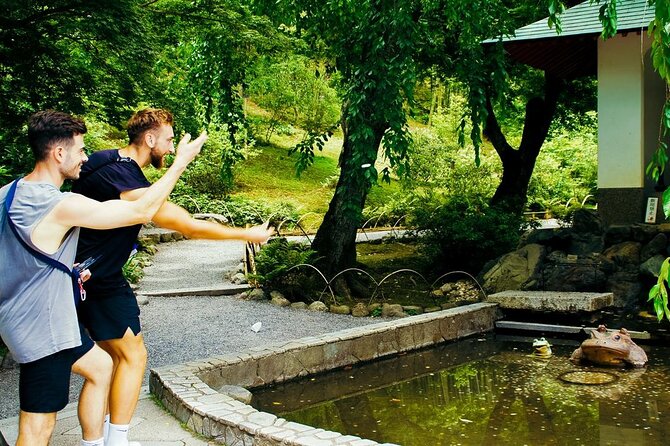
Arashiyama can feel like three different places stuck together: Zen temple calm, bamboo-photo dreaminess, and then that mountain-side wildlife moment. Trying to assemble it all on your own is doable, but it’s easy to waste time zig-zagging between spots or arriving at the best photo angles with no buffer.
This tour makes the connection part of the experience. You get a guided flow from temple to bamboo to shrine to bridge, then up to Monkey Park Iwatayama, and finally back to where you started at the meeting point near the station area. In practical terms, that means you spend more of your Kyoto time looking at things and less time figuring out where to go next.
You’ll also feel the “small group” difference. Several guides are mentioned by name in feedback, including Sofia, Pedro, Nay, Tim, and Gabriele Cammisuli. The common thread in that praise is not just facts, but timing—keeping breaks in the right places and keeping the group together without turning the day into a sprint.
And yes, it’s walking. But it’s structured walking. You get short, specific stop windows rather than one long slog with no breaks.
You can also read our reviews of more tours and experiences in Kyoto.



Tenryu-ji Zen gardens: UNESCO calm you actually get to enjoy
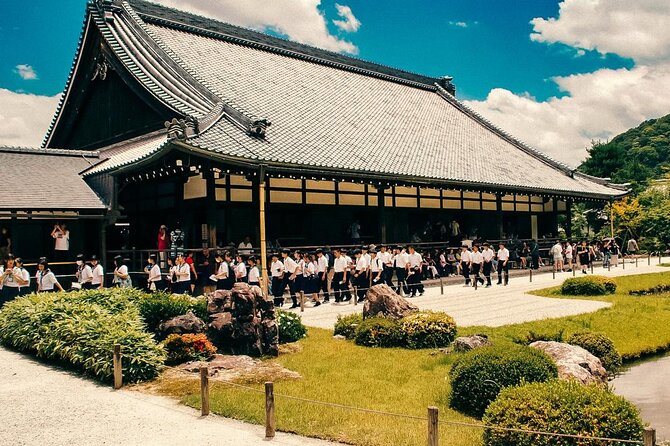
Tenryu-ji is the first big spiritual anchor of the day, and it’s UNESCO-listed. This is where the tone shifts from lively Kyoto scenery into designed quiet—Zen garden space, pond reflections, and seasonal color changes that feel made for slow looking.
You’re not just passing through. You get an included visit with dedicated time on site, which matters because Tenryu-ji is the kind of place where rushing can drain the atmosphere. Stand, look at the garden layout, then look again from a slightly different angle. That simple rhythm helps you see why people come back to this temple year after year.
One thing I’d plan for: you’ll be doing this after some walking. So take the first part of the day as your “focus time.” Put your phone away for a minute or two and just enjoy the stillness. It’s the best counterbalance to the bamboo crowds later.
Bamboo Forest time plus Togetsu-kyo Bridge photos
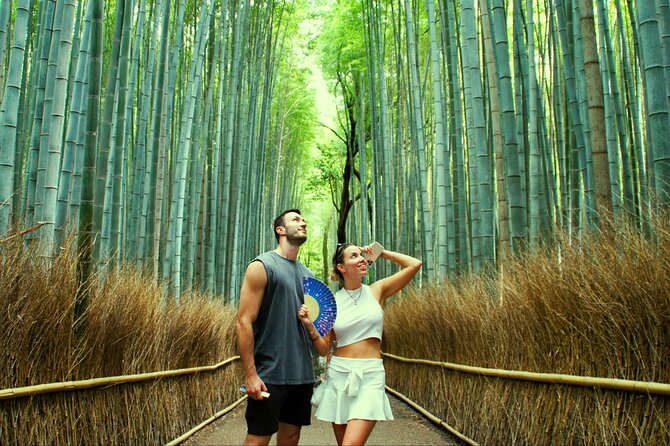
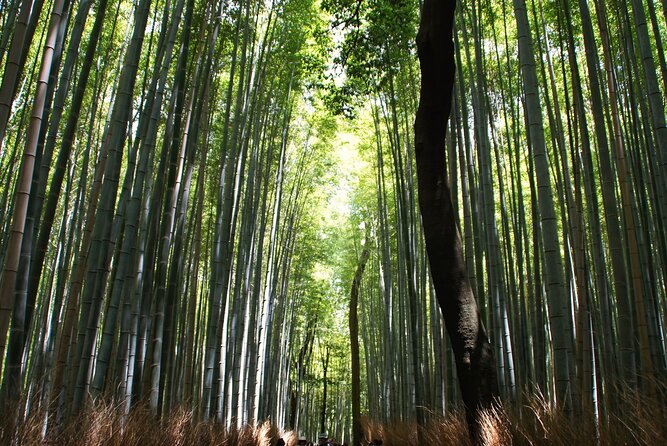
Arashiyama’s bamboo forest is famous for a reason. When you walk through it, the stalks feel like a roof—tall, close, and constantly moving as the air shifts. Even if you’ve seen photos before, the real effect comes from standing under the canopy and noticing how light filters through.
You get a set walking block here, so you don’t end up wandering too long or feeling pushed past the best section. Also, the timing matters because bamboo looks good when you have a little space to breathe, not when you’re trapped behind constant stop-start crowds.
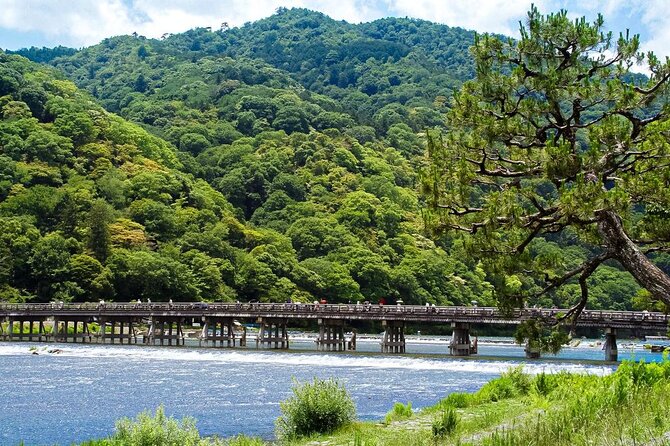
Then you move toward Togetsukyo Bridge, the elegant wooden “Moon Crossing Bridge.” This is a quick photo-and-stroll moment, but it’s a good one. The bridge frames the river and the mountain line behind it, so you can get both classic shots and more relaxed walking views.
If you’re thinking about photos, treat this like your “reset your stance” stop. You’ve got people energy in Arashiyama, but the bridge gives you a clean subject and a clear background.
Nonomiya Shrine and the included Uji matcha reset
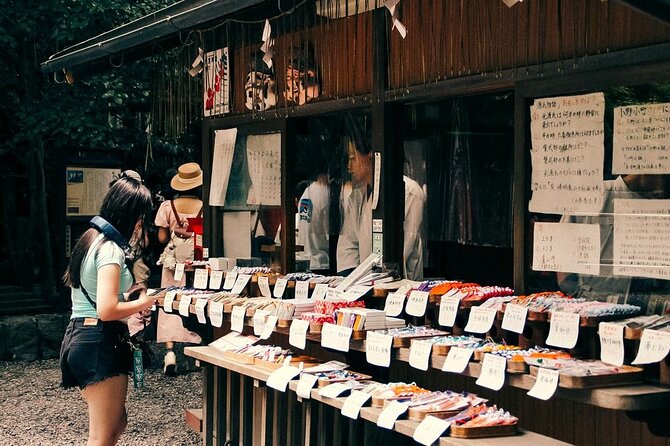
Nonomiya Shrine is smaller than the headline stops, but that’s part of the charm. It’s a Shinto shrine tied to ancient purification rituals, and you’ll feel that history in the atmosphere—mossy woods, quiet paths, and a calmer vibe than the main bamboo corridors.
This stop works well because it breaks up the day’s sensory rhythm. After temple gardens and bamboo scenery, the shrine gives you a different texture: softer shade, slower footsteps, and a sense of being off the main photo track for a bit.
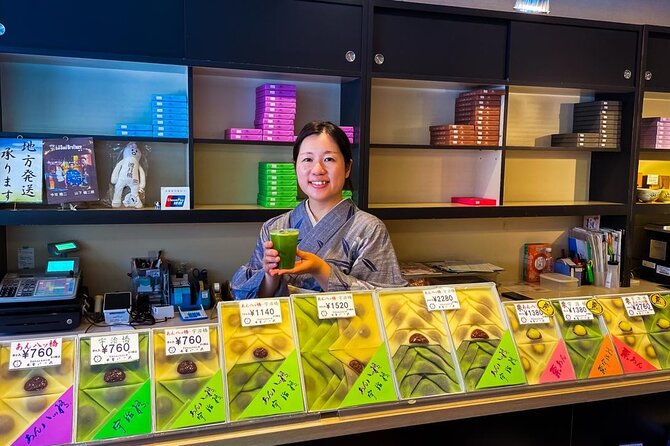
Then comes the included matcha moment. The tour provides 1 Uji matcha drink, and that matters because it’s not just a snack. Uji matcha has a reputation in Japan, and the break is timed to cool you down and give you a breather before the more physically demanding part of the day.
Practical tip: if you tend to get shaky on hills (low blood sugar, dehydration, all that), sip your matcha and take a moment. This is your chance to reset before Monkey Park’s climb.
Also, a bit of fun from feedback: at least one experience included a matcha ice cream add-on. Don’t assume it’s guaranteed, but it’s a nice reminder that guides sometimes help you spot quick, local treats in the area.
Monkey Park Iwatayama: the uphill hike and the best Kyoto views
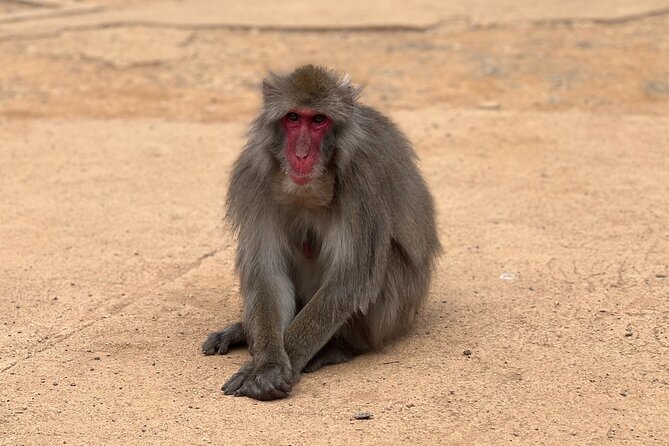
Monkey Park Iwatayama is the wow-factor stop—and the one that needs the most respect. It involves a short hike up to the viewpoint area, and the payoff is twofold: you see wild Japanese macaques, and you get panoramic views over Kyoto.
The climb is the main consideration. In feedback, people noted that it can be a struggle for anyone with health limits, even though the hike is not long. If you have knee issues or balance concerns, plan smart: go slow, take your time on the uphill stretch, and use any rest points the guide suggests.
Safety matters here, too. You’re dealing with wild animals, not zoo exhibits. One piece of guidance from feedback that I think you’ll appreciate: macaques generally keep to their routine and don’t crowd people unless you go into the specific feeding area. In other words, keep your distance and follow the guide’s lead.
What makes this stop memorable is how the view changes your mindset. From down in Arashiyama, Kyoto feels like a city below. From Monkey Park, Kyoto stretches outward—mountains in the distance, neighborhoods layered below, and the sense that you climbed up for a reason.
If the weather turns rough, be extra careful. Some feedback flagged slippery or treacherous conditions depending on conditions. Shoes with decent grip are the difference between enjoying the climb and regretting it.

Pacing, group size, and the real logistics that matter
This tour runs about 4 to 4.5 hours, which is long enough to feel like a full experience, but short enough that you’re not trapped all day in a single neighborhood. The schedule includes clear stops with time windows: bamboo forest for about 30 minutes, Tenryu-ji for about 30 minutes, Monkey Park for about 1 hour, Togetsu-kyo Bridge briefly, and Nonomiya Shrine briefly.
A good guide makes that work. Several named guides were praised for handling the group smoothly, including managing bathroom breaks and keeping the pacing comfortable even when the group size was around a dozen. That’s exactly what you want: enough structure to avoid stress, but enough breaks so you don’t arrive at the monkey viewpoint already tired.
The tour also uses a mobile ticket, and it’s confirmed at booking. The start location is very specific: TULLY’S COFFEE Randen Arashiyama Station Shop20-2 in Kyoto (Ukyo Ward). It ends back at the meeting point, which removes the anxiety of trying to figure out the last leg on your own.
One more practical reality: start times can get impacted when group members arrive late. Feedback included complaints about a delayed start due to late guests, which some people felt was unfair. My advice is simple—show up early. If you’re on time, you remove most of the variables from your side.
Price and value: is $53.06 a fair deal?
At $53.06 per person for a half-day, this price feels reasonable because several costs are bundled in. You’re not paying separately for Tenryu-ji entry, the Monkey Park admission, and the included Uji matcha drink. You also get a professional English-speaking guide guiding the timing and flow between spots.
Value is not just the ticket math, though. The big practical benefit is time saved and navigation simplified. Arashiyama’s top sights are spread out enough that trying to DIY everything can burn time on transit and routing. Here, the day’s route is already stitched together.
Is it expensive compared to free stuff? Sure—you could wander bamboo and take photos on your own. But you’d likely skip (or struggle to fit) the combination: UNESCO temple visit plus Monkey Park climb plus a scheduled tea break, all tied to a guided narrative.
So I’d frame the cost as paying for a smooth, guided loop rather than paying only for admissions.
Who this tour suits best (and who should reconsider)
This tour fits you best if you want a classic Arashiyama hit-list with context, not just photos. I also think it’s a strong match if you enjoy a day that alternates between calm sights (Zen gardens, shrine woods) and energetic ones (bridge views, monkeys).
You’ll likely feel good on this tour if:
- you can walk a fair amount for 4 to 4.5 hours
- you’re okay with a short uphill hike to Monkey Park
- you want English guidance to add meaning to what you see
Consider another plan if uphill walking is a big problem for your body. Even though the hike is described as short, feedback makes it clear that some people felt the climb was too much for their health.
Should you book Kyoto Arashiyama Bamboo, Monkeys, Matcha & Temple?
Yes, I’d book it if your goal is a guided, efficient Arashiyama sampler with real highlights: Tenryu-ji Zen gardens, Uji matcha, Togetsukyo Bridge views, Nonomiya Shrine calm, and Monkey Park’s wild macaques.
My decision would hinge on two things. First, are you comfortable with the uphill hike? If yes, you’re in for a memorable mix of nature, culture, and Kyoto panoramas. Second, are you the kind of person who can show up early and stay flexible? If you can, you’ll get the best version of the experience.
If you want the least-stress version of this famous area, this tour hits the sweet spot.
FAQ
FAQ
How long is the Kyoto Arashiyama Bamboo Forest, Monkeys, Matcha & Temple Tour?
It runs about 4 hours to 4 hours 30 minutes.
What does the tour include?
You get a professional English-speaking guide, entry fee to Tenryu-ji Temple, 1 Uji matcha drink, and entrance fee to Monkey Park.
What are the main stops on the route?
The tour includes Arashiyama Bamboo Forest, Tenryu-ji Temple, Monkey Park Iwatayama, Togetsukyo Bridge, and Nonomiya Shrine.
Where does the tour start?
It starts at TULLY’S COFFEE Randen Arashiyama Station Shop20-2 in Kyoto.
Where does the tour end?
The tour ends back at the meeting point.
Is there a mobile ticket?
Yes, the tour uses a mobile ticket.
How large is the group?
The maximum group size is 15 travelers.
Is admission included for Tenryu-ji Temple and Monkey Park?
Yes. The entry fee to Tenryu-ji Temple and the entrance fee to Monkey Park are included.
Is the bamboo forest admission free?
Yes. The bamboo forest stop lists admission as ticket free.
What is the cancellation policy?
You can cancel for a full refund up to 24 hours in advance. If you cancel less than 24 hours before the start time, the amount paid is not refunded.