REVIEW · KYOTO
Kyoto Afternoon Tour from Kyoto or Osaka
Book on Viator →Operated by JTB Global Marketing & Travel Inc. · Bookable on Viator
Kyoto’s temple trio in one smooth afternoon. This guided trip strings together three of Kyoto’s most famous stops, with Fushimi Inari’s red torii path, Sanjusangendo’s long wooden hall, and Kiyomizu-dera’s classic terrace views. You also get context on how Kyoto kept so many important buildings standing through centuries of war and fire, and even World War II.
I really like the English guide format here: guides such as Momo and Yoshi are known for keeping the group moving while adding humor and clear explanations you won’t find by just snapping photos. I also like the value math—your price covers entrance fees and transportation costs, so you’re not doing extra ticket math while you’re standing in line.
One consideration: the schedule is tight, and timing can affect what you see at Kiyomizu-dera. If you reach it late in the day, the famous views may be darker than you hoped, and you’ll feel the clock more than you would on your own—especially if you want slower browsing and deeper temple wandering.
In This Review
- Key things I’d zero in on
- Start at Avanti Tour Desk near Kyoto Station
- Fushimi Inari Taisha: red Senbon Torii and Inari’s world
- Sanjusangendo Temple: Japan’s longest wooden hall of 1,001 Kannon
- Kiyomizu-dera: terrace views plus the lanes up to the temple
- The afternoon timing: how the clock shapes what you see
- Price and value: why $82.58 can be a smart move
- How to get the most from each stop (and not hate crowds)
- Who this Kyoto afternoon tour fits best
- Should you book this Kyoto afternoon temples tour?
- FAQ
- What are the main stops on this Kyoto afternoon tour?
- Is there an entry fee for Fushimi Inari Taisha?
- How long is the tour, and how much time do you get at each place?
- Do I need hotel pickup or drop-off?
- Does the tour enter the Shin-en garden at Fushimi Inari?
- Can I cancel for a refund?
Key things I’d zero in on
- Three headline sites in one afternoon, so you’re not burning half a day on transfers
- English explanations that stick, with guides like Yoshi and Donna-San adding personality
- Sanjusangendo’s 1,001 Kannon statues inside Japan’s longest wooden hall
- Kiyomizu-dera terrace views plus the feel of the shopping lane leading up
- Photo opportunities that come fast, especially at Fushimi Inari’s Senbon Torii gates
- Time trade-off: each stop is capped, so you’ll plan to choose what you photograph most
Start at Avanti Tour Desk near Kyoto Station
This is an afternoon tour that begins near Kyoto Station, meeting your guide at the Avanti Tour Desk. That matters because Kyoto Station is a transportation hub—so it’s easier to slot this into a real day plan than a tour that starts in a random neighborhood.
The day runs about 4 hours 40 minutes. In practice, that means you’re moving between sites by shared transport, then spending limited time on foot at each main attraction. If you’re the kind of traveler who likes to “see everything,” this pace can feel a bit sprint-y. If you’re okay deciding what matters most for photos and atmosphere, it’s a good use of time.
One small logistics detail: seats aren’t designated, so you’ll want to board early if you care about where you sit on the bus. Also, the tour operates with a maximum of 40 people, which helps keep it from turning into a total zoo—though popular Kyoto sites still get crowded.
You can also read our reviews of more tours and experiences in Kyoto.

Fushimi Inari Taisha: red Senbon Torii and Inari’s world
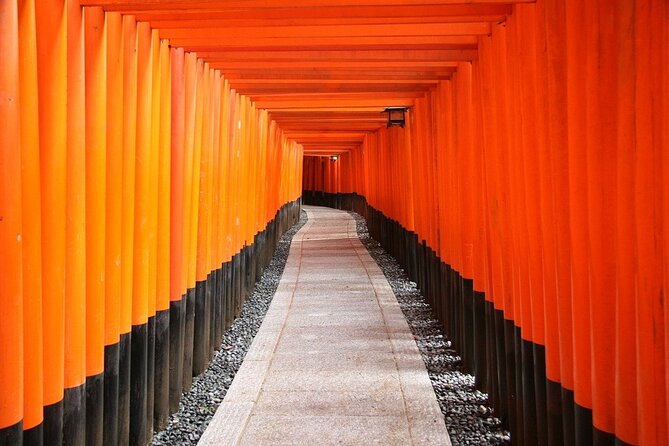
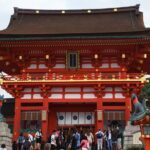
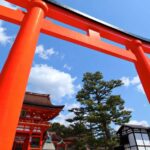
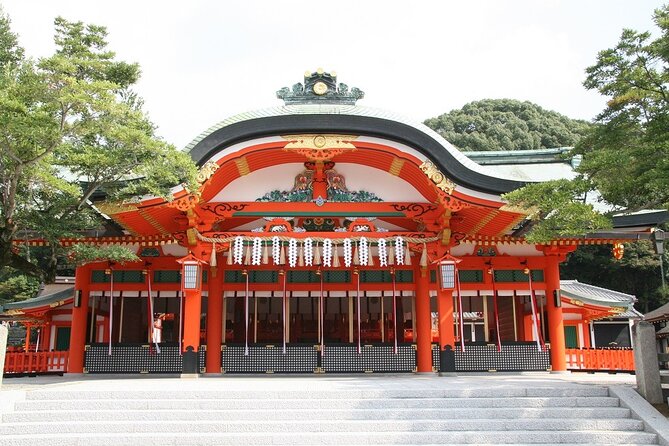
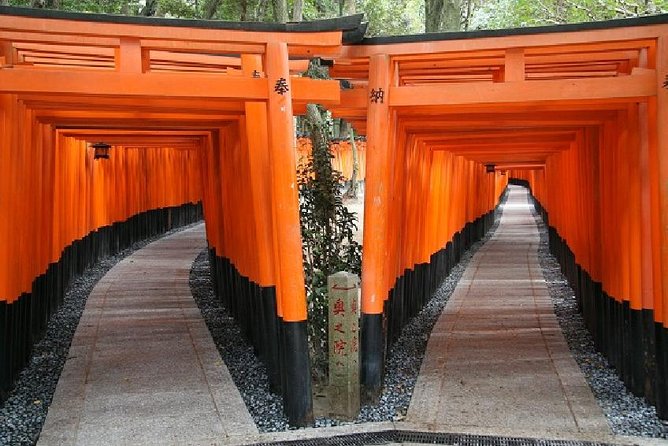
Your first stop is Fushimi Inari Taisha, the head shrine for the Inari shrine system across Japan—there are about 40,000 inari-jinja shrines tied to it. The big star here is the Senbon Torii: thousands of bright-red gates that create tunnels you walk through for real.
You’ll spend about 30 minutes here, and admission is free. That short window works if you treat this like a photo-and-walk moment: get your bearings, walk the torii corridor, then head back before the group tightens up.
A couple practical notes that help:
- You walk from the parking lot to the shrine, about 15 minutes one-way, so wear shoes you trust.
- The tour does not enter the Shin-en garden. If that garden is your personal must-see, you’ll want to plan extra time or a separate visit.
Why this stop is worth it even when it’s busy: the torii gates aren’t just scenery. They create a rhythm—step, gate, repeat—so even in a crowd, you can still find a “quiet pocket” for photos if you’re willing to move slightly off the main line.
Sanjusangendo Temple: Japan’s longest wooden hall of 1,001 Kannon
Next comes Sanjusangendo Temple on the eastern side of Kyoto, famous for housing 1,001 life-size statues of Kannon (the Buddhist bodhisattva linked with compassion). The building itself is the headline: it’s the longest wooden structure in Japan, stretching about 120 meters (394 feet).
You get about 30 minutes at this stop, and admission is included. This is a great example of why a guided format can be useful: you don’t just walk in and see rows of figures—you get the quick interpretive framework to understand why the space is built the way it is and what you’re looking at.
What to expect inside:
- Long, hall-like viewing where your eyes naturally travel along the statues.
- A calm but focused atmosphere, which contrasts nicely with Fushimi Inari’s “move-and-photo” energy.
The drawback is the same one you’ll feel elsewhere: 30 minutes can go fast if you’re trying to read details and take wide shots from multiple angles. If you’re torn, I’d prioritize one thing: either photography from the most scenic viewpoint, or time to look closely at the statue rows.
Also, Sanjusangendo’s location means you’re still in the thick of Kyoto’s temple-and-residential feel. So you’re not only seeing monuments—you’re getting a sense of how the city’s old and lived-in sides overlap.
Kiyomizu-dera: terrace views plus the lanes up to the temple
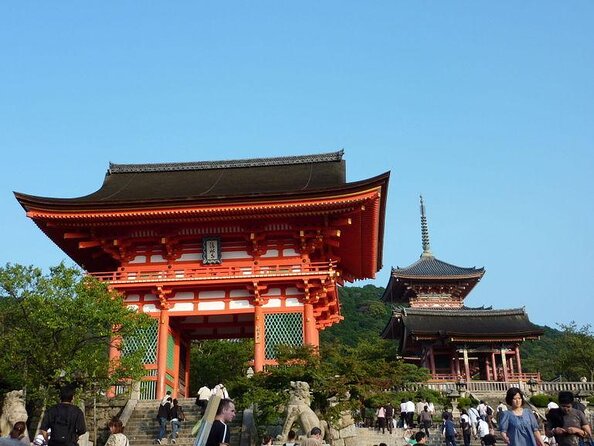
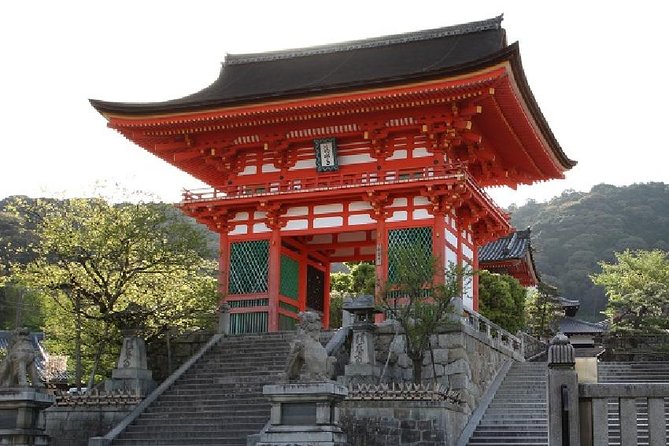
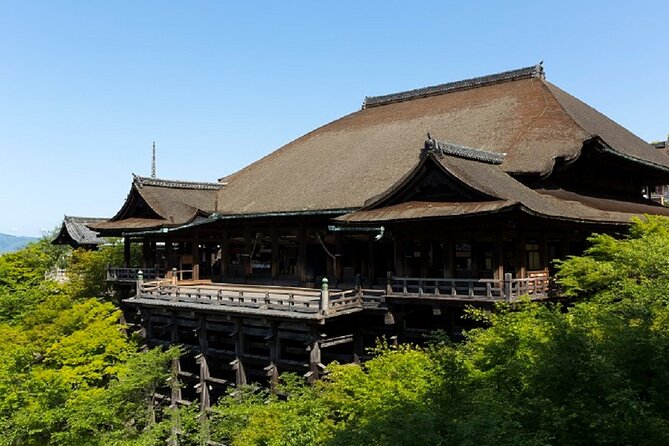
The final big stop is Kiyomizu-dera (Kiyomizu-dera Temple), a UNESCO World Heritage site. This is the one most people come for: the panoramic views from the terrace and walkways are the classic Kyoto postcard angle for a reason.
You’ll typically have about 1 hour 10 minutes here, with admission included. You’ll also walk through the shopping lane area leading up to the temple, which adds a lively layer to the visit. It’s not just temple grounds; it’s the experience of climbing into Kyoto’s old layers while shops and small streets surround you.
Two things I think you should plan for:
- There’s a strenuous climb in parts. Even when the tour is smooth, your body will feel it. If it’s hot or humid, take it slow.
- Crowds can be heavy at Kiyomizu-dera. That’s normal for this site, and it affects how long you’ll want to queue, where you can stand for photos, and how quiet your view moment will feel.
And here’s the timing issue that matters most: one of the most common “real life” surprises is arriving late enough that it’s close to dusk when you leave. If you’re hoping for autumn foliage colors or soft golden-hour light, the schedule may not line up with your fantasy version of the view.
That said, even at less-than-ideal light, the architecture and viewpoint are still impressive. Just go in with the mindset that you’re getting the Kyoto skyline from the temple, not necessarily the lighting show you pictured.
The afternoon timing: how the clock shapes what you see
This tour packs three major religious and cultural sites into a half-day window. That’s the whole trade: more variety, less time per place.
You can feel the structure in the stop lengths:
- Fushimi Inari: about 30 minutes
- Sanjusangendo: about 30 minutes
- Kiyomizu-dera: about 1 hour 10 minutes
The guide helps keep the group organized, but the clock is still the boss. If you want deep temple study, you’ll be happier with a full-day plan or self-guided time at one site. If you want the “big hits” without juggling routes, this afternoon format works.
Also, road congestion and conditions can shift the exact flow. The tour notes that the order and arrival times may differ, so don’t treat the schedule like a stopwatch. If you’re booking this as part of a tight itinerary, I’d treat it as flexible, not exact.
On crowd days, the “photo opportunity” promise is real—but the best shots often come from small choices: where you stand for a moment, when you turn around, and whether you’re willing to walk a few steps off the main line.

Price and value: why $82.58 can be a smart move
At $82.58 per person, this is priced for a “guided hits” style of sightseeing. Here’s why that cost can still feel reasonable.
You’re not only paying for the guide—you’re also getting:
- Admission fees included (so you don’t stop to buy tickets later)
- Transportation costs included (so you don’t spend your time hopping between areas by yourself)
- A licensed English guide interpreter included in the cost
When you add that up, the money-to-time ratio gets better—especially if you only have a single afternoon in Kyoto.
Guides like Yoshi, Donna-San, Jessie, and Amy are repeatedly singled out for making the experience more than a bus ride. That’s important: the “value” isn’t just logistics. It’s the explanations that help you understand why each place matters, and the practical pacing that keeps you from wasting time.
So, if your goal is to see the core icons without planning stress, the price makes sense. If you already have a free afternoon, strong navigation confidence, and a “stay as long as I want” mindset, you may prefer going on your own and spending more time where you care most.
How to get the most from each stop (and not hate crowds)
Kyoto crowds aren’t a tour problem. They’re a Kyoto problem. But you can still improve your experience.
Here’s what I’d do:
- Wear sturdy shoes for the torii walk and temple steps. You will walk from parking to Fushimi Inari, plus climb at Kiyomizu-dera.
- Bring a small water bottle and something light to eat afterward. Food and drinks aren’t included.
- For photos, decide your priorities early at each site. At Fushimi Inari, it’s the corridor of gates. At Sanjusangendo, it’s the long hall view. At Kiyomizu-dera, it’s the terrace angle.
Also, if you care about comfort on the bus, this tour is taken by shared transport and reviews mention an air-conditioned bus, which can be a lifesaver in Kyoto heat.
One more practical detail: the meeting office can be easy to miss if you don’t give yourself a little buffer. The Avanti desk is near Kyoto Station, but it’s in a building setup—so show up early enough that you’re not sprinting with your phone trying to find the basement entrance.
Who this Kyoto afternoon tour fits best
This works especially well if:
- You’re in Kyoto for a short stay and want the three headline sites without building a route
- You’d like an English guide to explain what you’re seeing (and to keep you from feeling lost)
- You prefer a structured afternoon over a free-for-all, especially with busy trains and walking distances
It can be less ideal if:
- You want long, slow visits and deep reading time at a single temple
- You’re traveling in a very time-sensitive window for specific seasonal light (like foliage timing)
- You’re sensitive to stairs and climbs, since Kiyomizu-dera involves a more strenuous ascent
The group size is capped at 40, and seats aren’t assigned. If you don’t like waiting in lines with crowds, you’ll still have to accept that these are famous places.
Should you book this Kyoto afternoon temples tour?
If you want a reliable, low-planning way to hit Fushimi Inari Taisha + Sanjusangendo + Kiyomizu-dera in one afternoon, this is a strong option. The best-case result is you leave with a clear sense of Kyoto’s religious blend—Shinto at Inari, Buddhist devotion at Sanjusangendo, and the viewpoint-heavy experience at Kiyomizu-dera—without spending your day stuck in logistics.
I’d skip or modify your plan if your main goal is maximum time at Kiyomizu-dera for the view in perfect light. The schedule can put you there near dusk, and the stop lengths can feel rushed if you love lingering.
If you can be flexible with timing and focus on seeing the big sights efficiently, booking this tour is a smart shortcut.
FAQ
What are the main stops on this Kyoto afternoon tour?
You’ll visit Fushimi Inari Taisha, Sanjusangendo Temple, and Kiyomizu-dera. The tour includes entrance fees for the paid stops.
Is there an entry fee for Fushimi Inari Taisha?
Fushimi Inari Taisha is listed as free for admission on this tour.
How long is the tour, and how much time do you get at each place?
The tour runs about 4 hours 40 minutes. Stop times are about 30 minutes for Fushimi Inari and Sanjusangendo, and about 1 hour 10 minutes for Kiyomizu-dera.
Do I need hotel pickup or drop-off?
No. There is no hotel pickup/drop-off. You meet the guide at the Avanti Tour Desk near Kyoto Station.
Does the tour enter the Shin-en garden at Fushimi Inari?
No. The tour will not enter the Shin-en garden.
Can I cancel for a refund?
Yes. You can cancel for a full refund if you cancel at least 24 hours before the experience’s start time.