REVIEW · KYOTO
Traditional Japanese Flower Styling Workshop – Ikebana in Kyoto
Book on Viator →Operated by Fooraku · Bookable on Viator
You can learn traditional ikebana in Kyoto without overthinking flowers. What makes this workshop stand out is that you’re taught basics and multiple styles, even if you don’t have special tools or traditional containers. I also love the calm, confidence-building instruction from Master Fooraku, who brings 30+ years of study and explains things in clear English. One thing to keep in mind: this is a tight, 1 hour 45 minute session, so it’s a strong introduction, not a long practice course.
You meet at Sogetsu WEST in Shimogyo Ward, a purpose-built ikebana space with 300+ flower containers, so you can see how shape and container choice change the whole mood of an arrangement. It’s private (just your group), you’ll take a photo of your creation, and you can request session slides by email if you want something to reference later.
In This Review
- Key points before you go
- Sogetsu WEST: Where container choice actually changes your arrangement
- In 1 hour 45 minutes, you learn the core of ikebana—not just the steps
- Master Fooraku’s teaching style: clear, experienced, and not stiff
- You can recreate your ikebana at home with ordinary supplies
- The flower-freshness lesson you’ll actually use
- Photo moment and the relaxed chat afterward
- Price and value: What $104.24 buys you in Kyoto
- Who should book this ikebana workshop, and who might skip it
- Should you book Traditional Japanese Flower Styling Workshop – Ikebana in Kyoto?
- FAQ
- FAQ
- How long is the ikebana workshop?
- Where does the workshop take place in Kyoto?
- Is this a private tour or shared class?
- Do I need special tools or traditional Japanese containers?
- Can I recreate what I learn after I get home?
- Who teaches the workshop?
- Will there be time to take a photo of my arrangement?
- Can I get slides from the session after the workshop?
- Is the workshop suitable for most travelers?
- What is the cancellation policy?
Key points before you go
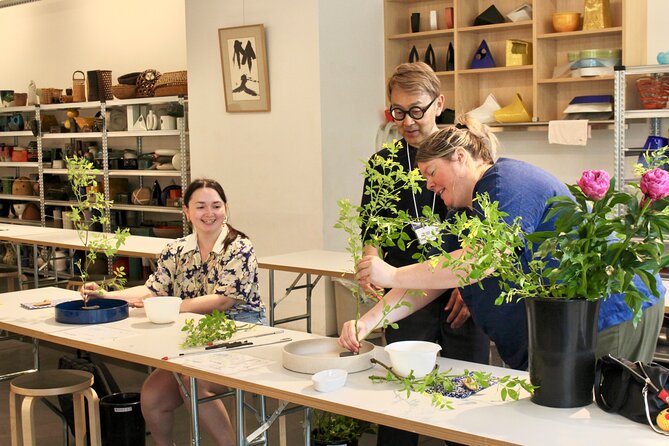
- Master Fooraku teaches the basics in a relaxed way, with English that keeps you on track
- Create multiple ikebana styles without special tools or traditional containers
- Learn principles plus practical flower-care tips so your arrangement lasts
- See the impact of containers, thanks to Sogetsu WEST’s 300+ options
- Get a photo and time to chat afterward, including questions about Japanese culture and food
- Short and focused (about 1h45), designed for real progress without an all-day commitment
Sogetsu WEST: Where container choice actually changes your arrangement
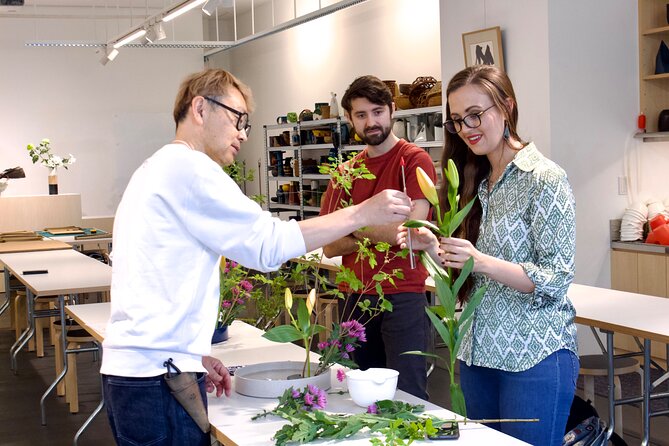
Sogetsu WEST is the kind of place that makes ikebana feel tangible instead of mysterious. You’re not just hearing about flower styling rules—you’re walking into a studio where containers and forms are part of the lesson. That matters because in ikebana, container shape isn’t an accessory. It’s part of the composition, like framing in photography.
You’ll start at the studio address in Shimogyo Ward: 20-4 Sujakudōnokuchichō, Shimogyo Ward, Kyoto, 600-8842, Japan. The class ends back at the meeting point, so you’re not dealing with awkward transit mid-activity. Since the workshop is near public transportation, it also works well as a planned stop between Kyoto sightseeing blocks.
A practical bonus: you receive a mobile ticket, and the experience is private. Private here means you’re not competing for attention or trying to follow along while a crowd splits the teacher’s focus. If your Japanese is basic (or zero), this structure helps you get the instructions you need.
The workshop is listed as generally doable for most travelers, so you shouldn’t feel like you need prior art experience. The goal is simple: get you making an arrangement you can be proud of, with a clear understanding of what you’re doing.
You can also read our reviews of more tours and experiences in Kyoto

In 1 hour 45 minutes, you learn the core of ikebana—not just the steps
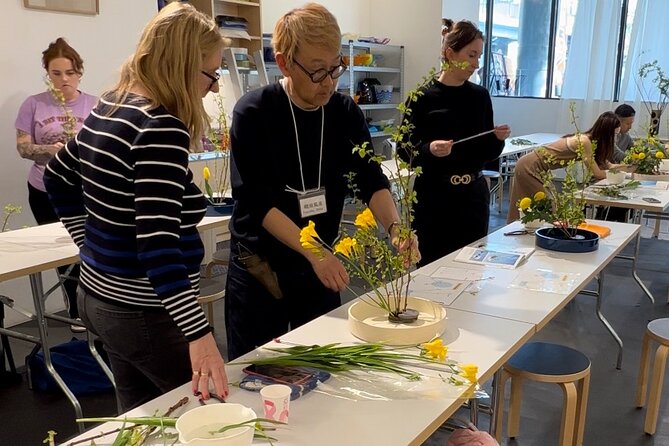
The class is built around the basics of flower arranging, then it moves into how ikebana works as an idea. You’ll cover the history and philosophy of ikebana, along with techniques for keeping flowers fresh. That combination is what I find most useful: you get both the “how” and the “why,” which makes it easier to remember and repeat later.
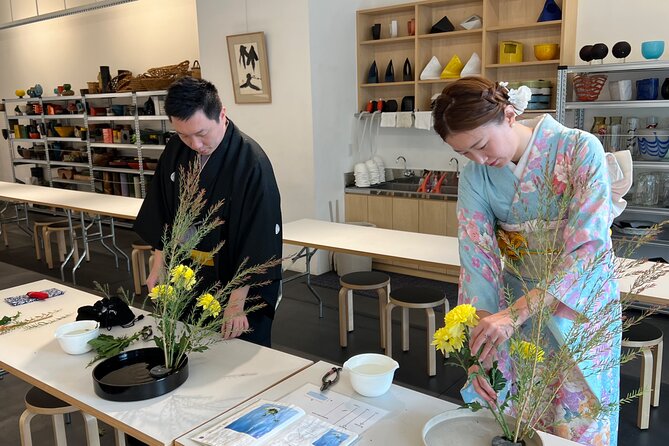
Expect a guided process while you create your own ikebana masterpiece. The wording you’ll see for the class is “basics,” but in practice, basics here means more than holding stems correctly. You’ll learn how to think in terms of form and balance, how to work with the materials you have, and how to shape the arrangement in different styles.
Then comes a key point: you’re taught to make different styles without depending on special flowers or specific traditional vases. That’s a big deal for travelers, because you’re not bringing a suitcase full of Japanese supplies home. You’re learning an approach you can recreate with what you can find locally.
And yes, you’ll get culture along the way. The teacher encourages conversation, and you can ask about Japanese food, culture, or traditions during or after the session. If you’re the type who likes to ask why people do what they do, this workshop gives you an easy opening.
Master Fooraku’s teaching style: clear, experienced, and not stiff
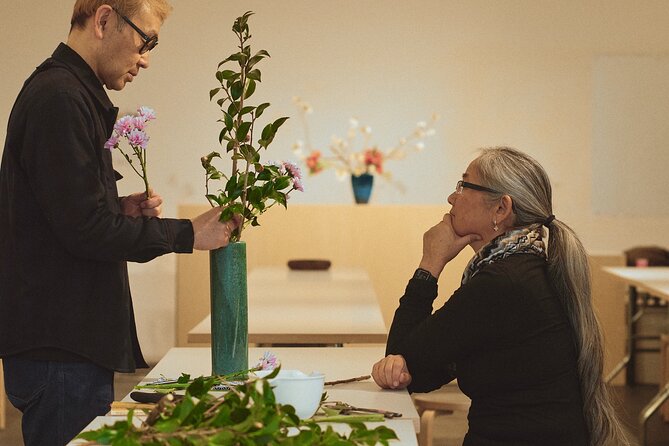
Master Fooraku is the standout factor here, based on the consistent praise for his instruction. He’s described as an expert ikebana teacher with 30+ years of experience studying the art. What I like about this kind of background is that you don’t just get rules; you get judgment. You get why something looks right, and what to adjust if it doesn’t.
English ability is also part of the value. The class is taught in a way that keeps you comfortable, especially if you’re worried you’ll be lost on the details. Reviews highlight his English as good, and that lines up with the structure of the workshop: you’re actively making something, so you need clear direction at each stage.
Another teaching detail that matters: the tone is relaxed. That doesn’t mean casual in a messy way. It means you can focus on the craft without feeling rushed or intimidated. For first-timers, that’s huge. You’ll learn without the sense that you’re being judged on your artistic talent.
If you’re worried about precision, remember this: the class is designed to help you create an arrangement you can take home as your own work. The teacher’s job is to get you there, not to trick you into failing.
You can recreate your ikebana at home with ordinary supplies
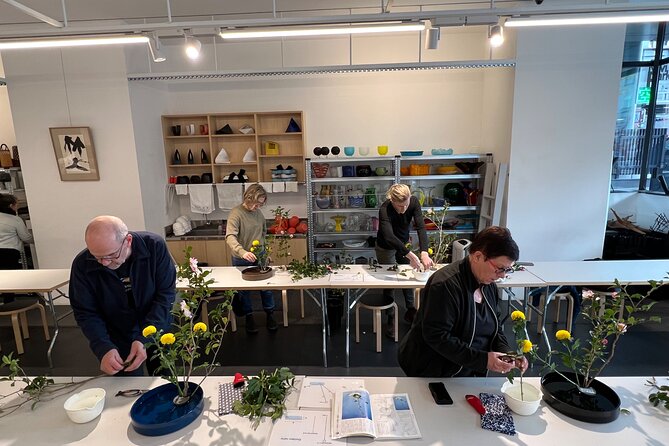
One of the most practical promises of this workshop is that you won’t need special tools or traditional Japanese containers to keep learning. You’ll learn styles that you can make again later, even without the exact same setup.
Why does that matter? Because a lot of craft classes end with a finished product, but the real challenge is what happens after you go home and your flowers wilt in the kitchen sink. This workshop specifically focuses on techniques for keeping flowers fresh and understanding the arrangement as a system, not a one-off trick.
Here’s what to do after class: when you get the basics, take notes on what you changed—stem angle, spacing, and how the form shifts as you add or remove material. Even if you don’t write “rules” like a textbook, those adjustments are what turn your memory into usable skill.
Also, you can request the session slides by email. That’s useful if you want a quick refresher on the method later, without relying on your shaky memory after a busy Kyoto trip.
The flower-freshness lesson you’ll actually use
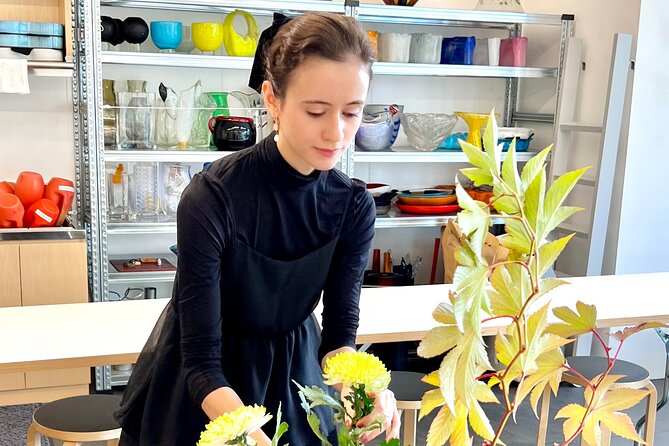
The workshop includes techniques for keeping flowers fresh, which I think is one of the smartest parts of any flower class. You’ll likely learn what to consider so your arrangement lasts longer, not just how to make it look good at the moment it’s finished.
In practical terms, this helps you avoid the classic problem: your ikebana looks great during the workshop, then starts losing shape right after you head back out to explore Kyoto. You’ll want to apply the guidance while you’re still in the “freshness window,” and you can carry it into home life for future arrangements.
If you’re planning to photograph your work later that day, ask the teacher what will help the most. If you’re bringing your arrangement home, ask about simple handling steps. The class is set up so you can clarify things while you’re still engaged in the craft.
Photo moment and the relaxed chat afterward
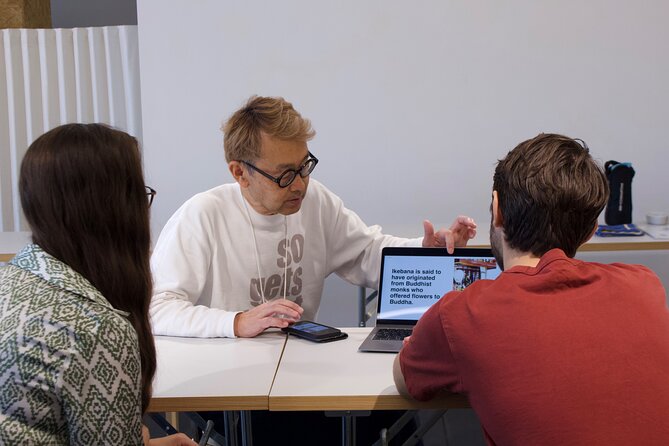
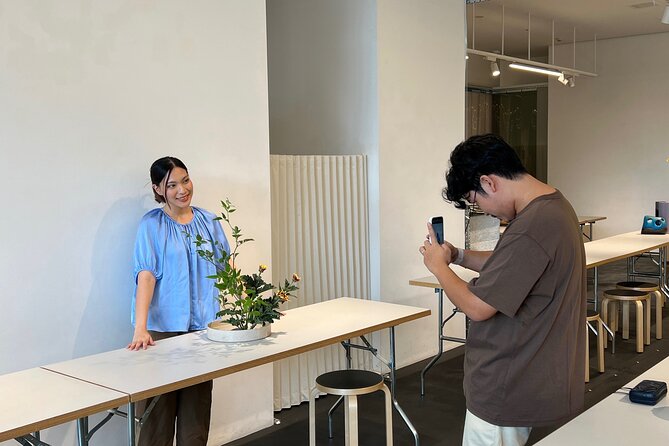
After you finish your arrangement, you’ll take a picture to commemorate it. That small step is more valuable than it sounds. It gives you a reference you can compare against next time you attempt the same style at home. A quick photo turns your memory into a tool.
Then you shift into post-session conversation. The tone is relaxed, and you’re invited to talk—especially if you’re comfortable sharing about your country and background. That exchange is part of the experience, because ikebana isn’t only about flowers. It’s also about how people think about seasonal change and daily life aesthetics.
This is also a nice time to ask follow-up questions you might not want to interrupt while you’re building your arrangement. If you’re curious about Japanese food, culture, or traditions, the teacher is happy to talk about it. If you’re not sure what to ask, a good starting point is what you should practice next with basic materials.
Price and value: What $104.24 buys you in Kyoto
At $104.24 per person for about 1 hour 45 minutes, this workshop isn’t a “cheap activity,” but it can still be great value because you’re paying for a skilled teacher, hands-on guidance, and a private class format.
Here’s how I think about value for classes like this:
- Time with an experienced instructor: Master Fooraku’s background matters because you’re learning faster and with fewer mistakes than you would alone.
- Private group attention: Even if your group is small, it reduces the stress of learning in a shared space.
- Practical take-home skill: The class emphasizes recreating ikebana styles at home without special containers or tools. That’s what separates a souvenir from a skill.
- Aesthetic + cultural context: You’re not just assembling stems; you’re learning the history and philosophy behind ikebana.
It’s also worth noting that this workshop is often booked about 26 days in advance on average. That’s a clue that slots can fill up, especially during busier travel periods. If you want it as part of a Kyoto schedule, don’t wait until the last moment.
Who should book this ikebana workshop, and who might skip it
I think this is a strong match if you:
- Want a hands-on Kyoto experience that isn’t about temples or shopping
- Like crafts where you can repeat the results at home
- Enjoy learning cultural context alongside making something with your hands
- Prefer a small, private class format with time for questions
It may not be the right fit if you’re hoping for a long, multi-session immersion in ikebana. This is a focused first step. Also, if you strongly dislike working with cut flowers or you’re already overloaded with activities, you may prefer something less craft-heavy.
But for most curious travelers—especially first-timers—the structure hits a sweet spot: you learn the basics, make something, take a photo, and leave with a method you can use again later.
Should you book Traditional Japanese Flower Styling Workshop – Ikebana in Kyoto?
If you want a Kyoto activity that gives you both a beautiful result and a repeatable skill, book it. The combination of multiple ikebana styles, no dependence on special containers, and instruction from Master Fooraku (30+ years of study) makes the class feel practical, not just decorative.
I’d especially recommend it if you like learning through doing and you want a calmer, more personal experience than big group tours. Plan to schedule it when you’re not rushing to catch your next train, because the post-session chat is part of why this feels human, not mechanical.
FAQ
FAQ
How long is the ikebana workshop?
It lasts about 1 hour 45 minutes.
Where does the workshop take place in Kyoto?
The meeting point is Sogetsu WEST, 20-4 Sujakudōnokuchichō, Shimogyo Ward, Kyoto, 600-8842, Japan.
Is this a private tour or shared class?
It’s a private tour/activity, so only your group participates.
Do I need special tools or traditional Japanese containers?
No. The workshop teaches you how to create ikebana styles without special tools or traditional Japanese containers.
Can I recreate what I learn after I get home?
Yes. The experience is designed so you can make various ikebana styles at home without special flowers or vases.
Who teaches the workshop?
The experience provider and teacher is Fooraku.
Will there be time to take a photo of my arrangement?
Yes. After your arrangement is complete, you’ll take a picture to commemorate it.
Can I get slides from the session after the workshop?
Yes. You can receive session slides by email upon request.
Is the workshop suitable for most travelers?
The experience is listed as suitable for most travelers.
What is the cancellation policy?
Free cancellation is available. You can cancel up to 24 hours in advance for a full refund. Cancellation cut-off is based on the local start time of the experience.