REVIEW · KYOTO
Kyoto Early Riser Platinum One-Day Walking Tour
Book on Viator →Operated by KAMNAVI Tours · Bookable on Viator
Kyoto at dawn has a magic edge. This early start private walking tour lines up big sights before the city gets loud, hot, and crowded. I like that it also feels personal, not like you’re being dragged from one photo spot to the next.
Two things I’d point you to right away: the professional guide pacing, and the mix of iconic Kyoto moments plus time to browse. One consideration: it’s an all-day plan with quite a bit of walking, plus extra costs for entrance and getting around.
In This Review
- Key reasons this Kyoto early riser tour works
- The value math: $130.79 plus the stuff that costs extra
- A meet-point that keeps things simple: Kyoto Station Building 901
- Fushimi Inari-taisha: torii gates before the crowd swell
- Bamboo Forest Street: when the light matters more than the hype
- Kinkakuji (Golden Pavilion): the iconic temple with real visual punch
- Kitano Tenmangu: shrine for academics and its student-energy vibe
- Kamishichiken Kaburenjo Theatre and the Kyoto geisha districts angle
- Nishiki Market shopping time: where you actually eat like Kyoto
- Getting around Kyoto: the transit reality (and how to handle it)
- What the guides are doing right (and why it matters)
- Comfort checklist for an 8-hour Kyoto day
- Price vs. self-guided: when this tour pays off
- Who should book this Kyoto Early Riser Platinum tour
- Should you book? My decision rule
- FAQ
- How long is the Kyoto Early Riser Platinum One-Day Walking Tour?
- Is this tour private?
- What costs are included, and what costs extra?
- Where do we meet, and does it end nearby?
- Is the tour stroller-friendly?
- What if the weather is bad?
Key reasons this Kyoto early riser tour works
- Private, just your group: fewer “herd management” moments and more tailored explanations.
- Real-time sightseeing pacing: you see a lot, but you’re not stuck sprinting nonstop.
- Must-see Kyoto in one day: torii at Fushimi Inari, bamboo forest, and the Golden Pavilion.
- Time saved by going early: you’re aiming to beat crowds and daytime heat.
- Shopping built in: Nishiki Market gets its own block, not a rushed walk-by.
- Guides go beyond facts: people mention guides who handle questions well and even help with practical comfort.
The value math: $130.79 plus the stuff that costs extra
The published price is $130.79 per person, and it includes a professional guide. On top of that, plan for:
- Admission fee: ¥500 per person
- Public transportation: ¥1,700 per person
That add-on pricing matters because it changes how you judge value. For many Kyoto half-day plans, you pay for guide time but still end up buying transport and entrances anyway. Here, you’re budgeting for a full day of major stops, and you’re also buying the benefit of someone guiding your route and timing.
One more small-but-real plus: the tour uses a mobile ticket, and it can include group discounts (if you’re traveling as a party). If your group is flexible on the date, you might also like that it’s commonly booked about 52 days in advance, which suggests people plan this early to lock in the schedule.
You can also read our reviews of more walking tours in Kyoto

A meet-point that keeps things simple: Kyoto Station Building 901
You start at Kyoto Station Building 901 (in Shimogyo Ward) and the tour ends back at the meeting point. I like meeting near a major hub because it lowers the stress of “how do we find this place?” at the start of a long day.
The start point also makes it easier to connect this tour to the rest of your Kyoto plans. If you’re already basing yourself around Kyoto Station, you’re not committing to an awkward neighborhood transfer just to begin.
Fushimi Inari-taisha: torii gates before the crowd swell
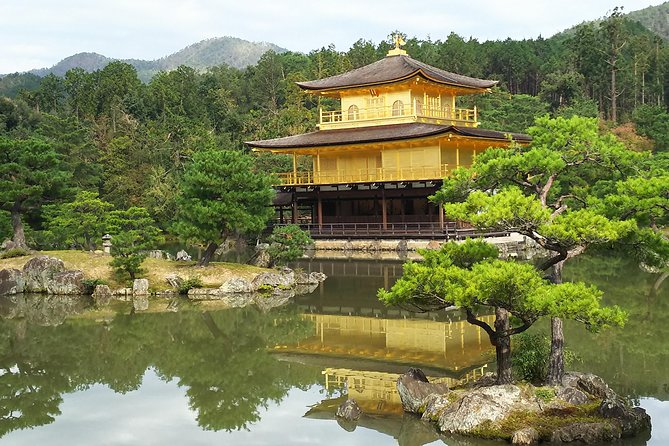
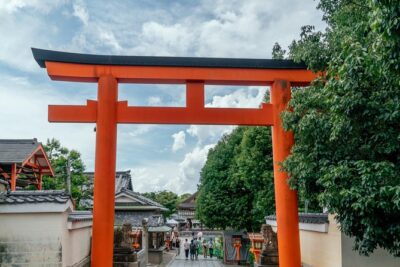
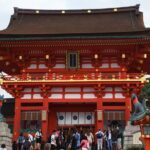
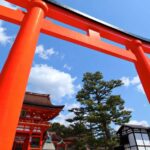
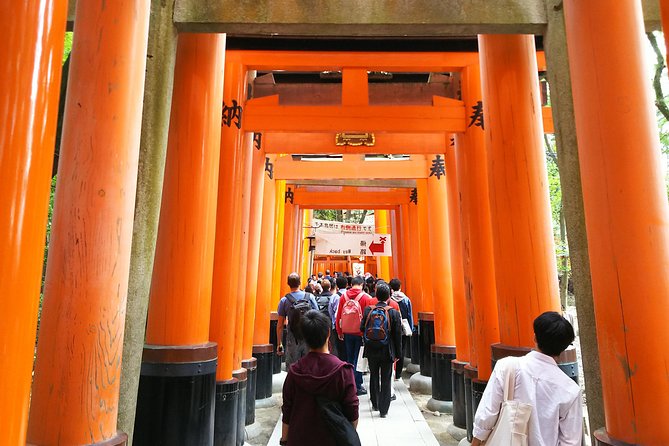
Your morning focus is Fushimi Inari-taisha Shrine, famous for its long tunnel of thousands of vermilion torii gates. Even if you’ve seen pictures, the physical feeling is different in person. The repeating shapes pull you forward, and the walk through the gates makes you notice details you’d miss if you only stopped for a quick snapshot.
This is the kind of stop where going early actually pays off. The tour’s whole idea is to start before crowds and before the day gets too hot. You also get about 1 hour here, which is enough to walk the core area at a comfortable pace and still leave with decent photos.
A practical note: this shrine area is famous and popular. If you’re the type who prefers slow, contemplative wandering, don’t worry—you’re not on a strict “only 10 minutes per stop” schedule. And if you like checking out side angles and textures, this is a good place to do it.
Bamboo Forest Street: when the light matters more than the hype
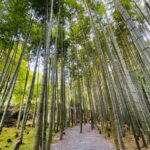
Next comes the Bamboo Forest Street, where the appeal is partly visual and partly sensory. You’re looking at the subtle green tones, with sun slanting through the bamboo. The famous soundscape—leaves rustling and trunks creaking as they sway—is the point. It’s not just “a photo wall,” it’s a place that feels alive.
You get about 1 hour 10 minutes here. That’s enough time to slow down and enjoy the atmosphere instead of racing to the best angle and then moving on. One consideration: bamboo forest timing can make or break your experience. If you want the softest light and fewer people, an early start helps a lot.
If you’re a solo photographer, be ready for a mix of people and angles. You can still get great shots, but you’ll do it by shifting your position and timing your steps—not by expecting empty space.
Kinkakuji (Golden Pavilion): the iconic temple with real visual punch
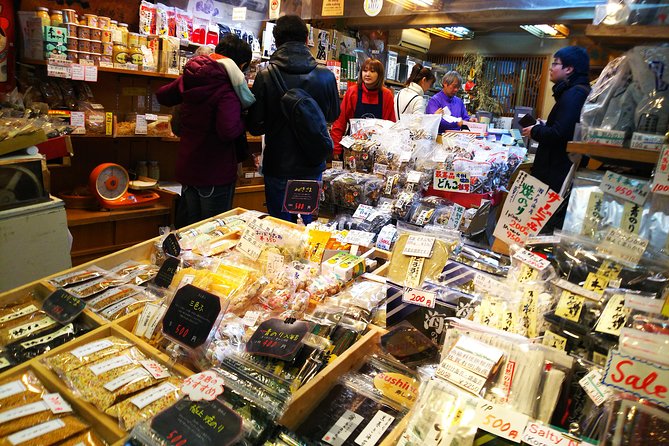
Then it’s on to Kinkakuji Temple, often called the Golden Pavilion. It’s a Zen temple, and it’s also described as an icon tied to Samurai culture. The “golden” part is what you expect—but the real payoff is how the building sits in its setting and how the details catch light.
You get about 50 minutes here, and the big cost note is that admission isn’t included. The tour lists an ¥500 admission fee per person, so budget that into your total day.
This stop is hugely popular, even with an early plan. I think that’s why the time matters: you want enough minutes to see it properly, not just glance at it and move on. At the same time, 50 minutes is a “realistic Kyoto pace.” It’s long enough to take in the temple and get your photos, but short enough that you still have energy for the afternoon shrines and market.
If you’re photo-heavy, you’ll appreciate how guides can help you choose which angles to prioritize so you don’t waste your time walking back and forth.

Kitano Tenmangu: shrine for academics and its student-energy vibe
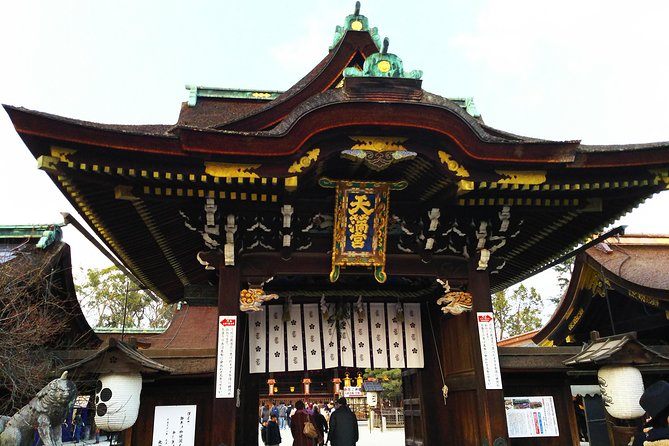
After Kinkakuji, the route shifts to Kitano Tenmangu Shrine, built in 945. It enshrines Sugawara no Michizane, known as the god of academics, and many people come here to pray for successful examinations. The tour gives you about 30 minutes, which is perfect for a focused visit: you can see the key areas, soak up the shrine atmosphere, and still keep the day moving.
One thing I like about including a shrine like this is the context. Kyoto’s religious sites aren’t just architecture. They’re living places with purpose, and this one has a very clear theme: education and good results.
If you enjoy learning what a place stands for, Tenmangu is a strong contrast to the flashier visual fame of the Golden Pavilion. It feels more grounded.
Kamishichiken Kaburenjo Theatre and the Kyoto geisha districts angle
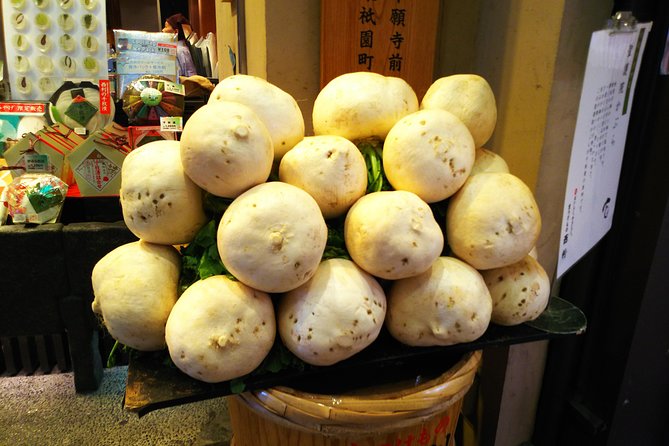
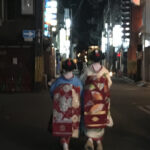
Right after Tenmangu, you’ll visit Kamishichiken Kaburenjo Theatre area. Kamishichiken is one of Kyoto’s five hanamachi (geisha districts). The tour notes it’s located next to Kitano Tenmangu, and that Kamishichiken has fewer geisha houses and fewer geiko/maiko compared with the bigger-name districts.
This stop is shorter—about 25 minutes—and it’s less about doing “things” and more about understanding how Kyoto’s cultural world is organized. Even if you don’t catch performances, the atmosphere of a hanamachi district helps connect dots between the shrines, the city neighborhoods, and what people actually do day-to-day.
Also, a couple of guides named in the feedback—Gigi and Meg—were praised for being thoughtful and responsive, so it’s worth leaning into questions here if you’re curious about customs and what you’re seeing.
Nishiki Market shopping time: where you actually eat like Kyoto
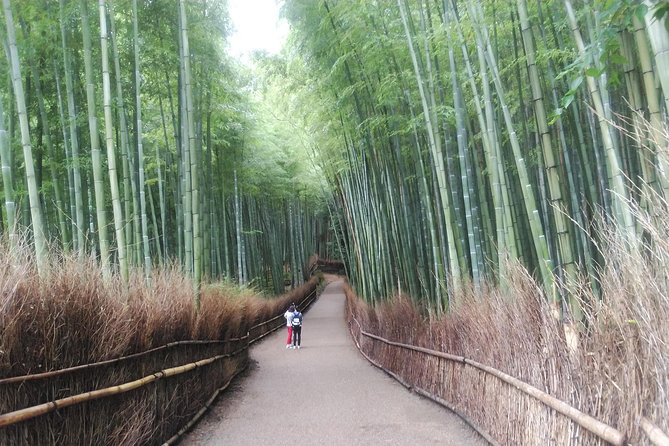
Finally, you get dedicated time at Nishiki Market Shopping District, a long street lined with 126 shops over about 390 meters. It’s been popular with Kyoto residents for around 400 years. You’ll find Kyoto-style vegetables, pickles, and lots of snacks.
The tour gives you about 40 minutes here. That’s a good window. It’s long enough to browse and pick a couple of things, and short enough that you’re not exhausted before you head back.
I also appreciate that the tour treats market time as part of the experience, not a quick afterthought. If you like practical souvenirs—things you can taste and bring home without guessing—Nishiki fits the bill.
A review-style detail that stands out: one guide arranged lunch for the group, and people described it as delicious. If you’re hungry, don’t panic—guides here seem to handle meal logistics so you don’t burn your day hunting food between stops.
Getting around Kyoto: the transit reality (and how to handle it)
This tour uses public transportation as part of the plan, and that’s where you should be realistic. One downside mentioned in the feedback is that using trains and buses can feel tedious, especially if you’re losing time that you’d rather spend walking in the sight itself.
Here’s the practical fix: bring an IC card (like Suica) if you have one. One comment specifically warned that without it you may end up counting change all day. Kyoto transit isn’t always friendly to cash-heavy navigation.
Also, consider this: the tour’s big win—seeing a lot in one day—requires some commuting between the stops. So the day isn’t 100% walking in the most scenic areas. It’s a mix of walking and transit, and you get better results if you stay flexible about timing.
What the guides are doing right (and why it matters)
The tour is private, and that changes how a good guide works. Instead of generic scripts, guides can adjust to your pace, your questions, and what you care about visually.
Several named examples come up in the feedback:
- Gigi is described as excellent—showing guests the big sights, helping organize lunch, and making sure the day felt enjoyable at their pace.
- Fuji-san is praised for being very knowledgeable and for pointing out scenic spots, including places based on the guests’ interests.
- Seiyan San was noted for making transit part of the experience, with a route that lets you walk through neighborhoods rather than only using transport.
- Meg was singled out for being caring and even bringing hand warmers at the start because she was worried people might be cold.
That last detail may sound small, but it signals something important: a calm, considerate guide makes early mornings more comfortable. And early in Kyoto can mean cooler air than you expect, especially when you’re waiting or walking before the day warms up.
If you like photography, you’ll also appreciate that some guides were highlighted as good at helping with pictures, not just giving instructions. That means fewer missed angles and fewer awkward “how do we line up?” moments.
Comfort checklist for an 8-hour Kyoto day
The tour runs about 8 hours. With multiple stops and transit, you’ll want to plan for a full day on your feet.
From the tour’s own details, here’s what you should assume:
- Quite a bit of walking
- Not stroller accessible
On the other hand, it’s listed as:
- Accessible for those with limited eye sight
- Accessible for those with limited mobility
That combination usually means the route and guide support may be helpful, but you should still think about your stamina. If you need frequent breaks, mention it early to your guide on the day.
On footwear: if you’re visiting Kyoto, you’re already thinking about comfortable shoes. This tour makes that more important than usual.
Price vs. self-guided: when this tour pays off
You could DIY this day by using transit and picking your own timings. But you’re paying for three things here:
- A guide to explain what you’re seeing (not just where it is)
- Routing and pacing so you’re not constantly recalculating
- A private group flow so you can move at a human speed
The “start early” concept is especially valuable if it’s your first time in Kyoto. You get a big-picture day that still includes specific highlights: torii at Fushimi Inari, bamboo atmosphere, the Golden Pavilion, and the Nishiki Market browsing window.
If you’re the kind of traveler who enjoys learning context and wants your day to feel organized, the value usually makes sense even with added admission and transit.
Who should book this Kyoto Early Riser Platinum tour
This fits you best if:
- You’re a first-time visitor who wants a solid overview with major hits
- You prefer private guidance over joining a large group
- You can handle an active full day and appreciate early starts
- You like a blend of temples and neighborhoods, plus a market stop
It might not be your best choice if:
- You hate public transportation changes and would rather stay in one area longer
- You’re looking for a slow, lingering bamboo forest experience without moving onward
- You’re traveling with a stroller, since it’s not stroller accessible
Should you book? My decision rule
Book it if you want one day that checks the Kyoto boxes with a guide, and you like the idea of getting to famous places earlier than the average crowd. The private format and the attention to pacing are the kind of things that make a long day feel manageable.
Skip it (or rethink the plan) if you already know you prefer to keep exploring the same neighborhood for hours. Transit time between stops can cut into your free-floating wander time, and that’s exactly what a few people flagged as disappointing.
If you do book, bring an IC card, wear shoes you trust, and go in with the mindset that this is a “big sights with guidance” day—not a single-area deep soak.
FAQ
How long is the Kyoto Early Riser Platinum One-Day Walking Tour?
It runs for about 8 hours.
Is this tour private?
Yes. It’s a private tour/activity, meaning only your group participates.
What costs are included, and what costs extra?
The tour includes a professional guide. Admission fees (¥500 per person) and public transportation (¥1,700 per person) are listed as not included.
Where do we meet, and does it end nearby?
You meet at Kyoto Station Building 901, and the activity ends back at the meeting point.
Is the tour stroller-friendly?
No. It is not stroller accessible, and it involves quite a bit of walking.
What if the weather is bad?
The experience requires good weather. If it’s canceled due to poor weather, you’ll be offered a different date or a full refund.