REVIEW · KYOTO
Shamisen Discovery in Kyoto 【Group】
Book on Viator →Operated by Shamisen Dojo · Bookable on Viator
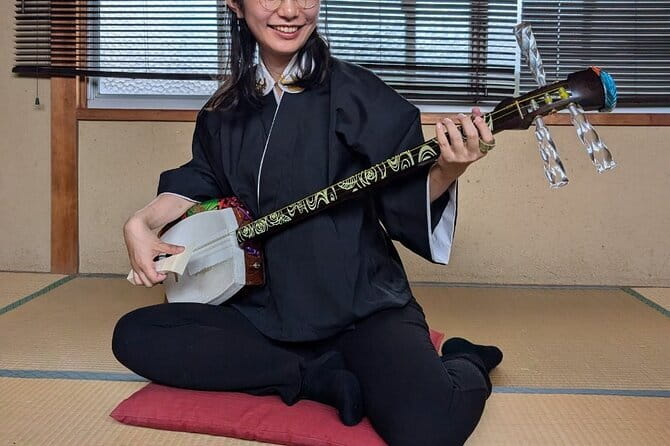
A shamisen lesson beats any museum stop. In Kyoto, this small-group class gives you hands-on coaching on holding the shamisen and using the bachi, and you get an instructor-led photo session with you playing. The only real trade-off is time: at about an hour, it is a great introduction, not long-term training.
I also like that the class feeds you the basics and then lets you play. You’ll get a coffee or tea break (green tea too), rental shamisen included, plus a jam where the instructor provides accompaniment while you try making your own melodies.
In This Review
- Key things I’d plan around before you go
- Finding the Shamisen Dojo in Kyoto’s Kita Ward
- What happens in the 60 minutes: history, hold, technique, and scales
- The photo session and the coffee or tea break that make it memorable
- Getting comfortable quickly with free practice time
- The jam session: when the instructor carries you, and you create
- Price and value: is $65.89 worth an hour?
- Who should book this shamisen discovery lesson?
- A practical Kyoto plan: when to schedule, what to bring
- Should you book the Shamisen Discovery in Kyoto (Group)?
- FAQ
- How long is the shamisen group lesson?
- What is included in the price?
- Is there a left-handed option?
- How big is the group?
- Do I need to print anything for the ticket?
- Can I cancel and get a full refund?
Key things I’d plan around before you go
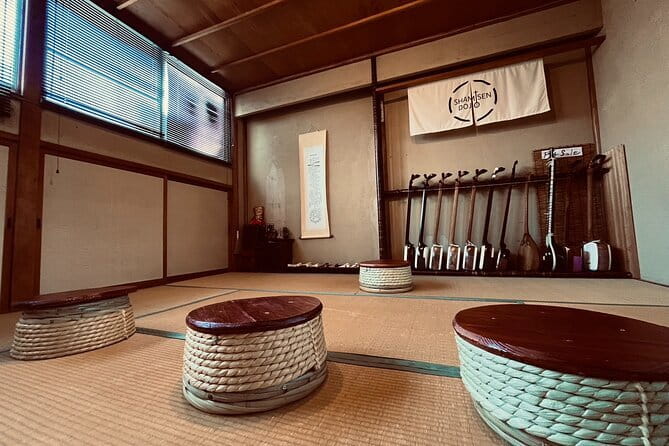
- Maximum 5 people means more instructor attention and fewer awkward waiting gaps
- Rental shamisen included, so you’re not renting gear on your own time
- Photo session included, with the instructor taking pictures while you hold and play
- A jam with accompaniment, where you can create melodies instead of just copying notes
- Left-handed shamisen available, so handedness doesn’t have to be a deal-breaker
- About 60 minutes, which is perfect for a first taste but tight for serious practice
Finding the Shamisen Dojo in Kyoto’s Kita Ward
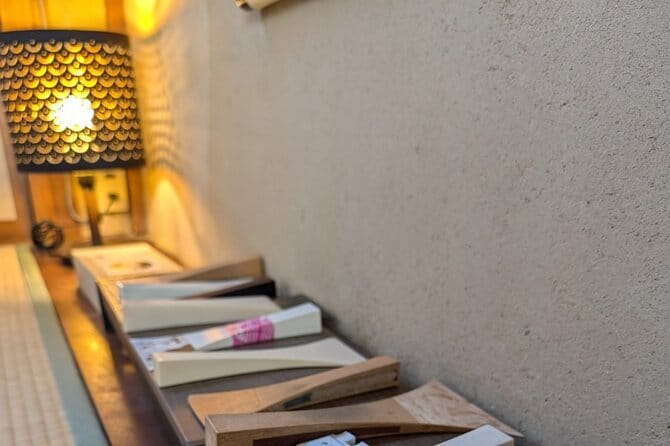
This experience runs out of the Shamisen Dojo in Kyoto’s Kita Ward, starting at Murasakino Nakakashiwanocho and ending back there. The location is described as near public transportation, but there’s no private transportation included, so you’ll want to map your route ahead of time and plan to arrive a little early.
You’ll get a mobile ticket, so bring your phone with the ticket ready to show. Because the class is small, being on time really matters for the flow of instrument setup and the first technique moments.
If you’re stacking this with other Kyoto sights, choose a “don’t rush me” slot. A shamisen lesson rewards calm focus, especially when you’re learning how the instrument should sit and how the bachi feels in your hand.
You can also read our reviews of more tours and experiences in Kyoto.



What happens in the 60 minutes: history, hold, technique, and scales
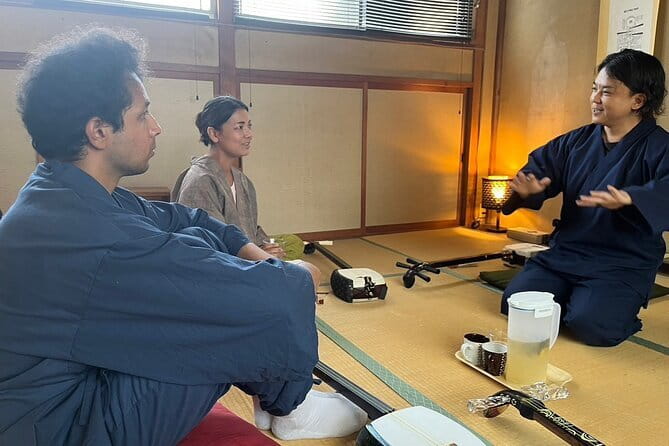
The lesson is built like a guided on-ramp. First, you get a clear introduction to shamisen culture: what the instrument is, types, and its history, explained by the instructor (with over 20 years of experience).
Then you switch from listening to doing. You’ll learn the basics of how to hold the shamisen properly and how to use the bachi (the plectrum used to strike the strings). This is the part where having one-on-one attention helps, because small corrections make a big difference fast.
Next comes structured practice. You’ll be introduced to one shamisen scale, plus there’s time to work through the “signatures” of the style. The class also includes “five signature sounds of Japan,” taught by the instructor so you can start recognizing the character of the music rather than just producing random notes.
Even if you’ve never touched a string instrument, the format is designed to get you playing sooner rather than later. The goal is confidence in an hour: enough technique to feel how shamisen music moves, plus enough guided repetition to make the sounds start to click.
The photo session and the coffee or tea break that make it memorable
This class isn’t just technique drills. It includes a photo session where you hold the shamisen you like and get pictures taken during the experience. That means you’re not leaving with only mental memories and a vague feeling of you holding something awkwardly in your lap. You leave with evidence.
The other morale booster is the included coffee and/or tea break, with green tea specifically mentioned as an option. It’s a small thing, but it helps because your hands and ears are doing a lot in a short time. Taking five minutes to reset makes the next part of the lesson easier to enjoy.
If you like keeping souvenirs that don’t clutter your suitcase, these photos are the kind you’ll actually use. And since the instructor can take the photos of you playing, you’re not stuck handing your phone to someone and praying it lands on your best side.
Getting comfortable quickly with free practice time
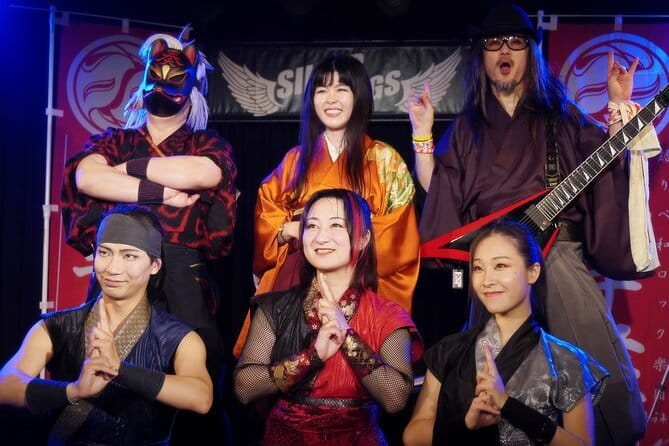
After the guided instruction, there’s free time to play. This is where you stop trying to copy perfectly and start exploring what feels right. You’ll get time to test your grip, strike angle, and rhythm—those tiny adjustments that can turn a frustrating first attempt into something that sounds musical.
If you want to make this time work for you, try setting a simple goal before you start. For example: focus on keeping your rhythm steady, or focus on getting a cleaner tone rather than speeding up. In a one-hour class, that kind of focus gets you more results than wandering randomly.
This is also where the left-handed shamisen option matters. If you’re left-handed, having an instrument setup that fits you saves time. You’re not trying to adapt to something designed for the other hand while you’re still learning the basics.
The jam session: when the instructor carries you, and you create
The final segment is a jam session where the instructor provides accompaniment. You don’t just watch; you get to freely create melodies while the base rhythm and harmony are handled for you.
This is the moment many people end up remembering most. It’s the difference between playing a lesson exercise and making something feel like music. The accompaniment gives you a safety net, so you can experiment without the pressure of carrying the whole sound by yourself.
If you’re traveling with a friend, sibling, or partner, this part is extra fun because you can react to each other’s rhythms and get a shared laugh when something unexpected happens. The class is built for beginners, so the jam is not about perfection. It’s about participation.


Price and value: is $65.89 worth an hour?
At $65.89 per person for about 60 minutes, you’re paying for more than a seat in a room. You’re getting:
- Rental shamisen included
- Instructor-led technique and scale introduction
- Photo session with the instrument
- Coffee/tea break (including green tea)
- A guided jam session with accompaniment
What makes it feel like good value is the combination of hands-on teaching and built-in materials. Many paid activities either give you instruction without including gear, or they give you a cultural talk without letting you play. Here, you get both, and you don’t have to bring an instrument, deal with setup, or manage a “where do we store this” problem.
The small-group cap (maximum 5 travelers) also matters. In a larger group, you can spend a lot of time waiting. Here, the design is clearly about more contact with the instructor, which is exactly what you need when your hands are learning something new.
Who should book this shamisen discovery lesson?
Book this if you want a beginner-friendly taste of Japanese traditional music that is active, not passive. It suits people who love trying skills on vacation, music lovers who want something less tourist-performative, and anyone curious about shamisen culture without needing background.
It also works well for mixed experience levels. Even if one person has played music before, the class is still structured around getting you playing. If you’re traveling with teens or a parent, this style of hands-on learning can be surprisingly satisfying because you’re doing, not watching.
Skip it if you’re looking for a long, performance-focused session. Since the class is about one hour, it’s best thought of as an introduction and a confidence builder, not a “study shamisen for the day” option. If you’re serious, you’ll likely want another lesson after you learn what to practice.
A practical Kyoto plan: when to schedule, what to bring
Because this is hands-on, schedule it when you can arrive with a clear head. After a big morning of temples, you’ll be ready for something more interactive and less line-based.
For example, it’s easy to pair with a morning sightseeing block and then come here for the lesson. In Kyoto, that kind of rhythm often works well: culture in the morning, skill-building in the afternoon.
What to bring is simple:
- Your phone (mobile ticket)
- Comfortable clothes and closed-toe shoes
- A willingness to copy, correct, and laugh at first attempts
You don’t need to bring the shamisen. You’ll choose from what’s available, and the rental is part of the experience.
Also, keep in mind there’s no private transport. If your Kyoto day involves multiple neighborhoods, give yourself a bit of buffer so you’re not sprinting across town before class.
Should you book the Shamisen Discovery in Kyoto (Group)?
Yes, I think you should book it if you want one of the most direct ways to experience Kyoto music culture: you learn the instrument basics, take photos while you play, and end with a jam that lets you create melodies. For the price, you’re not just buying a talk or a photo op. You’re buying time with an instructor and time on the instrument.
I’d hesitate only if you’re expecting a long masterclass or a performance-only evening. This is a tight, friendly beginner lesson, and it works best when you treat it like a first musical conversation.
If you want a memorable souvenir that isn’t another temple stamp or a crowded show, this one-hour shamisen experience is a strong bet.
FAQ
How long is the shamisen group lesson?
The course runs for about 1 hour.
What is included in the price?
The experience includes a rental shamisen, a photo session with the shamisen you like, and a coffee and/or tea break (green tea is included as an option). It also includes the lesson components like basic techniques, one shamisen scale, free play time, and a jam session with accompaniment.
Is there a left-handed option?
Yes. Lefty shamisen are available for left-handed players.
How big is the group?
The group size is capped at maximum 5 travelers.
Do I need to print anything for the ticket?
No. It uses a mobile ticket.
Can I cancel and get a full refund?
Yes. Free cancellation is offered, and you can cancel up to 24 hours in advance for a full refund.