REVIEW · KYOTO
Kyoto Fushimi-Inari Night Walking Tour
Book on Viator →Operated by Tomodachi Tours · Bookable on Viator
Kyoto’s Fushimi-Inari feels totally different at night, and that’s the point. You get a small-group walk through the shrine grounds and up the gate-lined paths as dusk turns to evening, with a guide adding meaning to what you’re seeing.
I especially like how the tour helps you read the site. Instead of just walking among thousands of bright red torii gates, you learn what Inari means in Shinto life and why specific spots matter.
One heads-up: you should expect some time on uneven paths in the dark, so comfortable walking shoes and layers for cooler evenings help a lot.
In This Review
- Key things that make this Fushimi-Inari night tour worth your time
- Fushimi-Inari at night: why the torii gates feel different
- Small-group format (max 12) and the guide-led pace
- Meeting at the fox statue: getting your bearings in Fushimi
- On the torii path: what you’ll see at Fushimi Inari Taisha
- What “after the crowds” really means (and why dusk helps)
- Photo time, walking shoes, and staying safe on the darker paths
- Price and value: is $43.11 a fair deal for this Kyoto evening?
- Who should book this night walking tour
- Guides you may meet: the tour’s biggest strength is the people
- Should you book the Kyoto Fushimi-Inari Night Walking Tour?
- FAQ
- How long is the Kyoto Fushimi-Inari Night Walking Tour?
- What is the group size for this tour?
- How much does the tour cost?
- Where do I meet for the tour?
- Does the tour return to the same meeting point?
- Is there an admission fee to enter Fushimi Inari Taisha?
- What kind of ticket do I receive?
- Is this tour near public transportation?
- Is free cancellation available?
- FAQ
- Is this tour suitable for most travelers?
Key things that make this Fushimi-Inari night tour worth your time
- Small-group size (max 12) keeps the experience relaxed and easier to follow after sunset
- Nighttime focus means fewer crowds, cooler temperatures, and better atmosphere for photos
- Guide-led context turns the shrine from scenery into a place with rules, symbols, and stories
- Famous Fushimi Inari-taisha setting includes stone fox statues, smaller shrines, and viewpoints along the route
- Mobile ticket makes check-in simpler, and the shrine entry itself is free
Fushimi-Inari at night: why the torii gates feel different
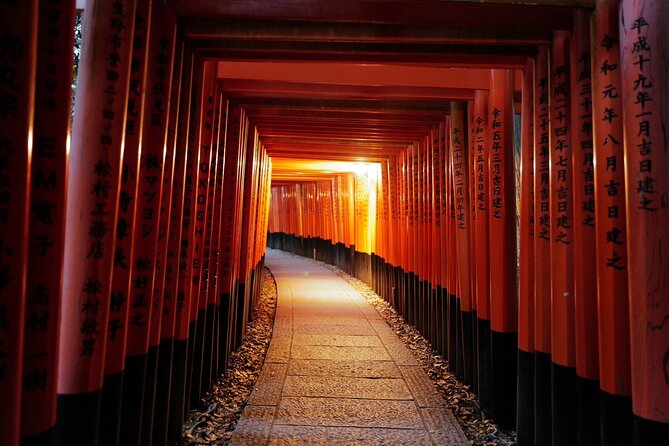
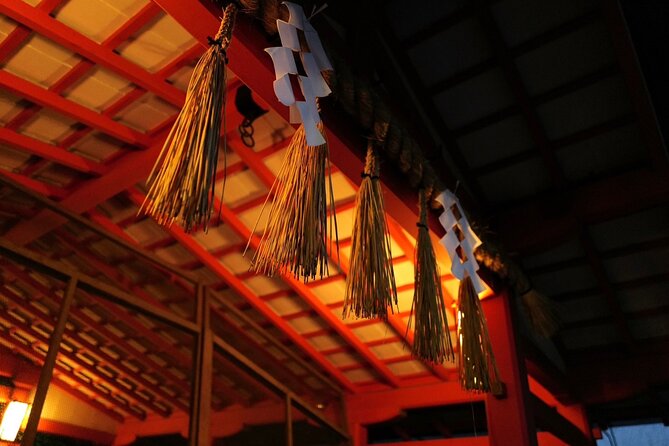
Daytime at Fushimi-Inari is famous for a reason. But it can also feel like a moving crowd on a photo mission. This night walking tour changes the mood fast. As the evening settles in, the torii gates and the paths around them feel calmer and more intimate, even though the shrine is still a popular Kyoto stop.
The real win is that you’re not just seeing the gates. You’re experiencing how the shrine works as a living Shinto place. Inari is the god of rice, agriculture, and business, and people come to pray for things like success, health, and happiness. At night, that spiritual purpose lands more clearly, because you have space to pause and look instead of constantly threading through other groups.
Also, the timing matters for comfort. The tour runs about 1 hour 30 minutes to 2 hours, so you can enjoy the night without losing your whole evening to long transit and slow lines.
You can also read our reviews of more walking tours in Kyoto


Small-group format (max 12) and the guide-led pace
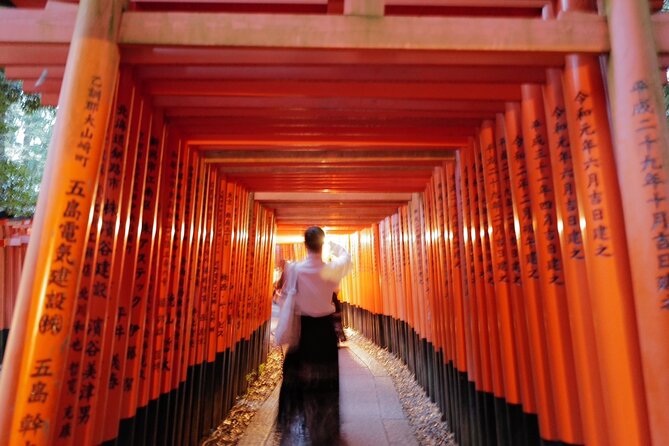
This is a maximum 12-person tour, which is exactly the size where a guide can actually manage the group. You get enough company to feel social, but not so many people that you’re forever stuck behind a row of cameras.
What you’ll notice quickly is the pace. The guides on this tour tend to keep moving while still making time for questions and photos. In the reviews, I saw how often guides like Jem, Tammy, Caleb, Masaki, Hiro, Navi, Vincent, and Yessi were praised for balancing stories with walking time.
A big practical plus: the shrine is easy to get turned around in. Even if you think you know where you’re going, the paths and side areas can pull you off your mental map. Having a guide helps you stay oriented, which is especially important once it gets dark and your eyesight has to work harder.
Meeting at the fox statue: getting your bearings in Fushimi
The tour starts at the fox statue at the entrance to Fushimi Inari Taisha Shrine. If you’ve been to shrines in Japan before, you know the entrance can look straightforward, but the surroundings still have little forks and landmarks that matter.
That meeting point is helpful because it gives you an obvious anchor. You can locate the fox statue, line up near the entrance area, and then follow the group from there. The tour ends back at the meeting point, so you’re not left wondering how to get out once you’re done.
If you want to make the first 10 minutes smoother, arrive a little early. That extra buffer lets you double-check you’re at the right entrance landmark and settle before the group starts moving.
On the torii path: what you’ll see at Fushimi Inari Taisha
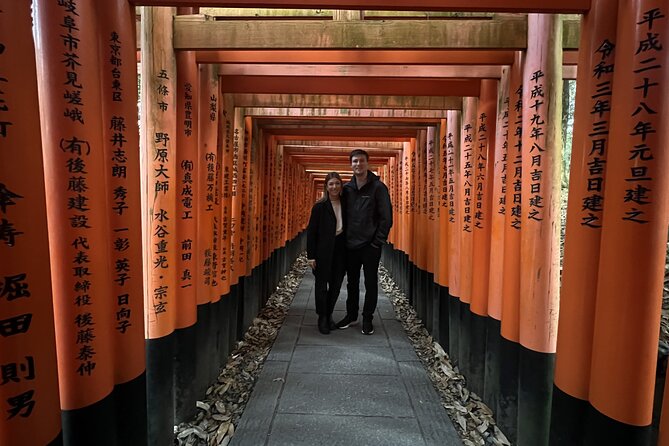
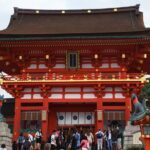
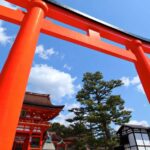
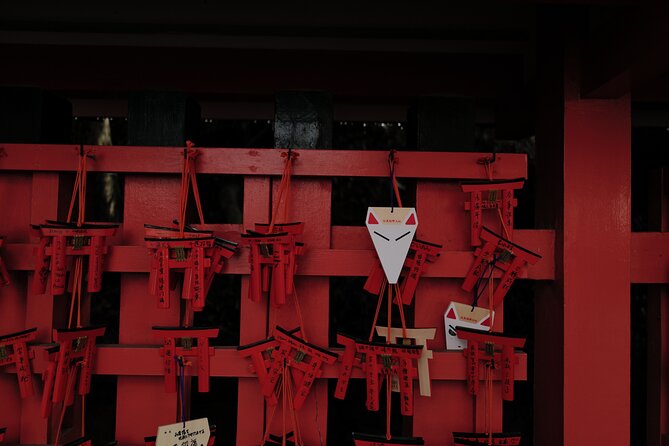
The heart of the experience is a guided walk at Fushimi Inari-taisha Shrine, famous for its thousands of bright red torii gates leading up toward Mount Inari. Expect the route to feel like a gentle hike through layers of shrine space: main areas, smaller shrines, and the side details most first-timers miss.
Here’s what the tour highlights in the place itself:
- The stone fox statues and their symbolism
The fox is tied closely to Inari. You’ll get context for why these statues are there and what they represent in the shrine’s traditions.
- Smaller shrine areas along the route
Inari isn’t one single room or one single stand-alone altar. It’s a network of sacred stops. Guides often point out items and locations that explain how the shrine is used.
- Prayer and ritual basics
One of the most memorable benefits in the reviews is that guides don’t just talk history; they help you understand how to participate. Some guides specifically mentioned showing how to pray at different sites, since rituals can vary by place.
- Scenic viewpoints
As you move along the gate paths toward higher areas, you’ll reach spots that make the “Mount Inari” feel real, even during a short tour window.
At night, these details read differently. Daytime gives you scale. Nighttime gives you attention. You’re more likely to notice the small carvings, the placement of objects, and the way people slow down to pray rather than rush through.
What “after the crowds” really means (and why dusk helps)
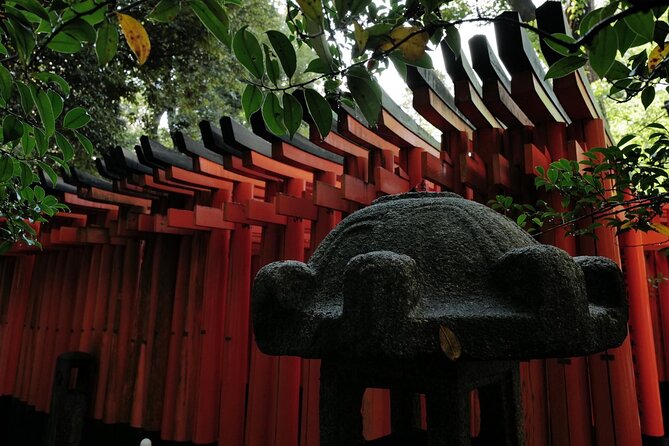
The promise here is crowd reduction, and the night timing delivers that in practice. Even if you don’t arrive at the exact moment crowds vanish, you’ll likely notice a shift as the evening progresses.
There’s also a comfort angle. Multiple guides and guests pointed out that late afternoon into evening is often cooler, which matters in Kyoto’s summer heat and in winter’s colder nighttime air. In December, for example, a guide-led walk still worked well, as long as you bring layers and don’t assume it will feel mild.
The tour can include some walking after sunset, not just in the “golden hour.” One reviewer noted that a good chunk of the walk was on mountain paths after dark. So treat this as an evening walk, not a short stroll at sunset. Plan for real low light.
Good news: the paths have lighting. So you’re not wandering in total darkness. But you still want your eyes and feet ready.
You can also read our reviews of more evening experiences in Kyoto





Photo time, walking shoes, and staying safe on the darker paths
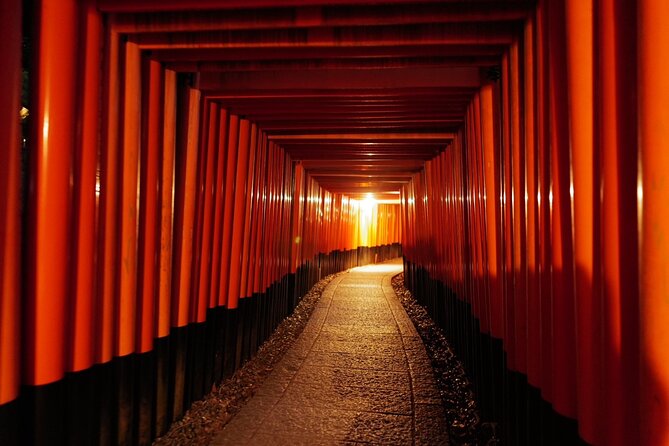
Night walking is fun. It’s also physical. This tour is a walking experience that may include uneven terrain and steps along shrine approaches. The biggest on-the-ground tip from the reviews is simple: wear walking shoes.
For photos, the timing is a strong advantage. Night gates can look dramatic because the route lines up in repeating patterns. Guides were also praised for patience while people stopped for pictures, which helps you get shots without feeling like you’re holding everyone back.
If you’re traveling with kids, or if you like a pace that still lets you ask questions, this small-group setup can be a good fit. Reviews mentioned that guides kept information clear and easy to follow, even for families.
If rain is in the forecast, expect the same principle: slower footing, more attention on steps, and a little extra time at photo stops. In one review, guides were described as sweet and patient when it was raining, which is what you want from a group tour at night.
Price and value: is $43.11 a fair deal for this Kyoto evening?
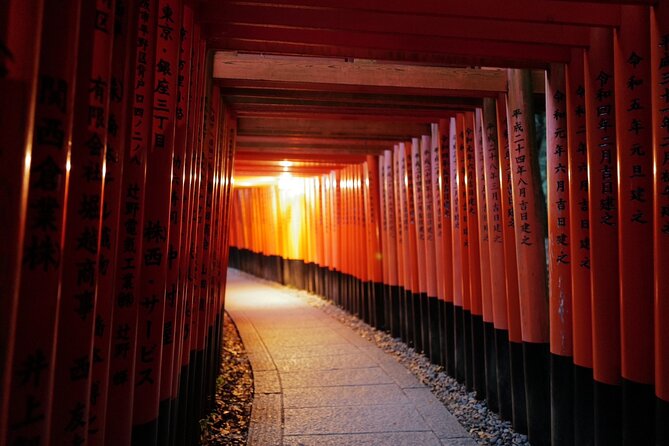
At $43.11 per person, this tour isn’t the cheapest way to see Fushimi-Inari. But it’s not trying to be. You’re paying mainly for three things:
- Time savings and smoother navigation
Fushimi-Inari can feel like a maze once you’re in the gates. A guide keeps you from wandering in circles and helps you choose the route that makes sense for the tour length.
- Meaningful context you would likely miss alone
Guides consistently got praise for stories, history, and explanations that made the shrine easier to understand. That matters a lot at Fushimi-Inari, because the place is full of symbols—fox statues, prayer areas, smaller shrines, and the logic of the torii route.
- A crowd-managed experience
Avoiding peak daytime pressure is a real quality-of-life upgrade. It also makes the walking more pleasant, which means you actually enjoy the details you came for.
Shrine entry is free as part of the experience, so your cost is focused on guiding and the night-route format. If you want a simple self-guided walk, you can do that. But if you’re the type who likes to understand what you’re seeing—especially at a sacred site—this price can feel reasonable fast.
In short: pay this if you want your Fushimi-Inari visit to feel intentional rather than rushed.
Who should book this night walking tour
This tour fits best if you want:
- A nighttime view of the torii gates with fewer crowds
- A guide who can explain Shinto meaning, not just describe the scenery
- A walk that lasts about two hours, so you can still enjoy Kyoto afterward
- A small group where you can keep up and ask questions
It also suits people who don’t want to plan a complex route. The meeting point is clear, the tour loops back to the start, and the guide manages the flow.
If you’re on a strict schedule, this can be a smart use of time. If you’re traveling in extreme heat, the evening timing can help you escape the worst of the day. If you’re visiting in colder months, it’s still doable—just dress for the weather and expect night air.
If you hate walking or can’t handle uneven steps, you might find this less comfortable. The tour is still relatively short, but it’s not a sitting-and-seeing type of experience.
Guides you may meet: the tour’s biggest strength is the people
One pattern stands out in the feedback: the guides. Names like Jem, Tammy, Caleb, Masaki, Hiro, Navi, Vincent, and Yessi come up again and again, and the common themes are friendly guidance, strong historical and cultural context, and patience.
You’ll likely experience the benefits of good guiding in small ways:
- photo moments don’t feel rushed
- answers stay relevant rather than turning into lectures
- group members stay together on darker paths
- you learn how items and shrine spaces relate to prayer and tradition
Even if your Japanese is limited, guides can still make the shrine understandable through clear explanations and on-site pointing. That’s a big part of why this tour gets such strong ratings.
Should you book the Kyoto Fushimi-Inari Night Walking Tour?
If you’re choosing between seeing Fushimi-Inari daytime versus night, I’d book this one if you care about atmosphere and understanding. The crowd-avoiding night timing, the small-group size, and the guide-led explanations are the combination that turns a famous site into an actually memorable evening.
Book it if:
- you want a calmer Fushimi-Inari visit
- you’d appreciate help with navigation and ritual context
- you’re ready for a short walk with dark-path conditions
Skip it if:
- you have mobility limits that make uneven shrine paths difficult
- you only want a quick photo loop and prefer to wander independently without a guide
For most visitors, this is a high-value way to see Kyoto’s most iconic torii landscapes with less stress and more meaning.
FAQ
How long is the Kyoto Fushimi-Inari Night Walking Tour?
It runs about 1 hour 30 minutes to 2 hours (approx.).
What is the group size for this tour?
The tour has a maximum of 12 travelers.
How much does the tour cost?
The price is $43.11 per person.
Where do I meet for the tour?
Meet at the fox statue at the entrance to Fushimi Inari Taisha Shrine in Kyoto.
Does the tour return to the same meeting point?
Yes, the experience ends back at the meeting point.
Is there an admission fee to enter Fushimi Inari Taisha?
The tour notes that the admission ticket is free.
What kind of ticket do I receive?
You’ll use a mobile ticket.
Is this tour near public transportation?
Yes, it’s listed as being near public transportation.
Is free cancellation available?
Yes. You can cancel up to 24 hours in advance for a full refund.
FAQ
Is this tour suitable for most travelers?
Most travelers can participate, and service animals are allowed.